

Historical and Cultural Context of the Kimberley
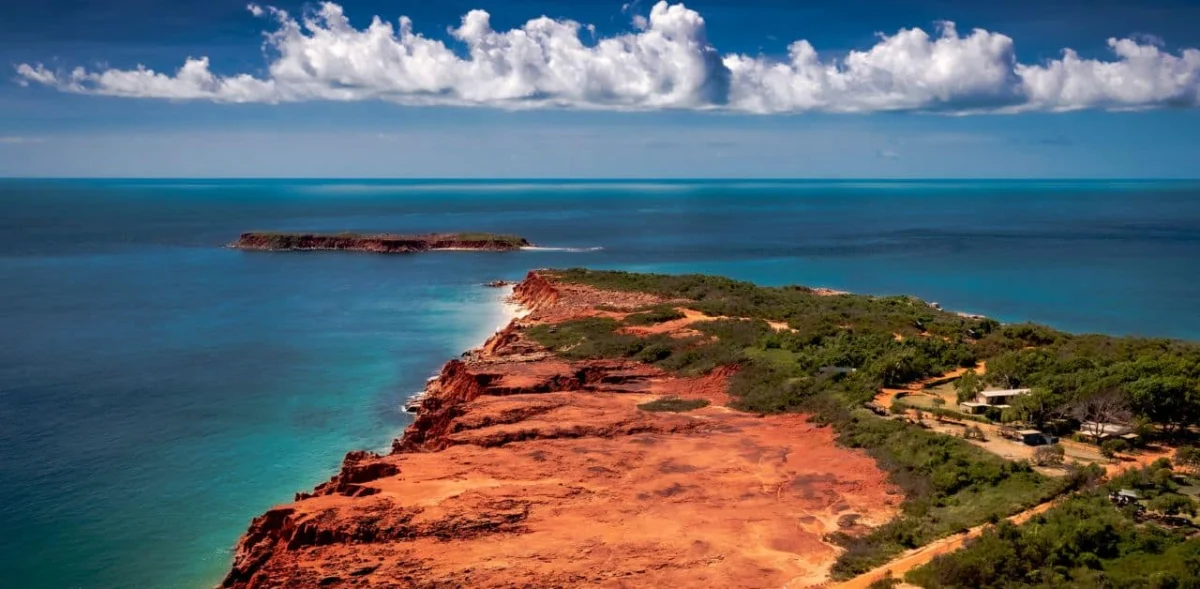
The human history of the Kimberley is among the oldest continuous cultural narratives on the planet. Indigenous Australians have inhabited this landscape for more than 40,000 years, with some archaeological estimates suggesting even earlier occupation. Today, the region is a beacon for Indigenous land rights; approximately 70% of the Kimberley is recognized under native title. This legal framework, solidified through decades of advocacy following the landmark Mabo decision and the subsequent Native Title Act of 1993, ensures that Traditional Owners—including the Yawuru, Gija, and Wunambal Gaambera peoples—maintain a central role in the management and preservation of their ancestral lands.
Geologically, the Kimberley is a masterpiece of deep time. The region’s foundations date back to the Paleoproterozoic era, roughly 1,800 million years ago. The rugged topography seen today is the result of hundreds of millions of years of erosion, tectonic shifts, and the ebb and flow of ancient inland seas. This geological complexity has created unique microclimates that support a vast array of endemic flora and fauna, making the Kimberley a critical site for scientific research and environmental monitoring.
1. Broome: The Strategic and Cultural Hub
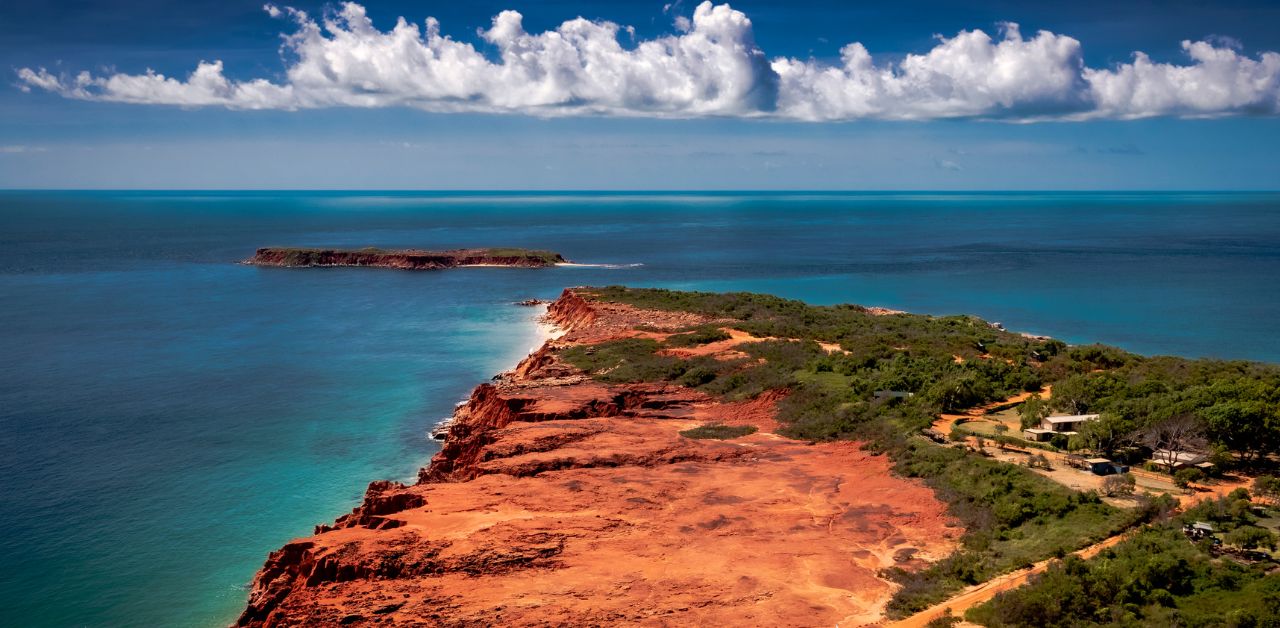
Broome serves as the primary gateway to the Kimberley, functioning as the region’s administrative and logistical center. Established in the 1880s as a pearling port, Broome’s identity is inextricably linked to the sea. The town’s history is a multicultural tapestry, shaped by Japanese, Malay, Filipino, and Chinese pearl divers who worked alongside Indigenous Australians. This legacy is preserved in the Chinatown district and the Japanese Cemetery.
Modern Broome is anchored by Cable Beach, a 22-kilometer stretch of white sand famous for its sunset camel trains and turquoise waters. Beyond leisure, Broome is an ecological focal point; Roebuck Bay, located on the town’s eastern edge, is recognized by the Ramsar Convention as a wetland of international importance. It serves as a crucial staging site for nearly 300,000 migratory shorebirds annually. The Broome Bird Observatory provides essential data for international conservation efforts, tracking species that migrate as far as Siberia.
2. The Bungle Bungle Range: Purnululu National Park
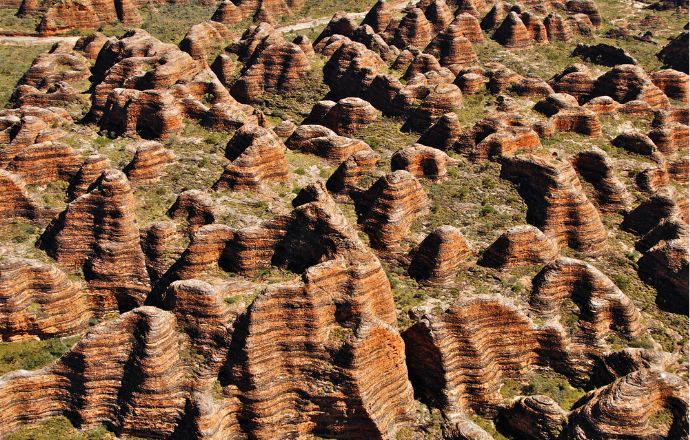
Purnululu National Park, a UNESCO World Heritage site since 2003, contains the Bungle Bungle Range, characterized by its iconic orange and black striped sandstone domes. These "beehive" structures are the result of 20 million years of erosion on a 350-million-year-old Devonian sediment bed. The distinct banding is caused by alternating layers of iron oxide (orange) and cyanobacteria (black), which thrive on the moisture-retaining layers of the rock.
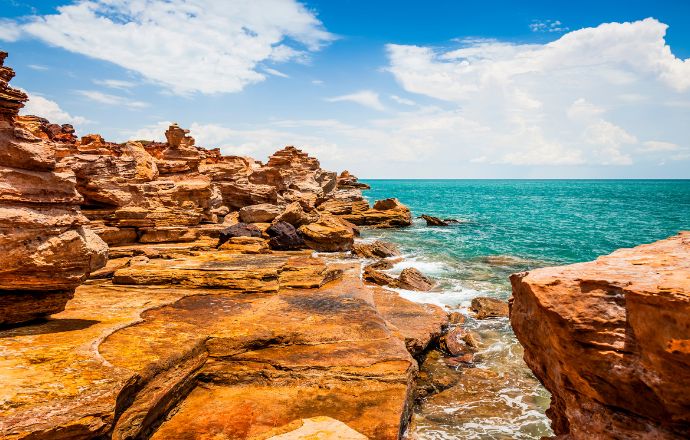
Despite its grandeur, the Bungle Bungle Range remained largely unknown to the non-Indigenous world until 1983, when a television crew chanced upon it. For the Gija and Jaru people, however, the area has always been a site of profound spiritual significance. Due to its extreme remoteness, the park is frequently accessed via scenic flights from Kununurra or Broome, though 4WD expeditions offer a more intimate view of features like Cathedral Gorge and Echidna Chasm.
3. Horizontal Falls: A Tidal Phenomenon
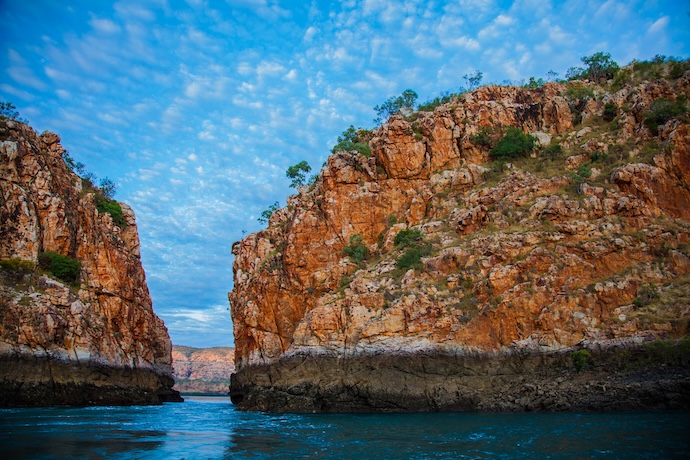
Located in Talbot Bay within the Buccaneer Archipelago, the Horizontal Falls—described by Sir David Attenborough as "one of the greatest natural wonders of the world"—is a testament to the Kimberley’s massive tidal energy. The "falls" are not vertical drops but a massive volume of water surging through two narrow, parallel gorges in the McLarty Range.
The tides in the Kimberley can reach a range of up to 10 to 12 meters. When the tide changes, water builds up on one side of the narrow gaps faster than it can flow through, creating a horizontal waterfall effect that can reach several meters in height difference. This site is a major draw for adventure tourism, with specialized vessels and seaplanes providing access to the turbulent waters.
4. Mitchell Falls: The Four-Tiered Cascade
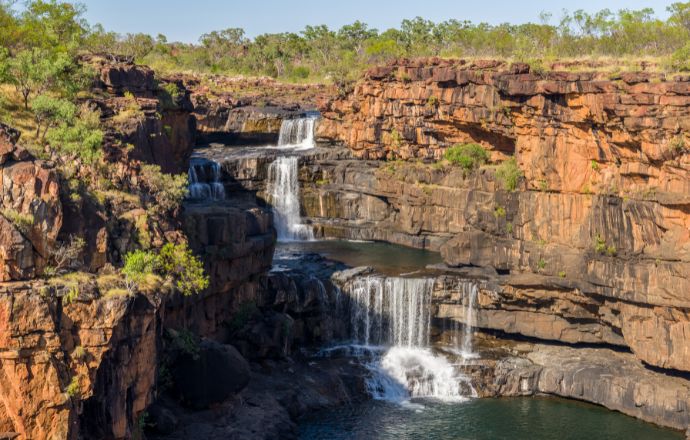
Mitchell Falls (Punamii-Uunpuu) is the centerpiece of Mitchell River National Park. This four-tiered waterfall system is carved into the Mitchell Plateau, a landscape dominated by ancient fan palms and eucalyptus woodlands. The falls are culturally significant to the Wunambal Gaambera people, who co-manage the park through the Uunguu Visitor Pass system, an initiative that directs tourism revenue back into Indigenous land management.
The plateau is a biodiversity hotspot, home to the monjon (the world’s smallest rock wallaby) and the rough-scaled python. Access to Mitchell Falls is notoriously difficult by land, often requiring a multi-day 4WD trek or a helicopter transfer, which underscores the region’s commitment to maintaining low-impact, high-value tourism.
5. El Questro Wilderness Park: A Model of Diversified Land Use
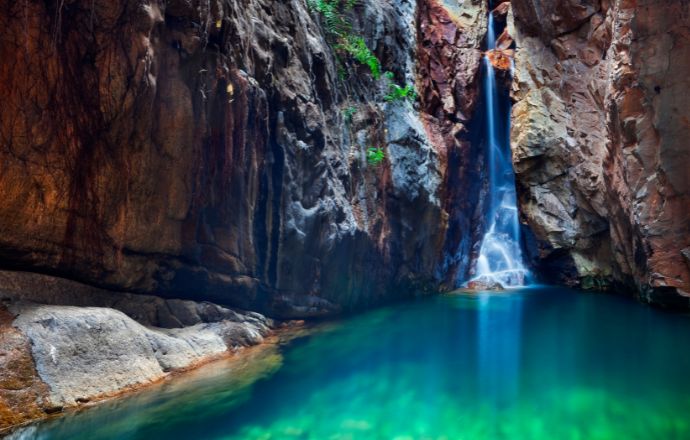
Spanning 700,000 acres, El Questro was originally a working cattle station before transitioning into a world-renowned wilderness destination. This site illustrates the Kimberley’s shift from purely extractive or agricultural industries toward sustainable tourism. The park features diverse ecosystems, from the thermal waters of Zebedee Springs to the sheer cliffs of Emma Gorge.
El Questro provides a unique case study in environmental management, where former pastoral lands are being rehabilitated. The park’s infrastructure supports everything from rugged camping to ultra-luxury lodges, catering to a broad demographic while enforcing strict environmental protocols to protect the Pentecost River catchment area.
6. King George Falls: The Twin Giants
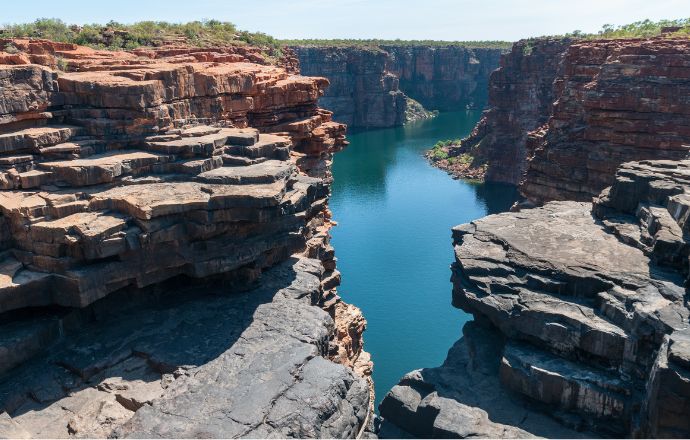
The King George River culminates in the spectacular King George Falls, Western Australia’s highest twin waterfalls. Dropping 80 meters over a sandstone cliff into a deep plunge pool, the falls are most impressive during the wet season (December to March). The river journey to the falls takes visitors through a canyon of 2-billion-year-old sandstone, showcasing the "King George Sandstone" formation.
The falls gained international cinematic fame in the 2008 film Australia, but their real value lies in their isolation. Accessible only by sea or air, they remain one of the most pristine environments in the Kimberley, free from the infrastructure that characterizes more accessible natural wonders.
7. The Buccaneer Archipelago: A Marine Frontier
Comprising approximately 800 to 1,000 islands, the Buccaneer Archipelago is a rugged labyrinth of Precambrian rock. The islands are largely uninhabited by humans but serve as a sanctuary for diverse marine and terrestrial life. The archipelago’s complex geology has created a "drowned" coastline where mountain peaks have become islands.
The region is a focal point for the Kimberley’s aquaculture industry, particularly South Sea pearl farming. However, the archipelago is also a site of increasing conservation interest, with the state government establishing the Lalang-garram/Camden Sound Marine Park to protect the calving grounds of the world’s largest population of humpback whales.
8. The Lacepede Islands: An Avian Sanctuary
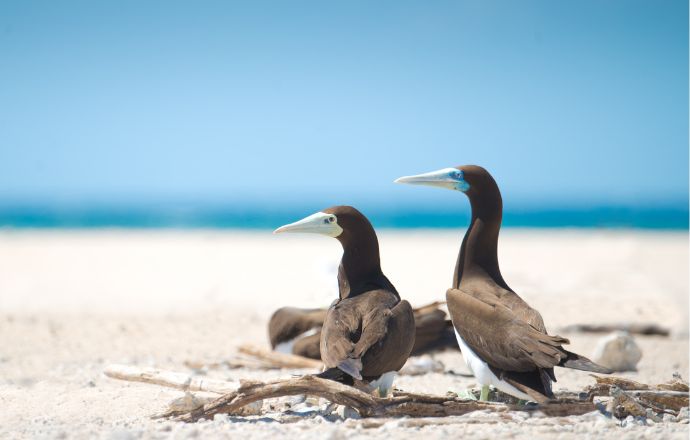
Located 120 kilometers off the coast of Broome, the Lacepede Islands are a Class A Nature Reserve. This chain of four sand cays sits atop a coral reef and is recognized by BirdLife International as an Important Bird Area. The islands support the largest breeding colony of Brown Boobies in the world, with populations often exceeding 18,000 breeding pairs.
Beyond their ornithological significance, the Lacepedes are a vital nesting site for Green Sea Turtles. Because of their status as a nature reserve, landing on the islands is prohibited, but small-ship cruises and zodiac tours allow for close-range observation, ensuring that the delicate nesting cycles of the wildlife remain undisturbed.
9. Gibb River Road: The Arterial Route
The Gibb River Road is a 660-kilometer former cattle-droving route that bisects the heart of the Kimberley. Extending from Derby to near Kununurra, the road is an icon of Australian outback travel. It provides the primary land access to numerous gorges, including Windjana Gorge—famed for its Devonian reef limestone walls and high concentration of freshwater crocodiles.
The "Gibb" is more than a road; it is a vital economic artery that connects remote communities and stations. Maintenance of the road is a significant annual undertaking for the Western Australian government, as the heavy rains of the monsoon season frequently wash out sections, rendering it impassable for months at a time.
10. Jar Island: The Gallery of Antiquity
Jar Island, located in the Kimberley’s north, serves as an outdoor museum of Indigenous art and maritime history. The island is famous for its Gwion Gwion (formerly known as Bradshaw) rock art. These paintings, characterized by fine lines and intricate depictions of human figures with ornaments and tassels, are estimated to be between 15,000 and 20,000 years old, representing a different stylistic era than the more common Wandjina art found elsewhere in the region.
The island also holds evidence of early international contact; pot shards found here indicate visits by Macassan trepanners from present-day Indonesia, who arrived centuries before European explorers to harvest sea cucumbers.
Broader Impact and Future Outlook
The Kimberley is currently at a crossroads between economic development and environmental preservation. The region’s vast mineral wealth—including diamonds, iron ore, and natural gas—presents significant industrial opportunities. However, the burgeoning tourism sector, which contributes hundreds of millions of dollars to the Western Australian economy annually, relies on the "pristine" nature of the landscape.
Official responses from the Western Australian Department of Biodiversity, Conservation and Attractions (DBCA) emphasize a "joint management" approach. By partnering with Traditional Owners, the state aims to create a sustainable model where Indigenous knowledge guides conservation efforts. This strategy is seen as essential for mitigating the threats of invasive species, such as cane toads, and managing the increasing frequency of intense bushfires.
As global interest in remote and sustainable travel grows, the Kimberley is poised to become an even more significant player in international tourism. The challenge for the coming decade will be to improve infrastructure and accessibility without compromising the very isolation and raw beauty that define this extraordinary corner of Australia. The continued success of the Kimberley will depend on a delicate balance: honoring 40,000 years of heritage while navigating the complexities of a 21st-century global economy.

