

Maintaining optimal health hinges on a delicate balance of essential minerals, and potassium stands as a crucial player in this intricate system. While often overshadowed by discussions surrounding sodium, potassium plays a vital role in numerous bodily functions, including nerve signal transmission, muscle contraction, and, critically, blood pressure regulation. The human body, designed through millennia of evolution, appears to thrive on a significantly higher potassium intake than what is typically consumed in modern Western diets. This stark contrast between our evolutionary heritage and contemporary dietary habits has profound implications for public health, particularly concerning the rising tide of cardiovascular disease.
The Evolutionary Blueprint: A Potassium-Rich Past
Our ancestors, who subsisted on diets rich in fruits, vegetables, leafy greens, roots, and tubers, naturally consumed substantial amounts of potassium. These whole, unprocessed plant foods formed the bedrock of their sustenance, providing not only essential vitamins and minerals but also abundant fiber and, crucially, ample potassium. In contrast, the modern diet has witnessed a dramatic shift, with calorie-dense, highly processed foods laden with added fats and sugars largely displacing these nutrient-rich staples. This dietary revolution has not only stripped away vital fiber but has also led to a significant reduction in potassium intake, while simultaneously increasing sodium consumption.
This dietary evolution is not merely an academic observation; it carries significant public health weight. High blood pressure, or hypertension, is now recognized as the second leading cause of death globally, claiming over 10 million lives annually. Unhealthy diets, characterized by an imbalance of sodium and potassium, rank as the primary risk factor contributing to this global health crisis. This underscores the critical need to re-examine our dietary patterns and their impact on cardiovascular health.
The Sodium-Potassium Imbalance: A Growing Concern
The prevailing dietary landscape in many developed nations is marked by an inverse relationship between sodium and potassium intake. Traditional diets, as mentioned, were characterized by low sodium and high potassium. Today, the situation is largely reversed, with many individuals consuming excessive amounts of sodium while falling short on essential potassium. This imbalance is a significant contributor to elevated blood pressure.
The consequences of this imbalance are stark. High blood pressure is a silent killer, often presenting no overt symptoms until it has caused significant damage to vital organs such as the heart, brain, and kidneys. It is a primary driver of heart attacks, strokes, kidney failure, and other serious health conditions. Addressing this imbalance is therefore not merely a matter of dietary preference but a public health imperative.
Rebalancing the Scales: Dietary Strategies and Salt Substitutes
Fortunately, the path towards rebalancing potassium and sodium intake is clear: an increased consumption of whole, healthy plant foods. Greens, beans, and other potassium-rich vegetables are potent allies in this endeavor. They not only provide a wealth of potassium but also possess properties that actively help to lower blood pressure.
However, for many, achieving an optimal potassium intake through diet alone presents challenges. The widespread availability and palatability of high-sodium processed foods, coupled with the decline in consumption of potassium-rich produce, create a complex dietary environment. In this context, the use of salt substitutes has emerged as a potential strategy to mitigate the negative effects of excessive sodium intake.
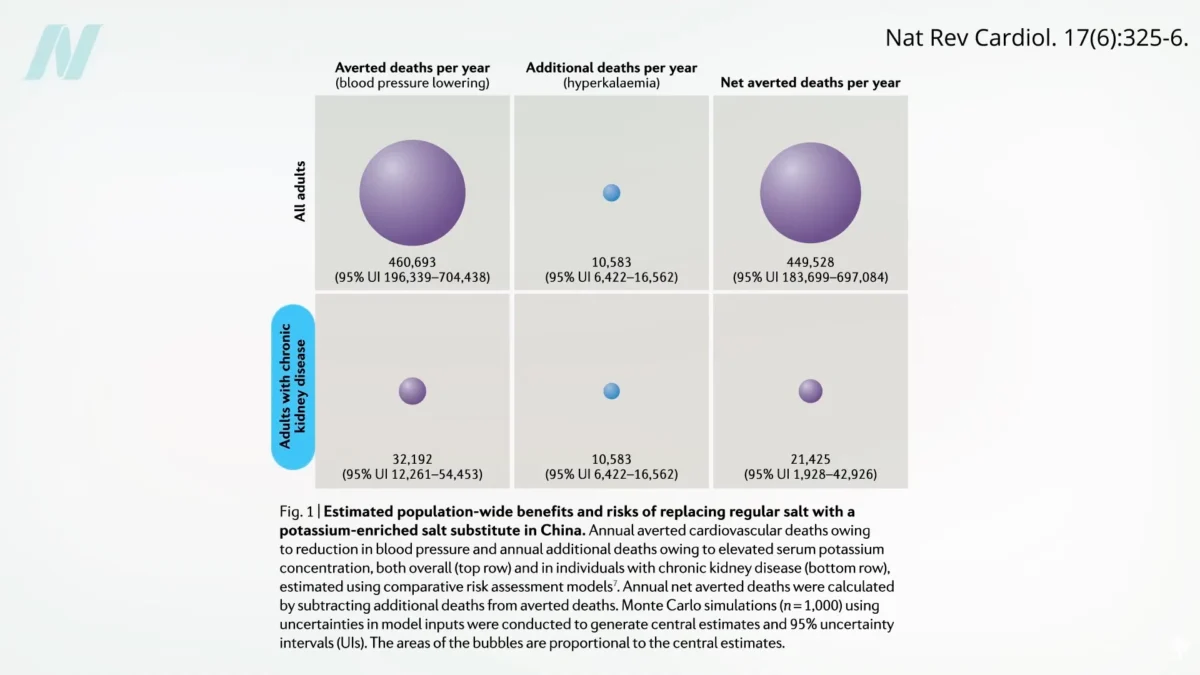
Potassium chloride, the most common salt substitute, offers a direct way to swap out sodium for potassium in the diet. This substitution is not merely theoretical; scientific evidence supports its efficacy. A meta-analysis of numerous randomized controlled trials has demonstrated that replacing sodium chloride with potassium chloride can lead to a significant reduction in blood pressure. The findings are particularly encouraging, as even substitutes containing less than 30% potassium chloride have shown positive results. Furthermore, at these concentrations, most individuals cannot discern a difference in taste between regular salt and potassium-based substitutes, suggesting a practical and palatable approach to blood pressure management.

Navigating the Nuances of Potassium Chloride
While potassium chloride offers a promising avenue for blood pressure control, it is essential to understand its nuances and potential limitations. The U.S. Food and Drug Administration (FDA) generally regards potassium chloride as "generally recognized as safe" (GRAS). For most healthy individuals, the primary concern associated with its use is a potential alteration in taste. Some users report a bitter or metallic aftertaste, which can vary depending on the food being seasoned.
Personal experience with potassium chloride highlights this variability. While it may perform exceptionally well on certain dishes and snacks, its flavor profile can render other foods unpalatable. This sensitivity to taste suggests that a gradual transition and careful application might be necessary for widespread adoption. Some individuals have found that completely eliminating sodium from their diet, and subsequently adapting their palate, can make even potassium chloride substitutes more acceptable. However, the subjective nature of taste means that individual experiences will undoubtedly differ.
The Role of the Kidneys: A Natural Regulator
A crucial aspect of understanding potassium’s role in the body lies in the function of the kidneys. Healthy kidneys are remarkably adept at regulating potassium levels. When potassium intake is high, whether from food or supplements, healthy kidneys efficiently excrete the excess through urine, thereby maintaining blood potassium within a safe and normal range. This natural regulatory mechanism explains why healthy individuals generally do not need to fear consuming too much potassium from dietary sources.
The human species evolved to consume significantly higher amounts of potassium, estimated to be around 15,000 mg per day. This evolutionary backdrop suggests that our bodies are well-equipped to handle substantial potassium loads. Studies have shown that even with potassium supplementation doses as high as 3,000 mg per day, no adverse effects have been observed with long-term use. Furthermore, healthy kidneys can maintain normal blood potassium levels even when intake reaches approximately 15,000 mg per day.
Understanding Blood Potassium Levels and Potential Risks
The normal range for blood potassium levels is typically between 3.5 and 5.0 millimoles per liter (mmol/L). Levels approaching or exceeding 6 mmol/L can be a cause for concern. However, even with the introduction of potassium supplements, such as those used in salt substitution trials where participants receive an average of 2,000 mg daily, blood potassium levels typically increase by a modest 0.14 mmol/L. This slight increase is generally not sufficient to push levels into a dangerous range for healthy individuals.
It is important to acknowledge that there are limits to this regulatory capacity. In rare and extreme cases, such as consuming an exceptionally large quantity of potassium-rich foods (e.g., up to 20 bananas daily for an extended period), blood potassium levels could theoretically rise above 6 mmol/L. Similarly, consuming extremely large quantities of any food item, such as 10 pounds of carrots daily, is not advisable and can be detrimental. These scenarios, however, represent extreme outliers and are not representative of typical dietary patterns or the risks associated with moderate salt substitute use.
Historical Context and the Evolution of Salt Substitutes
The history of salt substitutes is not without its cautionary tales. Early attempts in the 1940s to use lithium chloride as a salt substitute led to instances of lithium poisoning, highlighting the importance of understanding the chemical composition and potential toxicity of any substance used as a replacement.
More relevant to contemporary practices, potassium chloride has been the subject of scrutiny. While generally safe, there is a documented case of suicide involving the ingestion of a small amount of potassium chloride salt substitute. However, it is crucial to place this in perspective. Even small amounts of regular table salt, when ingested all at once, can be lethal. Ingesting concentrated salt water was, in fact, a traditional method of suicide in ancient China, underscoring that the inherent toxicity of a substance is often dose-dependent and related to the method of administration.
The Critical Role of Kidney Function in Potassium Management
The most significant caveat regarding potassium chloride salt substitutes centers on individuals with impaired kidney function. For those whose kidneys are unable to effectively regulate potassium excretion, an excess of potassium can indeed become a serious health issue, leading to hyperkalemia. This risk is particularly pronounced in individuals with pre-existing kidney disease, diabetes (which can damage the kidneys), severe heart failure, those taking medications that interfere with potassium excretion, older adults, and individuals with adrenal insufficiency.

The reluctance to widely promote potassium-based salt substitutes on a population level stems from this concern for individuals with compromised kidney function. For these vulnerable groups, careful medical supervision and consultation are paramount.
A Paradigm Shift in Kidney Disease Management: The Produce Aisle’s Promise
Historically, dietary recommendations for patients with kidney disease often involved restricting the consumption of fruits and vegetables due to their potassium content. However, this paradigm is undergoing a significant transformation. Emerging research indicates that a whole-food, plant-based diet may not only be safe but also beneficial for individuals with chronic kidney disease (CKD).
There is growing evidence suggesting that such diets can help slow the progression of CKD and potentially delay the onset of kidney failure. This shift in perspective implies that the practice of broadly restricting dietary potassium in kidney patients should be reserved for those with documented hyperkalemia (blood potassium levels of 6 mmol/L or higher). For many, the key to halting or slowing the progression of CKD might lie not in restriction, but in embracing the nutrient-rich bounty of the produce aisle. This represents a fundamental re-evaluation of dietary interventions for kidney health, emphasizing the therapeutic potential of plant-based nutrition.
Doctor’s Note: A Call for Vigilance and Personalized Care
The medical community recognizes the intricate relationship between potassium intake, kidney function, and overall health. While potassium chloride salt substitutes offer a valuable tool for blood pressure management for the general population, their use must be approached with an understanding of individual health profiles.
For individuals concerned about their risk of potassium imbalance or impaired kidney function, consulting with a healthcare professional is essential. A doctor can assess individual risk factors, including existing medical conditions, medications, and age, to determine the appropriateness of increased potassium intake or the use of salt substitutes. Kidney function tests can provide crucial insights into an individual’s capacity to regulate potassium, enabling personalized dietary recommendations.
It is important for patients to be aware of the potential risks associated with excessive potassium intake, particularly if they have underlying kidney conditions. Open communication with healthcare providers ensures that dietary strategies are safe, effective, and tailored to individual needs.
This discussion serves as the concluding segment of a three-part series exploring mineral intake recommendations and the efficacy of potassium chloride salt substitutes. Previous installments have delved into the challenges of meeting mineral intake recommendations in the U.S. adult population and offered a detailed examination of the benefits and drawbacks of potassium chloride salt substitutes.

