

The discovery of insulin in 1921 marked a monumental turning point in the fight against diabetes, transforming a once-fatal disease into a manageable condition for millions. However, for decades preceding this breakthrough, a humble bowl of oatmeal offered a lifeline to individuals diagnosed with diabetes, a testament to the power of dietary intervention in managing the condition. Pioneered by the acclaimed physician Carl von Noorden, the "oatmeal diet" emerged as a groundbreaking, albeit initially controversial, therapeutic strategy that saved and prolonged countless lives.
The Dawn of the Oatmeal Diet: A Controversial Beginning
In 1903, Carl von Noorden, a leading German physician of his time, published his seminal findings on a diet centered around oatmeal for patients with diabetes. At the turn of the 20th century, diabetes was a terrifying diagnosis, often leading to rapid deterioration and death. Treatment options were severely limited, primarily focusing on severe caloric restriction, which, while sometimes effective in the short term, was unsustainable and led to malnutrition and weakness.
Von Noorden’s proposal to use oatmeal as a cornerstone of diabetes management was met with significant skepticism from the medical community. The prevailing medical understanding at the time did not fully grasp the complexities of carbohydrate metabolism in diabetes, and the idea that a starchy food like oatmeal could be beneficial, rather than detrimental, was counterintuitive to many. However, von Noorden’s meticulous observations and the compelling results he witnessed among his patients began to chip away at the skepticism.
Early Adopters and the Growing Evidence
Among the most influential early adopters of von Noorden’s approach was Dr. James B. Herrick, a renowned American physician and cardiologist, credited with first describing the link between sickle cell disease and a vaso-occlusive crisis in 1910. Initially, Herrick harbored considerable doubts about the efficacy of the oatmeal diet. Yet, as he began implementing it with his own patients, he was astonished by the profound improvements they experienced. This personal experience led him to become a staunch advocate.
By 1909, the evidence supporting the oatmeal diet had become so compelling that Dr. Herrick issued a powerful proclamation: no child or adolescent diagnosed with diabetes should be denied the potential benefits of this dietary cure. This declaration signaled a significant shift in the medical perception of the treatment, moving it from the fringes of experimental therapy to a recognized and vital component of diabetes care.
"Magical Effects" and the Unsolved Mystery
The impact of the oatmeal diet was so remarkable that it captured the attention of Dr. Elliott Joslin, a towering figure in the history of diabetes research and treatment. Joslin, who founded the world’s oldest and largest diabetes clinic, described the effects of oatmeal as "sometimes magical." He referred to the underlying mechanism of the oatmeal cure as an "unsolved mystery," a puzzle that baffled physicians of the era. This enigmatic success story was frequently discussed as "one of the greatest puzzles in diabetes."
Despite the lack of a complete scientific explanation at the time, researchers observed crucial clues. A consistent finding was the absolute necessity of strictly excluding animal protein from the diet. It became evident that animal protein actively counteracted the beneficial effects of the oatmeal-based regimen. This observation, though empirically derived, foreshadowed a much deeper understanding of insulin resistance that would emerge decades later.
The Modern Understanding: Insulin Resistance and Plant-Based Power
More than a century after von Noorden’s initial discoveries, modern science has illuminated the mechanisms behind the oatmeal diet’s success. We now understand that the primary driver of prediabetes and type 2 diabetes is insulin resistance. This condition occurs when the body’s cells become less responsive to insulin, the hormone responsible for regulating blood sugar.

Research has unequivocally demonstrated that animal protein intake can significantly exacerbate insulin resistance. Conversely, plant-based foods, including oats, have been shown to enhance insulin sensitivity, effectively reversing the underlying pathology of type 2 diabetes. This scientific understanding validates the empirical observations made by early pioneers like von Noorden and Joslin, revealing the profound impact of dietary choices on metabolic health.
The Science Behind Oatmeal’s Efficacy
The beneficial effects of oatmeal on blood sugar control are not merely anecdotal; they are supported by a robust body of scientific evidence. Numerous randomized controlled trials have consistently shown that higher consumption of whole grains, particularly oats, is associated with a reduced risk of developing diabetes. Furthermore, these studies have revealed that oats significantly improve both short-term and long-term blood sugar regulation, in addition to positively impacting cholesterol levels.
The key to oatmeal’s therapeutic power lies in its rich content of a fermentable fiber known as beta-glucan. This soluble fiber plays a crucial role in the body’s metabolic processes. One of the primary mechanisms by which oatmeal lowers cholesterol is through its ability to modulate the gut microbiome. Beta-glucan acts as a prebiotic, selectively feeding beneficial bacteria in the gut.
The Remarkable Power of Fiber
The fiber found in oats, and indeed in other plant-based foods like beans, is far more impactful than its humble perception might suggest. Our gut microflora, the trillions of microorganisms residing in our digestive tract, thrives on dietary fiber. In return, these beneficial bacteria ferment fiber to produce short-chain fatty acids (SCFAs). These SCFAs possess potent anti-inflammatory properties and play a vital role in maintaining overall health.
Dozens of randomized controlled trials have confirmed that the types of fiber present in oats and beans can significantly improve long-term blood sugar control in individuals with diabetes. The explanation lies in the selective promotion of gut bacteria by dietary fiber. These fiber-promoted bacteria can actively contribute to alleviating the symptoms and progression of type 2 diabetes.
Specifically, oat fiber acts as a powerful prebiotic, fostering the growth of beneficial bacterial species such as Lactobacillus and Bifidobacteria. The synergistic combination of a diet devoid of animal protein and animal fat, coupled with an abundance of prebiotic fiber, explains why oatmeal-based diets became an integral part of clinical routines for managing diabetes.
Rapid and Lasting Benefits: The Speed of Oatmeal’s Impact
One of the most astonishing aspects of the oatmeal diet is the speed at which its benefits can manifest. Studies have indicated that even a few days of consuming oatmeal can yield positive effects that persist for approximately a month.
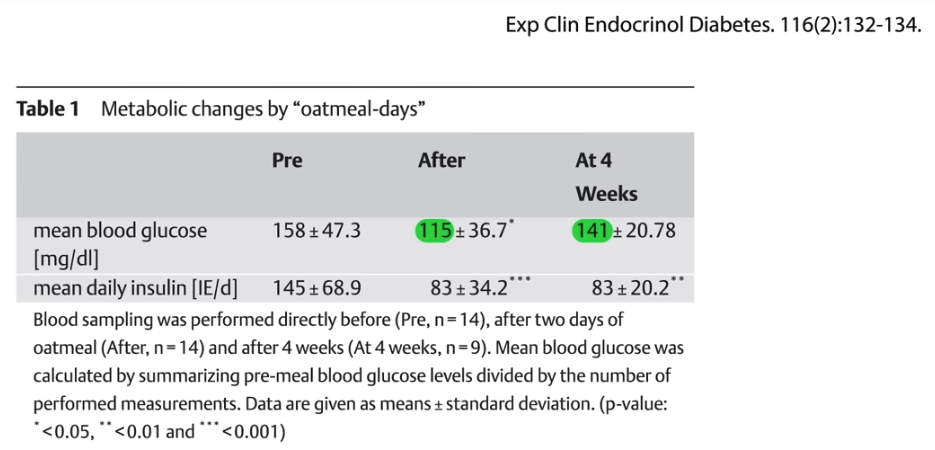
A notable randomized, controlled, crossover trial provided compelling evidence of this rapid impact. Participants who incorporated oatmeal into their diet experienced a remarkable 40% reduction in insulin needs within just two days, a stark contrast to control groups who only restricted calories. Crucially, this improvement was not fleeting. Measures of long-term blood sugar control, assessed four weeks later, continued to reflect the benefits derived from the short-term oatmeal intervention.
Further research has corroborated these findings. Studies have shown that a two-day regimen of oatmeal significantly reduced the required insulin dosage and improved blood sugar levels, with beneficial effects observed for up to four weeks post-intervention. In one study involving patients with uncontrolled type 2 diabetes, a two-day oatmeal diet led to a 40% reduction in insulin dose and an almost normalization of average blood sugar levels. Astonishingly, even after participants resumed their regular diets, the researchers observed a lasting and significant reduction in insulin dosage and ameliorated mean blood sugars for weeks after they were discharged from the study.
The broader implications of these findings are profound. When individuals adopt a diet rich in oats, beans, fruits, vegetables, and nuts, the population of their gut fiber-feeders, which produce beneficial SCFAs, increases significantly. This dietary shift has been linked to a drop in fasting diabetic blood sugars by approximately 25% within one month. The correlation is clear: the more fiber-promoting bacteria individuals foster, the better their blood sugar control becomes. When the diversity and abundance of SCFA-producing bacteria, promoted by fiber intake, are higher, participants demonstrate greater improvements in their hemoglobin A1c levels, a key indicator of long-term blood sugar management.
Potential Downsides and Necessary Precautions
While the benefits of an oatmeal diet are substantial, it is not without its potential risks, particularly for individuals on medication. If a physician prescribes an oatmeal-centric dietary intervention, they must be prepared to rapidly "deprescribe" or reduce the dosage of blood sugar-lowering medications. Failure to do so could lead to dangerously low blood sugar levels, a condition known as hypoglycemia.
Furthermore, oatmeal interventions should be approached with caution in patients who may have difficulty recognizing or reporting symptoms of hypoglycemia. The very effectiveness of oatmeal in lowering blood sugar means that it can, in some cases, work "a little too well." Therefore, such dietary changes must be implemented under close medical supervision to ensure patient safety and optimal management.
Understanding the Glycemic Index of Oatmeal
The form in which oats are consumed significantly influences their impact on blood sugar. While whole grains, in general, are beneficial, intact whole grains are superior. Oat groats, which are the whole grain with their inedible outer husks removed, represent the least processed form.
- Steel-Cut Oats (Pinhead or Irish Oats): These are made by slicing oat groats into two to four pieces. They are considered a low-glycemic-index (GI) food, typically scoring below 55.
- Scottish Oatmeal: This is made by coarsely grinding oat groats.
- Rolled Oats (Old-Fashioned Oats): These are produced by steaming oat groats and flattening them. Both Scottish oatmeal and rolled oats have a glycemic index of around 55, also falling into the low-GI category.
- Instant Oats: These are steamed for longer and rolled even thinner. With a GI score of 79, instant oats are classified as a high-glycemic-index food. While not as problematic as some highly processed breakfast cereals (which can range into the 80s and 90s), they are less ideal for optimal blood sugar management compared to steel-cut or rolled oats.
The difference in GI scores highlights the importance of choosing less processed forms of oats for those seeking to manage their blood sugar effectively.
Enhancing Oatmeal: From Classic to Creative Culinary Uses
Oatmeal, a quintessential whole-grain breakfast, offers a versatile foundation for a wide array of culinary creations. Beyond the traditional preparation, there are numerous ways to elevate its flavor and nutritional profile.
A fundamental approach involves building a "BROL" (Beans, Rolled Oats, Legumes) base, which provides a substantial source of fiber and complex carbohydrates. From this base, individuals can explore a spectrum of toppings to suit their taste preferences. For those with a sweet inclination, a "chocolate-covered-cherry sensation" can be achieved by combining frozen dark red cherries, cocoa powder, dates, and walnuts or pumpkin seeds. This combination offers antioxidants and healthy fats alongside the natural sweetness.
For those who prefer savory flavors, the BROL bowl can be readily adapted. Recipes featuring sautéed greens offer a nutritious and satisfying savory option. A quick internet search for "savory oatmeal" reveals a vast culinary landscape, encompassing dishes with mushrooms, herbs, curry spices, and roasted vegetables, demonstrating the adaptability of oatmeal to diverse palates and dietary needs.
Conclusion: A Legacy of Dietary Wisdom
The historical journey of the oatmeal diet from a controversial treatment to a scientifically validated dietary strategy underscores the enduring power of nutritional science. Carl von Noorden’s pioneering work, initially met with skepticism, laid the groundwork for a revolutionary understanding of diabetes management. The remarkable efficacy of oatmeal, driven by its rich beta-glucan fiber content and its ability to enhance insulin sensitivity while supporting a healthy gut microbiome, continues to offer a potent and accessible tool for individuals seeking to control their blood sugar and improve their overall metabolic health. As we continue to unravel the intricate connections between diet, gut health, and chronic disease, the humble bowl of oatmeal stands as a powerful reminder of the profound impact that simple, whole foods can have on human well-being.

