

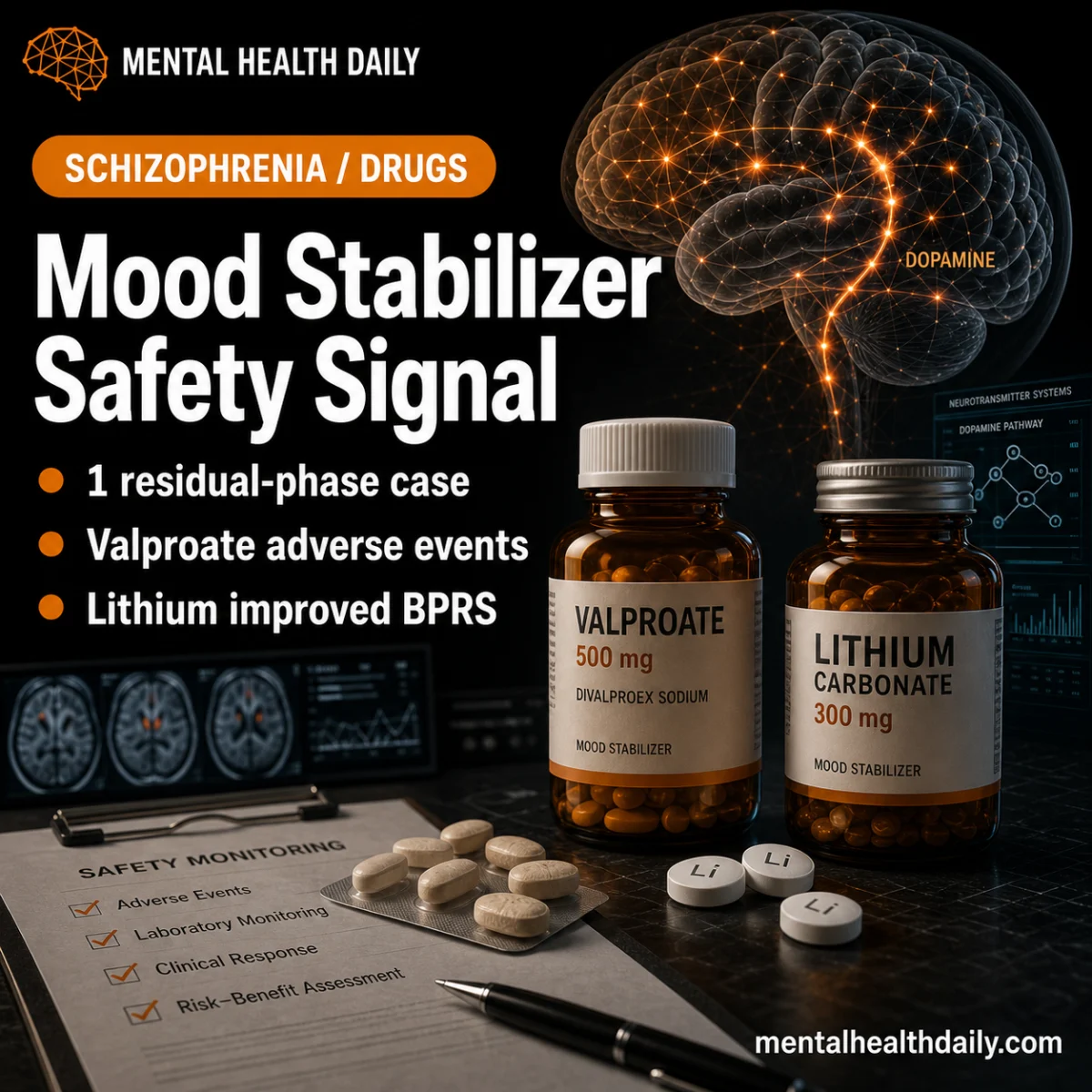
A recent 2026 case report by Kasagi et al. has brought into sharp focus the intricate challenges of managing treatment-resistant schizophrenia, particularly when conventional first-line strategies are declined. The report detailed the experience of a 49-year-old woman with long-standing illness, highlighting a sequence of mood stabilizer augmentations: an initial trial of valproate 800 mg/day that demonstrated efficacy in ameliorating agitation before precipitating severe adverse events, followed by a successful transition to lithium 600 mg/day, which correlated with significant clinical improvement. This sequence of events, while specific to a single patient, offers critical lessons on the careful balance between therapeutic benefit and potential harm in complex psychiatric care, underscoring the indispensable role of meticulous monitoring.
The Landscape of Treatment-Resistant Schizophrenia and Augmentation
Treatment-resistant schizophrenia (TRS) affects approximately 20-30% of individuals diagnosed with schizophrenia, posing a significant clinical burden and often leading to persistent symptoms, functional impairment, and increased healthcare utilization. Characterized by an inadequate response to at least two trials of different antipsychotic medications, TRS frequently manifests with residual symptoms such as negative symptoms, cognitive deficits, and behavioral instability including agitation, aggression, impulsivity, or dangerous conduct. For these patients, standard antipsychotic monotherapy often proves insufficient, necessitating alternative or adjunctive treatment strategies.
One such strategy is mood stabilizer augmentation, which involves adding a medication like valproate, lithium, lamotrigine, or carbamazepine to existing antipsychotic regimens. This approach is typically considered when residual agitation, aggression, affective instability, impulsivity, or other dangerous behaviors persist despite optimized antipsychotic therapy. The goal is not to treat a primary mood disorder, but rather to target specific behavioral disturbances that complicate the course of schizophrenia, especially during its residual phase where acute psychotic symptoms may be less dominant but severe behavioral issues remain.
A Patient’s Journey: Valproate’s Initial Promise and Subsequent Peril
The case report centered on a 49-year-old woman with a chronic course of treatment-resistant schizophrenia. Despite her long-standing illness and persistent behavioral problems, she declined established, evidence-based interventions for TRS, specifically clozapine and electroconvulsive therapy (ECT). This decision context is crucial, as clozapine is widely recognized as the gold standard for TRS due to its superior efficacy, including for suicidality and aggression, and ECT can be highly effective in severe, refractory cases. Faced with these limitations, her treatment team opted for mood stabilizer augmentation.
Valproate, administered at 800 mg/day, was initiated. Valproate, an antiepileptic drug with mood-stabilizing properties, works by enhancing GABAergic neurotransmission, modulating voltage-gated sodium channels, and influencing intracellular signaling pathways. In this patient, the medication initially appeared to be effective, leading to a noticeable improvement in irritability and psychomotor agitation. This initial therapeutic response aligned with existing clinical observations suggesting valproate’s utility in managing aggression and agitation in some patients with schizophrenia.
However, the clinical picture soon deteriorated due to serious safety concerns. The patient developed hypoglycemia, a condition characterized by abnormally low blood sugar levels. This was suspected to be indicative of relative carnitine deficiency, a known, albeit less common, side effect of valproate. Valproate can deplete carnitine, which is essential for fatty acid metabolism, potentially leading to metabolic disturbances including hypoglycemia. Following the onset of hypoglycemia, the patient further developed pancytopenia, a severe hematological condition defined by a significant reduction in all three major blood cell lines: red blood cells (leading to anemia), white blood cells (increasing infection risk), and platelets (increasing bleeding risk). Pancytopenia is a critical adverse event in psychiatric prescribing, often necessitating immediate medication discontinuation and intensive medical management. Both the hypoglycemia and pancytopenia resolved completely upon the discontinuation of valproate, unequivocally linking these severe adverse events to the medication.
The Transition to Lithium: A Clinically Cleaner Path Emerges
Following the cessation of valproate and a subsequent recurrence of dangerous behaviors, the treatment team pivoted to lithium augmentation. Lithium, a classic mood stabilizer, was initiated at 400 mg/day and carefully titrated to 600 mg/day. The patient’s serum lithium level was closely monitored, eventually reaching 0.8 mEq/L, a concentration generally considered within the therapeutic range for mood stabilization.
Upon achieving this therapeutic level, a marked improvement in the patient’s condition was observed. Dangerous behaviors and agitation significantly decreased. This improvement was objectively captured by the Brief Psychiatric Rating Scale (BPRS), a widely used clinician-rated measure of psychiatric symptom severity. The patient’s total BPRS score improved substantially, dropping from 80 before lithium initiation to 64 after lithium treatment. More specifically, target symptoms showed considerable reduction: hostility scores decreased from 6 to 2, and excitement scores decreased from 6 to 4. These changes indicated a clinically meaningful reduction in the patient’s distressing and disruptive behaviors.
Furthermore, a critical outcome from a safety and quality of life perspective was the absence of psychiatric ward readmission during the three-month follow-up period. While this follow-up duration is relatively short and the observation uncontrolled, it nonetheless represents a positive clinical indicator in a patient with a history of severe, treatment-resistant illness and behavioral instability. It is important to contextualize this improvement within the patient’s long and complex illness course and multiple prior treatment changes, recognizing that the outcome cannot be directly compared to a randomized controlled trial.
Broader Evidence for Lithium in Schizophrenia: A Mixed Picture
The successful outcome with lithium in this case report prompts a broader examination of lithium’s role in schizophrenia augmentation. Systematic reviews and meta-analyses on lithium augmentation in schizophrenia have yielded mixed results. A Cochrane review, for instance, identified some signals of benefit, particularly for affective symptoms, but noted that these signals often weakened or disappeared after more stringent sensitivity analyses. This suggests that while lithium may have a role in certain subtypes of schizophrenia, particularly those with prominent affective or mood-related features, it cannot be considered a broadly proven add-on for all schizophrenia symptoms based on randomized controlled trial evidence alone.
However, real-world cohort studies offer a more encouraging, albeit still confounded, perspective. A large Finnish cohort study, examining data from a national register, found that lithium augmentation was associated with a statistically significant lower risk of psychiatric rehospitalization (Hazard Ratio = 0.83, 95% CI 0.81 to 0.85). While such observational data are prone to confounding factors – including prescribing selection bias, inherent patient differences, and variations in monitoring intensity – they provide valuable insights into how these medications perform in routine clinical practice. The association observed in the Finnish study, despite its limitations, suggests that for some patients, lithium augmentation may contribute to greater stability and reduced need for acute inpatient care.
Valproate Augmentation: Balancing Potential Benefit with Significant Safety Trade-offs
Valproate has historically been employed as an augmentation strategy in schizophrenia, particularly when aggression, agitation, or affective instability are prominent and complicate the clinical picture. The Kasagi et al. case report aligns with this rationale, demonstrating that valproate did indeed improve agitation before the emergence of adverse events. This highlights valproate’s potential to address specific behavioral targets in schizophrenia.
However, the limiting factor with valproate, as starkly illustrated in this case, is its extensive safety profile. Valproate is associated with a range of potential side effects affecting multiple organ systems. These include hepatotoxicity (liver dysfunction), thrombocytopenia (reduced platelet count), hyperammonemia, weight gain, sedation, and significant teratogenic risks, making it generally contraindicated in women of childbearing potential unless no other options exist. While hypoglycemia and pancytopenia are not among the most common valproate problems, their severity mandates rigorous monitoring and prompt causality assessment when they occur. Clinicians must meticulously weigh the potential for behavioral improvement against these serious, sometimes life-threatening, adverse events.
The Case as a Crucial Monitoring Lesson
Perhaps the most salient clinical lesson derived from this single case report is not a definitive recommendation for lithium over valproate, but rather a profound reinforcement of the absolute necessity of vigilant safety monitoring in complex psychopharmacology. The initial behavioral improvement observed with valproate could have, in a less disciplined clinical setting, overshadowed the nascent safety signals. The adverse-event sequence – the emergence of hypoglycemia followed by pancytopenia – fundamentally altered the treatment logic, shifting the focus from efficacy to patient safety.
Valproate monitoring protocols typically involve regular assessment of liver enzymes, complete blood counts (including platelet count), and ammonia levels, along with monitoring for sedation, weight changes, and careful consideration of pregnancy risk and drug interactions. This case adds a crucial reminder that unusual metabolic presentations, such as hypoglycemia, must be actively considered, especially when carnitine depletion is a plausible mechanism.
Lithium monitoring, while different, is equally critical. It requires routine checks of serum lithium levels to ensure therapeutic efficacy and prevent toxicity, kidney function (creatinine, GFR) due to lithium’s renal excretion, thyroid function (TSH) given its potential to induce hypothyroidism, and careful attention to hydration status. Clinicians must also monitor for interacting drugs that can alter lithium levels and watch for signs of toxicity such as tremor, gastrointestinal symptoms, and neurological impairment. Even within a "therapeutic" range like 0.8 mEq/L, lithium can become dangerous if dehydration, renal impairment, or interacting medications cause levels to rise unexpectedly.
Defining Target Symptoms: A Cornerstone of Augmentation Strategy
A common pitfall in clinical practice is the vague application of mood stabilizers for patients deemed "unstable." This case underscores that such a broad framing is insufficient for effective schizophrenia augmentation. Instead, clinicians must clearly define the specific target symptoms or behaviors they aim to modify. Examples include aggression, impulsivity, excitement, affective lability, insomnia-driven agitation, self-injury risk, or dangerous behavior.
This targeted approach prevents the indiscriminate accumulation of medications, a phenomenon often termed "indefinite medication stacking." If the precisely defined target behavior improves, the observed benefit can be weighed against the measurable risks of the added medication. Conversely, if the target behavior does not improve within a reasonable timeframe, the augmentation strategy should be reassessed, and the added drug should be discontinued, rather than maintaining it simply because the patient is challenging to treat. This disciplined approach minimizes unnecessary polypharmacy and its associated burden of side effects and interactions.
Clozapine and ECT: The Enduring Context for Treatment Decisions
The significance of the Kasagi et al. case report is amplified by the fact that the primary, evidence-based options for treatment-resistant schizophrenia—clozapine and ECT—were declined by the patient. Clozapine boasts the strongest evidence base for TRS, demonstrating superior efficacy in reducing positive and negative symptoms, aggression, and suicidality. ECT, particularly for catatonic or severely agitated presentations, can also be highly effective. The report explicitly stated that both were declined, which is a critical piece of the decision context.
Mood stabilizer augmentation should not be viewed as a direct substitute for clozapine. Rather, it emerges as a pragmatic option when preferred treatments are unavailable, declined by the patient or family, or when immediate risk management of severe behavioral instability necessitates an alternative approach. This distinction is vital; a patient who can safely initiate and tolerate clozapine belongs in a different evidence pathway than one whose clinical or personal circumstances preclude its use. The observed lithium response in the latter scenario does not diminish clozapine’s paramount role in the former. This case serves as a cautionary pharmacology vignette: symptom improvement, serious adverse effects, and subsequent response to another agent can all be true within the same patient’s journey. Good psychopharmacology demands simultaneous visibility of all these facts.
Implications for Clinical Practice and Future Directions
The Kasagi et al. case report, while a single observation, offers several actionable insights for clinicians. It suggests that lithium may be a viable consideration in selected cases of residual-phase behavioral problems in schizophrenia, particularly when valproate’s safety profile proves unacceptable or when other preferred options are declined. However, comparative treatment decisions must always be guided by a comprehensive assessment of diagnosis, laboratory parameters, renal and thyroid risk factors, potential drug interactions, and the patient’s individual history and preferences.
The case also underscores the ongoing need for research into effective and safe augmentation strategies for TRS, especially for patients unable or unwilling to undergo clozapine or ECT. Future studies should focus on identifying biomarkers or clinical profiles that predict response to specific mood stabilizers in schizophrenia, moving beyond a trial-and-error approach. Furthermore, robust studies are needed to compare different augmentation strategies head-to-head in populations where clozapine and ECT are not feasible.
Conclusion: Disciplined Monitoring in Complex Care
The uncertainty inherent in a single case report – whether lithium would have worked initially, whether the patient’s improvement was partly attributable to time or setting, or whether a different antipsychotic strategy might have yielded similar results – is not a reason to dismiss it. Instead, it serves as a powerful reminder for disciplined clinical practice. Mood stabilizer augmentation, particularly in residual-phase schizophrenia, must be approached with a named target symptom, a defined time window for assessment, a clear laboratory monitoring plan, a proactive toxicity management strategy, and an explicit stopping rule. Without these structured elements, augmentation can devolve into open-ended medication accumulation, imposing an undue treatment burden on patients already facing significant challenges.
Ultimately, the most pertinent clinical question is not a simplistic "lithium or valproate?" but rather, whether a specific behavioral target justifies the addition of another medication after preferred, evidence-based options have been thoroughly considered, offered, and if necessary, ruled out or declined. In this particular case, the simultaneous monitoring of hostility, excitement, dangerous behavior, blood counts, glucose levels, and lithium levels exemplified the multifaceted vigilance required to navigate the complexities of treatment-resistant schizophrenia, ensuring both therapeutic benefit and patient safety remain paramount.

