

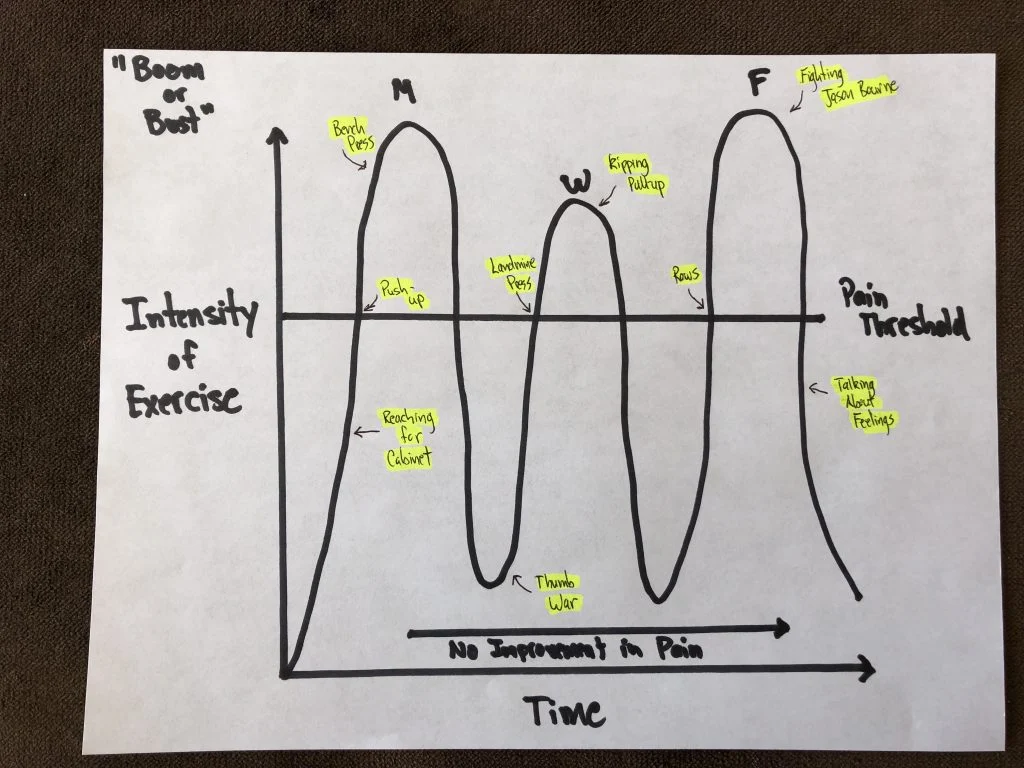
The physical therapy and strength-and-conditioning industries are increasingly focusing on the psychological and physiological patterns that dictate how athletes recover from chronic pain, specifically identifying a detrimental cycle known as the Boom or Bust phenomenon. Developed in part by Dan Pope of Champion Physical Therapy and Performance and popularized by industry veterans like Tony Gentilcore, the Boom or Bust model describes a recurring sequence where individuals oscillate between excessive physical exertion and total inactivity. This pattern often prevents long-term healing by keeping the body’s nervous system in a state of heightened sensitivity. Understanding the mechanics of this cycle, the biological process of mechanotransduction, and the strategic application of controlled discomfort is now considered essential for modern rehabilitative protocols.
The Mechanics of the Boom or Bust Cycle
The Boom or Bust cycle is a behavioral pattern frequently observed in high-achievers and recreational athletes who prioritize immediate performance over long-term structural integrity. The cycle typically begins with an intense training session—the "Boom"—where the individual performs high-volume or high-intensity exercises despite the presence of minor aches. As the session progresses, the accumulation of stress on compromised tissues leads to acute pain.
Following the onset of pain, the individual enters the "Bust" phase. This period is characterized by a complete cessation of activity, often accompanied by frustration and a reliance on passive recovery methods such as icing or complete rest. During this downtime, the acute symptoms subside, leading the individual to believe the injury has fully healed. Consequently, they return to the gym and attempt to resume their previous high-intensity workload, only to re-trigger the injury. This creates a stagnant loop that Dan Pope and other experts argue prevents the tissue from ever building the necessary capacity to handle the required loads.
Chronology of Injury Mismanagement
A typical timeline for an athlete trapped in the Boom or Bust cycle often spans several weeks or months, illustrating the inefficiency of the approach:
- The Catalyst (Day 1): The athlete performs a demanding movement, such as a heavy bench press or high-repetition overhead work. The primary "alarm system" of the body signals discomfort, but it is ignored in favor of completing the workout.
- The Inflammatory Response (Days 2–4): Pain becomes localized and debilitating. The athlete ceases all movement, leading to a temporary reduction in inflammation but also a decrease in tissue tolerance and blood flow to the affected area.
- The False Recovery (Days 5–10): As pain levels drop to near zero during rest, the athlete regains confidence. However, because no strengthening or loading occurred during this time, the tissue remains as weak as it was on Day 1.
- The Relapse (Day 11): The athlete returns to the gym at 100% intensity. Because the threshold for pain has not been systematically increased, the injury recurs almost immediately, often with greater severity.
The Biological Foundation of Healing: Mechanotransduction
To break this cycle, sports medicine professionals advocate for a shift toward "movement as medicine," a concept rooted in the science of mechanotransduction. Mechanotransduction is the process by which the body converts mechanical stimuli into cellular activity. When a tendon, muscle, or ligament is subjected to a controlled load, it triggers a cascade of chemical signals that promote protein synthesis and tissue remodeling.
Research in the field of physical therapy suggests that complete rest is often counterproductive for chronic musculoskeletal issues. Without mechanical loading, the body does not receive the signal to reinforce the structural matrix of the tissue. Therefore, the "Bust" phase of the cycle—while providing temporary symptomatic relief—actually facilitates a decline in the tissue’s functional capacity. By introducing a "smidge" of pain through dosed exercise, practitioners can stimulate the healing process without overtaxing the system.
Quantifying the Pain Threshold
A critical component of modern rehabilitation is the education of the athlete on how to interpret pain. Rather than viewing all pain as a "stop" signal, coaches and therapists utilize a numerical rating scale (NRS) to guide exercise selection.
On a scale of 1 to 10, where 1 represents no pain and 10 represents a catastrophic injury, the "sweet spot" for rehabilitative training is generally considered to be the 2 to 3 range. Training within this narrow margin allows the athlete to:
- Maintain a training effect in non-injured tissues.
- Desensitize the central nervous system to the movement pattern.
- Promote mechanotransduction in the affected area.
- Avoid the "Bust" phase by preventing the pain from reaching a 5 or higher, which would trigger a systemic inflammatory response.
Exercises such as landmine presses, renegade rows, and modified push-up variations are often utilized during this phase. These movements provide the necessary load to the shoulder or back while offering enough stability to keep discomfort within the manageable 2–3 range.
Supporting Data on Overuse and Recovery
Statistical evidence highlights the prevalence of the Boom or Bust mindset in the general fitness population. According to data from the National Health Interview Survey, overuse injuries account for nearly 30% of all visits to sports medicine clinics. Furthermore, studies on "kinesiophobia"—the fear of movement—suggest that athletes who experience the Boom or Bust cycle are more likely to develop long-term chronic pain because they become afraid of any movement that elicits even minor discomfort.
In contrast, a 2022 meta-analysis published in the British Journal of Sports Medicine found that progressive loading protocols resulted in a 40% faster return-to-play rate compared to traditional rest-based protocols for soft tissue injuries. This data underscores the importance of the "Goal Graph" proposed by Gentilcore and Pope, which shows a steady, upward-trending pain threshold achieved through consistent, sub-maximal loading.
Professional Responses and Industry Shift
The fitness industry is currently undergoing a significant shift in how it addresses the "hurt" population. Historically, there was a sharp divide between the clinical world of physical therapy and the performance world of the weight room. Today, that gap is closing through collaborative efforts and professional education.
Dean Somerset, a prominent kinesiologist, and Tony Gentilcore have been at the forefront of this movement, emphasizing that "training is rehab and rehab is training." Their collaborative workshops, such as "The Complete Fit Pro Blueprint," aim to provide personal trainers with the tools to manage clients who are not "injured" enough for surgery but are too "beat up" for traditional high-intensity programs.
Industry experts suggest that the role of the modern fitness professional is evolving into that of a "movement educator." By teaching clients to prioritize common sense over ego and to understand the difference between "good" training discomfort and "bad" injury pain, coaches can prevent the Boom or Bust cycle before it begins.
Broader Impact and Long-term Implications
The implications of adopting a controlled-loading approach extend beyond the individual athlete. For the healthcare system, reducing the frequency of recurring musculoskeletal injuries can lead to a decrease in the reliance on elective surgeries and long-term opioid use for pain management.
Furthermore, as the workforce becomes increasingly sedentary, the prevalence of "soul-hurting" chronic back and neck pain is rising. Applying the principles of mechanotransduction and threshold management to the general population could improve overall public health outcomes. The "Boom or Bust" framework serves as a cautionary tale for any endeavor involving physical adaptation: progress is rarely a straight line, but it must be a continuous one. Total cessation of activity is rarely the answer; instead, the solution lies in the calculated, disciplined application of stress that respects the body’s current ability level while gradually demanding more.
As Gentilcore and Somerset prepare for their upcoming international workshops in Boston and Dublin in 2026, the focus remains on equipping the next generation of fitness professionals with these insights. The goal is a fitness culture where the "face-palm" moments of avoidable injury are replaced by the sustainable, long-term improvement of human performance.

