

For the past eighteen months, a compelling dialogue has unfolded between this publication and David Malinsky, a multifaceted artist whose work encompasses writing, photography, and a profound connection with the natural world. Malinsky has cultivated a particular reverence for the Great Basin Bristlecone Pines (Pinus longaeva), a species he affectionately refers to as "Old Friends in High Places." This article delves into Malinsky’s unique perspective, offering a glimpse into the profound beauty and philosophical insights he derives from his explorations of these ancient and majestic beings. His communications have inspired a deeper appreciation for these arboreal titans, prompting an invitation for interested individuals to join his listserve for further discourse and to share their own reflections by contacting him directly at [email protected].
The Bristlecone Pine: A Living Chronicle of Time
The Great Basin Bristlecone Pine stands as one of the planet’s most ancient and resilient organisms. These remarkable trees, found primarily in the arid, high-altitude regions of the Great Basin in California, Nevada, and Utah, have captured the imagination of scientists and nature enthusiasts alike. Their ability to survive in harsh environments, enduring extreme temperatures, high winds, and nutrient-poor soils, has led to their extraordinary longevity. The oldest known individual, nicknamed "Methuselah," located in the White Mountains of California, is estimated to be over 4,850 years old. Another individual, "Prometheus," was controversially cut down in 1964 for research purposes and was found to be approximately 4,900 years old, providing invaluable dendrochronological data.
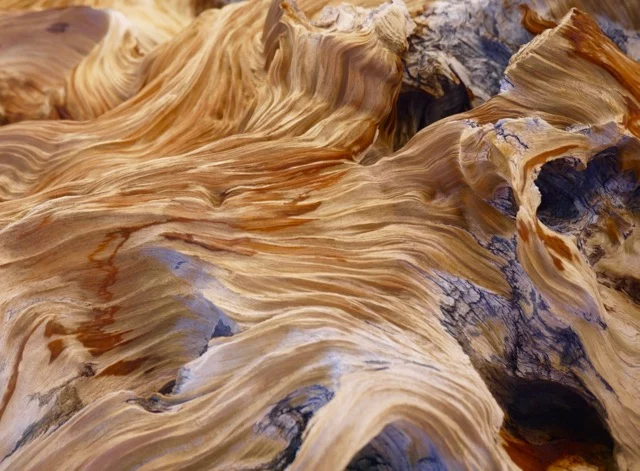
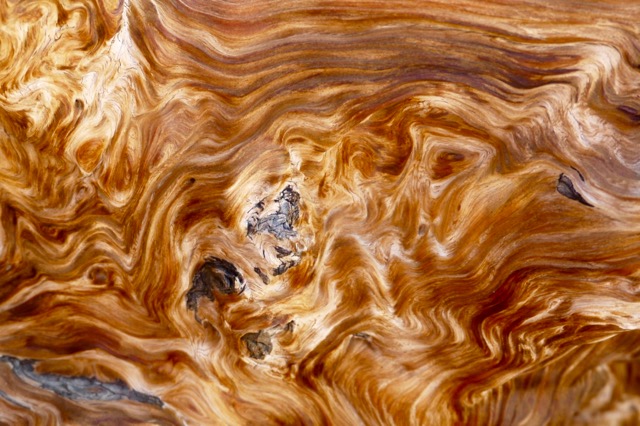
These trees are characterized by their gnarled, twisted forms, often appearing skeletal as they shed large portions of their bark and branches. This unique morphology is a testament to their survival strategies. They grow incredibly slowly, often adding only an inch in circumference over a century, and their wood is exceptionally dense and resinous, providing resistance to insects and decay. Their limited foliage, typically concentrated on the tips of branches, conserves moisture in their challenging habitats.
Malinsky’s Perspective: Embracing the Unknowable
Malinsky’s writings, shared through his correspondence, offer a deeply personal and philosophical engagement with these ancient trees. He moves beyond a purely scientific or aesthetic appreciation, framing his encounters as a journey of self-discovery and a profound meditation on the nature of existence. His reflections, particularly those focused on the pursuit of the "unknowable," resonate with a timeless wisdom.
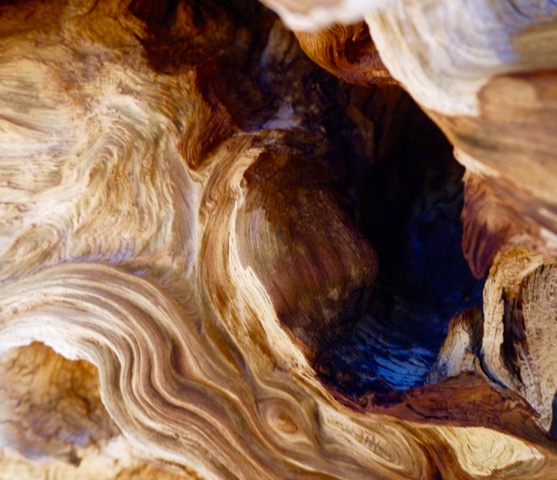
One sequence from his communications, captured in the accompanying photographic evidence, articulates this philosophy: "Daring to take a path towards what may be unknowable can be among the most noble pursuits of the human spirit. Known targets bring tangible opportunities for achievement, but also limitations; even a well-aimed arrow is forced to halt its arc, having reached a bullseye. Allow the arrow to be what it is, a tool for a particular purpose, but after your fingers release the bowstring do not let the confines of the arc define you. It was what you did, but only a small piece of who you are."
This powerful metaphor suggests that fixating solely on predefined goals or outcomes can limit personal growth and the capacity for experiencing the richness of life. Malinsky advocates for embracing the process, the journey itself, rather than being solely defined by the achievement of a specific, measurable target. He emphasizes that even successful endeavors, like hitting a bullseye, represent a conclusion, a point of cessation, whereas the true essence of being lies in continuous exploration and evolution.
The Vastness of Perception: Beyond Confined Sights
Expanding on this theme, Malinsky elaborates on the importance of broadening one’s perspective: "Without narrowing the focus on the bullseye, there can be so much to see, much that will be missed if our sights are too confined. You do not have to reduce all of this to a single place; there is room in your consciousness for all of it, if you allow it in."
This sentiment underscores the idea that a narrow focus, while efficient for achieving specific tasks, can lead to a profound lack of awareness of the broader context and the myriad wonders that exist beyond immediate objectives. Malinsky suggests that the human mind possesses an inherent capacity for encompassing a vast spectrum of experiences and observations. The key, he implies, lies in actively choosing to open oneself to this broader perception, allowing the complexities and nuances of the world, and indeed of one’s own inner landscape, to be experienced without the need for immediate categorization or reduction.
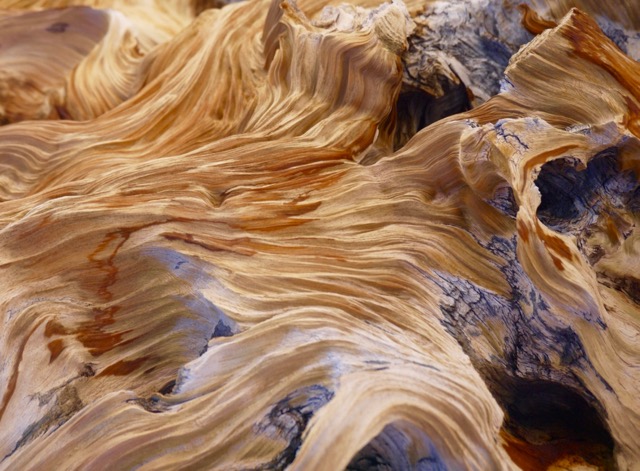
The accompanying images, showcasing the rugged beauty of the Bristlecone Pines in their natural, high-altitude habitat, serve as visual metaphors for this concept. The intricate textures of the bark, the stark silhouettes against the vast sky, and the resilience evident in their forms all speak to a grandeur that transcends simple definition.
The Journey of Self: Merging Person and Place
Malinsky’s reflections then pivot towards the intrinsic connection between personal growth and the exploration of the external world, particularly the natural environment: "It is in taking a path beyond established targets that you begin the journey of yourself, a path whose first steps may appear as though on the way to a ‘Where’, but as you venture will almost magically turn into as much a ‘Who’, person and place becoming one. When you feel something inside of yourself growing with each step, and your developing senses appreciating what surrounds the path even more, then you are on the verge of the most important discovery you can make, and any notions of maps can be discarded. Your path has no end, for both you and Nature are constantly evolving, and it is in that trust of Nature that you can place yourself, and explore the labyrinths ahead filled with the joy of anticipation, instead of trepidation."
This passage articulates a profound ecopsychological perspective, suggesting that the external journey of exploration is inextricably linked to the internal journey of self-discovery. The initial impetus to travel to a particular "Where" evolves into a deeper understanding of one’s own "Who." As one becomes more attuned to their surroundings, the boundaries between the self and the environment begin to blur. This heightened sensory appreciation and the feeling of internal growth signify a fundamental shift in perception, a realization that the most significant discoveries are not found on predetermined maps but within the unfolding experience of being present and evolving alongside nature. The concept of an "endless path" acknowledges the continuous, dynamic relationship between humanity and the natural world, emphasizing trust and anticipation over fear.
Embracing Darkness: The Light Within
The final reflection offered by Malinsky delves into the transformative power of facing perceived "darkness": "Once you develop that trust, both of Nature and of yourself, when you come across what appears to be a darkness you do not fear. That darkness is only a place that is currently without illumination, and should you venture forward with an open spirit, your path may well take you to where it was intended to all along — the place where it is you that are the light."
This powerful statement frames challenges and unknowns not as obstacles to be avoided but as opportunities for growth and self-realization. By cultivating trust in both the external world and one’s own inner resources, one can approach perceived "darkness" with equanimity. Malinsky suggests that such moments are not inherently negative but are simply devoid of understanding or awareness. By approaching these situations with an "open spirit," individuals can navigate them and, in doing so, discover their own inner capacity to illuminate and transform. This journey culminates in the realization that one’s own consciousness and being can be a source of light, dispelling the shadows and revealing the intended path.
Broader Implications and the Future of Bristlecone Appreciation
David Malinsky’s insights, deeply rooted in his photographic and literary explorations of the Great Basin Bristlecone Pines, offer a compelling invitation to re-evaluate our relationship with the natural world and our own inner lives. His emphasis on embracing the unknown, broadening our perception, and trusting the unfolding journey resonates with growing calls for a more integrated and mindful approach to environmental engagement.
The continued scientific study of bristlecone pines, particularly in areas like climate change research and understanding of extreme longevity, is crucial. However, Malinsky’s work highlights the equally vital role of art and philosophy in fostering a deeper, more personal connection with these ancient beings. By sharing his unique perspective, he encourages a dialogue that transcends mere observation, inviting individuals to consider the profound lessons these trees offer about resilience, time, and the interconnectedness of all life.
The establishment of Malinsky’s listserve signifies a commitment to fostering a community of like-minded individuals. This platform promises to be a fertile ground for sharing experiences, insights, and responses, further enriching the understanding and appreciation of these remarkable "Old Friends in High Places." As the world grapples with complex environmental challenges, perspectives like Malinsky’s, which blend scientific fascination with profound personal reflection, offer a path towards a more holistic and ultimately more sustainable relationship with our planet. The enduring majesty of the Bristlecone Pine, captured through Malinsky’s lens and articulated through his words, serves as a potent reminder of the deep wisdom that can be found in the wild, and within ourselves.

