

The serene heart of the Tassajara Zen Mountain Center, a venerable institution nestled deep within California’s Ventana Wilderness, has been irrevocably altered by fire. The zendo, the sacred space where countless individuals have sought solace and clarity through meditation, was consumed by flames, leaving behind a landscape of ash and profound reflection. This devastating event, occurring in the remote and rugged terrain of the Ventana Wilderness, approximately 30 miles southeast of Carmel Valley, has not only destroyed a physical structure but has also ignited conversations about impermanence, resilience, and the enduring spirit of a place deeply intertwined with spiritual practice.
A Sanctuary’s Fiery Ordeal
The blaze, which reportedly erupted in late May 2024, swept through a portion of the Tassajara Zen Mountain Center, a historic site recognized as the first traditional Zen monastery established outside of Asia. While the full extent of the damage is still being assessed, initial reports confirm the complete destruction of the zendo, the central meditation hall. The fire also claimed irreplaceable monastic artifacts, including meditation cushions, monks’ robes, and sacred rakusus—hand-sewn cloths that symbolize lay ordination. Of particular poignancy is the loss of an ancient Gandharan Buddha statue, a rare artifact carved with Hellenistic features in Afghanistan during its time as a Greek garrison. Only its face reportedly survived the inferno, a stark testament to the destructive power of the fire and the fragility of even the most cherished objects.
The Tassajara Zen Mountain Center, established in 1967 by the San Francisco Zen Center under the guidance of Shunryu Suzuki Roshi, has a rich history predating its monastic incarnation. For centuries, its natural hot springs served as a healing refuge for the indigenous Esselen people. Following their violent dispossession in the 19th century, the site transitioned into a commercial resort, attracting Hollywood stars in its early 20th-century heyday, complete with amenities like a bowling alley and a bar. The purchase and transformation of the property into a Zen monastery marked a radical shift, preserving its natural beauty while dedicating it to spiritual practice. The summer months, when Tassajara opens its doors to paying guests, have historically helped fund the austere monastic practice periods held during the fall and winter.
Echoes of Impermanence and the Call to Rebuild
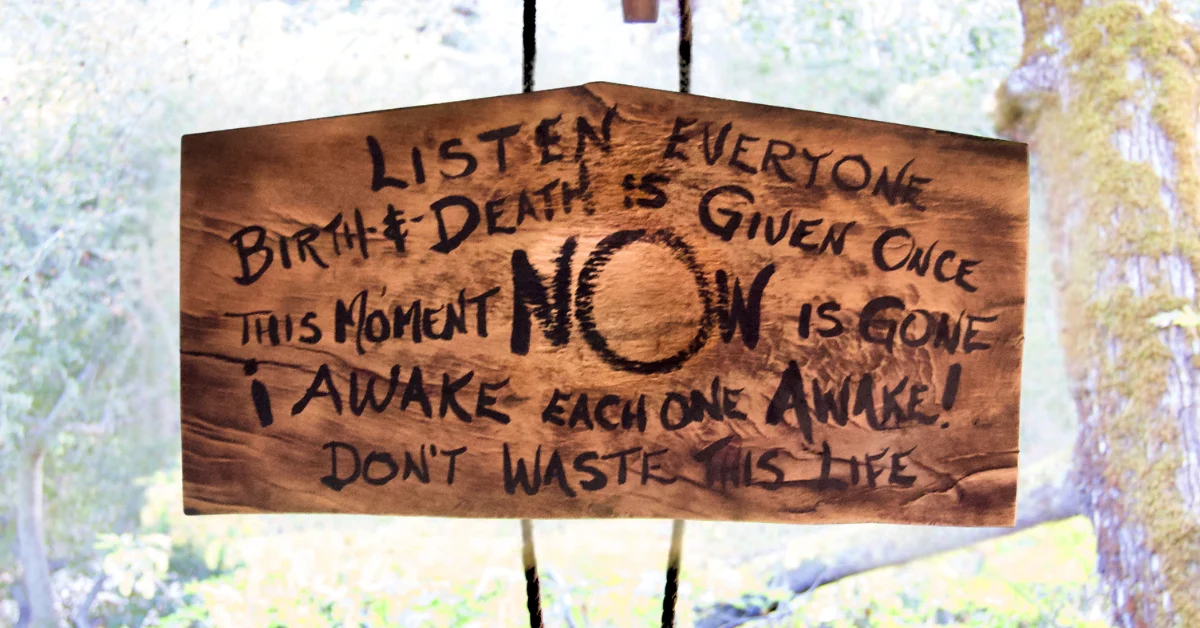
News of the fire spread rapidly through online communities, eliciting a spectrum of responses that reflect the core tenets of Buddhist philosophy. Many former and current monks, as well as visitors who have experienced the transformative power of Tassajara, spoke of impermanence, a fundamental concept in Buddhism emphasizing the transient nature of all phenomena. This philosophical perspective was articulated through quotes from Dogen Zenji, the founder of the Soto Zen school in Japan, whose teachings often address the cycle of birth and death. "Firewood becomes ash, and it does not become firewood again," one widely shared quote stated, highlighting the finality of transformation. "Birth is an expression complete in this moment. Death is an expression complete in this moment."
Yet, alongside this philosophical acceptance of change, a powerful wave of practical action and financial support has emerged. The San Francisco Zen Center has launched an immediate fundraising campaign to aid in the extensive cleanup and reconstruction efforts. The estimated cost of rebuilding is expected to far exceed the coverage provided by insurance, underscoring the community’s commitment to restoring this vital spiritual center. Online platforms have become a hub for former residents and supporters to share memories, express solidarity, and contribute financially to the rebuilding initiative. This collective response demonstrates a profound connection to the physical and spiritual legacy of Tassajara.
A Deeper Understanding of Loss and Renewal
The author’s personal encounter with the loss of the zendo offers a poignant reflection on the nature of grief and acceptance. Initially, the reaction was one of shock and profound sadness—a natural human response to the permanent loss of something deeply treasured. This personal experience is then contextualized through the teachings of Thich Nhat Hanh, the revered Zen master, who viewed impermanence not as an endpoint but as a continuous process of transformation. He famously taught that elements of the past are always present in the present, illustrating how clouds become rain, nourish trees, and are then transformed into paper.

This perspective allows for a re-examination of Tassajara’s history, revealing a pattern of constant change and adaptation. The site has transitioned from indigenous lands to a commercial resort, and then to a spiritual sanctuary. The very foundation of the lost zendo was once a dance hall that burned down nearly a century ago, illustrating the cyclical nature of destruction and creation inherent to the location. Even within the monastic community, significant shifts have occurred. The recitation of lineage names, once exclusively male, was expanded in 2000 to include female spiritual ancestors, reflecting a growing inclusivity and evolution within the tradition.
The author also notes the physical changes within the zendo itself over the decades, from kerosene lamps to solar power, and the passing of key figures involved in its construction, such as Jay Simoneaux and master builder Paul Discoe. The recent reconfiguration of the summer guest season due to the pandemic, shifting towards meditation and yoga-focused workshops, further illustrates Tassajara’s dynamic adaptation to contemporary needs. These examples collectively underscore the idea that Tassajara, despite its apparent solidity and permanence as a spiritual center, has always been a place of ongoing transformation.
The Enduring Resonance of Sacred Space
The destruction of the zendo prompts a deeper contemplation of what constitutes sacredness. The author argues that while physical structures can be imbued with spiritual significance through the shared intention and practice of those who use them, the essence of the sacred resides not solely in the building but within the practitioners themselves. The hours spent in meditation, the chanting, and the shared rituals have imprinted themselves not just on the walls of the zendo but within the very cells of the individuals who participated. This internal transformation is presented as a form of spiritual continuity that fire cannot extinguish.
The author’s personal meditation practice in her home office, complete with a yoga mat, a meditation bench, and a Japanese bell, serves as a tangible example of this internalized sacredness. The juxtaposition of everyday objects—a paper shredder, a laser printer—with a Buddha statue and a bell highlights the author’s understanding that the sacred can be found in the ordinary, a concept rooted in Zen teachings. The practice of taking a "blade of grass" and transforming it into a "sixteen-foot golden Buddha," as described in Dogen Zenji’s Instructions for the Cook, is interpreted as the arduous yet ultimately transformative work of settling the mind, embodying compassion, and engaging in diligent practice. This process, repeated across generations, is what truly creates a sanctuary, both within the individual and within the community.
A Future Forged in Resilience
The Tassajara Zen Mountain Center, situated in a remote valley surrounded by steep granite ridges and dynamic creeks, has always possessed a sense of both solidity and precariousness. Its history is punctuated by narrow escapes from fires, a constant reminder of the wild environment it inhabits. The destruction of the zendo, while a significant loss, is viewed within this broader context of cyclical change and resilience. The summer guest season, though potentially delayed, is planned to proceed, offering a space for renewed practice in a temporary zendo. This commitment to continuity signals the community’s determination to persevere.
The author anticipates returning to Tassajara to refresh her practice, emphasizing the importance of communal support and shared ritual in sustaining spiritual endeavors. The hope is that a rebuilt zendo will, in time, welcome a new generation of practitioners. These future seekers, like those who came before them, may initially be unaware of the profound inner resources they possess—the "diamond sewn in the lining of their pockets," as described in the original text. Through silence, shared ritual, and dedicated practice, they will, in turn, build their own sanctuaries within their bodies, rendering any place they inhabit holy. The fire at Tassajara, therefore, while a moment of profound loss, also serves as a powerful catalyst for reaffirming the enduring principles of resilience, transformation, and the ever-present potential for renewal. The spirit of Tassajara, forged over decades of practice and imbued with the aspirations of countless individuals, will undoubtedly endure, finding new forms of expression in the ashes of the old.

