

The landscape of the professional fitness industry is often divided between high-performance boutique facilities and large-scale commercial health clubs. For Tony Gentilcore, a strength coach with over 20 years of experience and a co-founder of the renowned Cressey Sports Performance, the distinction has long been more than professional—it was personal. However, in a move that has sparked discussion regarding the psychological and physical needs of long-term fitness professionals, Gentilcore recently announced his return to a commercial gym environment. This decision marks the end of a 25-year period during which he trained exclusively in private, high-performance, or self-owned facilities, highlighting a growing trend among industry veterans seeking to mitigate burnout and diversify their training modalities.
The Professional Trajectory: A Three-Decade Chronology
The transition back to a commercial gym serves as a bookend to a career that began in the early 1990s. To understand the significance of this shift, one must examine the chronological progression of Gentilcore’s training environments, which mirrors the broader evolution of the American fitness scene.
In 1990, Gentilcore began his journey in a home-based setting, utilizing a standard plastic-coated cement weight set common to the era. This period represented the "basement era" of fitness, where enthusiasts relied on rudimentary equipment and instructional posters before the advent of the internet. By the mid-1990s, his training transitioned to a high school weight room—a facility described as a "dungeon" characterized by "universal gyms" and aging iron plates. These environments, while limited in technology, fostered the foundational strength and work ethic prevalent in the pre-digital fitness culture.
A pivotal moment occurred in 1996 when a commercial gym opened in Gentilcore’s rural hometown. This facility introduced him to the "bells and whistles" of the commercial sector, such as specialized machines and a diverse range of equipment. However, this phase was short-lived as his professional aspirations took root.
Upon entering the fitness profession in 2002, Gentilcore’s training became inextricably linked to his workplace. For five years, he operated within a variety of commercial and private gyms where he was employed. A notable exception occurred during a year-long stint training at South Side Barbell in Stratford, Connecticut—a specialized powerlifting gym. This period was instrumental in shaping his philosophy toward heavy resistance training and high-performance standards.

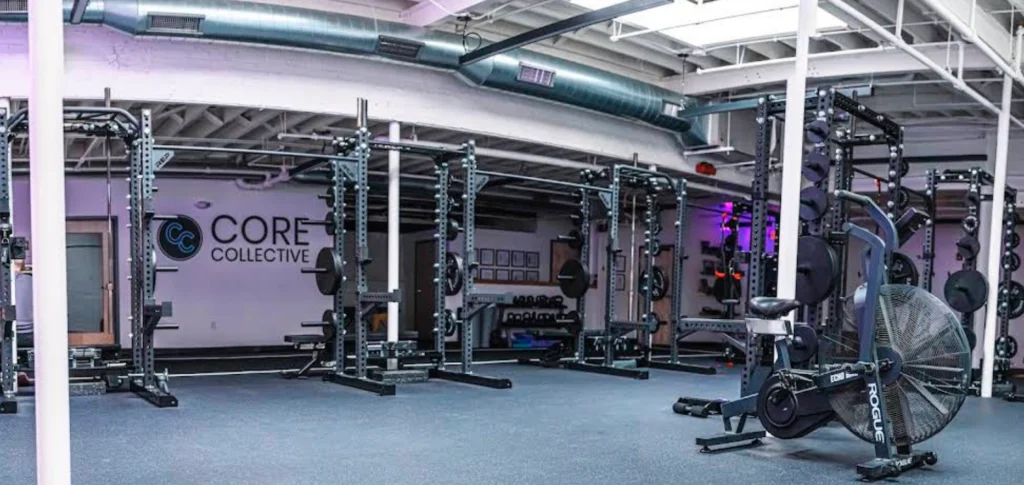
In 2007, the trajectory of Gentilcore’s career shifted toward the "boutique" and "specialized" sector with the founding of Cressey Sports Performance (CSP). For over a decade, he existed within what he describes as a "strength and conditioning bubble." In these environments, the culture is defined by high-level athletic performance, full-range-of-motion pull-ups, and a normalization of elite-level lifts, such as 400-plus pound deadlifts. Following his tenure at CSP, he transitioned to his current facility, Core Collective in Brookline, Massachusetts. Despite owning and operating a high-end space, the recent decision to pay for a membership at a local commercial gym represents a strategic pivot in both his mental approach to training and his physical methodology.
The Divergence of Boutique and Commercial Facilities
The decision to re-enter a commercial gym highlights a fundamental divergence in the fitness industry: the gap between "functional" strength facilities and "big-box" commercial clubs.
Boutique facilities, like Core Collective or CSP, are typically characterized by:
- Specialized Equipment: Power racks, specialty barbells (safety squat bars, trap bars), and open floor space for sled work.
- Performance Culture: A high concentration of athletes and serious lifters, often leading to an environment of intense social pressure and high expectations.
- Limited Machine Variety: A focus on free weights and compound movements, often at the expense of isolation machines like leg presses or pec decks.
Conversely, commercial gyms offer a vast array of selectorized machines and pneumatic equipment. While the "hardcore" lifting community often disparages these machines as less "functional," modern exercise science has reaffirmed their value for hypertrophy (muscle growth) and injury rehabilitation. By rejoining a commercial gym, Gentilcore gains access to Hammer Strength machines, functional trainers, and leg presses—tools that are often absent in minimalist strength boutiques but are highly effective for targeted muscular development.
Psychological Implications: The Separation of Work and Training
One of the primary drivers behind this transition is the psychological concept of "separation of church and state." For fitness professionals who own or manage their own facilities, the gym floor is a workplace. Every moment spent in the facility involves potential client interactions, equipment maintenance checks, or business management concerns.
Industry data suggests that "occupational burnout" is a significant risk for fitness trainers. According to reports from the International Health, Racquet & Sportsclub Association (IHRSA), the high emotional labor required in personal training can lead to a decline in the trainer’s own fitness motivation. By moving his personal training to a neutral "third space," Gentilcore is effectively implementing a boundary between his professional identity and his personal health goals.

The "monotony and boredom" Gentilcore cited as a reason for the change is a recognized phenomenon in sports psychology. Environmental change can provide a "novelty effect," which stimulates the central nervous system and can lead to renewed progress in training. For a coach who has spent 25 years in high-performance bubbles, the "silent camaraderie" and even the "perplexed looks" of a general population gym provide a fresh social context that removes the pressure of being the "expert" in the room.
Supporting Data: The Rise of Hybrid Training Models
Gentilcore’s move reflects a broader trend in the $30 billion American fitness industry. While boutique fitness saw a massive surge in the 2010s, post-pandemic data shows a resurgence in commercial gym memberships. Many consumers and professionals are adopting a "hybrid" approach—using specialized studios for coaching while maintaining low-cost commercial memberships for access to a wider variety of equipment.
According to the 2023 IHRSA Global Report, the "Big Box" gym segment saw a 15% increase in foot traffic compared to 2019 levels. This is partly due to the "value-added" proposition of diverse equipment. For a strength coach, the ability to utilize a leg press or a cable crossover machine allows for "joint-friendly" volume that is harder to achieve with purely barbell-based training. This is particularly relevant for aging trainees who must balance high-intensity lifting with recovery and joint health.
Implications for the Fitness Community
The implications of a high-profile coach joining a commercial gym extend to how training success is defined. It signals a move away from the "elitism" sometimes found in the strength and conditioning world.
- Validation of Machines: Gentilcore’s enthusiasm for the "pec deck" and "leg press" serves as a professional endorsement of machine-based training. This helps bridge the gap between "functional" training and traditional bodybuilding, suggesting that a holistic approach is superior to a dogmatic adherence to one style.
- Professional Vulnerability: By admitting that training in his own world-class facility had become "boring," Gentilcore normalizes the struggle with motivation that even experts face. This transparency can be beneficial for clients who feel guilty about their own lulls in enthusiasm.
- The "Observer" Benefit: For a fitness writer and coach, being immersed in a commercial gym provides a wealth of observational data. It allows a professional to see the common struggles, mistakes, and trends of the general public, which can inform better coaching cues and content creation.
Conclusion: A Strategic Evolution
Tony Gentilcore’s decision to join a neighborhood commercial gym after two decades of professional isolation is more than a personal anecdote; it is a strategic response to the realities of long-term career sustainability in the fitness industry. By seeking a change of scenery, diversifying his equipment access, and establishing a firm boundary between work and personal training, he is addressing the multifaceted nature of health—encompassing physical variety, mental clarity, and professional longevity.
As the fitness industry continues to evolve, the distinction between "hardcore" and "commercial" may continue to blur. Professionals like Gentilcore are demonstrating that the "best" gym is not necessarily the one with the most expensive specialty bars, but the one that provides the necessary mental and physical stimulus to keep an individual engaged for the long haul. His return to the commercial floor, "peacocking" and all, underscores a fundamental truth in exercise science: the most effective program is the one that is consistently executed in an environment that fosters focus and renewal.

