

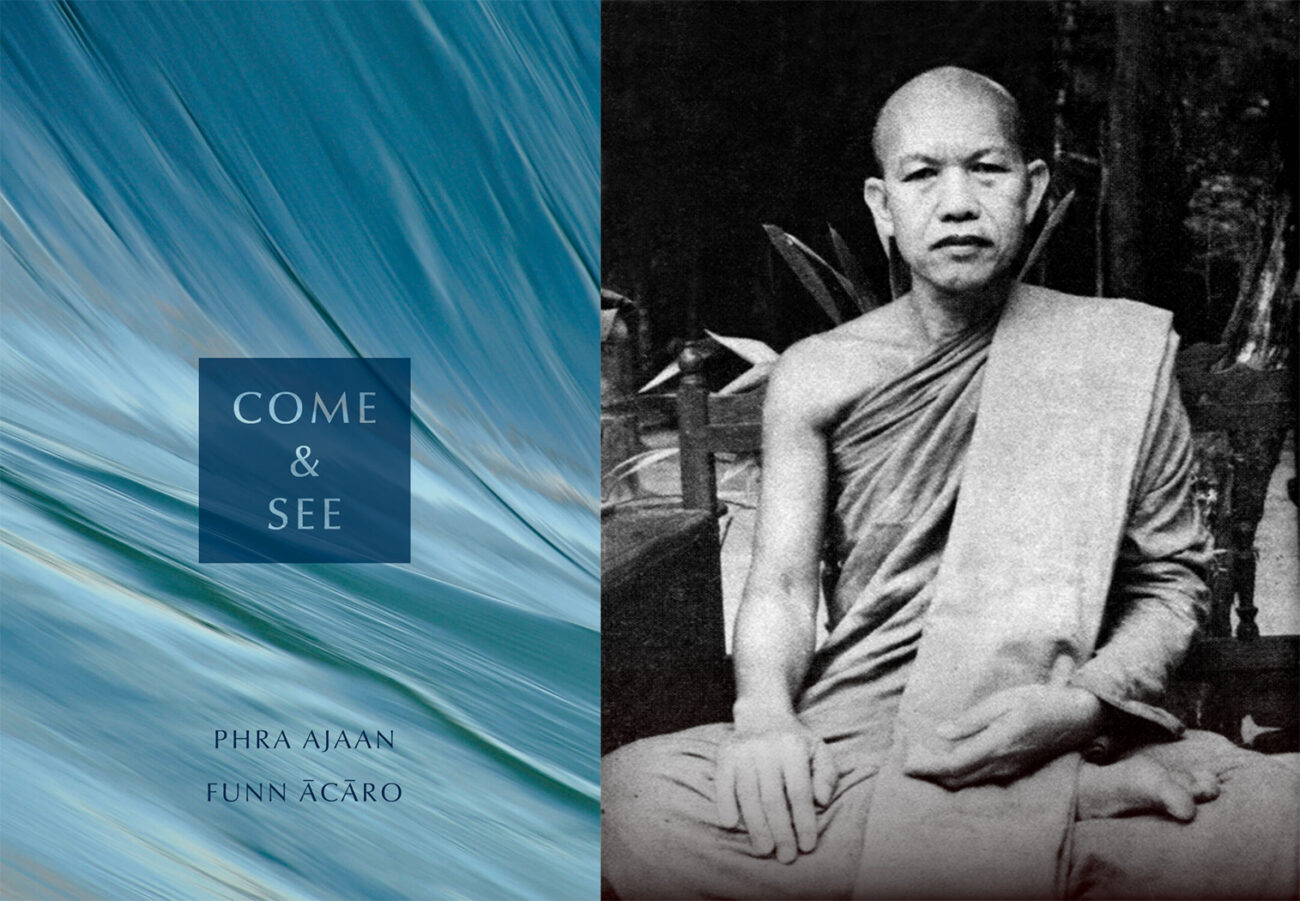
The essence of true monastic life lies not in external trappings or accumulated knowledge, but in a profound understanding of the Four Noble Truths, according to insights shared from a dhamma talk by Ajaan Funn Acaro. This perspective, originally delivered at Wat Tham Khaam in Sakon Nakhorn, Thailand, on June 15, 1972, and later translated by Thanissaro Bhikkhu, offers a deep dive into the Buddhist understanding of suffering and the path to its cessation. The teachings emphasize that until these fundamental truths are apprehended, any intellectual grasp of Buddhist doctrine remains mere "book-knowledge," devoid of transformative power.
Understanding Suffering: The Core of the First Noble Truth
The cornerstone of the Buddhist path, as articulated by Ajaan Funn Acaro, is the direct confrontation with suffering, or dukkha. This is not a peripheral aspect of existence, but its very fabric. The first Noble Truth, dukkha ariya saccan, posits that suffering is inherent in all conditioned phenomena. This encompasses the unavoidable realities of life: birth, aging, illness, and death.
"Birth is suffering," the teachings state, detailing the pain of emerging into existence and the subsequent decline into decrepitude. Aging is described as another "heap of suffering," leading to a compounding of afflictions. Illness is presented as a third, and death as a fourth, culminating in an inescapable conclusion to one’s earthly sojourn. These are not abstract concepts but visceral experiences that individuals encounter universally, irrespective of social standing, ethnicity, or personal circumstances. The Buddha’s teachings highlight that the physical body itself is a vessel for these inevitable pains.
The discourse challenges the common human tendency to seek solace in external pursuits such as status, wealth, or material possessions. These, the teachings suggest, are ultimately futile attempts to escape suffering, akin to "looking for suffering" by building homes and mansions. The Buddha, in contrast, is presented as one who "let go" because he recognized that such attachments lead to "enormous sufferings, sufferings beyond measure."
The Illusory Nature of the Self and the Pervasiveness of Illness
A significant aspect of the teachings delves into the pervasive nature of illness, extending beyond conventional medical understanding. The body, from the soles of the feet to the crown of the head, is seen as inherently prone to malfunction and disease. This perspective extends to every part of the anatomy: eyes, ears, nose, tongue, heart, hands, feet, hair, nails, teeth, skin, muscles, tendons, bones, and bone marrow. Each is susceptible to ailments, underscoring the fragility of the physical form.
The discourse posits that these illnesses are not merely external invasions but are intrinsic to our being. The common attribution of illness to external factors is contrasted with the Buddha’s teaching that "illnesses that already fill the body down to every pore." This inherent vulnerability is a constant reminder of the impermanent and unsatisfactory nature of existence. The body, therefore, is not a stable entity to be controlled, but a dynamic process tending towards decay and suffering.
The Path to Liberation: Virtue, Concentration, and Discernment
The Buddha’s path to liberation from this pervasive suffering is outlined through the cultivation of virtue (sila), concentration (samadhi), and discernment (panna). These three pillars form the foundation for understanding and realizing the Four Noble Truths.
Virtue (Sila): Observing ethical precepts is presented as the creation of an environment free from animosity and danger. Through composed thoughts, words, and deeds, individuals avoid causing harm, thereby mitigating the creation of negative karma and its attendant suffering. The absence of virtue, conversely, leads to entanglement in dangerous situations, a reflection of the suffering observed in the world.
Concentration (Samadhi): This involves the development of a mind that is firmly established, constant, and upright. A concentrated mind is one that does not waver in response to the vicissitudes of the world (loka-dhamma). It is a state of mental stability that allows for deeper insight. The teachings emphasize that true concentration is a prerequisite for profound understanding, anchoring the mind amidst the flux of experience.
Discernment (Panna): This is characterized by all-around knowledge of the affairs of fabrication (sankhara). It is the wisdom that understands the nature of conditioned existence, the causes of becoming, and the cycle of rebirth. Discernment reveals how our actions (kamma), animosity, and attachment lead to continued suffering. It is the faculty that allows us to see through the delusion of self and the inherent impermanence of all phenomena.
The Nature of Mara and the Illusion of "Mine"
The teachings introduce the concept of Mara, often understood as the personification of temptation, delusion, and death. However, Ajaan Funn Acaro expands this understanding to encompass the "Maras of the aggregates," which are the five components of existence: form, feelings, perceptions, mental formations, and consciousness. These aggregates, which constitute our sense of self, are presented not as external evils but as the very fabric of our conditioned experience.
The pervasive sense of "mine" – "This is mine, that is mine, this property’s mine, this money, these possessions are mine…" – is identified as a primary source of suffering. This attachment extends to our physical body and its faculties, which we mistakenly believe to be under our absolute control. The discourse challenges this by pointing out that even our eyes, ears, and body are subject to decay and malfunction, proving they are not truly "ours" in an enduring sense.
The Buddha’s teachings on the aggregates of existence highlight their impermanent nature. Form is inconstant, feelings are inconstant, perceptions are inconstant, fabrications are inconstant, and consciousness is inconstant. Recognizing this impermanence leads to the understanding that these phenomena are "not-self" (anatta). This realization is crucial for detaching from the illusion of a permanent, independent self, which is the root of much suffering.
The Journey Within: Meditation and the Realization of Unbinding
The practical application of these teachings lies in contemplative practice, particularly meditation. The discourse encourages individuals to "sit and meditate to watch them," applying what has been heard to their inner experience. This involves observing the mind and body without judgment, allowing for direct realization of the impermanent and unsatisfactory nature of existence.
The text describes the body, when devoid of consciousness, as akin to "a piece of kindling wood," devoid of substance or essence. This stark imagery underscores the impermanence of life and the ultimate emptiness of the physical form without the animating force of consciousness. However, consciousness itself is not static; it exists on various levels, from the sensual realm to higher realms of form and formlessness.
The ultimate goal of this practice is the realization of nibbana (nirvana), the cessation of suffering. This state of unbinding is not a distant, unattainable destination but is to be found "right here, too." It is achieved by seeing that all levels of becoming are inconstant and by relinquishing attachments.
Implications and Broader Context
The teachings of Ajaan Funn Acaro, rooted in the Theravada tradition, offer a timeless perspective on the human condition. In a world often characterized by relentless pursuit of material gain and fleeting pleasures, this message serves as a potent reminder of the deeper truths of existence. The emphasis on self-reliance in spiritual practice, encouraging individuals to "know and see for yourselves," aligns with the core principles of Buddhist inquiry.
The original talk, delivered in 1972, reflects a continuous lineage of Buddhist teachings aimed at alleviating suffering. The translation and dissemination of such teachings by scholars like Thanissaro Bhikkhu play a vital role in making these profound insights accessible to a global audience. The enduring relevance of these concepts underscores the universality of the human experience of suffering and the enduring appeal of a path towards liberation.
The analytical framework provided by the Four Noble Truths, coupled with the practical guidance on virtue, concentration, and discernment, offers a comprehensive approach to understanding and transforming one’s experience of life. By shifting focus from external acquisitions to internal realization, individuals can begin to disentangle themselves from the cycle of suffering and move towards a state of greater peace and understanding. The call to "contemplate these things, to separate them out and make our choice" is an invitation to actively engage with these profound teachings, rather than passively accepting them. This active engagement, the teachings suggest, is the key to unlocking true liberation.

