

The intersection of Hollywood preparation and professional strength conditioning recently gained significant public attention following a social media disclosure by Academy Award-nominated actress Rosamund Pike. While filming in Boston, Pike collaborated with renowned strength and conditioning coach Tony Gentilcore to develop a physical regimen tailored to her role as Marla Grayson in the critically acclaimed film I Care a Lot. The partnership culminated in a widely circulated video showcasing Pike performing a 100-pound deadlift for multiple repetitions, a feat that has sparked a broader discourse regarding the representation of female strength in mainstream media and the physiological benefits of resistance training for women.
The Intersection of Cinema and Physical Conditioning
The collaboration between Pike and Gentilcore underscores a growing trend in the film industry where actors seek specialized athletic training to embody the psychological and physical traits of their characters. In I Care a Lot, Pike portrays a predatory legal guardian, a character she described as a "lioness." To project the necessary presence and resilience for the role, Pike engaged in a rigorous lifting program that prioritized functional power over aesthetic minimalism.
Gentilcore, a veteran in the fitness industry known for his evidence-based approach to coaching, noted that Pike arrived with a foundation of weight room experience. However, the focus of their sessions was to push past previous plateaus. The achievement of a 100-pound deadlift—a milestone in functional strength—served as a tangible metric for the actress’s preparation. This specific exercise, which engages the posterior chain, core, and grip strength, is often cited by kinesiologists as a fundamental movement for developing total-body power.
Chronology of the Training Engagement and Public Release
The training sessions took place during the production cycle of Pike’s recent projects in the Massachusetts area. While celebrity fitness routines are often shrouded in secrecy or marketed through highly stylized montages, the footage released by Pike offered an unvarnished look at the effort required to maintain high-level physical performance.
- Initial Assessment: Pike began working with Gentilcore to align her physical capabilities with the demands of her character’s persona.
- Instructional Phase: Focus was placed on technical proficiency, specifically regarding the deadlift, to ensure safety and maximum force production.
- The Milestone: Pike successfully executed multiple reps of a 100-pound deadlift, documenting the progress as a testament to her character’s "lioness" mentality.
- Public Advocacy: In early 2021, Pike shared the footage on Instagram, explicitly thanking Gentilcore for challenging her to find "more [strength] than I knew I had."
The reaction from the fitness community was immediate, with professionals praising the transparency of the weight used and the dismissal of the "light weights for toning" trope that has historically dominated female-centric fitness marketing.
Supporting Data: The Physiological Imperative for Resistance Training
The advocacy for women lifting "appreciable weight," as highlighted by Gentilcore, is supported by a vast body of clinical research. Despite the historical marginalization of women in weight rooms, current medical data emphasizes that high-intensity resistance training is a critical component of long-term health.
Bone Mineral Density and Osteoporosis Prevention
According to the National Osteoporosis Foundation, women are at a significantly higher risk for bone density loss than men. Weight-bearing exercises, particularly compound movements like the deadlift and squat, place mechanical stress on the bone, which stimulates osteoblast activity. Clinical studies have shown that lifting weights at 70–85% of one’s one-rep maximum (1RM) is far more effective at increasing bone mineral density than low-intensity aerobic activity or lifting very light weights.
Metabolic Health and Lean Muscle Mass
Data from the Centers for Disease Control and Prevention (CDC) indicates that only about 20% of women meet the federal guidelines for both aerobic and muscle-strengthening activities. Resistance training increases the basal metabolic rate (BMR) by building lean muscle tissue, which is more metabolically active than adipose tissue. This is a crucial factor in managing long-term metabolic health and preventing Type 2 diabetes.
The Myth of Hypertrophy
One of the primary barriers to female participation in heavy lifting is the "bulkiness" myth—the fear that lifting heavy weights will lead to excessive muscle hypertrophy. However, physiological data confirms that women typically have 15 to 20 times less testosterone than men, making significant muscle bulk difficult to achieve without specific, high-volume caloric surpluses and targeted supplementation. The strength gains seen in athletes like Pike are primarily the result of neurological adaptations—the brain becoming more efficient at recruiting existing muscle fibers.
Analysis of Media Representation and "Strong" as a Sentiment
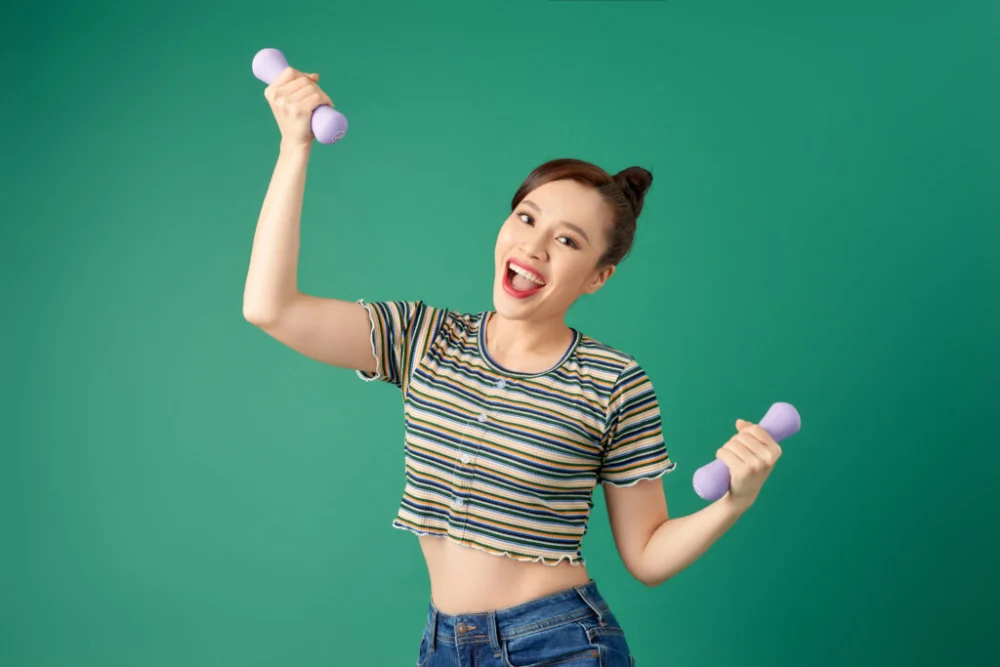
A significant portion of the discourse surrounding Pike’s training involves the critique of how "strength" is marketed to women. Gentilcore pointed out that stock photography and mainstream fitness advertisements often depict women using light, plastic-coated dumbbells, even when the accompanying text discusses "strength."
This discrepancy creates a psychological barrier, suggesting that barbells and heavy plates are the exclusive domain of male athletes. The "dainty weight" narrative reinforces a gendered divide in the gym that is not supported by biological necessity. Professional trainers argue that programming should be based on individual goals, injury history, and ability levels rather than chromosomal makeup.
By sharing her 100-pound deadlift, Pike contributed to a shift in the cultural zeitgeist. The message conveyed is that "strong" is not a fixed aesthetic but a "sentiment"—a subjective feeling of capability and empowerment that transcends the numbers on the plates.
Official Responses and Industry Impact
The fitness industry has seen a marked increase in the number of women participating in powerlifting and CrossFit over the last decade. Professional organizations, such as the National Strength and Conditioning Association (NSCA), have updated their position stands to further encourage heavy resistance training for female populations across all age groups.
Industry experts suggest that when high-profile figures like Pike showcase genuine effort and substantial weight, it validates the efforts of non-professional athletes. It moves the conversation away from "weight loss" and toward "performance gains." Gentilcore’s assertion—that he does not alter his fundamental programming philosophy based on gender—reflects a modernizing trend in coaching where the focus is on human movement potential rather than traditional gender roles.
Broader Implications and Future Outlook
The long-term implications of this shift in the fitness narrative are multifaceted. As more women engage in heavy resistance training, the public health sector may see a reduction in the incidence of frailty and fall-related injuries among aging populations. Furthermore, the psychological impact of physical strength—often referred to as "self-efficacy"—has been linked to improved mental health outcomes and increased confidence in professional and personal spheres.
The narrative provided by the Pike-Gentilcore collaboration serves as a case study in the power of professional advocacy. It highlights a departure from the superficiality of "celebrity workouts" toward a more substantive, results-oriented approach to health.
In conclusion, the definition of what it means to be "strong" is undergoing a significant transformation. It is no longer confined to the capacity for taco consumption or the aesthetics of a magazine cover. Instead, as demonstrated by the 100-pound deadlifts of modern "lionesses," strength is being redefined as a measurable, attainable, and essential component of the female experience. The move toward inclusive, high-intensity training protocols represents a maturation of the fitness industry, ensuring that the benefits of the weight room are accessible to all, regardless of the presence of a Y chromosome. This cultural and physiological evolution promises a future where the image of a "strong woman" is synonymous with the clink of iron and the mastery of the barbell.

