

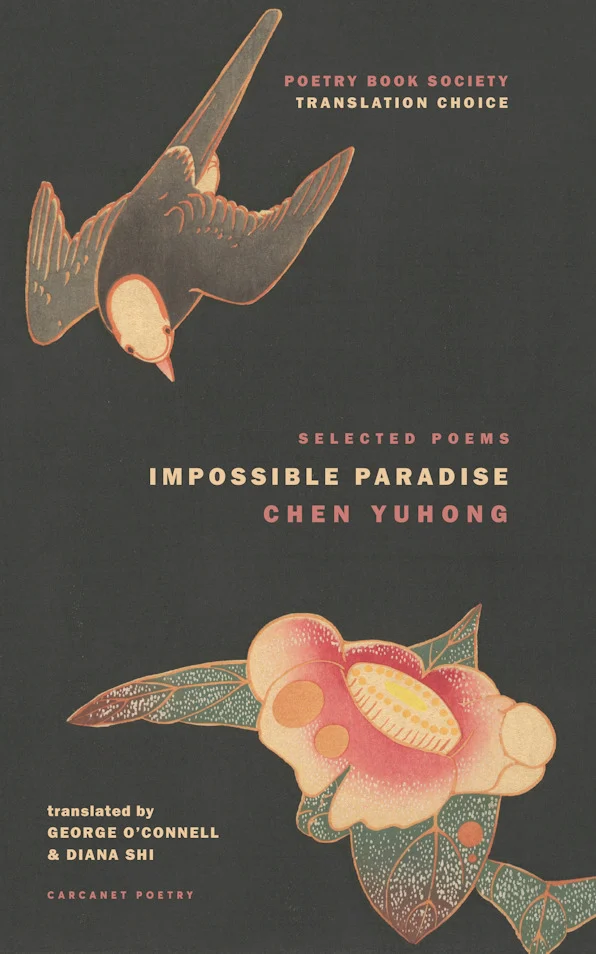
The long-awaited English translation of Taiwanese poet Chen Yuhong’s work, Impossible Paradise, has finally arrived, offering a substantial collection that spans nearly three decades of her distinguished career. Published by Carcanet Press and meticulously translated by George O’Connell and Diana Shi, this volume marks a significant milestone, making Chen’s evocative poetry accessible to an international English-speaking readership for the first time. While her work has previously been translated into languages such as Japanese, French, Dutch, and Swedish, its absence in English has been a notable gap in the global literary landscape, a gap now powerfully filled.
Chen Yuhong stands as one of contemporary Taiwan’s most celebrated poets, a figure whose oeuvre is deeply interwoven with the threads of philosophical inquiry, cultural heritage, and the very act of linguistic translation. Her approach to poetry is not merely an output of personal experience but a dynamic engagement with the transformative power of language itself. This profound connection is evident in her dual role as both poet and translator. Chen has not only seen her own verses rendered into multiple tongues but has also undertaken the challenging task of translating into Chinese the works of eminent international poets, including Nobel laureate Louise Glück, contemporary literary luminaries Anne Carson and Sappho, and the influential Buddhist monk Matthieu Ricard.
In an illuminating conversation with Poetry Nation Review, Chen articulated her fundamental understanding of the translator’s role, describing it as a delicate mediation between languages and cultures. “As a translator, I mediate between two languages and cultures, trying to carry across the voice I hear in the host language to the target language,” she explained. This act of translation, for Chen, directly informs her own poetic creation. She views her role as a poet as akin to that of the Pythia, the oracle at Delphi, channeling an inner voice, an inspiration, into tangible form. “As a poet, I feel the impulse to write, to channel that voice that I hear inside, inspiration you may call it, faithfully into the present, like Pythia repeating Apollo’s words. I translate, I create, and I re-create,” she stated. This cyclical process of translation and creation underscores her belief that language is not static but a living conduit for meaning and expression.
The thematic landscape of Chen Yuhong’s poetry is rich and multifaceted, drawing heavily from the wellsprings of classical Chinese literature and Eastern philosophical traditions. She finds particular resonance in the works of Tang Dynasty master Li Bai and the Song Dynasty poet Li Qingzhao, poets whose lyrical depth and profound observations of nature and human emotion have inspired generations. Furthermore, Buddhist and Daoist sutras form a crucial bedrock for her contemplative verses. Raised Catholic, Chen’s spiritual journey led her to explore Buddhist texts in her quest to grapple with profound existential questions, particularly those surrounding death and reincarnation.
“They offered me a different way to look at the world, teaching me the impermanence of life and sunyata, or emptiness,” Chen remarked, referring to the Buddhist concept of emptiness, a key tenet that underscores the absence of inherent, independent existence in all phenomena. Yet, despite this philosophical exploration, she embraces the inherent ambiguity of existence, acknowledging that many of life’s most profound questions remain unanswered. Her wry observation, “Will I ever have an answer to all my questions about life and death? Perhaps not,” encapsulates a core tenet of her poetic sensibility: an acceptance of the unknowable and a willingness to dwell in the space of inquiry.
This embrace of paradox and unresolved questions is a defining characteristic of Chen’s poetry. Her verses often resist definitive pronouncements, instead creating a liminal space where contradictions coexist and ambiguities flourish. This is vividly illustrated in her poem "Erasure," which reflects on the destruction of the colossal Buddhas of Bamiyan in Afghanistan. The poem confronts the act of annihilation with a stark portrayal of resilience, observing that even amidst rubble and brokenness, life persists and the essence of what was can be reinterpreted. The imagery of Buddha living “amid rubble, amid the broken, / amid the colossal task” speaks to the enduring spirit and the capacity for meaning to emerge from devastation.
Thematic Depth and Philosophical Underpinnings
Impossible Paradise offers readers a comprehensive immersion into Chen Yuhong’s distinct poetic voice. The collection delves into themes of impermanence, the nature of consciousness, the interconnectedness of all things, and the profound beauty found in both the mundane and the sublime. Her engagement with Buddhist philosophy, particularly the concept of sunyata (emptiness), is not presented as a doctrine but as a lived experience, a lens through which to perceive reality. This philosophical grounding provides a framework for understanding her often-meditative and introspective style.
The poems explore the delicate balance between existence and non-existence, the fleeting nature of time, and the search for meaning in a transient world. Chen’s ability to juxtapose profound philosophical concepts with vivid, sensory imagery allows her poetry to resonate on multiple levels. She navigates the complexities of life and death, suffering and enlightenment, with a nuanced perspective that avoids dogma and embraces the inherent mystery of the human condition.
A Dialogue with Tradition: Classical Influences and Contemporary Relevance
Chen Yuhong’s poetry is a testament to the enduring power of literary tradition. Her deep appreciation for classical Chinese poets like Li Bai and Li Qingzhao is not an act of imitation but a form of dialogue. She draws inspiration from their mastery of language, their keen observation of the natural world, and their exploration of human emotions, reinterpreting these ancient voices through a contemporary sensibility. This engagement with the past allows her to imbue her modern verses with a timeless quality, connecting the reader to a rich cultural heritage.
Her exploration of Buddhist and Daoist texts further enriches this dialogue. The emphasis on mindfulness, detachment, and the interconnectedness of all beings, central to these traditions, finds expression in her poetry’s quiet contemplation and its acceptance of life’s inherent uncertainties. This fusion of classical literary influences and Eastern philosophical thought creates a unique and compelling poetic voice that is both rooted in tradition and strikingly contemporary.
"Erasure": Confronting Destruction and Resilience
The poem "Erasure" stands as a powerful testament to Chen Yuhong’s engagement with historical events and their profound human implications. The poem directly addresses the Taliban’s destruction of the 6th-century Buddhas of Bamiyan in March 2001. The act of meticulously carving these immense statues into the cliff face over decades, only to have them systematically destroyed with explosives, is depicted with a chilling starkness. Chen focuses on the deliberate intent to obliterate not just stone but also the symbolic meaning and historical continuity embodied by the statues.
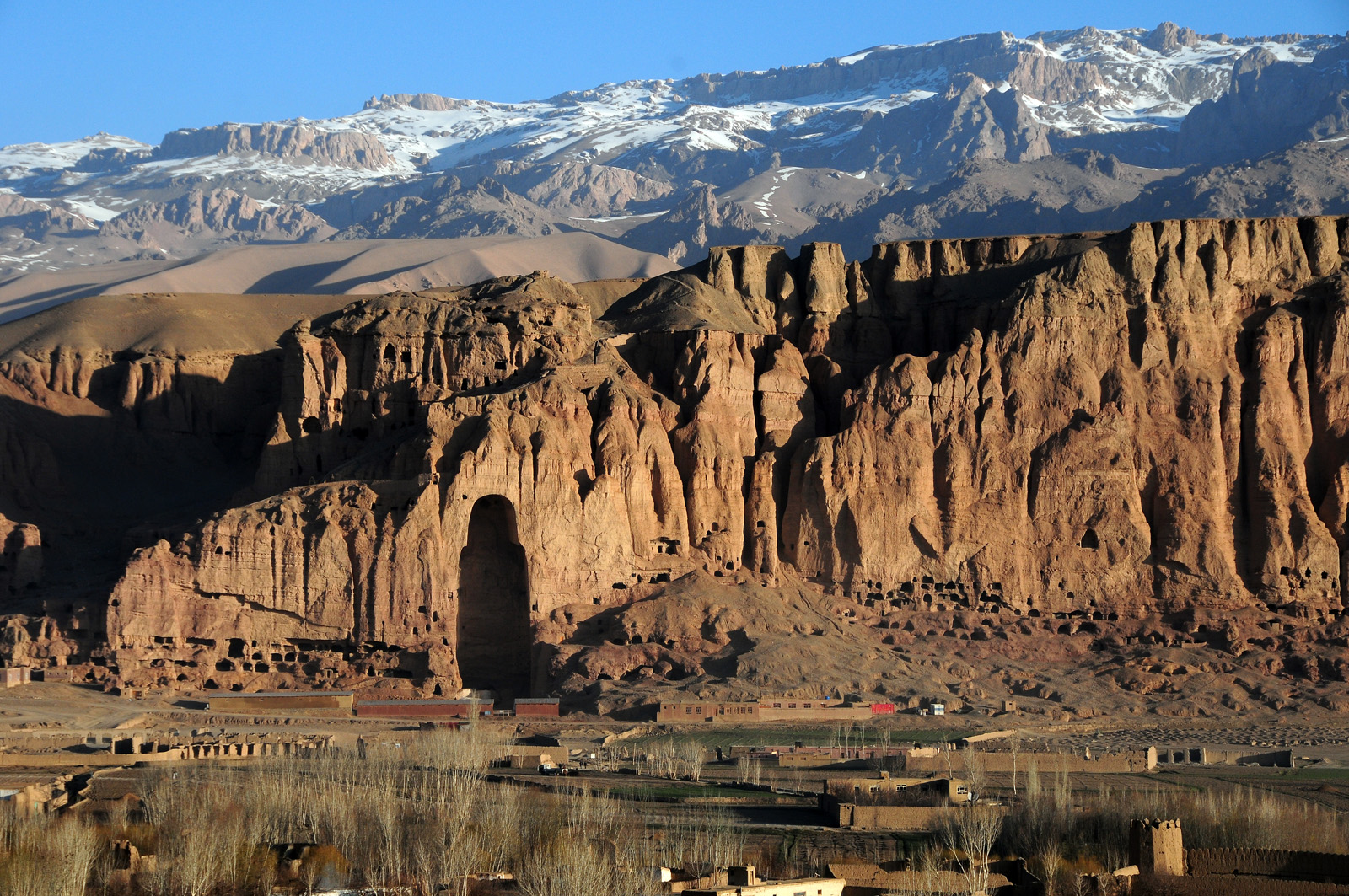
The poem contrasts the destructive act with the quiet persistence of life. The image of residents continuing their farming and two white doves landing in an empty niche speaks to an enduring, almost paradoxical, sense of normalcy and renewal. The phrase “the bodhisattva’s mind ethereal space / where everything’s relinquished” suggests a spiritual transcendence that remains untouched by physical destruction. The concluding lines, “Buddha lives amid rubble, amid the broken, / amid the colossal task,” encapsulate a profound message of resilience, suggesting that the essence of what is destroyed can find new forms of existence and meaning, even in the face of utter devastation. This poem serves as a poignant reflection on loss, memory, and the indomitable spirit of humanity and its cultural heritage.
"Buddhist Pine": Meditative Observation and Timelessness
"Buddhist Pine," set in Taipei in November, offers a lyrical meditation on nature and stillness. The poem begins with an image of the pine tree in a lotus posture, blending with lichen, evoking a sense of serene contemplation. The comparison to a “meditative painting” and its tranquility exceeding that of a cat highlights the tree’s profound stillness. Chen describes the pine as being “closer to the cleanness of rain, / the tranquility of stone,” emphasizing its elemental purity and enduring presence.
The poem asserts the pine’s transcendence of temporal and spatial boundaries: “inside, outside time and space, / ambiguous, / polysemous, / a feline plant / my Buddhist pine.” This description suggests a creaturely vitality within its plant form, a subtle animating spirit. The second stanza further explores the tree’s timeless quality, noting how seasons leave no trace. The image of the “winged apsara” and its “green peaks / mimicking a mountain range” imbues the pine with mythical and majestic qualities. Its classical form withstands the elements and the fleeting shadows of passing life, such as a butterfly. The poem concludes by emphasizing the impermanence of even daylight, which leaves no trace, and the transient sounds of the external world, further highlighting the enduring, quiet presence of the Buddhist pine.
"Necessities": A Compendium of Life’s Essential Elements
The lengthy and intricate poem "Necessities" presents a sprawling, almost encyclopedic, exploration of what constitutes a meaningful existence. It is a testament to Chen Yuhong’s broad engagement with life, art, philosophy, and the everyday. The poem is structured as a series of enumerations, listing the essential elements, both grand and humble, that contribute to a rich and authentic life.
The poem begins with fundamental needs: living, freedom, idleness, strolling, and daydreaming. It then moves to the necessity of quiet contemplation, contrasting it with the distractions of modern technology: “The necessity of no phone, no TV, but reading, pausing, seeing and hearing, / drinking tea, birdsong in the tree of longing.” This is followed by a focus on sensory experiences and natural phenomena: mindfulness, the ocean, drizzle, shadows, wind, flowers, snow, and the moon.
Chen also includes the necessities of artistic appreciation and personal agency: Bach, willfulness, saying “yes” and “no,” writing, and the clarity of a glass skylight. The poem delves into abstract concepts like space, emptiness, time, and devotion, alongside references to art masters Giorgio Morandi and Willem de Kooning, suggesting a deep appreciation for visual arts. It embraces paradoxes of human nature: being fickle, suspicious, light, minimal, clean, and having a clear visual perspective.
The poem navigates the spectrum of human experience, from the mundane to the profound: the insipid, beauty, writing poetry, accepting the natural world (spiders, lizards), and the elemental forces of ice and fire. It touches upon physical needs and desires: hunger, seclusion, personal grooming, hot springs, and the imperative of questioning. The inherent vulnerability of existence is acknowledged: walking tightropes, being fragile or soft, being oneself, and the necessity of solitude. It extends to grander emotional states and existential realities: despair, ecstasy, night, stone, appearances, and the acute awareness of the self’s smallness.
Chen’s inclusion of what might seem contradictory or unconventional necessities—like “not writing poems” or “the insipid”—highlights her holistic approach to life. She advocates for a balanced perspective that embraces both presence and absence, creation and non-creation, order and chaos. The poem also touches upon spiritual and philosophical imperatives, referencing Buddhist texts like the Heart Sutra and the acceptance of imperfection and neuroticism. The necessity of cultivating simple pleasures, like growing mint or enjoying a family meal, is juxtaposed with a critique of superficial societal demands, such as work uniforms and punching clocks.
The poem’s scope extends globally and historically, mentioning New York, Paris, and figures from Chinese philosophy like Confucius, Laozi, and Zhuangzi, as well as contemporary Taiwanese poets Ya Xian, Luo Fu, and Zheng Chouyu. The poem concludes with a series of essential acts, ranging from simmering a pot of porridge to writing poetry, not writing poetry, and ultimately, the fundamental necessity of living itself. "Necessities" is a profound and expansive reflection on what it means to be alive, to engage with the world, and to find meaning in its myriad complexities.
Broader Impact and Literary Significance
The publication of Impossible Paradise is a significant event for contemporary poetry. It not only introduces a major Taiwanese poet to a wider audience but also enriches the global literary conversation with a distinctly Asian perspective on universal themes. Chen Yuhong’s work, with its philosophical depth, linguistic dexterity, and unique blend of tradition and innovation, offers a valuable counterpoint to dominant Western poetic traditions.
The meticulous translation by O’Connell and Shi is crucial to this achievement. Their ability to capture the nuances of Chen’s language and the philosophical underpinnings of her work ensures that the translated poems retain their power and resonance. This volume is expected to spark further interest in Taiwanese literature and encourage more cross-cultural literary exchange. The collection serves as a powerful reminder of the interconnectedness of human experience and the enduring capacity of poetry to bridge divides and foster understanding. It is a vital addition to the canon of world literature, promising to engage and inspire readers for years to come.

