

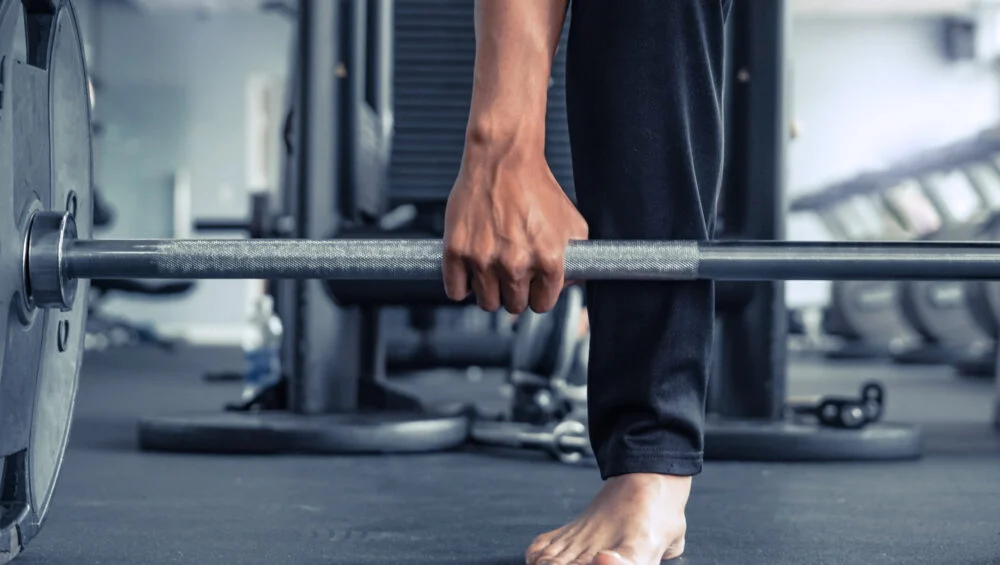
The deadlift remains a cornerstone of modern resistance training, widely recognized by strength and conditioning professionals as a primary metric for posterior chain development and total-body power. Despite its fundamental nature, the execution of the lift—which involves pulling a static weight from the floor to a standing position—presents significant biomechanical challenges that often necessitate supplemental training interventions. To optimize performance and mitigate the risk of musculoskeletal injury, practitioners are increasingly adopting specialized accessory movements designed to address specific technical deficiencies, such as poor starting strength, inadequate core tension, and suboptimal latissimus dorsi engagement.
The Biomechanical Context of Deadlift Optimization
The deadlift is a multi-joint compound movement that requires the synchronized recruitment of the gluteus maximus, hamstrings, erector spinae, and quadriceps, supported by significant isometric stabilization from the upper back and core. Research published in the Journal of Strength and Conditioning Research indicates that the most common failure point, or "sticking point," in the deadlift occurs either immediately off the floor or just below the knee. These failures are rarely the result of a lack of global strength but are instead often attributed to specific mechanical leaks or a failure to maintain "rigidity" under load.
Strength professionals emphasize that while the principle of specificity suggests that one must deadlift to improve at deadlifting, the law of diminishing returns often applies to high-frequency, high-intensity pulls. Consequently, the integration of accessory drills serves to refine the motor patterns and muscular endurance necessary for a "pristine" lift without overtaxing the central nervous system (CNS).
Concentric-Only Development via Deadstart Squats
One of the most effective interventions for improving the initial "pull" phase of the deadlift is the implementation of Deadstart Squats, also known as Pin Squats. This variation requires the lifter to position the barbell on the safety pins of a power rack at a specific height—typically around parallel or slightly above—and perform the concentric (upward) portion of the lift from a complete standstill.
The primary benefit of the Deadstart Squat lies in the elimination of the stretch-shortening cycle (SSC). In a traditional squat, the eccentric (lowering) phase allows the muscles to store elastic energy, which assists in the subsequent upward movement. By starting from a dead stop, the athlete is forced to generate maximal force instantaneously, mirroring the mechanics of a deadlift. This develops "starting strength" and teaches the lifter to maintain internal tension before the load moves.
Clinical observations suggest two primary protocols for integrating Deadstart Squats into a strength macro-cycle:
-
Hypertrophy and Technical Proficiency (The 3-5 Rep Range): This approach utilizes 60% to 75% of an athlete’s one-rep maximum (1RM). A standard four-week progression involves varying volume and intensity, beginning with 5×5 at 65% and peaking at 8×3 at 75% in the third week, followed by a deload. The objective is to remain "tight" throughout the set, ensuring the bar comes to a complete rest on the pins between repetitions without the athlete relaxing their postural muscles.
-
Neuromuscular Power and Specificity (Singles): For advanced lifters, performing single repetitions at 70% to 85% of 1RM allows for a premium on explosive power. This method emphasizes "full-body tension," where the lifter treats every repetition as a maximum effort attempt. A typical progression might involve 12 singles with 30-second rest intervals, gradually increasing weight while decreasing volume over a month-long period.
Isometric Stabilization: The RKC Plank Protocol
While the traditional plank is a staple of core conditioning, its efficacy is often undermined by poor execution and a lack of intensity. Strength coaches argue that the ability to hold a passive plank for several minutes does not translate to the high-tension environment of a heavy deadlift. Instead, the Russian Kettlebell Challenge (RKC) Plank is utilized to teach "full-body tension."
The RKC Plank differs from the standard version through several key mechanical adjustments:
- The Fulcrum Change: The elbows are placed slightly further forward than usual.
- Active Contraction: The lifter actively pulls their elbows toward their toes and their toes toward their elbows, creating an intense isometric contraction.
- Gluteal Engagement: The glutes are squeezed as hard as possible to stabilize the pelvis.
The RKC Plank serves as a "neural primer." If an athlete cannot perceive or maintain maximal tension while lying on the floor, they are unlikely to maintain it when subjected to the compressive and shearing forces of a 400-pound barbell. Biomechanical analysis suggests that just 10 seconds of a properly executed RKC Plank can produce higher levels of abdominal wall activation than several minutes of traditional bracing.
Latissimus Dorsi Activation and the Straight-Arm Band Pulldown
A frequently overlooked component of a successful deadlift is the role of the latissimus dorsi (lats). The lats are responsible for keeping the barbell close to the body’s center of mass. According to the principles of physics, the further the bar drifts away from the shins, the longer the moment arm becomes, significantly increasing the torque required from the lower back to complete the lift.
The Straight-Arm Band Pulldown is an accessory drill designed to "wake up" the lats and the posterior chain before the primary lifting session begins. By performing 5 to 10 repetitions with a 3 to 5-second isometric hold at the bottom of the movement, the lifter creates a "lat-spine connection." This activation helps in:
- Neutral Spine Maintenance: Engaging the lats creates tension in the thoracolumbar fascia, which acts as a natural weight belt for the lumbar spine.
- Bar Path Optimization: It reinforces the "pulling back" cue, ensuring the barbell remains in contact with the legs throughout the ascent.
Chronology of Training Methodology Evolution
The shift toward these specific accessory movements reflects a broader evolution in the strength and conditioning industry. In the mid-20th century, training was often characterized by "linear periodization," focusing almost exclusively on the main lifts. However, the 1990s and early 2000s saw the rise of the "Conjugate Method" and specialized "prehabilitation" drills, popularized by institutions like Westside Barbell.
The current era of training, as evidenced by the protocols of contemporary coaches, emphasizes "movement quality over quantity." The integration of Deadstart Squats, RKC Planks, and Band Pulldowns represents a synthesis of powerlifting intensity and rehabilitative precision. This "corrective" approach to heavy lifting is designed to address the high rates of lower back discomfort reported among amateur and professional lifters alike.
Data-Driven Analysis of Implications
The implications of adopting these accessory protocols extend beyond mere performance metrics. By focusing on tension and starting strength, lifters can achieve higher intensities with lower overall volume, potentially extending the "training age" of an athlete.
Data from sports medicine clinics suggest that a significant portion of lifting-related injuries occur during the "setup" or the "initial pull" phase of the deadlift, where spinal bracing is most likely to fail. The use of the RKC Plank and Straight-Arm Pulldowns directly addresses these failure points. Furthermore, the Deadstart Squat’s ability to build leg drive without the spinal compression of a traditional back squat (due to the higher starting position) allows for a higher frequency of "heavy" training days without the associated risk of overtraining.
Conclusion and Future Outlook
In summary, the deadlift is a nuanced lift that requires a sophisticated approach to training. The protocols outlined—Deadstart Squats for concentric power, RKC Planks for isometric core stability, and Band Pulldowns for lat engagement—provide a comprehensive toolkit for athletes seeking to break through plateaus.
As the fitness industry continues to lean into data-backed methodologies, the distinction between "working out" and "training" becomes clearer. The strategic use of accessory movements ensures that every repetition performed on the platform is supported by a foundation of structural integrity and technical mastery. For the modern athlete, these "quick-n-dirty" suggestions are not merely optional extras but essential components of a long-term, injury-free strength career. Future research into electromyography (EMG) during these specific drills will likely continue to validate their role in the optimization of the human "hinge" pattern.

