


A profound teaching from the Anguttara Nikaya, translated and introduced by Maria Heim, offers a nuanced perspective on the psychological journey toward liberation, highlighting the interconnectedness of ethical conduct, emotional well-being, and profound insight. This ancient Buddhist discourse, drawn from the "Numerical Discourses," outlines a sequential unfolding of positive mental states, rooted in the practice of virtue, which ultimately leads to freedom from suffering. The text, presented by The Buddha and made accessible through Heim’s scholarship, underscores a fundamental principle: that liberation is not an external acquisition but an internal blossoming, cultivated through a series of naturally arising conditions.
The Foundation of Virtue: Ethical Conduct as the Starting Point
The teaching begins by emphasizing the pivotal role of virtuous conduct as the bedrock upon which the entire edifice of spiritual development is built. This foundational practice, as outlined in the five precepts of Buddhism, involves abstaining from killing, stealing, lying, sexual misconduct, and the use of intoxicants. This is not merely a set of prohibitions; it represents a conscious commitment to minimizing harm to oneself and others, fostering a sense of integrity and ethical responsibility.
Maria Heim, in her introduction, elaborates on this crucial initial step. She notes that "this teaching thus places mental development on a moral foundation." By refraining from harmful actions, individuals inherently create a psychological space free from the corrosive effects of remorse. This remorse, often manifesting as regret, guilt, shame, worry, and anxiety, acts as a significant impediment to mental clarity and peace. The absence of these distressing emotions, therefore, is presented not as a goal to be chased, but as a natural consequence of ethical living.
Supporting this assertion, contemporary psychological research consistently demonstrates the link between ethical behavior and mental well-being. Studies in positive psychology, for instance, have shown that individuals who engage in altruistic behaviors and adhere to personal moral codes often report higher levels of life satisfaction and lower incidences of depression and anxiety. The Anguttara Nikaya’s teaching, therefore, resonates with modern understanding by positing that a life lived with integrity naturally cultivates an inner sense of ease.
The Upward Spiral: From Remorse-Free to Delight
The absence of remorse, the teaching posits, initiates an "upward spiral" of positive mental states. This is a crucial distinction from the common misconception that happiness or positive emotions can be willed into existence. Heim explains, "If one enjoys the absence of remorse, one need not then generate a further thought or intention to be delighted. In fact, generating an intention to be delighted (or joyful or calm or happy) tends not to be effective anyway: It is not as if we can bring delight into our lives by demanding that it appear or by forcing ourselves to feel it."

Instead, the teaching suggests that positive states, such as delight, arise organically when the mind is not burdened by self-recrimination or the fear of having caused harm. The clear, unburdened mind becomes receptive to the simple joys and beauties of the present moment. This is where the concept of "enjoying the absence of remorse" gains its significance. It is not about actively seeking pleasure, but about experiencing the natural buoyancy that emerges when the weight of negative psychological baggage is lifted.
The implications of this are far-reaching. In a society often driven by the pursuit of fleeting pleasures and external validation, this teaching offers a counter-narrative. It suggests that true contentment is not found in the accumulation of experiences or possessions, but in the cultivation of an inner state of peace and clarity. This psychological shift can lead to a more sustainable and profound form of happiness, one that is less susceptible to the vagaries of external circumstances.
The Emergence of Joy, Calm, and Happiness
As the spiral ascends, delight naturally gives rise to joy. This progression is not arbitrary but is described as occurring "in the nature of things," meaning it is a natural unfolding of cause and effect within the human psyche. Heim elaborates on this phenomenon: "Positive states arise as a result of conditions; we can’t manufacture them by fiats of will, and the more we chase them the more elusive they become. Rather, they emerge, as this teaching suggests, when the mind is simply clear of fretting about oneself and worrying about whether one has been harming the world."
This emergent joy, when cultivated, further leads to a state of calm. The calm body and mind, in turn, foster a sense of happiness. This sequence highlights a cascading effect, where each positive state provides the fertile ground for the next to blossom. The teaching explicitly states, "Monks, one who is delighted does not need the intention, ‘May joy arise in me.’ For it is the nature of things, monks, that joy arises in the delighted." This repeated emphasis on the natural emergence of these states underscores the teaching’s core message of non-striving and allowing.
The psychological benefits of this progression are significant. A mind free from remorse is less prone to rumination and anxiety. The resulting delight and joy can lead to increased resilience and a more positive outlook on life. The calm that follows further enhances cognitive functions, allowing for greater focus and clarity.
Concentration and the Deepening of Insight
The state of happiness and calm naturally paves the way for enhanced concentration. When the mind is not agitated by disturbing emotions or distracted by worries, it becomes capable of sustained attention. This heightened concentration is not merely about focus; it is the crucial precursor to genuine insight. The teaching states, "Monks, one who feels happy does not need the intention, ‘Let my mind become concentrated.’ For it is the nature of things, monks, that the mind of one who feels happy is concentrated."

With concentrated attention, individuals can begin to "know and see things as they truly are." This is a pivotal moment in the path to freedom. It signifies the transition from a superficial understanding of reality, often colored by personal biases and desires, to a more profound and accurate perception. This clarity allows one to observe phenomena without the distortions of craving, aversion, or delusion.
The implications for personal growth are immense. By seeing things "as they truly are," one can begin to understand the impermanent and conditioned nature of all experiences. This understanding, known in Buddhist philosophy as the "Three Marks of Existence" (impermanence, suffering, and non-self), is the catalyst for detachment.
Disenchantment, Dispassion, and the Realization of Freedom
The direct seeing of reality’s true nature leads to a natural process of disenchantment and dispassion. This is not a pessimistic outlook, but rather a realistic appraisal of impermanence. When one understands that all conditioned phenomena are subject to change and cessation, the inherent dissatisfaction in clinging to them becomes apparent. This realization fosters a sense of detachment, not in the sense of apathy, but in the sense of releasing the grip of craving and aversion.
Heim explains this crucial stage: "When one knows and sees things as they truly are one grows disenchanted with them due to their impermanent and conditioned nature. Detaching from them makes it possible to know and see in a way that is free, with freedom being the ultimate aim of all practice." This freedom is the ultimate goal – liberation from the cycle of suffering driven by attachment and ignorance.
The teaching culminates in the realization of a "way of knowing and seeing that is free." This is the direct experience of liberation, a state where the mind is no longer bound by the conditions that create suffering. The final lines of the discourse powerfully summarize this interconnectedness: "Monks, knowing and seeing in a way that is free is the aim and benefit of becoming disenchanted and dispassionate. Disenchantment and dispassion are the aim and benefit of knowing and seeing things as they really are. Knowing and seeing things as they really are is the aim and benefit of concentration. Concentration is the aim and benefit of feeling happy. Happiness is the aim and benefit of being calm. Being calm is the aim and benefit of joy. Joy is the aim and benefit of delight. Delight is the aim and benefit of freedom from remorse. Freedom from remorse is the aim and benefit of virtue."
Historical and Scholarly Context
The Anguttara Nikaya, a foundational text within the Pāli Canon of Theravada Buddhism, is attributed to the teachings of Siddhartha Gautama, the Buddha. It is organized by numerical groupings of suttas (discourses), making it a unique and systematic collection of the Buddha’s teachings. The Anguttara Nikaya is considered a vital source for understanding the practical application of Buddhist principles in daily life.
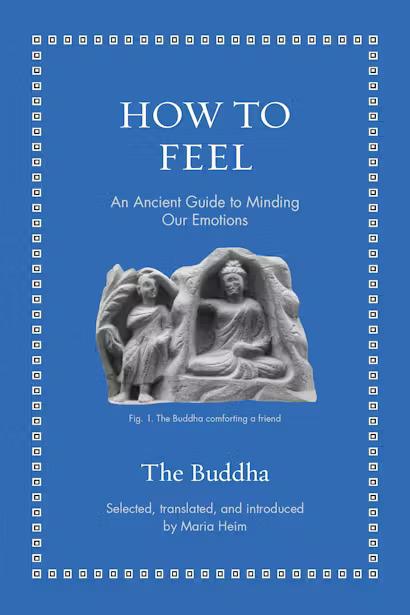
Maria Heim, a respected scholar of Buddhist studies, brings a wealth of academic rigor to her translations and introductions. Her work on the Anguttara Nikaya, particularly in her recent publication "How to Feel," aims to make these ancient teachings accessible and relevant to contemporary readers. By providing context and explanation, Heim bridges the gap between ancient wisdom and modern understanding, demonstrating the enduring relevance of the Buddha’s insights into the human condition.
The publication of this teaching in February 2026, by Tricycle: The Buddhist Review, a prominent platform for Buddhist news and scholarship, signifies its continued importance in contemporary spiritual discourse. The accompanying image, an upward spiral, serves as a potent visual metaphor for the progressive unfolding of positive mental states described in the text.
Broader Implications for Personal and Societal Well-being
The spiral path to freedom outlined in this teaching offers a powerful framework for understanding personal transformation. It suggests that by cultivating ethical conduct, we create the conditions for inner peace, which in turn allows for the natural emergence of positive emotions. This leads to enhanced concentration, enabling a clearer perception of reality, which ultimately fosters detachment and liberation.
On a broader societal level, this teaching offers a compelling argument for the importance of ethical education and the cultivation of mindfulness. In a world often characterized by division and conflict, the principles of non-harming and inner peace are more crucial than ever. By emphasizing the interconnectedness of individual well-being and ethical behavior, the Anguttara Nikaya provides a timeless roadmap for creating a more compassionate and enlightened society. The emphasis on natural emergence rather than forced attainment also offers a refreshing perspective, encouraging patience and self-compassion in the journey toward greater well-being.

