

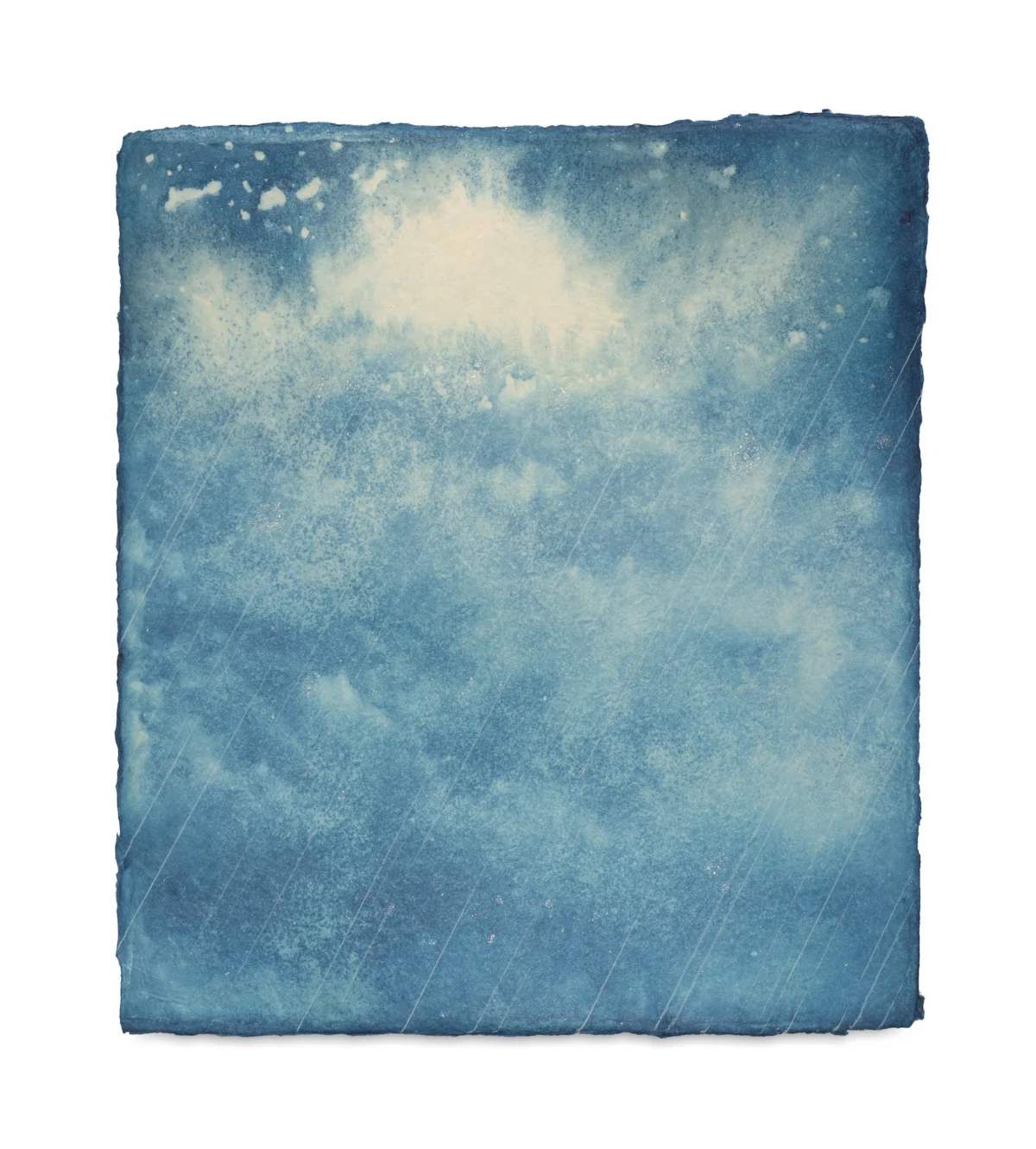
The profound and multifaceted relationship between Japanese culture and the ephemeral phenomenon of rain is brought into sharp focus through the groundbreaking work of multidisciplinary artist Miya Ando. Her latest project, Water of the Sky: A Dictionary of 2,000 Japanese Rain Words, is far more than a mere compilation; it is a deep dive into a rich linguistic and cultural heritage, revealing how a civilization has observed, categorized, and found meaning in every nuance of falling water. This extensive lexicon, drawn from ancient Buddhist texts, classical poetry, and regional dialects, serves as a testament to a worldview that finds deep reverence and philosophical insight in the natural world.
Ando’s journey into this specific area of study was sparked by a childhood memory. Growing up in Japan, she was introduced to the term kitsune no yomeiri, or "fox wedding rain," a phrase that describes the peculiar meteorological event of rain falling while the sun is shining. Her grandparents explained this as the time when foxes hold their wedding ceremonies. "I was shocked that there existed a word so specific for that type of rain," Ando recounts, a sentiment that encapsulates the wonder and deep cultural embeddedness of such observations. This early encounter with the nuanced language of rain became a foundational element of her artistic practice, fostering a lifelong dedication to exploring and expressing the fleeting beauty of transient phenomena.
A Lexicon Rooted in Reverence and History
Water of the Sky derives its title from ama no mizu, an ancient Japanese term for rain that translates literally to "water of the heavens." This choice immediately signals the project’s intent to explore the sacred and mystical dimensions of rain, moving beyond mere meteorological description. The 2,000 entries in the dictionary are meticulously curated, reflecting Ando’s own biographical influences and the multifaceted cultural traditions she has engaged with.
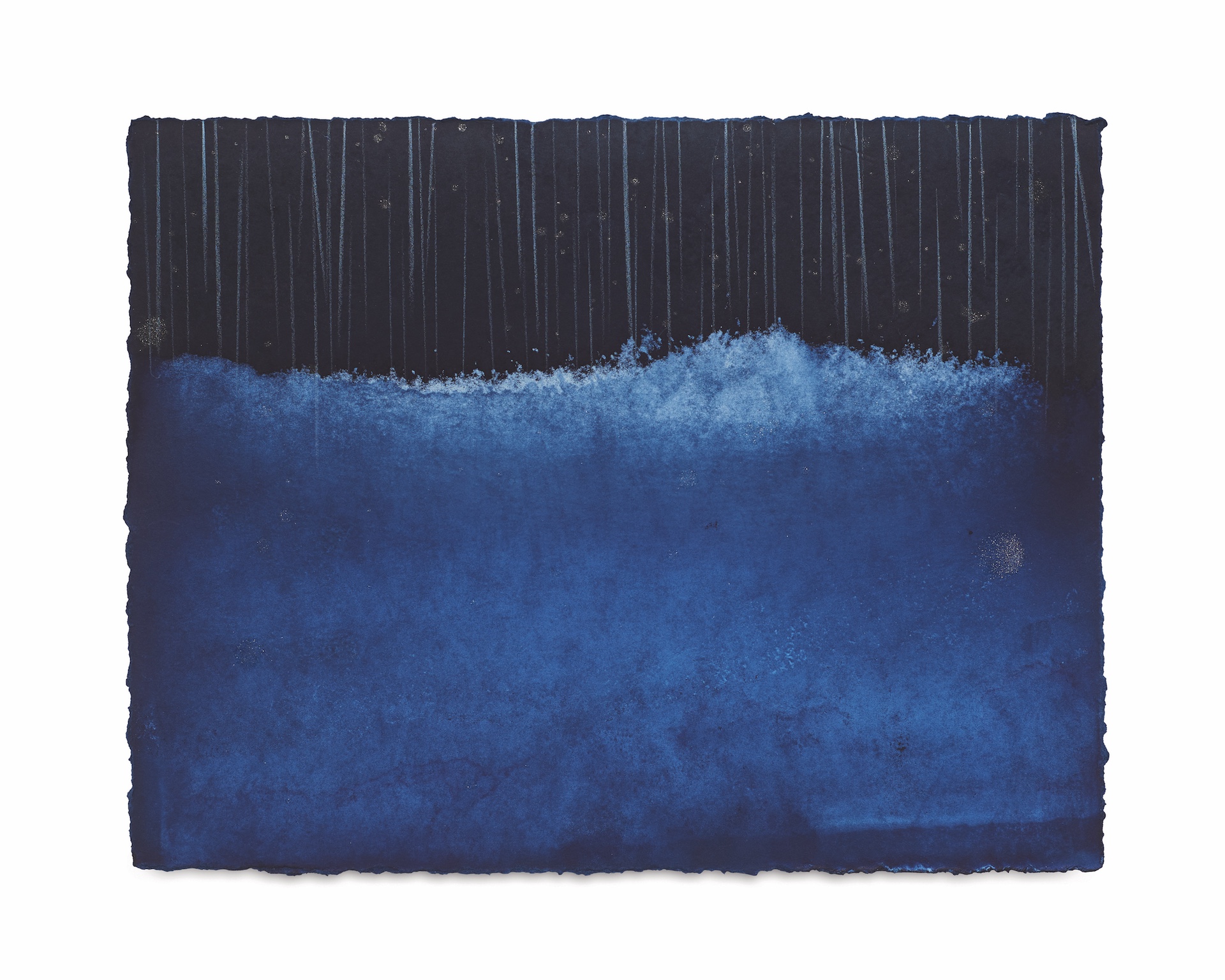
A significant portion of the collection draws from Buddhist traditions, a direct reflection of Ando’s upbringing. The dictionary includes numerous expressions associated with Buddhist rain sutras and deities, such as over two dozen amagoi, or prayers for rain. One notable example is the poem by Priest Noin, used as a rain prayer, titled Ama No Gawa Nawashiro-mizu Ni Sekikudase Amakudarimasu Kami Naraba Kami, which translates to "Open, O God, the Celestial River, the Milky Way, to Send Water to the Rice Fields" (#1876). These entries highlight a historical and spiritual reliance on divine intervention for vital resources like rain.
Further enriching the collection are Zen idioms, or zengo, which employ rain as a metaphor for profound philosophical concepts. Inspired by her mother and grandmother’s practice of the tea ceremony, Ando includes phrases like Ame Narazu Shite Hana nao Otsu (#1559), meaning "Even If There Is No Rain, Petals Will Fall." This idiom encapsulates the Buddhist teaching on the impermanence of all things, suggesting that even without a specific catalyst like rain, natural cycles of decay and change will inevitably occur.
The influence of classical Japanese literature is also evident. Ando incorporates terms from the writings of Heian-period women poets, introduced to her at a young age by her mother. These often poetic observations link specific rain patterns to seasonal changes, such as the blossoming of wisteria or the waxing and waning of the moon. These entries offer a glimpse into an aesthetic sensibility that finds beauty and significance in the subtle shifts of the natural world.
Bridging Cultural Divides Through Lexical Gaps
Ando, as a Japanese American artist, has long been fascinated by the "lexical gaps"—the conceptual spaces that exist between languages and cultures. Her heritage, a blend of a sixteenth-generation lineage of Bizen swordsmiths turned priests and her childhood spent between a Nichiren Buddhist temple in Okayama, Japan, and the Santa Cruz Mountains of California, has provided her with a unique perspective on how language shapes and reflects cultural values.
"When you truly value something, you give it a name," Ando stated in a recent interview on Tricycle Talks. "So this is a way to look at what we value in one society versus another." This philosophy underpins her approach to Water of the Sky. By highlighting the vast array of Japanese terms for rain, many of which have no direct English equivalent, she invites a contemplation of what these words reveal about Japanese cultural priorities, its historical relationship with nature, and its philosophical underpinnings. The project, in essence, becomes a powerful tool for understanding cross-cultural value systems through the lens of language.
The dictionary includes terms sourced from diverse regions and dialects across Japan, many of which are archaic and have fallen into disuse. The earliest entries date back to 720 CE, while the most recent includes kuroi ame ("black rain"), a stark reminder of the devastating impact of the atomic bombing of Hiroshima in the 20th century. This chronological breadth underscores the enduring human need to describe and comprehend the experience of rain, from the most mundane to the most catastrophic. Ando’s meticulous curation effectively resurrects lost ways of seeing and experiencing the world, acting as an archivist of both linguistic and experiential heritage.
The Art of Capturing Transience: Mono No Aware and Shinrabansho
The project’s exploration of impermanence is deeply intertwined with the Japanese aesthetic and philosophical concept of mono no aware. Ando translates this as "an empathy for the pathos of transitory things." She elaborates, "The idea of mono no aware is both a philosophical and aesthetic idea. It’s about having a sensitivity to or an appreciation of particularly fleeting things. Why are fleeting things depicted as particularly beautiful? It’s because we are fleeting. It’s an empathy to yourself, and you are no different from these fleeting things like clouds and falling stars."
This profound sensitivity to the transient nature of existence is reflected in Ando’s artistic practice. Her work often manifests in a meditatively serial manner, akin to the detailed observations of Japanese artists throughout history who have meticulously documented the changing seasons. For instance, her collection of moon drawings comprises over 1,500 entries, and she has completed a series illustrating the 498 aspects of the rainy moon. This deep engagement with cyclical change is also informed by the traditional Japanese calendar of seventy-two microseasons, a system she learned from her grandmother, a Urasenke tea master who embodied this meticulous awareness in her daily life and attire.

Ando’s artistic approach extends to her choice of materials. The accompanying drawings in Water of the Sky are created using micronized silver, which alters its reflection of light depending on the time of day, and traditional indigo dye. Indigo, she explains, functions as a "natural clock," its hue deepening with prolonged submersion. "Conceptually, therefore, it is a material that both records and communicates time’s passage," she notes. These visual interpretations are not mere illustrations but evocations, aiming to embody the ephemeral quality of each described rain type.
Her artistic practice is further guided by the concept of shinrabansho, literally meaning "the all-covering forest," or encompassing all things in nature that exist under heaven. This includes phenomena like clouds, rain, shooting stars, and the lunar cycle, as they have been historically recorded and depicted in language and literature. Ando draws inspiration from the 15th-century monk Ikkyu Sojun, who suggested learning from the "love letters sent from the wind, rain, snow, and moon" rather than complex doctrines.
"It’s just a perception shift to think about how the natural world is a mirror of our own lives and our own impermanence," Ando told Tricycle. "You just look at the seasons changing and rain and things that are evanescent—it mirrors our own evanescence. In this context of mono no aware, impermanence and death and dying are not nihilistic. It is an opportunity to be aware of the present moment, and you feel lucky that you saw something particularly evanescent in nature, like a shooting star or falling petal or momiji leaf."
An "Extinction Diary" in the Face of Climate Change
The relevance of Water of the Sky takes on an urgent dimension in the context of climate change. Many of the specific rain terms documented by Ando are becoming obsolete not only because they are falling out of common usage but also because the very weather patterns they describe are shifting or disappearing. This makes Ando’s project function as an "extinction diary" or a time capsule, preserving vital knowledge that risks being lost to time.

The implications of this are significant. As ecological awareness grows, Ando’s work suggests that a deeper understanding of our natural world can foster care and compassion. This message is particularly potent as humanity confronts the existential challenges posed by a changing planet. The project highlights how a keen observation of the natural world, and the language we develop to describe it, can serve as a pathway to greater ecological consciousness and, by extension, to a more compassionate relationship with our environment and ourselves.
The Enduring Gift of Attention and Wonder
Ultimately, Water of the Sky offers a profound gift: the invitation for viewers to cultivate a similar posture of attention and devotion to the fleeting phenomena that constitute our lives and our ever-changing world. Through the rich vocabulary for the minutiae of existence, the compendium encourages the discovery of new language for everyday wonders that often escape notice.
Much like Ando’s childhood fascination with the concept of "fox wedding rain," readers may encounter new ways of perceiving that fundamentally alter their relationship with manifestations of impermanence. Whether it’s a single falling raindrop or the inevitable passage of time, the project offers a framework for engaging with these realities not with dread, but with a profound sense of wonder and appreciation. By learning to "read the love letters sent by transient things," as Ikkyu Sojun suggested and Ando herself embodies, we are encouraged to savor their beauty while we can, fostering a deeper connection to the ephemeral, and ultimately, to ourselves.

