

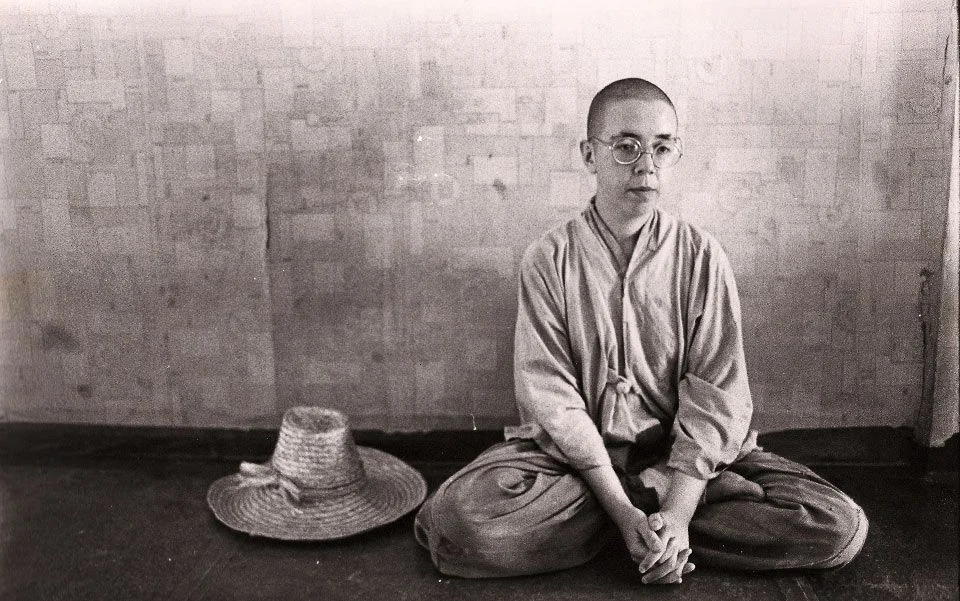
Author and former monastic Martine Batchelor offers profound insights into the transformative power of non-reactivity, a practice that, while often cultivated in the disciplined environment of retreat, holds the key to navigating the complexities of everyday existence. Batchelor, a respected figure in Buddhist studies and a former nun who spent years in monastic life in Korea, draws from her extensive experience to illuminate how moments of profound clarity and equanimity can arise when we cease to cling to our reactions and expectations. Her reflections, shared in a recent discourse, suggest that the path to inner peace is not about eradicating difficult experiences, but about transforming our relationship to them.
The essence of Batchelor’s teaching lies in the understanding that moments of non-grasping and non-reactivity are not exclusive to the secluded halls of meditation centers. While the controlled conditions of retreat—often characterized by extended periods of silence and the absence of external distractions—can facilitate such experiences, their seeds are present in our daily lives. During a typical retreat, practitioners dedicate their energy to cultivating stillness and mindfulness. Batchelor notes that early in this process, individuals often encounter states of quietness and clarity. This initial experience can be so potent that it sparks a desire for more, a yearning to deepen the state. However, this very desire, this subtle grasping, can disrupt the tranquility.
The practice, therefore, becomes the art of simply being with these moments of quietness, of experiencing the non-reactive state without attempting to hold onto it. Batchelor emphasizes that this is not merely an intellectual exercise but a visceral realization: "I, too, can experience quietness. I, too, can experience clarity." This personal affirmation is crucial for grounding the insight within the entire organism, not just the mind. Yet, like all phenomena, these states are impermanent. They arise, offer their gift, and then, inevitably, pass.
Batchelor recounts a personal anecdote from her intensive practice in Korea, where she sat for ten hours a day. The sheer physical strain often led to significant pain. On one occasion, by consciously directing her mind toward this discomfort, she experienced a profound sense of emptiness. This was a different quality of experience than the quietness and clarity she had previously encountered. While this was a powerful revelation, she notes that such insights are not consistently accessible. Many times, the dominant experience was simply the anticipation of the meditation session and the pain ending. This highlights a key aspect of her teaching: an insight, while illuminating, does not offer a permanent escape from suffering. Instead, it provides a new perspective, a way to see things differently.
"An insight is not something we experience all the time," Batchelor states. "It helps us see that we can experience things differently. Often, this doesn’t last because of conditions. However, it does start to illuminate. We have more clarity around it." This clarity can manifest in daily life. For instance, when confronted with something that elicits aversion, a practitioner might suddenly recognize it as merely a thought, a mental construct, and realize the futility of the aversion. This moment of non-reactivity can be liberating. However, the practice is an ongoing process, and the same individual might later encounter a visceral trigger, like the sight of a dead rat in the garden, and find themselves reacting with familiar disgust. This fluctuation underscores the dynamic nature of practice and the subtle ways our ingrained patterns resurface.
The Open Heart: Embracing Inclusivity
Beyond moments of clarity, Batchelor describes another significant experience: that of an "open heart." This state, often arising during meditation, is characterized by a profound sense of inclusivity, where the usual mental barriers and judgments dissolve. "You sit in meditation and suddenly you have no trouble with anybody," she observes, contrasting it with the common tendency to harbor "little niggle[s]" about specific individuals or situations. In this state, there are no categories of exclusion; everyone and everything is embraced. This expansive feeling is deeply transformative, offering a stark contrast to the ordinary experience of the self as a separate entity. Again, Batchelor reminds us that these moments, however potent, are transient. The external world, with its myriad provocations, can quickly reintroduce old patterns. A neighbor’s behavior, for instance, might trigger a familiar annoyance, but the memory of the open heart allows for a conscious choice: "not today, we’re not going there today." This capacity to recall and re-engage with a more expansive perspective is a hallmark of a developing practice.
Mystical Experiences and the Dissolution of Self
Batchelor also touches upon what could be termed "mystical experiences," states that transcend ordinary perception. These can involve an overwhelming sense of joy coupled with profound equanimity. In such moments, the feeling of separation from the world dissolves. These are often manifestations of the non-reactive state, appearing in diverse forms and offering glimpses into a deeper reality. The common thread, however, remains the cessation of habitual reactions and the embrace of what is, without resistance.
Historical Echoes: Ancient Wisdom in Practice
To further illustrate the timeless nature of these insights, Batchelor references historical figures. She shares a poignant exchange with a 12th-century Chinese master who responded to an official struggling with his spiritual practice. The official lamented his "dim and dull" root nature, feeling hopeless about his progress. The master, however, pointed out the inherent wisdom in recognizing one’s perceived limitations: "The one who can recognize dim and dull is definitely not dim and dull." This ancient wisdom highlights that the very capacity to observe our shortcomings with clarity is a sign of progress, a testament to an underlying awareness that is not dulled. This principle resonates with the idea that self-awareness, even of perceived inadequacy, is a form of insight.
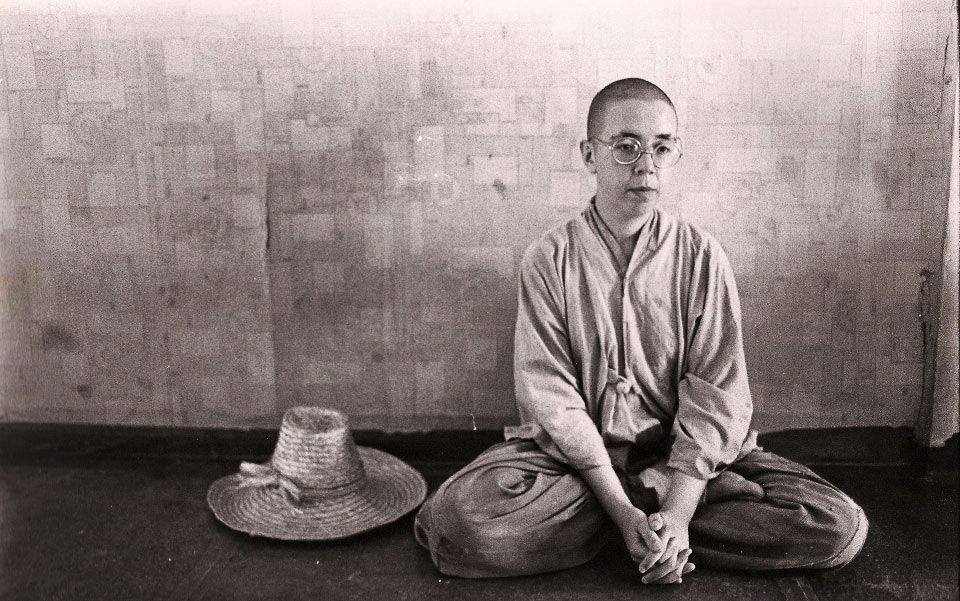
Batchelor’s own life story, intertwined with that of the Korean nun Sön’gyong Sunim in her book Women in Korean Zen, provides a compelling human dimension to these teachings. Sön’gyong Sunim, despite her profound spiritual accomplishments, often felt inadequate due to her humble origins and lack of formal instruction. Initially relegated to kitchen work by other nuns who underestimated her potential, she persevered in her practice. Over time, her dedication bore fruit, leading to profound experiences that drew others to her teachings. Batchelor describes Sön’gyong Sunim as a "wonderful example of practice, of life, and of the practice of non-reactivity," noting her deep humility.
Sön’gyong Sunim’s poetry eloquently captures the essence of non-attachment to spiritual attainment:
Buddha cannot see Buddha, sees Buddha
I cannot see I, sees I
I saw the nature, awaken to the way
What rubbish.
This verse challenges the tendency to grasp at spiritual experiences or labels like "awakened." It suggests that true insight lies in experiencing reality directly, without the ego’s insistence on recognizing or owning the experience. The poem’s final line, "What rubbish," can be interpreted as a playful dismissal of the conceptual mind’s attempts to define and possess spiritual states.
Another poem attributed to Sön’gyong Sunim further elaborates on this theme of subtle perception:
The clear water flows over white rocks.
The autumn moon shines bright.
So clear, is the original face.
Who does say it is or is not.
This imagery encourages a careful observation of reality, free from the tendency to fix or define it prematurely. The "original face" refers to our fundamental nature, which is clear and unconditioned, yet eludes definitive categorization. The poem warns against affirming or denying its existence, suggesting that it is beyond such dualistic pronouncements.
The Path of Non-Self and Enlightenment
The discourse also invokes the wisdom of Dogen, a prominent Japanese Soto Zen master, whose teachings on self-knowledge and enlightenment are highly relevant. Dogen’s oft-quoted verse encapsulates a profound paradox:
The way of the Buddha is to know the self
To know the self is to forget the self
To forget the self is to be enlightened by all things
This progression illustrates that true self-knowledge leads not to an enhanced ego, but to its dissolution. When the self is no longer a primary concern, one becomes open to the entirety of existence, experiencing enlightenment through a seamless integration with all phenomena. This echoes Batchelor’s emphasis on non-reactivity as a means to shed the constrictions of the ego and experience a more expansive reality.
Implications for Secular Dharma
The ongoing evolution of Buddhist practice in the West, particularly within secular contexts, finds resonance in Batchelor’s teachings. Her emphasis on cultivating non-reactivity and an open heart, grounded in personal experience rather than dogma, aligns with the principles of secular dharma. The latter seeks to extract the ethical and contemplative practices of Buddhism, making them accessible and relevant to individuals who may not adhere to traditional religious frameworks.
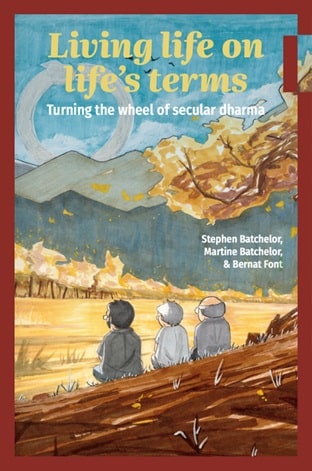
The recent publication of Living Life on Life’s Terms: Turning the Wheel of Secular Dharma, co-authored by Stephen Batchelor, Martine Batchelor, and Bernat Font, further underscores this commitment. This work likely explores how ancient wisdom traditions can be adapted to contemporary life, offering practical guidance for navigating personal challenges and fostering a more mindful and compassionate existence.
Martine Batchelor’s reflections serve as a powerful reminder that the path to inner freedom is not paved with the avoidance of difficulty, but with the cultivation of a discerning and non-reactive awareness. By embracing the transient nature of both pleasant and unpleasant experiences, and by learning to respond with equanimity rather than automatic reaction, individuals can unlock moments of profound clarity and open-heartedness, transforming their relationship with themselves and the world around them. The illumination that comes with non-reactivity, as she demonstrates, is a continuous unfolding, a subtle yet profound shift in perspective that enriches every aspect of life.

