

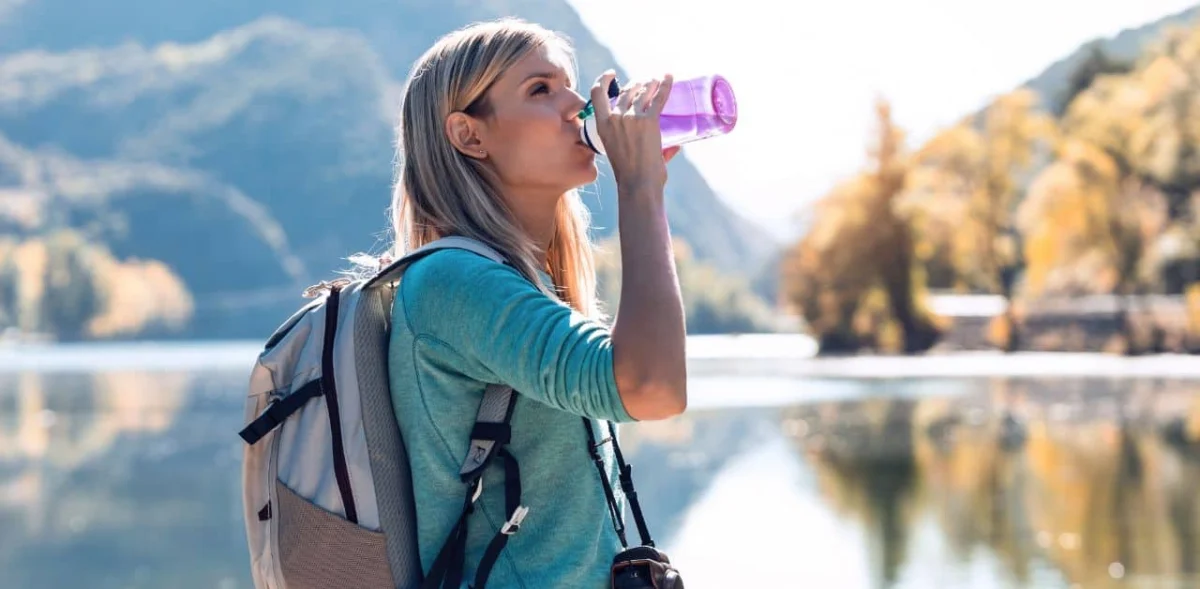
The Evolution of Global Water Safety and the Plastic Revolution
The history of water consumption for travelers has undergone a radical transformation over the last century. In the early 20th century, waterborne illnesses were a primary concern for any cross-border movement, leading to the development of early filtration and chlorination systems in major urban centers. However, the mid-20th century saw the "plastic revolution," which fundamentally altered the landscape of global consumption. The introduction of Polyethylene Terephthalate (PET) bottles in the 1970s provided a lightweight, durable, and seemingly sterile method for transporting water. This convenience catalyzed a massive shift in consumer behavior, as bottled water was marketed not just as a necessity in developing regions, but as a lifestyle choice in the West.
By the 1990s, the bottled water industry had become a multi-billion-dollar global enterprise. This growth occurred in tandem with a widening gap in infrastructure investment. While many European and North American nations modernized their municipal water treatment facilities to meet increasingly stringent safety standards—such as the Safe Drinking Water Act in the United States—other regions struggled with aging pipes, rapid urbanization, and agricultural runoff. This divergence created the current "safety map" that travelers navigate today, where the boundary between safe and unsafe tap water often aligns with national GDP and the robustness of local regulatory oversight.

Scientific Analysis of Pathogenic Risks in Municipal Systems
The designation of tap water as "unsafe" for travelers is frequently misunderstood. It does not necessarily imply that the water is toxic or "dirty" in a general sense, but rather that it contains a microbial profile to which a visitor’s immune system has no prior exposure. Public health experts at the Centers for Disease Control and Prevention (CDC) and the World Health Organization (WHO) categorize these risks into three primary groups: bacteria, viruses, and protozoa.
Bacteria such as Escherichia coli (E. coli), Salmonella enterica, and Vibrio cholerae are common in systems with insufficient chlorination. Viruses, including Norovirus and Hepatitis A, can persist in water supplies that have not undergone advanced ultraviolet (UV) or ozone treatment. Perhaps most challenging for travelers are protozoan parasites like Giardia duodenalis and Cryptosporidium, which are resistant to standard chemical disinfection due to their hard outer shells.
A traveler’s body maintains a delicate internal ecosystem of bacteria. When introduced to foreign microorganisms—even those that local populations consume daily without ill effect—the result is often Traveler’s Diarrhea (TD). Research indicates that TD affects between 30% and 70% of travelers depending on the destination and season. While usually self-limiting, these infections can lead to severe dehydration and secondary complications, reinforcing the psychological reliance on bottled water as a "safety blanket."

Regional Safety Standards: A Data-Driven Overview
According to the most recent data compiled from the CDC and the Environmental Performance Index (EPI), global water safety is geographically stratified. Travelers can generally consume tap water with high confidence in the following regions:
- North America: The United States and Canada maintain some of the world’s most rigorous testing protocols, though localized infrastructure issues (such as lead pipes in older cities) remain a point of domestic debate.
- Europe: The vast majority of the European Union, along with the United Kingdom, Switzerland, and Norway, offer potable tap water. This includes Andorra, Austria, Belgium, the Czech Republic, Denmark, Finland, France, Germany, Greece, Iceland, Ireland, Italy, Luxembourg, the Netherlands, Poland, Portugal, Spain, and Sweden.
- Asia-Pacific: Japan, South Korea, Singapore, Hong Kong, and Israel stand out as regional leaders in water treatment technology. In Oceania, Australia and New Zealand provide safe, high-quality municipal water.
Conversely, caution is advised in regions where infrastructure has not kept pace with population growth or where environmental regulations are loosely enforced. This includes much of Africa, Central and South America, and large swaths of Asia. Notable countries where travelers are typically advised to avoid tap water include Mexico, Egypt, Morocco, China, India, Thailand, Brazil, and Peru. In these areas, the risk of contamination from agricultural pesticides, industrial heavy metals, and untreated sewage is statistically higher, making purification or bottled water a medical necessity.
The Environmental Toll of the Bottled Water Industry
The reliance on bottled water comes at a staggering environmental cost. Data from the United Nations Environment Programme (UNEP) reveals that the world produces approximately 400 million tonnes of plastic waste annually. Single-use water bottles are a primary contributor to this figure. Despite global efforts to promote recycling, only about 9% of all plastic waste ever produced has been recycled. Approximately 12% has been incinerated, while the remaining 79% has accumulated in landfills, dumps, or the natural environment.

The life cycle of a plastic water bottle is a carbon-intensive process. It begins with the extraction of fossil fuels, followed by energy-heavy manufacturing and global shipping. Once discarded, a PET bottle can take up to 450 years to decompose. During this process, it does not disappear but fragments into microplastics—particles less than five millimeters long—which have now been detected in the deepest parts of the ocean, in the soil, and even in human bloodstreams. For the traveler, the irony is often that the very natural beauty they travel to see—pristine beaches in Southeast Asia or glacial lakes in the Andes—is being systematically degraded by the plastic waste generated by the tourism industry itself.
Technological Solutions and Mitigation Strategies
To bridge the gap between health safety and environmental stewardship, travelers are increasingly turning to portable purification technologies. These tools allow for the safe consumption of tap water even in high-risk regions, effectively eliminating the need for single-use plastics.
- Advanced Filtration: Modern portable filters use hollow fiber membranes with "absolute" pore sizes, often as small as 0.1 microns. These are highly effective at removing bacteria and protozoa. However, travelers should be aware that standard filters often do not remove viruses, which require a "purifier" grade device.
- Ultraviolet (UV) Radiation: Devices such as the SteriPen use UV-C light to disrupt the DNA of pathogens, rendering them unable to reproduce. This technology is effective against bacteria, viruses, and protozoa alike, provided the water is clear of sediment.
- Chemical Disinfection: Iodine and chlorine dioxide tablets remain the most lightweight and cost-effective options. While they can alter the taste of water and require a waiting period (often 30 minutes to 4 hours), they are essential for emergency backup.
- Boiling: The most traditional method remains the "gold standard" for safety. Bringing water to a rolling boil for at least one minute (three minutes at high altitudes) neutralizes all biological pathogens.
Official Responses and the Path Toward Sustainable Tourism
International bodies are beginning to respond to the water-plastic dilemma with policy shifts. The United Nations Sustainable Development Goal 6 (SDG 6) aims to ensure availability and sustainable management of water and sanitation for all by 2030. Progress toward this goal would theoretically render the "bottled water vs. tap water" debate moot by ensuring safe municipal supplies globally.

Furthermore, many tourism boards in high-risk areas are implementing "Refill Stations" initiatives. In Bali, Indonesia, and parts of Thailand, local businesses are partnering with NGOs to provide filtered water refill points for a fraction of the cost of a new bottle. These programs aim to reduce the estimated 30 million plastic bottles consumed by tourists in these regions every month.
From a journalistic perspective, the analysis suggests that the responsibility for sustainable travel is shifting from a purely individual choice to a systemic requirement. Governments in developing nations are under increasing pressure to view water infrastructure not just as a public health utility, but as a critical component of a sustainable tourism economy.
Broader Implications for the Future of Travel
The decision to skip the plastic bottle is more than a personal health choice; it is an act of participation in a global movement toward environmental accountability. As climate change alters the availability of fresh water and plastic pollution threatens marine biodiversity, the "water plan" will become an essential part of every traveler’s itinerary.

Experts suggest that the future of travel will be defined by "low-impact" logistics. This includes the normalization of carrying high-quality reusable flasks, the integration of filtration systems into standard travel gear, and a heightened awareness of local infrastructure. By understanding the scientific realities of water safety and the environmental consequences of consumption, travelers can navigate the world with a footprint that is as clean as the water they seek to drink. The transition away from bottled water represents a significant step in the evolution of the global citizen—one who prioritizes the longevity of the destination as much as their own well-being.

