

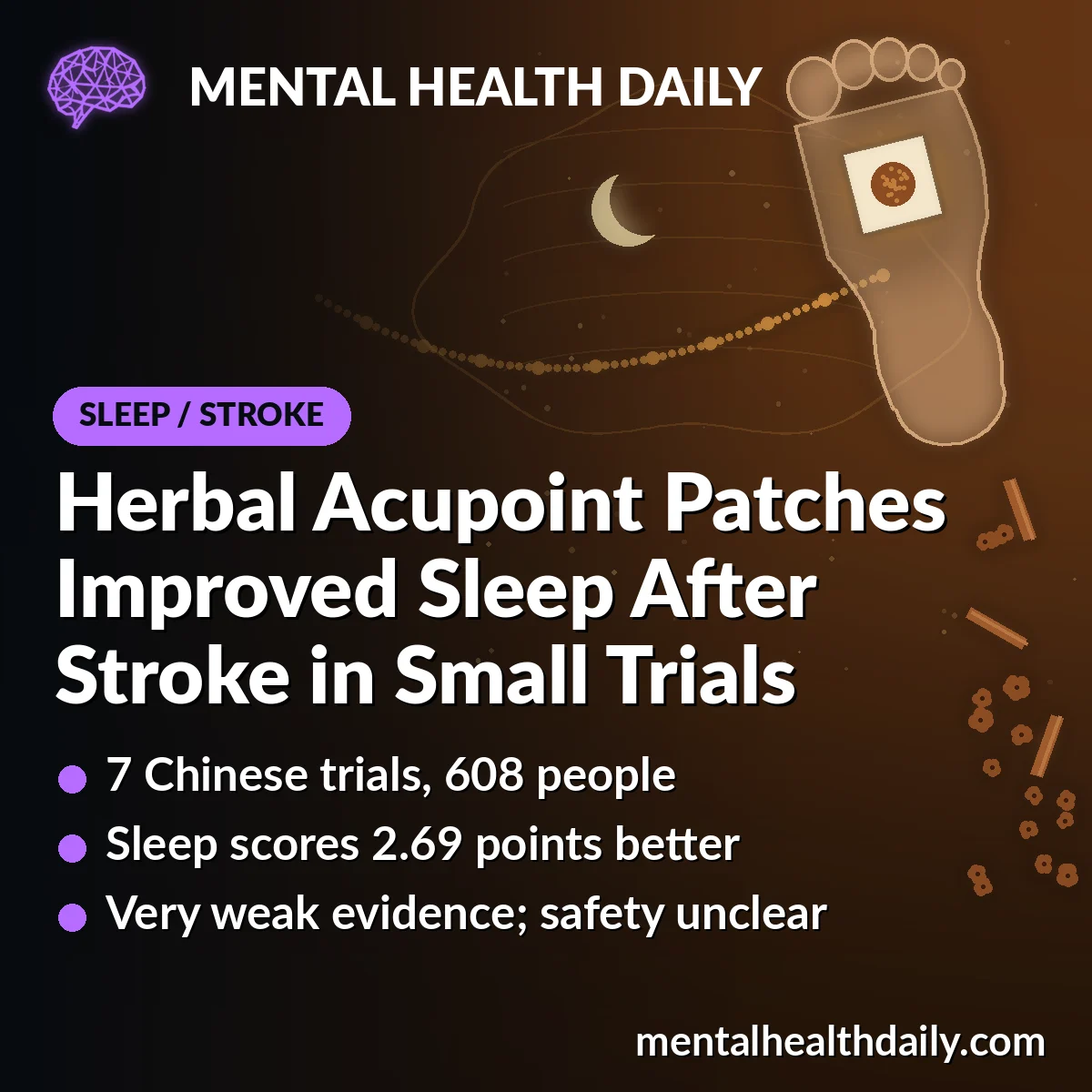
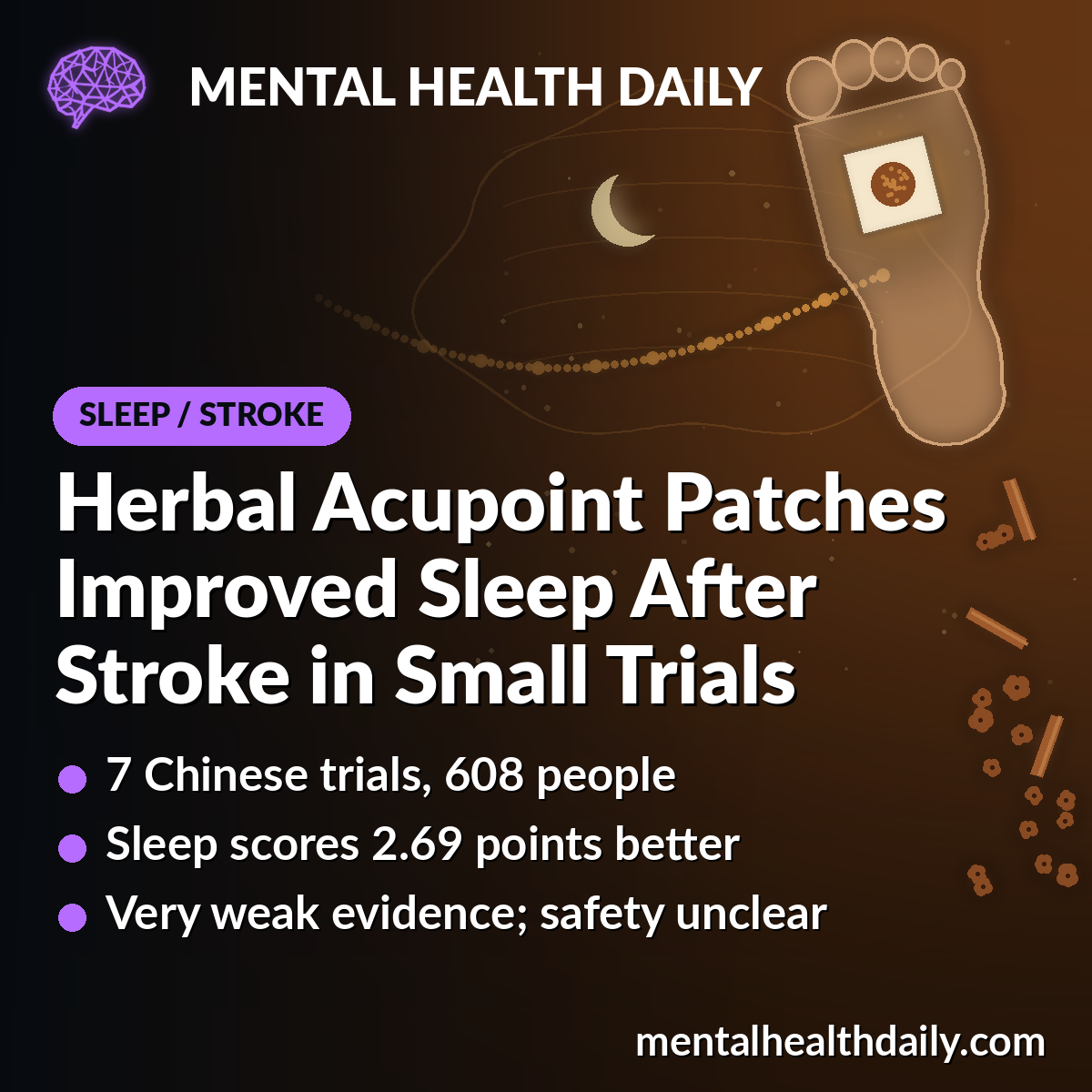
A 2026 meta-analysis, synthesizing findings from seven small Chinese trials, suggests that incorporating herbal patches on acupuncture points into standard stroke care can improve self-rated sleep quality in 608 stroke survivors grappling with sleep disturbances. While the findings indicate a potential benefit, the researchers cautiously rated the evidence as "very low certainty," largely due to methodological limitations across the included studies and a notable scarcity in safety reporting. This early glimpse into a traditional Chinese medicine (TCM) approach highlights both the potential for novel interventions in stroke recovery and the critical need for more robust scientific validation.
Understanding Post-Stroke Sleep Disturbances
Stroke, a leading cause of long-term disability worldwide, not only impacts motor and cognitive functions but also profoundly disrupts patients’ sleep patterns. Post-stroke sleep problems, including insomnia, sleep-disordered breathing, and restless legs syndrome, are highly prevalent, affecting an estimated 30% to 70% of survivors. These disturbances are not mere inconveniences; they can significantly impede rehabilitation, worsen neurological deficits, impair cognitive recovery, exacerbate mood disorders like anxiety and depression, and increase the risk of recurrent cardiovascular events. The mechanisms are multifactorial, involving direct damage to sleep-regulating brain regions, pain, medication side effects, psychological distress, and changes in daily routine. Effective management of post-stroke sleep is therefore a crucial, yet often overlooked, component of comprehensive stroke care, driving the search for both pharmacological and non-pharmacological interventions.
The Meta-Analysis Unveiled: Key Findings from Xu et al. (2026)
The meta-analysis, conducted by Xu et al. and published in 2026, aimed to systematically evaluate the efficacy and safety of herbal acupoint application for sleep problems in stroke survivors. The researchers meticulously scoured four Chinese and four English-language databases up to April 1, 2026, for randomized controlled trials (RCTs) involving stroke survivors diagnosed with a sleep disorder, primarily insomnia or poor sleep quality. Ultimately, seven trials met the stringent inclusion criteria, all originating from China and published in Chinese journals between 2013 and 2025. This geographical and linguistic concentration underscores a particular interest in this modality within the Chinese medical research community.
The pooled analysis revealed several key findings: a statistically significant improvement in self-rated sleep quality, a reduction in anxiety and depression scores in a subset of trials, and a higher response rate in the patch groups. However, these positive signals were consistently tempered by the researchers’ strong emphasis on the low certainty of the evidence, a recurring theme that shapes the interpretation of these results.
Decoding Herbal Acupoint Application: Principles and Practice
Chinese herbal acupoint application, often referred to as ‘TCM external application’ or ‘acupoint patching,’ is a non-invasive traditional Chinese medicine treatment with ancient roots. Unlike needle acupuncture, this method involves no skin penetration. Instead, a powdered herbal preparation, often mixed into a paste or formulated into a patch, is directly applied to specific acupuncture points on the skin and typically secured with medical tape. The underlying principle is two-fold: locally stimulating the chosen acupoint through the physical presence and gentle pressure of the patch, and allowing certain bioactive compounds from the herbs to be absorbed transdermally into the body. This dual action is believed to regulate qi (vital energy) and blood flow, balance yin and yang, and ultimately address the root causes of disease according to TCM theory.
In the trials reviewed by Xu et al., the most common herbal application involved powdered Evodia rutaecarpa fruit, a traditional Chinese herb known for its warming properties and use in conditions like insomnia and pain, placed on the Yongquan (KI1) point. This specific acupoint is located on the sole of the foot and is highly regarded in TCM for its calming and grounding effects, often utilized for sleep disorders, hypertension, and headaches. Other variations in the trials included cinnamon powder or various herbal blends applied to different acupoints situated at the wrist, navel, back, or leg, reflecting the diverse approaches within TCM for managing sleep disturbances. The choice of specific herbs and acupoints often depends on the individual patient’s TCM diagnosis and the particular presentation of their sleep problems.
Quantifying Sleep Improvement: The PSQI Scores
The primary outcome measure across the majority of the reviewed trials was the Pittsburgh Sleep Quality Index (PSQI). The PSQI is a widely validated, self-rated questionnaire designed to assess sleep quality and disturbances over a one-month period. It comprises 19 individual items that yield seven component scores: subjective sleep quality, sleep latency (time to fall asleep), sleep duration, habitual sleep efficiency, sleep disturbances, use of sleeping medication, and daytime dysfunction. Each component is scored from 0 to 3, with higher scores indicating worse sleep. The sum of these seven component scores provides a global PSQI score ranging from 0 to 21, where lower scores signify better sleep quality. In the trials included in the meta-analysis, participants generally started with PSQI scores ranging from approximately 12 to 17 points, indicating significant pre-existing sleep problems.
The pooled analysis across six of the seven trials (involving 536 participants) demonstrated a statistically significant improvement in PSQI scores in the herbal patch groups. At the end of treatment, PSQI scores were an average of 2.69 points lower (95% CI −3.84 to −1.55) compared to control groups receiving usual care alone. This reduction, while statistically significant, needs to be interpreted with caution. While a 2-3 point reduction on the PSQI is often considered clinically meaningful by some researchers, the high heterogeneity across the trials complicates a definitive statement on clinical significance.
A critical observation from the meta-analysis was the "sharp disagreement" among trials, evidenced by an I² statistic of 95%. An I² value of 95% indicates that 95% of the observed variability in results across the trials was due to actual differences between the studies, rather than random chance. This substantial heterogeneity points to significant variations in treatment protocols, patient characteristics, and study designs. Differences in the specific herbs used, the acupoints targeted, the daily wear time of the patches, the overall length of treatment, the stage of stroke recovery (acute, subacute, or chronic), and the nature of the background conventional care all contributed to this wide spread in outcomes. This high level of inconsistency makes it challenging to draw a precise, universally applicable conclusion about the magnitude of effect.
Further exploratory subgroup analysis shed light on how the background conventional care might influence the efficacy of the herbal patches. When the patches were added only to conventional medical care, the improvement in PSQI scores was more pronounced, with an average reduction of 3.95 points (95% CI −4.45 to −3.45). However, when the herbal patches were added to care that already included another active therapy, such as acupuncture or rehabilitation, the observed difference in PSQI scores shrank to 2.10 points (95% CI −3.43 to −0.76). This pattern aligns with the logical expectation that an add-on therapy has less "room" to demonstrate a large additional benefit when patients are already receiving other effective treatments. While insightful, the researchers rightly emphasized that each subgroup contained only a few trials, making these findings exploratory rather than definitive.
Beyond the quantitative scores, five trials also reported response rates, defined as the proportion of people meeting the trial’s own definition of "clinical improvement." The analysis indicated that participants in the herbal patch groups had 3.5 times the odds of responding (odds ratio 3.50, 95% CI 2.05–5.97) compared to control groups, with no measurable inconsistency across these trials. However, a significant caveat is that each trial employed its unique definition of "response," meaning this combined tally represents a mosaic of different success metrics rather than a uniform standard.
Beyond Sleep: Impact on Mood (HAMA & HAMD)
In addition to sleep quality, two of the seven trials (involving a total of 182 participants) also explored the impact of herbal acupoint application on mood, using clinician-rated scales: the Hamilton Anxiety Rating Scale (HAMA) and the Hamilton Depression Rating Scale (HAMD). The HAMA is a 14-item scale used to assess the severity of anxiety symptoms, while the HAMD is a 17- to 21-item scale used to assess the severity of depression. Both scales are widely used in clinical research, with higher scores indicating greater severity of symptoms.
In these two trials, the herbal patch groups reportedly showed a substantial reduction in mood scores:
- HAMA scores were 6.02 points lower (95% CI −6.97 to −5.06).
- HAMD scores were 5.76 points lower (95% CI −6.83 to −4.69).
These reported differences are notably large for a non-pharmacological intervention like a skin patch, suggesting a significant impact on anxiety and depression. However, the tight confidence intervals, rather than indicating robust evidence, largely stem from the small sample size and limited variability within these two trials. The researchers issued a strong caution regarding these mood effects, suggesting they might be overestimated. Neither trial provided details on the blinding of the clinicians who rated anxiety and depression, which introduces a high risk of bias. Furthermore, specifics regarding the Chinese version of the HAMA used or the training of the raters were not reported, further undermining the confidence in these particular findings. These limitations underscore the preliminary nature of the mood-related observations.
The Critical Gaps: Safety and Evidence Certainty
A fundamental aspect of evaluating any medical intervention is its safety profile. Disturbingly, the meta-analysis found a profound lack of adequate safety reporting across the included trials. Only two out of the seven trials explicitly reported adverse events. These two trials noted a total of five minor skin reactions, such as itching or redness, which are common and expected risks associated with prolonged skin contact with herbal pastes or patches. The remaining five trials offered no information whatsoever regarding whether side effects were monitored, let alone reported. This silence is not synonymous with safety. With any herbal paste or patch worn for hours or days, skin irritation, allergic reactions, or other localized effects are obvious potential risks that require diligent tracking.
Furthermore, none of the trials followed patients after the treatment period ceased. This means that the long-term benefits, potential for relapse of sleep problems, or the occurrence of delayed adverse reactions remain entirely unknown. This absence of follow-up data is a major limitation, preventing any conclusions about the sustained efficacy or enduring safety of this intervention.
The researchers applied the GRADE (Grading of Recommendations Assessment, Development and Evaluation) system, a widely accepted framework for rating the certainty of evidence in systematic reviews and meta-analyses. GRADE considers factors such as study design, risk of bias, inconsistency, indirectness, imprecision, and publication bias. Based on this rigorous assessment, Xu et al. rated the evidence for the overall response rate as "low certainty," and for every other outcome, including PSQI scores and mood improvements, as "very low certainty." This means that the true effect of herbal acupoint application could be substantially different from the estimates presented in the meta-analysis.
Five primary problems drove this low-to-very-low certainty rating:
- Small Sample Sizes: All included trials were relatively small, which inherently limits their statistical power and the generalizability of their findings.
- High Risk of Bias: Methodological flaws were prevalent. For instance, blinding of participants, personnel, and outcome assessors was often either poorly described or entirely absent, introducing a significant risk of performance and detection bias.
- High Heterogeneity: The substantial differences between trials (I² of 95%) in terms of herbs, acupoints, treatment duration, and background care made it difficult to synthesize a consistent effect.
- Imprecise Results: While some results were statistically significant, the wide confidence intervals for certain outcomes, especially for mood, reflected a lack of precision, meaning the true effect could vary considerably.
- Poor Safety Reporting: The severe lack of adverse event reporting makes it impossible to confidently assess the safety profile of the intervention.
A pervasive issue highlighted by the researchers, particularly relevant to studies from China, is publication bias. This phenomenon, where studies with positive or statistically significant results are more likely to be published than those with negative or null findings, can skew the perception of an intervention’s efficacy. A long-documented problem, a 1998 review of Medline-indexed trials found that virtually all acupuncture trials from China, Japan, Hong Kong, and Taiwan reported positive results, and 99% of Chinese trials of other treatments favored the test treatment, compared to 75% of trials published in England. The pattern of a small set of generally positive Chinese trials in the current meta-analysis fits this historical observation, reinforcing concerns about the potential for inflated effects.
A Broader Perspective: Comparing with Acupuncture and TCM
It is instructive to compare the findings on herbal acupoint patches with those on needle acupuncture for post-stroke insomnia, a related TCM modality with a much larger existing trial base. A 2023 meta-analysis, for example, synthesized data from 41 studies involving 3,233 participants, concluding that needle acupuncture significantly improved PSQI scores compared to control treatments (standardized mean difference −1.03, 95% CI −1.32 to −0.74).
However, despite the larger evidence base for needle acupuncture, the quality picture remains strikingly similar to that of herbal patches. The GRADE ratings for needle acupuncture studies were also predominantly low or very low certainty, and safety information was likewise insufficiently reported to draw firm conclusions. This parallel suggests a systemic challenge in the rigorous evaluation of TCM interventions within conventional research paradigms, particularly concerning methodological quality and comprehensive safety tracking. Essentially, herbal acupoint patches now occupy a similar position to needle acupuncture in this domain: consistently favorable findings in trials, but underpinned by weak evidence due to pervasive methodological limitations. The key difference lies in the volume of research: 7 trials for patches versus 41 for needles, indicating a less mature evidence base for the former.
Implications for Patients and Practitioners
Given the "very low certainty" of the evidence, what does this meta-analysis mean for stroke survivors struggling with poor sleep and for the healthcare professionals guiding their recovery?
For stroke survivors, the findings offer a glimmer of hope that a non-invasive, complementary therapy might help alleviate sleep problems. Many patients are keen to explore non-pharmacological options, especially those seeking alternatives to sedative-hypnotics which can have side effects and dependency risks, particularly in a vulnerable population like stroke survivors. The low-risk nature of a topical patch, especially when compared to medication, might appeal to some. However, it is crucial for patients to understand that the current evidence is preliminary. They should discuss any interest in such therapies with their healthcare providers to ensure it integrates safely with their overall treatment plan and to manage expectations realistically.
For practitioners, including neurologists, rehabilitation specialists, and general physicians, the meta-analysis signals an area of potential adjunctive therapy that warrants further investigation. While they cannot definitively recommend herbal acupoint patches based on the current evidence, they can acknowledge its emerging role in research and its potential appeal to patients. The findings might also encourage a broader dialogue about integrated approaches to stroke care, recognizing the value of exploring complementary therapies within a rigorous scientific framework. The significant reduction in PSQI scores, even with the caveats, suggests a biological plausibility that merits attention.
The researchers themselves have issued a clear call to action, outlining the critical steps needed to elevate the certainty of evidence for herbal acupoint application. They advocate for:
- Larger Multicenter Trials: To increase statistical power and ensure generalizability across diverse patient populations.
- Registered Protocols: To enhance transparency, prevent selective reporting, and reduce publication bias.
- Blinded Outcome Raters: To minimize detection bias, particularly for subjective measures like self-rated sleep and clinician-rated mood scales.
- Standardized Herbs and Acupoints: To reduce heterogeneity across studies and allow for more consistent replication.
- Objective Sleep Measures: Incorporating objective measures like actigraphy or polysomnography (PSG) alongside self-reported questionnaires would provide a more comprehensive and unbiased assessment of sleep quality.
- Real Follow-up: To evaluate long-term efficacy, sustained benefits, and delayed adverse events.
The Path Forward: Calls for Rigorous Research
The 2026 meta-analysis by Xu et al. provides a valuable initial synthesis of existing research on herbal acupoint application for post-stroke sleep problems. It suggests a promising, non-invasive avenue within traditional Chinese medicine that could potentially improve sleep quality and mood in stroke survivors. However, the consistent rating of "very low certainty" evidence due to pervasive methodological flaws, significant heterogeneity, and woefully inadequate safety reporting means that these findings should be viewed as hypothesis-generating rather than definitive.
The journey from promising traditional practice to evidence-based medical intervention requires adherence to the highest standards of clinical research. Future studies must address the identified limitations by adopting rigorous methodologies, including proper blinding, larger sample sizes, standardized protocols, objective outcome measures, and comprehensive long-term safety and efficacy follow-up. Only through such meticulous investigation can the true potential and safety profile of herbal acupoint application for post-stroke sleep disturbances be reliably established, offering clear guidance for patients and practitioners alike in the complex landscape of stroke recovery. Until then, while the concept is intriguing, caution and a demand for more robust data remain paramount.

