

In Tibetan Buddhism, the concept of "bardo" signifies an intermediate state, a liminal space between defined points. This can refer to the passage from death to rebirth, but also encompasses the journey through life itself, from birth to death. The collection of essays and interviews titled Between-States delves into these profound bardo concepts, exploring themes of acceptance, interconnectedness, and impermanence as they manifest in human relationships—parent-child dynamics, marital bonds, friendships—and in the pursuits of work and creativity. Through these explorations, the collection aims to illuminate pathways to discovering new perspectives and finding enduring happiness amidst life’s continuous flow.
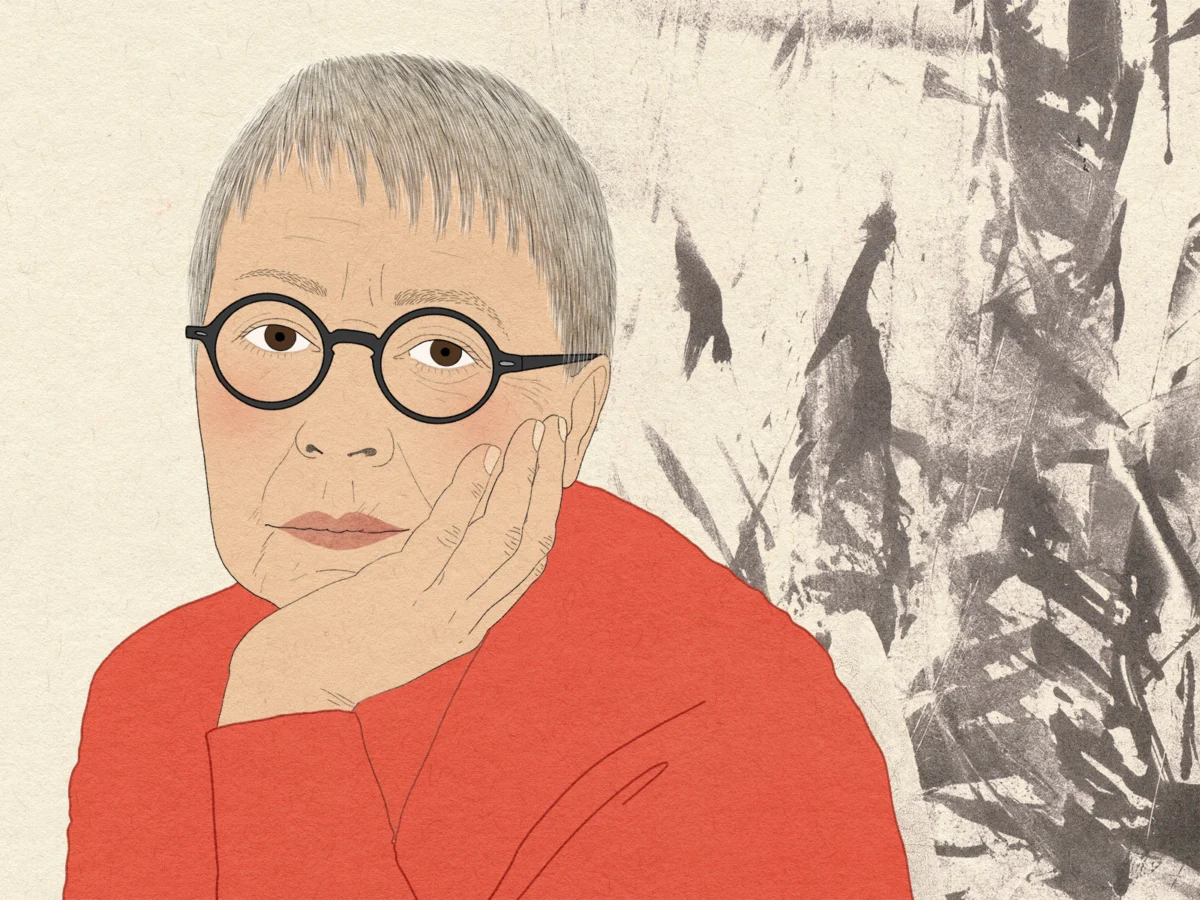
Sigrid Nunez, a celebrated author whose works have garnered critical acclaim and numerous awards, further investigates these "between-states" in her latest collection of stories, It Will Come Back to You. The book navigates various life stages, from the often-turbulent period of adolescence to the reflective process of aging, and examines the unexpected reversals that everyday existence can bring. One particularly striking narrative within the collection is "Airport Story," which depicts a woman finding herself unexpectedly stranded and disoriented in an airport due to a flight delay.
"So innocently, so unexpectedly, the woman loses her sense of identity through no fault of her own," Nunez explained in a recent interview, reflecting on the story’s premise. "It’s because of this strange but totally ordinary situation in an airport. You’re going along and you think, ‘This is life, this is me, this is how things are,’ and suddenly it’s like you leave the ground. You’re walking on air and you don’t know how you got there. You also don’t know how and when you’re going to come down.” This profound sense of disorientation, of being untethered from one’s perceived reality, is a central tenet explored in Nunez’s work.
Born in 1951 in New York City, Nunez has established a distinguished literary career, authoring nine novels and a memoir, Sempre Susan, which chronicles her significant relationship with the iconic writer Susan Sontag. Her novel The Friend (2018) was a monumental success, earning the prestigious National Book Award for Fiction and later adapted into a film starring Naomi Watts and Bill Murray. More recently, her 2020 novel What Are You Going Through was adapted by acclaimed director Pedro Almodóvar into the film The Room Next Door, featuring Tilda Swinton and Julianne Moore. It Will Come Back to You, Nunez’s first collection of short stories, compiles works published over the past three decades, offering a comprehensive retrospective of her narrative evolution. Her literary achievements have been recognized with honors such as a Guggenheim Fellowship and the Rome Prize in Literature, underscoring her significant contributions to contemporary literature.
Nunez recently spoke about the intersection of writing with the concept of "bardo," her enduring preoccupation with mortality, and a surprising career aspiration she harbored.
The Writer’s Liminal Space: Bardo and Creativity
Nunez often explores themes of liminality, those transitional periods where individuals find themselves in an intermediate state. When asked about her personal experiences with such "between-states," she immediately identified the act of writing. "The first thing that comes to mind is that I feel very much in bardo when I’m writing," she stated. "It’s a desirable state of suspension, one where I forget myself." She referenced the artist Philip Guston, who, quoting John Cage, described the studio as a space where the past, friends, enemies, the art world, and one’s own ideas converge. However, as the creative process deepens, these external and internal influences recede, ideally leading to a state of pure artistic immersion. "But as you continue painting, they start to leave, one by one, until you’re left completely alone. Then, if you’re lucky, even you leave." This profound self-effacement, this dissolution of the ego into the creative act, mirrors the transitional states of bardo.
Navigating the Path: Resilience in the Face of Adversity
The journey through the bardo of life, much like the path of a writer, is shaped by choices and sustained effort. Nunez’s trajectory toward literary success was not immediate; it was a long and arduous path marked by significant challenges. "It took a long time for things to happen. I wasn’t getting published, wasn’t making money. There was a certain amount of humiliation to endure." She recounted instances of being questioned about her career, even by professionals. "I would go to the dentist and he’d say, ‘Oh, you’re still writing? Haven’t you been working on that book for about fifteen years?’" she recalled, adding with a wry smile, "No, I wasn’t working all that time on one book." Another memorable encounter occurred at a dinner party where a guest, upon learning Nunez was a writer, inquisitively asked, "What name do you write under?" "In front of the whole table!" Nunez exclaimed, highlighting the subtle but persistent skepticism she faced.
Her family, while supportive in their own way, expressed practical concerns. "My parents were quite reasonably worried about how I expected to make a living," she admitted. A significant turning point, or rather a moment of profound challenge, came from a trusted boyfriend, a psychiatrist, who, despite appreciating her work, offered a difficult piece of advice. "Sometimes you have to give up a dream in order to move on," he told her. This occurred when Nunez was in her late thirties, a period of considerable struggle. "Things were going very badly, and I was in tears a lot."
Despite the emotional toll and the well-intentioned counsel, Nunez felt an unwavering conviction. "No," she responded when asked if she considered giving up. "I knew it was a loving thing to say and he wasn’t trying to sabotage me. And, of course, he was not wrong, but as it turned out, about me, he was wrong. I knew writing was what I was supposed to be doing." This deep-seated certainty, a belief in her authentic calling, proved to be her guiding force.
Embracing Authenticity: The Role of Self-Belief and Inheritance
The teachings of The Tibetan Book of the Dead emphasize embracing one’s authentic nature within the bardo, living in alignment with one’s true self. Nunez’s ability to persevere through significant professional hurdles stemmed from a profound sense of self-belief. "I became less and less risk-averse, and I thought, ‘Well, I’m not going to stop now.’”
A fascinating insight into her tenacity emerged when Nunez reflected on her heritage. "Part of it was something that didn’t occur to me until a few years ago, when I was doing an interview for The Paris Review," she revealed. "My father, who was Chinese-Panamanian, was a gambler, not unto ruination, but he gambled the way many Asian men gamble. I realized I’d inherited that trait, that it was in my DNA to dare to keep writing even when I wasn’t having any success and so much time was passing. In other words, I was willing to gamble with my future and risk everything in the hope that I’d reach my goal in the end." This innate willingness to take calculated risks, a trait she traces to her father’s background, played a crucial role in her sustained dedication to her craft.
This unwavering commitment eventually began to yield tangible results. "I just kept going, and opportunities and encouragement started to come: a story accepted by a little magazine, some small award, a person I greatly respected saying of something I wrote, ‘This is really good.’” These incremental validations served as vital affirmations, fueling her resolve.
The Long Road to Publication and Mentorship
The publication of her first novel, A Feather on the Breath of God, was a testament to her persistence. "My first book, A Feather on the Breath of God, was very, very, very hard to get published," Nunez recounted. "It was rejected by one editor after another; I can’t recall just how many." The novel was finally accepted when she was 42 and published when she was 44, a considerably late debut in the literary world.
Following this milestone, Nunez consciously structured her life to prioritize her writing. "From that time, I made an effort to organize everything around my writing. It helped to be in a place like New York—I found flexible jobs proofreading, teaching ESL, whatever. I took time off to go to residencies, where I’d meet other writers who were supportive, telling me that my writing was good.” These periods of immersion and connection with fellow artists provided crucial encouragement and a sense of community.
A pivotal influence in her life was Susan Sontag, who entered her orbit after Nunez completed her MFA program at Columbia University. Sontag viewed writing as a "religious vocation, an exalted and even heroic profession, and the best job in the world." According to Sontag’s perspective, aspiring writers needed to be exceptionally dedicated, prepared for significant sacrifices, and unconcerned with financial or reputational rewards. "From her I felt that I was being given permission to do this unjustifiable thing of devoting my life to writing, while everyone else was concerned with how I was going to make a living and when I was going to find a husband and settle down.” Sontag’s unwavering commitment and validation provided Nunez with the crucial permission she needed to pursue her calling without the societal pressures of conventional success.
Contemplating an Exit: Retirement and the Fear of Regret
As Nunez reaches a stage where many contemplate retirement, the question of her future writing endeavors arises. "I’m thinking of stopping. Or limiting it, not writing as much as I have been, because it’s so all-consuming." This introspection echoes the sentiments of fellow writers like Philip Roth, who, upon ceasing fiction writing, redirected his energy towards cultural pursuits and social engagements. Nunez expresses a similar inclination, acknowledging the desire to engage in activities typically associated with retirement.
However, she contrasts her feelings with Sontag’s staunch aversion to the concept of retirement. "Sontag was appalled by such an idea. The word ‘retire’ made her very sick." Nunez notes that Sontag, paradoxically, managed to balance her intense writing life with a vibrant social existence, frequently attending concerts, movies, and social gatherings. "She was famous for that. But I never could do it all. I feel like I’ve missed a lot.” This admission suggests a recognition of the all-consuming nature of her creative process, which may have necessitated foregoing other life experiences.
The Ever-Present Shadow of Mortality
The bardo teachings inherently confront the reality of impermanence and the inevitability of death. Nunez reveals a lifelong engagement with this theme. "I’ve always been death-haunted," she states. This pervasive awareness of mortality is deeply rooted in her upbringing. "Part of the reason for that is that my mother was raised in Nazi Germany and came of age during the Second World War. She met my father when he was serving over there with the occupying forces, and he brought her here, to Brooklyn."
The absence of religious framework in her household meant that death was approached as a stark, unadorned fact of existence. "Ours wasn’t a religious household, so we kids didn’t hear anything about people seeing each other again in heaven. Death was just a plain boiled fact of life." Her mother’s firsthand experiences with the pervasive death and loss during wartime profoundly shaped her perspective. "My mother had seen a lot of death, and even when we kids were very young, she’d tell us stories about people who were killed in the war. She would also speak matter-of-factly about the deaths of people in our community. ‘Oh, Mrs. Rodriguez’s father died,’ she’d say. Almost as if it were no big thing. There was never any discussion of what death meant." This upbringing instilled in Nunez a pragmatic, unsentimental view of mortality, devoid of supernatural comfort.
While death is a constant presence in her thoughts and work, Nunez asserts a lack of fear regarding the ultimate cessation of life. "Death is always on my mind, and always part of my work. But I think of myself as somebody who’s not afraid of death. The idea of moving on has not terrified me yet." She articulates a perspective common among those who feel they have lived a full life: "If you reach a certain age, you can feel like you’ve lived your given life, and though, of course, there’s more you could see and do, you can go in peace.”
However, she draws a critical distinction between the abstract concept of death and the process of dying. "Though, to be clear, I’m very afraid of the way we die." She cites Susan Sontag’s struggle with illness as an example of a death she would wish to avoid. "Sontag was an example of how you don’t want to die. Kicking and screaming. Resistant to the point that she insisted on radical treatments that it was understood had almost no chance of working." Nunez acknowledges the uncertainty of her own reaction in such a situation, admitting, "I don’t have what she had, this overwhelming terror of the dark. But who knows how I’ll feel when it happens to me. I’ve heard people say they’re not afraid, and then when they’re dying, they feel completely different." This nuanced perspective highlights the complex interplay of philosophical acceptance and visceral fear when confronting the end of life.
The Weight of Unlived Lives and Missed Opportunities
The conversation then turned to the concept of regret, a natural companion to retrospection. Nunez’s father, a physician and philosopher, reportedly feared dying with regrets over a life not fully lived. Nunez, now 75, is at an age where such reflections become more pronounced. "Now that I’m 75, I think about regrets. I’m at a time when it’s natural to look back and think about what didn’t happen, whereas before I could think, ‘Well, such-and-such a thing could still happen.’”
Her regrets span a range of experiences, from the whimsical to the deeply felt. "Some of my regrets are silly, like, ‘I always wanted to learn how to juggle but never did.’ I also wish I’d learned more languages. I wish I’d spent more time in nature, and more time traveling. I also regret not having had more animals in my life.”
The decision to refrain from having pets in recent years stems from the profound grief she experienced with the loss of her long-lived cats. "The problem is that the cats I used to have lived a long time, and losing them was terrible. Their final days were too much, they both suffered a lot, and I can’t go through that again, especially not alone.”
However, the most significant regret revolves around a path not taken, a profession she feels would have brought her profound fulfillment. "But when I think about what I might have done if I weren’t a writer—what would have made me a much happier, more fulfilled person—it’s doing some kind of work with animals. I believe I would have been a good trainer or caretaker of animals, because I’m patient with animals, much more so than with people, and I’ve always loved them a lot.” She recalled a friend suggesting she emulate the "animal lady" who appeared on The Tonight Show, a suggestion that resonated deeply. "My friend said, ‘This is what you should have done with your life. This is who you are.’ I thought there was a lot of truth to that.”
Nunez contrasts this with the regret of not having had children. While she expresses affection for children, she states, "I would never have had a child as a single person, ever. I would always have had to be with somebody, and no one I was ever with was somebody I wanted to have children with—or who wanted children himself. So I don’t think of it as something I regret not having done, because it wasn’t meant to happen.” Her perspective on motherhood is grounded in the practicalities of partnership, suggesting a pragmatic approach to life’s significant decisions.
Finding Happiness Amidst Global Turmoil
The Dalai Lama’s assertion that, fundamentally, all humans desire happiness serves as a unifying principle. Nunez acknowledges the pervasive human quest for contentment, even amidst the turbulent "bardo of life." However, her current emotional landscape is significantly influenced by global events. "Like so many people, I’m obsessed with current events, the sense of a world spinning out of control. The craziness and cruelty and corruption. Sometimes I feel like I’m drowning in it.”
She observes a marked difference in the current global climate compared to her lifetime. "The world has been troubled my whole life because the world is always troubled, but things are different now." The anticipation of escalating crises is palpable: "I keep expecting ever more terrible things to happen: Somebody will drop a nuclear bomb, hackers will create chaos through massive cyberattacks, destructive weather events will keep getting worse, and on and on.” This sentiment is shared by many of her contemporaries. "People I know who are my age say, ‘Who wants to spend the last part of their life in this mess?’”
Despite this pervasive sense of unease, Nunez finds solace and purpose in her writing. "But I’m able to write, and when I’m writing, I’m able to feel like I’m doing what I should be doing despite all the bad things happening in the world.” This engagement with her craft provides a grounding force, a sense of agency in a world that often feels chaotic.
Furthermore, she emphasizes the importance of humor and shared perspective in navigating these challenges. "It’s important, as well, to have a sense of humor, to still be able to see the comic aspects in things, and to be around other people who can do that too.” She cites the Dalai Lama as a prime example of this spirit. "The Dalai Lama is a wonderful example. He’s suffered tremendous loss, yet he calls himself a ‘professional laugher.’ He loves joking around.” Nunez concludes with a poignant observation: "That’s the way it should be. There’s nothing more human than that.” This perspective underscores her belief that embracing joy and levity, even in the face of profound suffering and uncertainty, is an essential aspect of the human experience.

