

Men employed in the demanding smelting, anode, and casting sectors of an Iranian aluminum production facility have reported statistically significant higher levels of anxiety compared to their counterparts working in office and security roles within the same plant. This concerning finding is directly correlated with elevated markers of polycyclic aromatic hydrocarbons (PAHs) and aluminum in their urine, even after carefully accounting for the independent influence of job-related stress. The study, conducted by Mohammad Zare and a team of researchers, sheds new light on the complex interplay between industrial chemical exposure, occupational stressors, and mental well-being in heavy industry.
The Study Unveiled: Assessing Anxiety in a High-Risk Environment
The research initiative targeted male employees at a single aluminum production plant in Iran, inviting 270 individuals to participate. A robust 96.3% response rate saw 260 men complete comprehensive questionnaires and provide urine samples for analysis. To ensure the integrity of the findings, participants with pre-existing major psychiatric or neurological diagnoses, those on regular medication for anxiety or depression, or individuals suffering from major chronic diseases were excluded. Notably, smoking rates were nearly identical between the exposed and control groups (54 smokers in the exposed group versus 53 among office and security staff), suggesting that tobacco use, a known source of PAHs, did not disproportionately skew results between the two cohorts.
The study strategically divided the participants into two distinct groups: 130 "exposed" workers directly involved in the smelting, anode, and casting areas, and 130 "non-exposed" individuals comprising office and security personnel. This clear division allowed for a direct comparison of health outcomes and exposure levels.
Anxiety Scores: A Modest but Significant Difference
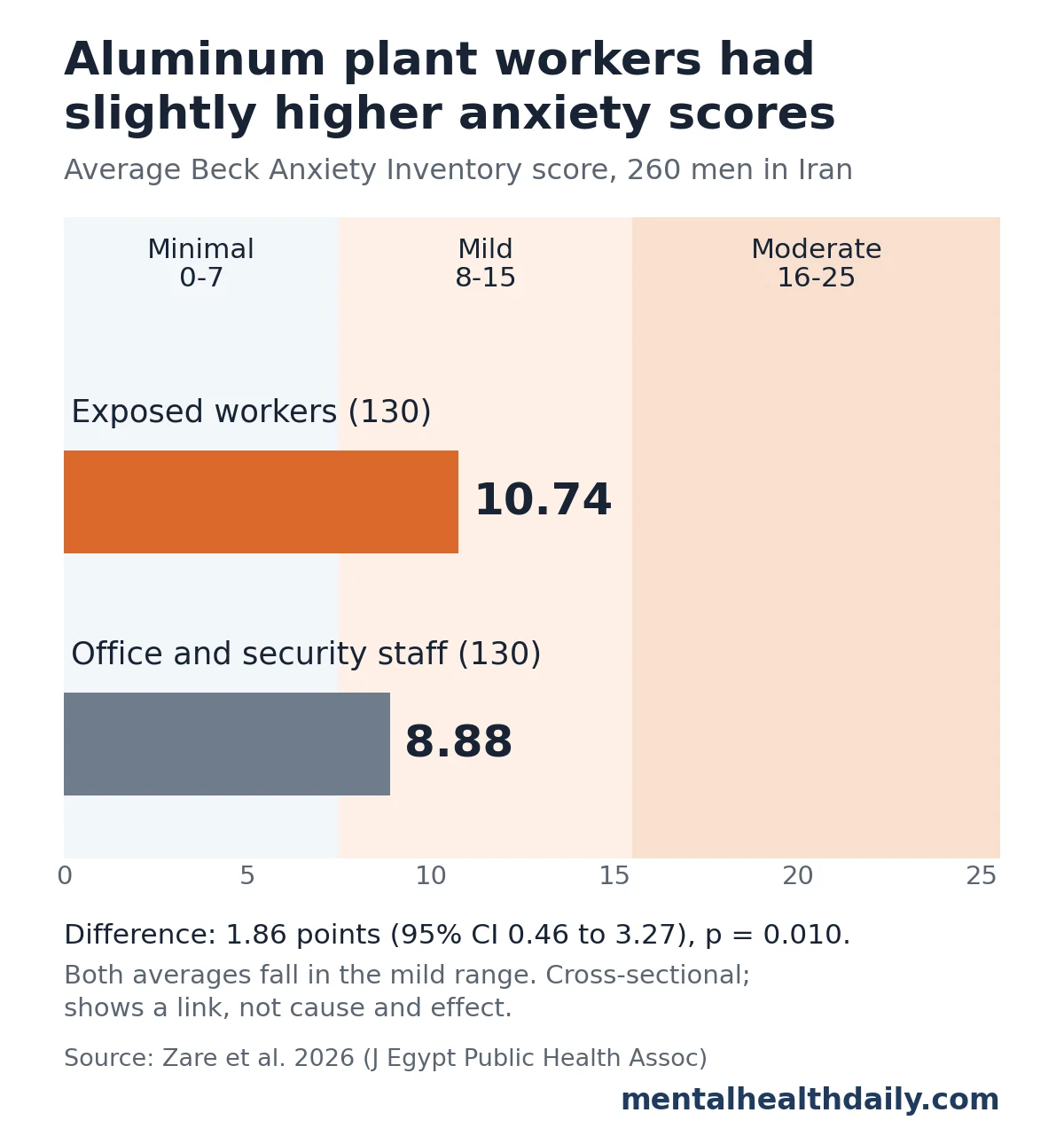
Utilizing the Beck Anxiety Inventory (BAI), a widely recognized self-report questionnaire for measuring anxiety severity, the researchers observed a notable difference between the groups. Exposed workers recorded an average BAI score of 10.74, while office and security staff averaged 8.88. This 1.86-point difference was deemed statistically significant (95% CI 0.46 to 3.27, p = 0.010), indicating that the observed disparity was unlikely due to chance.
While both group averages fell within the "mild anxiety" range (8 to 15 on standard BAI cutoffs), the researchers cautiously described the gap as "modest in absolute terms," suggesting it might not reflect clinically significant anxiety for the majority of workers. However, the study also revealed a greater spread of scores among exposed workers (standard deviation 6.18 vs. 5.28). This wider distribution implies that while the average might be mild, a subset of exposed individuals likely experienced anxiety levels well beyond this mild range, potentially reaching moderate or severe thresholds. This variability underscores the importance of individual screening in high-exposure jobs, as group averages can mask the struggles of a vulnerable minority.
Chemical Footprints: Stark Differences in Exposure Markers
The disparity in anxiety levels was paralleled by even more pronounced differences in the biological markers of chemical exposure. Urinary 1-hydroxypyrene (1-OHP), a key metabolite of pyrene and a standard indicator of PAH absorption, was found to be significantly higher in exposed workers, averaging 1.48 µmol/mol creatinine compared to a mere 0.35 µmol/mol creatinine in the control group. This represents more than a four-fold increase in PAH exposure. Similarly, urinary aluminum levels were dramatically elevated in exposed workers, averaging 58.64 µg/g creatinine, in stark contrast to the 9.38 µg/g creatinine observed in office and security staff – a six-fold difference. These figures robustly confirm that the exposed group indeed faced substantially higher levels of both PAH and aluminum absorption.
Unraveling the Connections: PAH, Aluminum, and Job Stress
A deeper statistical analysis, correlating various factors with anxiety scores across all 260 participants, revealed several compelling links. Urinary 1-OHP exhibited the strongest individual correlation with anxiety (r = 0.505), followed closely by job stress (r = 0.435), and then urinary aluminum (r = 0.417). Airborne benzo[a]pyrene, a specific and highly carcinogenic PAH, also showed a weaker but still relevant link (r = 0.249).
Recognizing that these factors might overlap, with individuals experiencing high exposure often also reporting higher job stress, the researchers employed a multivariate regression model. This sophisticated statistical technique allowed them to isolate the independent contribution of each factor while holding others constant. The model confirmed that four factors were independently and significantly linked to higher BAI scores:
- Urinary 1-Hydroxypyrene (1-OHP): Standardized β = 0.287, indicating a strong independent link. Each additional 1 µmol/mol creatinine of 1-OHP was associated with approximately 0.26 more BAI points.
- Job Stress: Standardized β = 0.263, highlighting its significant independent role.
- Urinary Aluminum: Standardized β = 0.248, also demonstrating a substantial independent connection. Each additional 10 µg/g creatinine of aluminum correlated with about 0.6 more BAI points.
- Marital Status: Being single was linked to higher anxiety (Standardized β = 0.160).
- Education Level: Lower education was associated with higher anxiety (Standardized β = -0.160, inversely).
- Body Mass Index (BMI): Higher BMI also showed a link to increased anxiety (Standardized β = 0.150).
Interestingly, age and years on the job did not emerge as significant factors in this model. Collectively, these six variables explained 38.4% of the variation in anxiety scores (R² = 0.384), providing a substantial explanatory power for the observed anxiety levels.
Crucially, the study also clarified the relationship between chemical exposure and job stress. While exposed workers did report more job stress (52.45 vs. 47.45), the researchers specifically tested whether job stress was merely an intermediary through which chemical exposure led to anxiety. Their findings indicated that this was not the case; chemical markers and job stress each maintained their own distinct and independent links to anxiety. This implies that addressing one factor without the other may not fully mitigate the risk of anxiety in these industrial settings.
The Underlying Biology: Why PAHs and Aluminum Could Affect Anxiety
The potential mechanisms by which PAHs and aluminum might contribute to anxiety are complex, drawing on evidence primarily from animal and cell studies cited by the researchers. These proposed biological pathways include:
- Oxidative Stress and Neuroinflammation: PAHs, once absorbed, are metabolized in the body, a process that can generate reactive oxygen species (ROS). These ROS can lead to oxidative stress, damaging cells and tissues, particularly in the brain. This oxidative stress can, in turn, trigger neuroinflammation, a chronic inflammatory response within the nervous system. Neuroinflammation is increasingly recognized as a contributor to various neuropsychiatric disorders, including anxiety and depression, by disrupting normal brain function and neurotransmitter systems.
- Disruption of Neurotransmitter Systems: Both PAHs and aluminum have been implicated in altering the delicate balance of neurotransmitters crucial for mood regulation. For instance, they may interfere with the synthesis, release, or reuptake of serotonin and dopamine, two key neurotransmitters involved in feelings of well-being, motivation, and anxiety control. Dysregulation of these systems is a hallmark of many anxiety disorders.
- Mitochondrial Dysfunction: Mitochondria are the "powerhouses" of cells, and their proper function is vital for neuronal health. Exposure to toxins like PAHs and aluminum can impair mitochondrial function, leading to reduced energy production and increased cellular stress within brain cells. This dysfunction can contribute to neuronal vulnerability and impact neurological and psychological processes.
While these biological pathways offer plausible explanations, the existing human evidence regarding aluminum’s neurotoxic effects has predominantly focused on cognitive and motor functions rather than anxiety specifically. A 2007 meta-analysis of nine occupational studies, involving 449 exposed workers and 315 controls, found that aluminum-exposed workers consistently performed worse on cognitive and motor tests, with a particularly clear effect on thinking speed (d = -0.43). This underscores aluminum’s capacity to affect the nervous system, even if the direct link to anxiety requires further elucidation.
Broader Context: PAH Exposure and Mental Health in Other Populations
The findings from the Iranian aluminum plant are not isolated but resonate with a growing body of research linking environmental and occupational chemical exposures to mental health outcomes.
A recent analysis (published in 2025, implying a very current study) of 4,026 adults participating in the National Health and Nutrition Examination Survey (NHANES) in the U.S. found compelling evidence that eight out of nine urinary PAH metabolites were associated with reporting seven or more anxious days per month. Specifically, for 1-hydroxypyrene, the odds ratio was 1.16 per log-unit rise (95% CI 1.04 to 1.29), and a combined score for all nine PAHs yielded an odds ratio of 1.15 (1.04 to 1.28). This large-scale population study provides crucial corroboration, suggesting that the link between PAH exposure and anxiety extends beyond specific occupational settings.
Another significant study, the GuLF STUDY, investigated the mental health impacts on workers involved in the clean-up efforts following the 2010 Deepwater Horizon oil spill. This extensive study compared 8,968 clean-up workers with 2,225 individuals who trained but were not hired. Clean-up work was linked to a higher probability of depression (prevalence ratio 1.22) and Post-Traumatic Stress Disorder (PTSD) (prevalence ratio 1.35). While this study focused on depression and PTSD rather than generalized anxiety, and the exposures were to a complex mixture of hydrocarbons rather than specific PAHs and aluminum, it demonstrated how intense chemical exposure in an occupational context can profoundly impact mental health. Notably, after accounting for specific clean-up job experiences, only the highest hydrocarbon exposure remained independently linked to PTSD, highlighting the direct toxicological component.
Beyond chemical exposures, the role of job stress in mental health is well-established. A meta-analysis of longitudinal studies consistently found that high job demands, low control over work, and an imbalance between effort and reward are significant predictors of common mental disorders. The strong and independent link between job stress and anxiety observed in the Iranian aluminum plant workers aligns perfectly with this extensive body of work, underscoring that psychosocial factors are as critical as chemical ones.
Finally, the complex relationship between smoking and anxiety is also relevant. Tobacco smoke is a significant source of PAHs, and a bidirectional link between smoking and anxiety has long been suspected. While a systematic review found inconsistent evidence on which comes first – anxiety leading to smoking, or smoking exacerbating anxiety – the presence of smokers in both groups of the Iranian study was controlled for, ensuring that differences were not solely attributable to this factor.
Limitations of the Current Study: A Call for Further Research
While providing valuable insights, the Iranian aluminum worker study is subject to certain limitations that warrant consideration for future research. As a cross-sectional study, anxiety levels and exposure markers were measured simultaneously at a single point in time. This design allows for the identification of associations but cannot definitively establish a cause-and-effect relationship. It is not possible to conclusively state that PAHs or aluminum caused the anxiety, only that they were significantly linked.
Specific limitations identified by the researchers include:
- Self-Reported Anxiety: The reliance on self-reported questionnaires for anxiety could be subject to reporting bias.
- Single Plant Data: The study was conducted at a single aluminum production plant, limiting the generalizability of the findings to other plants with potentially different operational procedures, exposure controls, or worker demographics.
- Unmeasured Lifestyle Factors: The study did not account for various lifestyle factors such as diet, physical activity levels, or alcohol consumption, all of which can influence both chemical exposure metabolism and mental health.
- Complex Exposure Mixtures: Workers in smelting environments are exposed to a complex cocktail of chemicals, not just PAHs and aluminum. The study focused on these two prominent exposures, but synergistic or antagonistic effects with other unmeasured substances cannot be ruled out.
Implications for Aluminum and Smelter Workers: A Holistic Approach to Safety
The findings of this study carry significant implications for occupational health and safety practices in the aluminum industry and other heavy industrial sectors.
Exposure Control is Paramount and Already Justified: The need for stringent control over exposure to benzo[a]pyrene and other PAHs is already well-established due to their classification as potent cancer hazards. This new evidence linking them to anxiety provides yet another compelling reason to reinforce and improve existing exposure mitigation strategies. Reducing airborne and dermal contact with these carcinogens will not only protect against cancer but also potentially safeguard workers’ mental well-being.
Job Stress Deserves Equal Attention: The study’s clear demonstration of job stress as an independent and strong predictor of anxiety underscores the necessity of addressing psychosocial work stressors with the same vigor applied to chemical exposures. Companies should implement comprehensive programs to identify and reduce factors contributing to high job demands, low control, and effort-reward imbalance. This could include improved work-life balance initiatives, clearer communication channels, better training, and increased worker autonomy where feasible.
Proactive Screening and Mental Health Support: Given that a group average can mask significant individual suffering, the researchers advocate for integrating mental health checks into the routine occupational health monitoring already conducted in high-exposure plants. This could involve regular, confidential screenings using validated tools like the BAI. Workers who exhibit persistent worry, tension, or physical symptoms of anxiety should be encouraged and supported to seek assistance from occupational health clinics or their personal doctors. Early identification and intervention can prevent mild anxiety from escalating into more severe and debilitating conditions.
Beyond the Workplace: Addressing Broader Environmental Exposures: While the study focuses on occupational settings, it also implicitly highlights the broader public health concern regarding PAHs. Everyday contact with aluminum (e.g., cookware, foil, cans) involves vastly lower exposure levels than smelter work and was not the subject of this study. However, the ubiquity of PAHs in vehicle exhaust, tobacco smoke, and charred food means that general population exposure remains a concern for overall health, including potentially mental health, as suggested by the NHANES data.
In conclusion, the Iranian study serves as a critical reminder that the health impacts of industrial work extend beyond physical injuries and well-known diseases like cancer. Mental health, specifically anxiety, can be directly influenced by the chemical environment and the psychosocial demands of the workplace. A truly comprehensive approach to worker safety in heavy industries like aluminum smelting must therefore encompass rigorous chemical exposure control, proactive management of job-related stress, and dedicated support for the mental well-being of its workforce. Future longitudinal research, exploring broader populations and specific biological pathways, will be crucial to further solidify these links and inform even more effective intervention strategies globally.

