

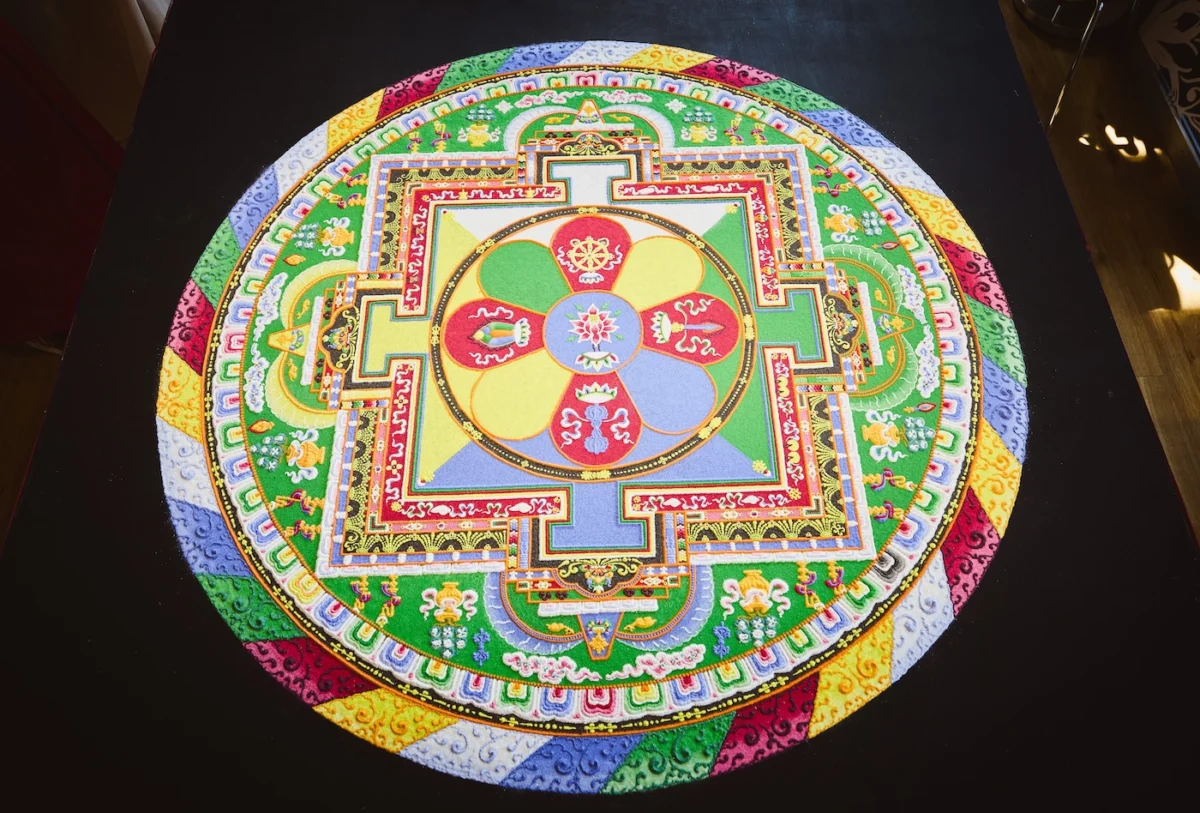
For five days at the Oxo Gallery on London’s bustling South Bank, a profound artistic and spiritual undertaking unfolded, inviting visitors to contemplate the fundamental Buddhist concept of impermanence. The Pure Land Foundation, in collaboration with Tricycle: The Buddhist Review, presented a live sand mandala installation meticulously crafted by three senior monks. From Wednesday, June 17, to Sunday, June 21, 2026, the gallery transformed into a sanctuary of stillness, offering a stark contrast to the relentless energy of the surrounding city.
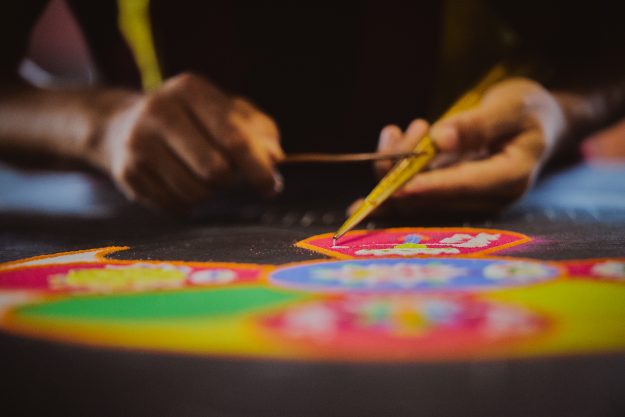
The installation began with the monks hunched over, their movements precise and deliberate as they began to lay down finely colored sand. Grain by grain, a complex and sacred image started to emerge. This was not merely an aesthetic display but a living practice, a tangible manifestation of Buddhist philosophy. The very act of creation, witnessed over five days, served as a powerful lesson in patience, focus, and the transient nature of all phenomena.
The Genesis of a Sacred Space Amidst Urban Flux
The Oxo Gallery, known for its contemporary exhibitions and prime location along the River Thames, provided a unique backdrop for this ancient practice. London, a city characterized by its ceaseless motion, where buses rumble across bridges and pedestrians navigate crowded pavements, often with their attention fixed on digital devices, became the unlikely stage for a meditative art form. The juxtaposition of this urban dynamism with the serene, focused effort of the monks was a central theme of the experience.

The Pure Land Foundation, an organization dedicated to fostering spiritual well-being and exploring the intersection of art and contemplative traditions, initiated the collaboration. Their mission aligns with the core tenets of Buddhist practice, which often emphasize the importance of cultivating inner peace and understanding the nature of reality. The partnership with Tricycle: The Buddhist Review, a publication renowned for its in-depth coverage of Buddhist thought and culture, further amplified the installation’s reach and resonance.
A Five-Day Journey of Creation and Contemplation
The installation commenced on Wednesday, June 17, with the initial outlining of the mandala. Visitors entering the gallery would have observed the monks carefully marking out the sacred space, laying the foundation for the intricate design. Over the subsequent days, the mandala gradually took shape.
Day 1-2: Foundations and Emerging Forms
The early stages focused on establishing the geometric patterns and foundational colors. The monks’ tools, often simple yet exquisitely designed, allowed for the precise placement of each grain of sand. This period demonstrated the meticulous planning and deep concentration required to initiate such a complex work. Initial outlines and broad color fields would have been visible, hinting at the final composition.
Day 3-4: Intricacy and Deepening Detail
As the installation progressed, the mandala began to reveal its full complexity. Fine details emerged, intricate symbols and deities took form, and the interplay of colors became more pronounced. Visitors returning to the gallery during these days would have witnessed a significant transformation, not through sudden bursts of activity, but through the steady, incremental application of effort. This gradual unfolding mirrored the Buddhist understanding of spiritual progress as a process of sustained practice rather than instantaneous enlightenment.
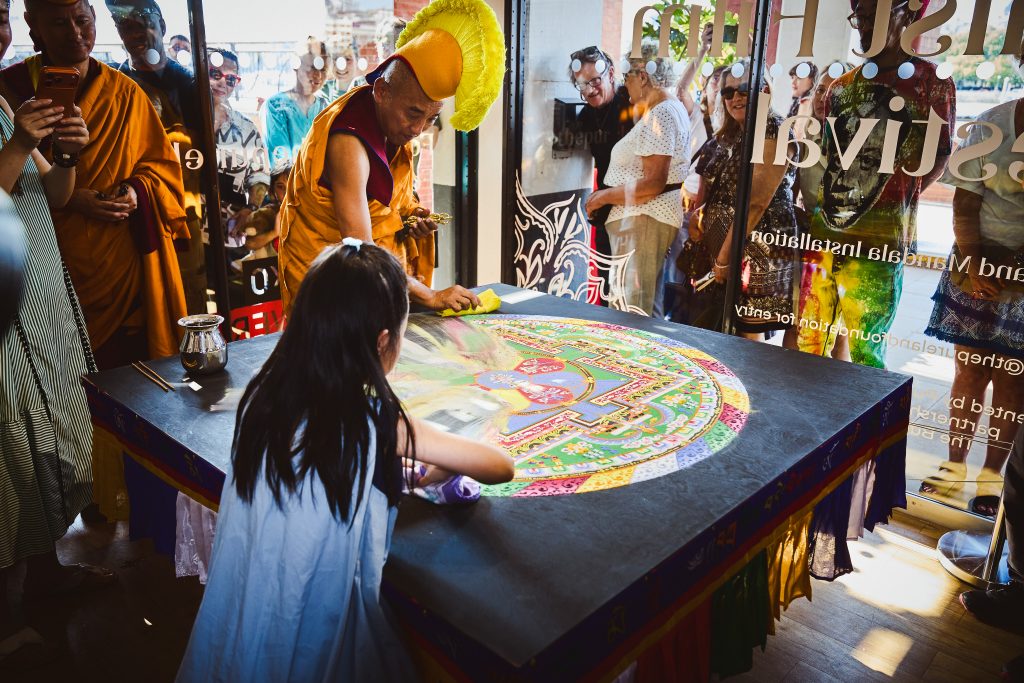
Day 5: Culmination and Ceremonial Dissolution
Sunday, June 21, marked the completion of the mandala. The monks would have added the final touches, bringing the sacred artwork to its zenith. This moment of completion, however, was immediately followed by one of Buddhism’s most poignant teachings: impermanence. The monks would then have performed a ceremonial dissolution, carefully sweeping away the sand, returning it to its elemental form. This act, often described as both beautiful and difficult to witness, underscored the core message of the installation – that all conditioned phenomena are subject to change.
The Mandala as Practice: More Than an Object of Beauty
A sand mandala is far more than a static artwork to be passively admired. It is an active practice, a tool for contemplation that encourages viewers to engage with its creation and dissolution on a deeper level. The process invites a slowing down, a meticulous observation, and a recognition that beauty and meaning are not diminished by their impermanence.
The monks’ work was characterized by an extraordinary patience and discipline. Their focused attention, devoid of any sense of urgency, offered a counterpoint to the often-frenetic pace of modern life. This steady accumulation of effort, easily overlooked in a society that frequently prioritizes immediate results and tangible outcomes, served as a profound example of the value of process itself.
Embracing Stillness in the Heart of the City
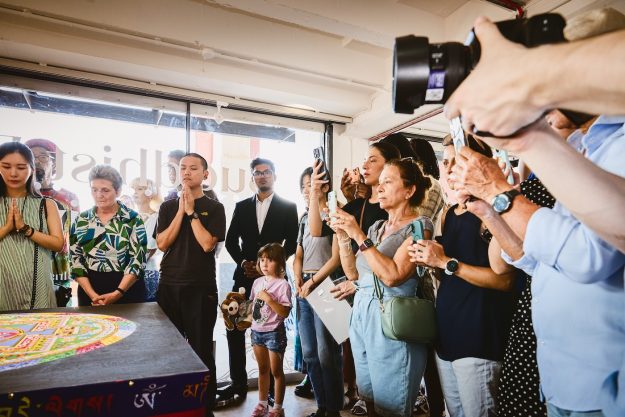
The installation provided a unique opportunity for urban dwellers to step away from the constant barrage of stimuli and enter a space dedicated to quietude. The gallery, a place usually associated with visual consumption, became a sanctuary for introspection. Visitors were not asked to perform, interpret, or respond in a prescribed manner. Instead, they were simply invited to be present, to observe, and to allow the experience to unfold.
The impact on visitors was palpable. Many, drawn in from the bustling South Bank without prior knowledge of the event, reported feeling a sense of calm and softening. The mandala’s creation offered a different rhythm, a reminder that focused attention can be an act of care, a form of inner cultivation.
Broader Implications: Inner Life and Contemporary Crises
The installation’s message resonated deeply in a world grappling with numerous challenges. The author’s reflection points to the inner origins of many societal crises: unresolved anger, fear, resentment, and loneliness. While acknowledging the urgent need for external action and societal change, the installation highlighted the crucial importance of inner work. The way individuals respond to the world, the author suggests, is fundamentally shaped by the state of their hearts and minds.
The mandala, in this context, does not offer simplistic solutions to suffering. Buddhist practice, as the author notes, rarely provides easy answers. Instead, it offers a profound shift in perspective. It illuminates the interconnectedness of all things, the reality of constant change, the pain that arises from attachment, and the foundational role of compassion rooted in awareness. Witnessing the monks’ diligent practice, the author was reminded that peace is not a passive state but an actively cultivated quality, nurtured through discipline, patience, and repeated effort.
A Bridge Between Ancient Wisdom and Modern Life
The Pure Land Foundation’s broader programming aimed to create a bridge between ancient contemplative traditions and the contemporary realities of urban existence. Alongside the mandala, evening breathwork sessions offered participants an opportunity to experience stillness not just as an observed phenomenon but as a felt bodily sensation. This integrated approach sought to connect spiritual wisdom with the lived experiences of stress, overstimulation, grief, and the universal search for meaning.
The overarching goal was not to isolate wisdom in academic or museum settings but to foster direct encounters with it. Through various mediums such as film, art, meditation, dialogue, and public installations, the question remains: How can these timeless teachings equip us to live more consciously in the present day?
The collaboration with Tricycle: The Buddhist Review was particularly significant in this regard. The publication’s commitment to exploring Buddhist themes through diverse formats, including its Buddhist Film Festival, which delves into impermanence, compassion, identity, suffering, and resilience, created a synergistic relationship with the Oxo installation. The exhibition extended these themes into the public sphere, allowing individuals to engage with Buddhist thought not merely through intellectual explanation but through atmosphere, gesture, and embodied experience.
The Dissolution: A Profound Teaching
The ceremonial dissolution of the mandala on the final day was a powerful and moving conclusion. After days of meticulous creation, the monks carefully swept the sand together, undoing the intricate image. This act acknowledged a fundamental human tendency to cling to beauty and to seek evidence that effort has not been in vain.
However, the dissolution is precisely where the mandala’s deepest teaching lies. Nothing is truly wasted because nothing remains static. The care, attention, and intention imbued in the mandala’s creation did not vanish with its physical form. These qualities were carried forward in the minds and hearts of those who witnessed it, in the conversations it sparked, and in the quiet shifts it may have inspired in individuals’ daily lives.
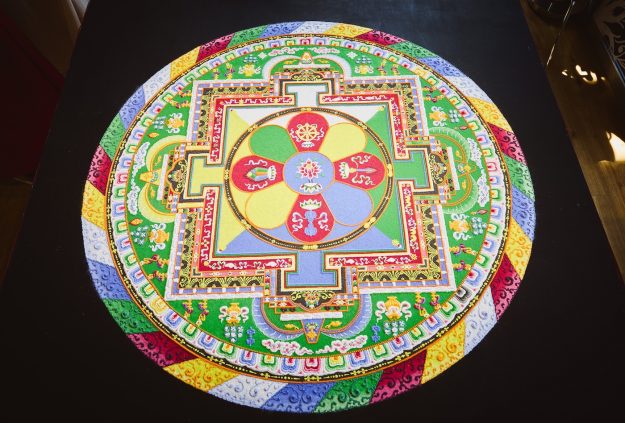
Following the ceremonial sweeping, the colored sand was released into the River Thames. This act symbolized the blessing and energy of the work extending beyond the confines of the gallery and flowing into the wider life of the city. Releasing the sand into the Thames, a powerful symbol of movement, continuity, and change, underscored the understanding that the mandala’s meaning was never intended to be confined but was always meant to be expansive.
Enduring Resonance: The Power of the Temporary
Throughout the five days, the author observed a remarkable intuitiveness in many visitors. They did not necessarily require extensive knowledge of Buddhist traditions to grasp the significance of the event. They recognized the inherent value in patience, the profound beauty of a dedicated creation, and the poignant beauty of something willingly relinquished.
The sand mandala, even after its physical disappearance, remains with us. It serves as a potent reminder that the temporary can be deeply profound. It demonstrates that peace can be cultivated even amidst the clamor of a busy city. It teaches that spiritual practice need not be detached from daily life but can be integrated directly into it. Crucially, it reveals that when we learn to let go, we do not lose the essence of what has passed. Instead, we create space for its meaning to move through us and beyond us, enriching the world around us. The installation, therefore, served not just as an artistic event but as a living testament to the enduring power of impermanence and mindful practice.

