

The landscape of understanding Parkinson’s disease has undergone a profound transformation since James Parkinson first meticulously described its cardinal signs in the early 19th century. Beyond the motor impairments that define the condition, contemporary research has illuminated the intricate interplay between nutrition and neurodegeneration. Emerging evidence suggests that dietary choices can significantly influence both the risk of developing Parkinson’s and the management of its debilitating symptoms. Among the dietary components that have garnered considerable scientific attention is coffee, and specifically, its active ingredient, caffeine. Initial studies hinted at a promising role for coffee in alleviating Parkinson’s symptoms, leading to excitement about a potentially simple, accessible intervention. However, subsequent, more rigorous research has painted a more nuanced picture, revealing that while short-term benefits may exist, sustained relief remains elusive.
The Evolving Understanding of Parkinson’s Disease and Diet
Parkinson’s disease, a progressive neurodegenerative disorder primarily affecting dopamine-producing neurons in the substantia nigra, is characterized by motor symptoms such as tremors, rigidity, bradykinesia (slowness of movement), and postural instability. Non-motor symptoms, including cognitive impairment, sleep disturbances, and mood disorders, also play a significant role in the disease’s burden. For decades, research into Parkinson’s focused predominantly on genetic and environmental factors, with nutrition often taking a secondary role.
However, the paradigm has shifted. A growing body of epidemiological and laboratory research indicates that diet is not merely a backdrop to disease but an active participant. Studies have identified potential dietary risk factors, with high intakes of animal fats, mercury, iron, and dairy products being associated with an increased likelihood of developing Parkinson’s. Conversely, a plant-based dietary pattern, rich in antioxidants, appears to confer a protective effect.
Plant-Based Diets: A Foundation for Neuroprotection
The protective mechanisms attributed to plant-based diets are multifaceted. These diets are inherently rich in antioxidants and anti-inflammatory compounds, which are crucial for combating oxidative stress and inflammation. These two processes are widely recognized as central hallmarks of chronic degenerative diseases, including Parkinson’s. Oxidative stress, an imbalance between the production of reactive oxygen species and the body’s ability to detoxify them, can damage cellular components, including neurons. Inflammation, a complex biological response, can also contribute to neuronal dysfunction and death in the context of neurodegenerative disorders.
In contrast, diets high in animal-derived products, particularly those rich in saturated fats and processed meats, have been linked to an increased risk of various chronic illnesses. This includes not only neurodegenerative diseases like Parkinson’s but also leading causes of mortality such as cancer, heart disease, and type 2 diabetes. The proposed mechanisms involve the promotion of inflammation and oxidative stress, alongside other detrimental pathways.
It is important to note that not all plant-based foods are universally beneficial. For instance, the fruit Annona muricata, commonly known as soursop or graviola, has been implicated in causing an atypical form of Parkinsonism. While soursop has shown potential benefits in lowering blood pressure and uric acid levels, it contains neurotoxic compounds that can induce Parkinsonian symptoms, particularly with excessive consumption. Population studies have indeed indicated a correlation between high soursop intake and neurodegenerative disorders. This underscores the complexity of dietary recommendations, emphasizing the need for individualized approaches and rigorous scientific scrutiny of specific plant-derived substances.
The Promise of Coffee and Caffeine in Parkinson’s Management
Given the potential of plant-based nutrition to both prevent and manage Parkinson’s disease, researchers have been keen to identify specific dietary interventions that could offer tangible benefits. Coffee, a globally consumed beverage, has been a focal point of this research due to its rich antioxidant profile and its primary psychoactive compound, caffeine.
Numerous observational studies have suggested a protective association between coffee consumption and the development of Parkinson’s disease. Some research has even indicated that individuals who regularly drink coffee or caffeinated tea may experience a significantly reduced risk of premature mortality, potentially halving it compared to non-consumers. This correlation, while compelling, does not definitively establish causation. The question remained: could caffeine, when administered directly, offer a therapeutic benefit for those already living with Parkinson’s?
Early Clinical Trials: A Glimmer of Hope
To address this question, a critical step was to move beyond correlational studies and conduct controlled clinical trials. In a six-week, randomized, placebo-controlled, double-blind study, researchers set out to evaluate caffeine as a potential treatment for Parkinson’s disease. This rigorous study design is considered the gold standard for assessing treatment efficacy, as it minimizes bias by ensuring that neither the participants nor the researchers know who is receiving the active treatment and who is receiving a placebo.
Participants in the caffeine group were initially given an amount of caffeine equivalent to approximately one cup of coffee, administered twice daily—once in the morning and once after lunch. The dosage was then escalated to the equivalent of two cups of coffee, twice a day. This dosage regimen was comparable to consuming about four cups of black tea or six cups of green tea twice daily.
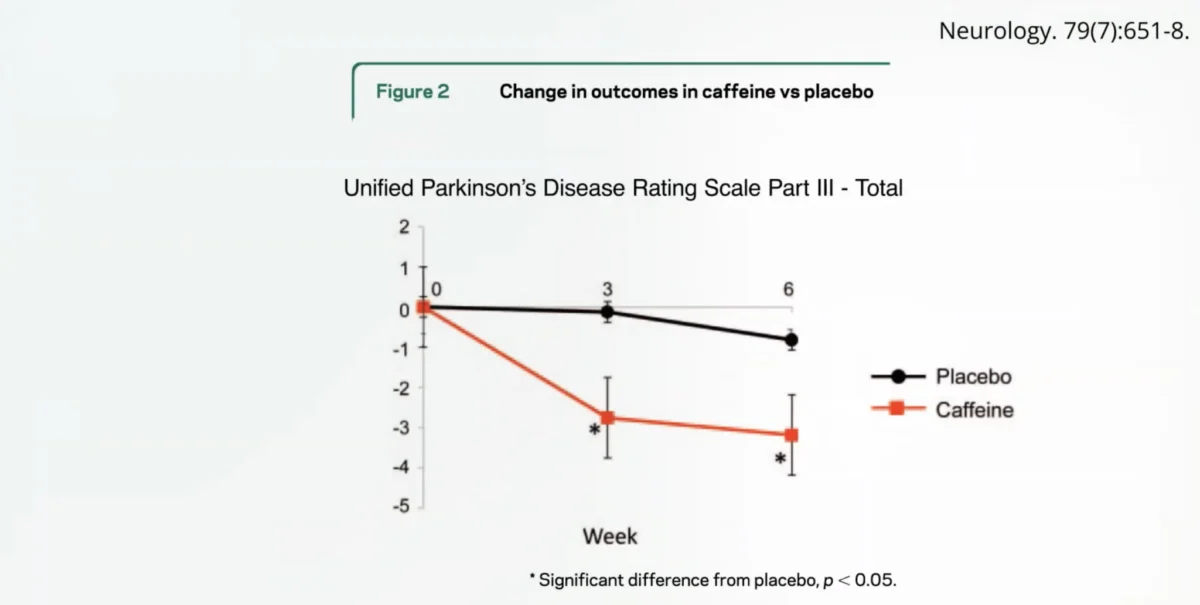
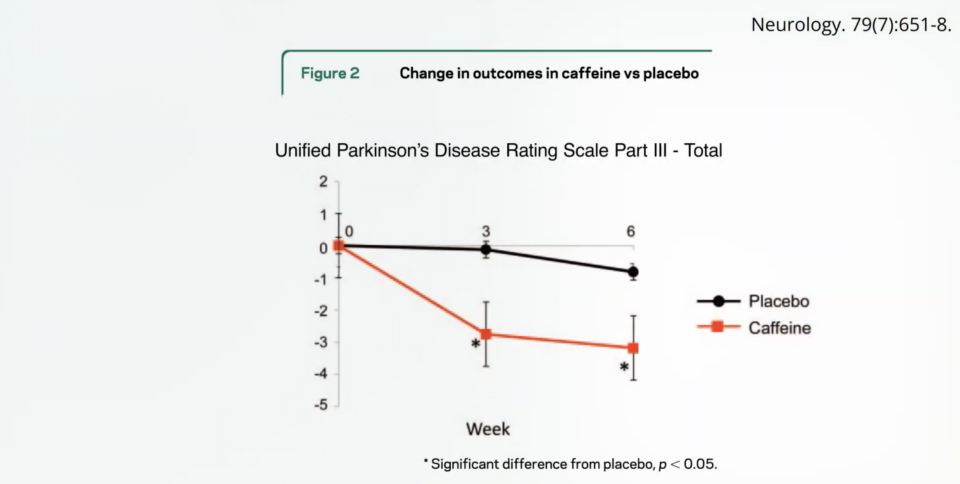
The results of this initial trial were encouraging. Within just three weeks, participants receiving caffeine demonstrated a statistically significant improvement in their Parkinson’s symptoms when compared to the placebo group. These findings, visually represented by data graphs often presented in conjunction with such research, offered a compelling argument for caffeine’s potential as a readily available and inexpensive intervention for symptom management. The implications were significant: a common beverage could potentially offer a simple, safe, and accessible treatment option for individuals grappling with the complexities of Parkinson’s.
The Tachyphylactic Property and the Search for Sustained Benefits
Despite the promising initial results, a crucial limitation of the six-week study was its duration. Caffeine is known to possess what are termed "tachyphylactic" properties, particularly in its effect on alertness and wakefulness. Tachyphylaxis refers to a rapid decrease in the response to a drug after repeated administration. While this phenomenon is well-documented in the context of combating sleepiness, it raised a pertinent question about caffeine’s long-term efficacy in treating Parkinson’s symptoms. Would the initial benefits wane over time?
To investigate this, a subsequent, longer-term study was initiated five years after the initial trial. This research aimed to determine if the symptomatic benefits observed in the shorter study could be sustained. In this follow-up investigation, patients diagnosed with Parkinson’s disease were again randomized. This time, they received a daily dose of caffeine equivalent to approximately two cups of coffee, administered twice a day, for a period exceeding six months.
The results of this longer-term study presented a stark contrast to the initial findings. After more than six months of continuous caffeine administration, there was no discernible benefit observed over the placebo group. This outcome was a significant setback, indicating that the initial improvements seen in the shorter trial did not translate into sustained relief.
Analysis of Implications: Short-Term Relief vs. Long-Term Efficacy
The divergence in outcomes between the short-term and long-term studies has critical implications for the clinical application of caffeine in Parkinson’s disease management. The initial six-week trial strongly suggests that caffeine can indeed offer a temporary, symptomatic improvement for individuals with Parkinson’s. This short-term benefit could potentially be valuable in specific circumstances, perhaps for managing a particularly challenging period or for providing a brief window of improved motor function.
However, the subsequent research unequivocally demonstrates that this benefit is not sustained. The tachyphylactic nature of caffeine appears to play a role, leading to a diminishing effect with continued use. This phenomenon is not unique to Parkinson’s; individuals who regularly consume caffeine often report needing more to achieve the same level of alertness they experienced initially.
Therefore, based on the current scientific evidence, caffeine cannot be recommended as a chronic, symptomatic therapy for Parkinson’s disease. While it may provide transient relief, its inability to offer long-term benefits renders it unsuitable as a primary treatment strategy for managing the progressive nature of the condition.
Future Directions and Broader Context
The research on caffeine and Parkinson’s disease highlights the importance of robust, long-term clinical trials in validating initial promising findings. It also underscores the complexity of neurodegenerative diseases and the multifaceted nature of potential therapeutic interventions. While caffeine may not be the answer for sustained symptom management, the ongoing exploration of dietary factors in Parkinson’s disease continues.
The broader context of nutrition in Parkinson’s disease management remains a vital area of research. Identifying specific plant-based foods, compounds, or dietary patterns that can offer sustained benefits, either in preventing the disease or in managing its symptoms, is an ongoing pursuit. This includes further investigation into the vast array of edible plant varieties worldwide, many of which have yet to be studied for their potential anti-Parkinson’s activity.
The journey from initial observations to definitive treatment recommendations is often a lengthy and iterative process. The case of caffeine in Parkinson’s disease serves as a potent reminder that while hope can be found in accessible dietary elements, scientific rigor and long-term validation are indispensable in translating that hope into effective clinical practice. The quest for comprehensive and sustainable solutions for Parkinson’s disease continues, with nutrition remaining a central and promising frontier.

