

August 13, 2026
By Michael Greger M.D. FACLM
A micromort, a unit for comparing and communicating risk to patients, is equivalent to a one-in-a-million chance of dying. This innovative metric is gaining traction as a powerful tool to demystify complex statistical probabilities, particularly within the realm of healthcare and everyday activities, enabling individuals to make more informed decisions about their well-being.
The challenge of conveying risk has long been a hurdle in patient-physician communication. For instance, surgical procedures, while life-saving, inherently carry risks. Hundreds of millions of operations are performed annually worldwide, with the risk of mortality typically hovering around half a percent. This statistic, however, often fails to resonate with patients, leading to underestimation or overestimation of danger. Phrases like, "I could die just as easily crossing the road," highlight a common disconnect in understanding the magnitude of risk associated with medical interventions compared to routine activities.
To bridge this gap, risk communication strategies increasingly rely on analogies. For example, undergoing anesthesia alone presents approximately a 1-in-100,000 chance of not waking up. To contextualize this, it’s comparable to the risk associated with an expert skydive. Yet, even these comparisons can be abstract and difficult to fully grasp, especially when dealing with small numerical probabilities. Visualizing a rug measuring just 0.0017 miles by 0.00227 miles, for instance, offers little intuitive understanding of its scale. This is where the micromort emerges as a more digestible and universally applicable unit.

Defining the Micromort
A micromort (mM) is precisely defined as a one-in-a-million chance of death. This unit can be likened to flipping a coin and achieving heads twenty times in a row, or a slightly less probable outcome than drawing a royal flush in a game of poker. The true strength of the micromort lies in its ability to create a standardized metric for comparing disparate risks.
Consider the risk associated with daily travel. Driving 100 miles, on average, carries approximately a one-in-a-million chance of fatality. Therefore, driving 100 miles equates to one micromort. Similarly, scuba diving is estimated to carry a risk of about five micromorts per dive. This means that a single scuba diving excursion is as risky as driving 500 miles. This direct comparability allows for a more nuanced understanding of the relative dangers of various activities, from recreational pursuits to medical procedures.
Micromorts in Medical Contexts
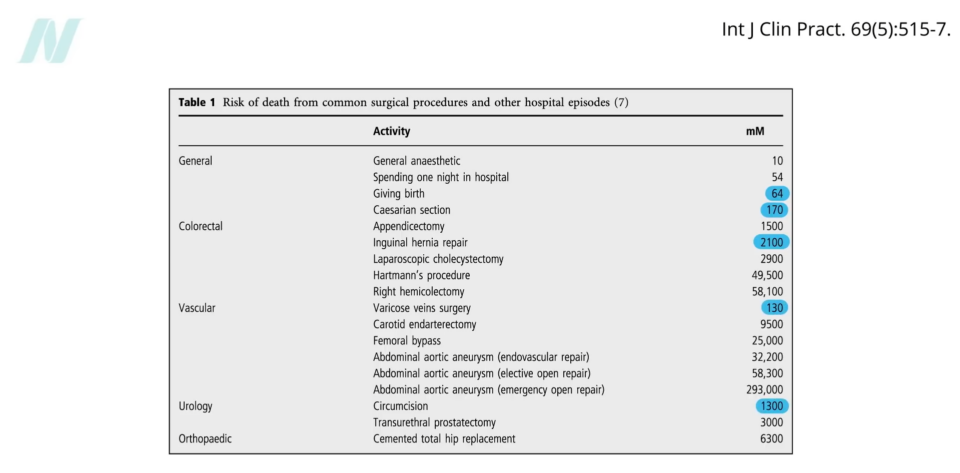
The application of micromorts extends significantly into the medical field, offering patients a clearer perspective on the risks associated with treatments and interventions. For example, the risk associated with childbirth is estimated to be comparable to driving from New York to Los Angeles and back. However, undergoing a Cesarean section elevates this risk to more than double that of a natural birth. Even seemingly routine procedures, such as a hernia repair, carry a risk of mortality equivalent to performing 200 skydives.
This comparative approach can empower patients to make more informed decisions, particularly when procedures are elective. For instance, while certain surgeries like varicose vein removal or circumcision may carry a risk of death, their associated micromort values can be weighed against the risks of other activities or even the risks of non-intervention. The accompanying visual data, presented within the original publication, illustrates these comparisons, including a video segment at the 2:32 mark titled "Micromorts: How Risky Is It to Go Under Anesthesia?"
Beyond surgical risks, the micromort framework also sheds light on the dangers of various forms of treatment. Chemotherapy and radiation therapy for head and neck cancers, for example, present a significantly higher risk than activities like prolonged rock climbing, extensive driving, or numerous skydives. This data, when presented in micromorts, provides a stark yet understandable representation of the risks involved in aggressive cancer treatments.
Everyday Risks and Accidental Deaths
The concept of micromorts is not confined to medical scenarios; it also provides a valuable lens through which to examine everyday risks and accidental deaths. Dr. Michael Greger, the author, notes that accidental deaths represent a significant cause of mortality, often overlooked in broader health discussions.
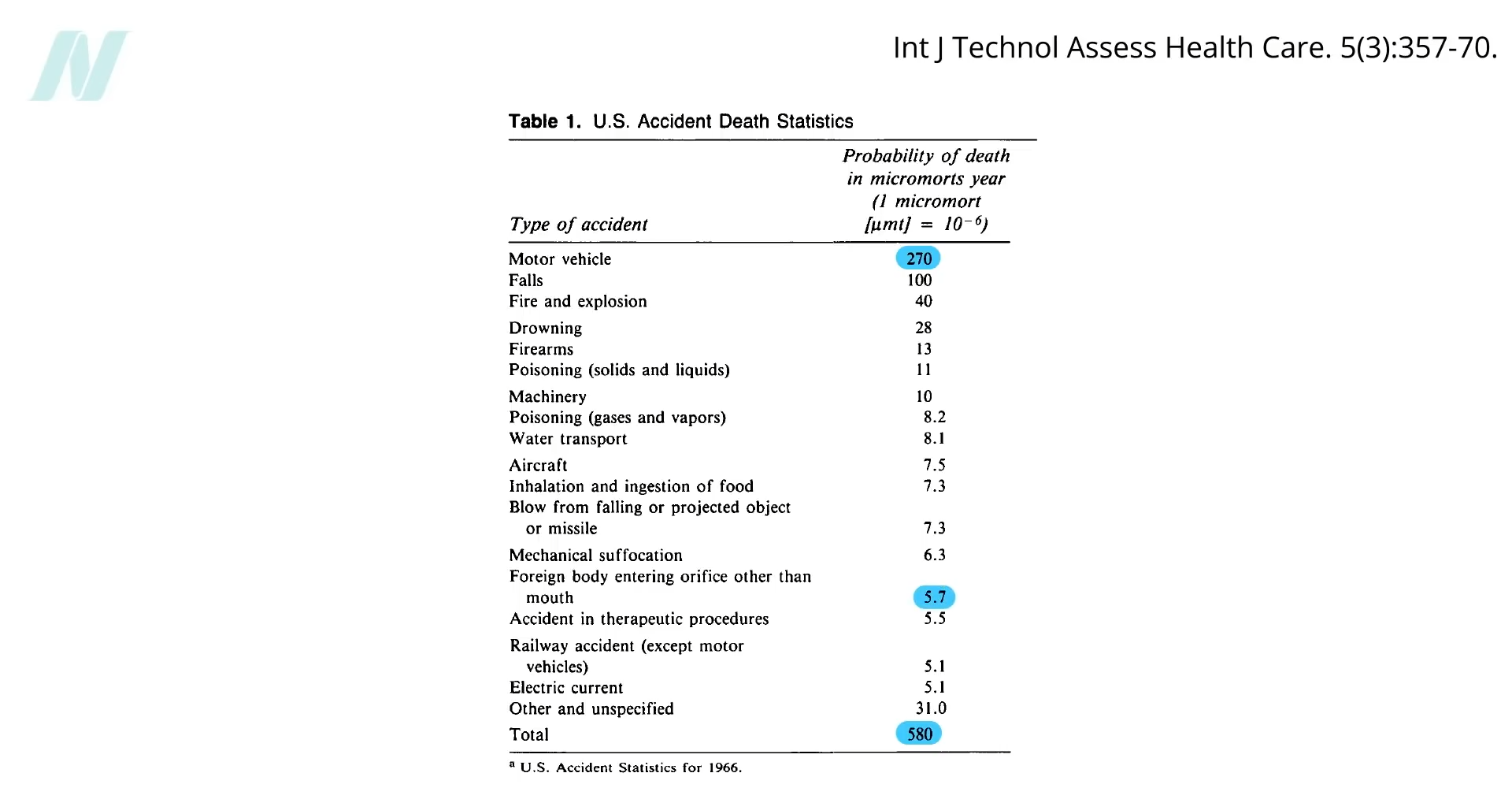
On average, individuals face approximately a one-in-a-million chance of dying from an accident each day. Car crashes account for roughly half of this risk, based on U.S. averages. However, a multitude of other hazards contribute to this daily micromort. The original article references visual aids and a video segment at the 3:19 mark that detail these various accidental risks.
A surprising statistic revealed by this analysis is the risk associated with foreign bodies entering orifices other than the mouth. Americans, on average, face a 1-in-200,000 chance annually of dying from such incidents. This highlights the importance of safety awareness in seemingly innocuous situations.
Further comparisons reveal striking differences in risk across various activities:
- Mount Everest Climbs: Approximately 30 times riskier than coal mining or base jumping.
- Train vs. Plane Travel: Over the same distance, the risks are remarkably similar.
- Motorcycle Riding: Approximately 50 times deadlier than riding in a car.
- Cycling: While often perceived as safe, cycling to a destination is about 10 times as deadly as driving in the immediate term, considering potential accidents.
Contextualizing Specific Risks: Breast Implants and Cancer
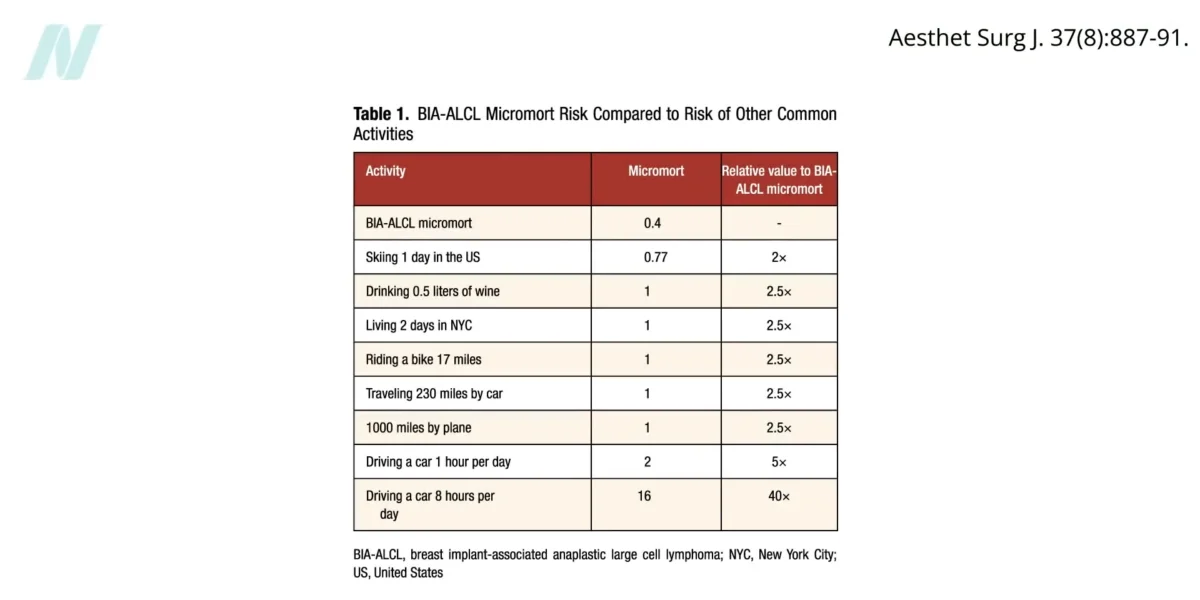
The micromort metric proves particularly useful when analyzing risks that may seem alarming but, upon closer examination, are relatively small. The risk of developing a rare type of cancer, breast implant-associated lymphoma, linked to certain types of breast implants, can be a source of significant anxiety for millions of women. However, when quantified in micromorts, this risk is placed in a more manageable perspective.
According to the research cited, the risk of dying from this specific implant-associated cancer is less than the risk incurred by a single day of skiing. While the prospect of slow suffering from cancer might be a concern for some, the micromort comparison allows for a rational assessment of this risk against other common activities. This does not diminish the seriousness of the potential cancer but rather provides a framework for informed decision-making, particularly when weighing the risks and benefits of elective procedures. The original article includes a visual aid at the 4:12 mark in its accompanying video, illustrating this comparison.
Broader Implications for Public Health and Policy
The widespread adoption and understanding of micromorts could have profound implications for public health initiatives and policy-making. By providing a clear, quantifiable measure of risk, public health campaigns can be more effectively designed to communicate the dangers of specific behaviors or the benefits of certain interventions. For instance, campaigns aimed at reducing road fatalities could highlight the micromort cost of unsafe driving practices, making the consequences more tangible.
Furthermore, this metric can aid in the allocation of healthcare resources. Understanding the relative risks of different medical procedures and treatments in micromorts can inform decisions about which interventions offer the greatest benefit for the lowest risk. It can also empower patients to engage more actively in their healthcare decisions, fostering a more collaborative relationship between patients and providers.
The Role of Physicians and Prevention
The article also touches upon the surprising notion that physicians themselves can be considered a leading cause of death, not in a malicious sense, but due to the inherent risks associated with medical interventions. This underscores the critical importance of preventative healthcare. Dr. Greger’s work, including his book "How Not to Die," emphasizes the power of lifestyle choices in mitigating risk and improving health outcomes.
By focusing on prevention, individuals can significantly reduce their exposure to many of the risks quantified by micromorts. This includes adopting healthier diets, engaging in regular physical activity, and avoiding harmful behaviors. The discussion around physicians as a "leading cause of death" serves as a catalyst for further dialogue on the balance between intervention and prevention in modern healthcare. The article references related videos, "Why Prevention Is Worth a Ton of Cure" and "How Doctors Responded to Being Named a Leading Killer," for further exploration of this complex issue.
In conclusion, the micromort offers a valuable and accessible tool for demystifying risk. Its application across medical procedures, daily activities, and even the subtle dangers of the environment allows for a more informed and rational approach to personal safety and healthcare decision-making. As this metric gains wider recognition, it has the potential to revolutionize how we understand and communicate the probabilities that shape our lives.

