

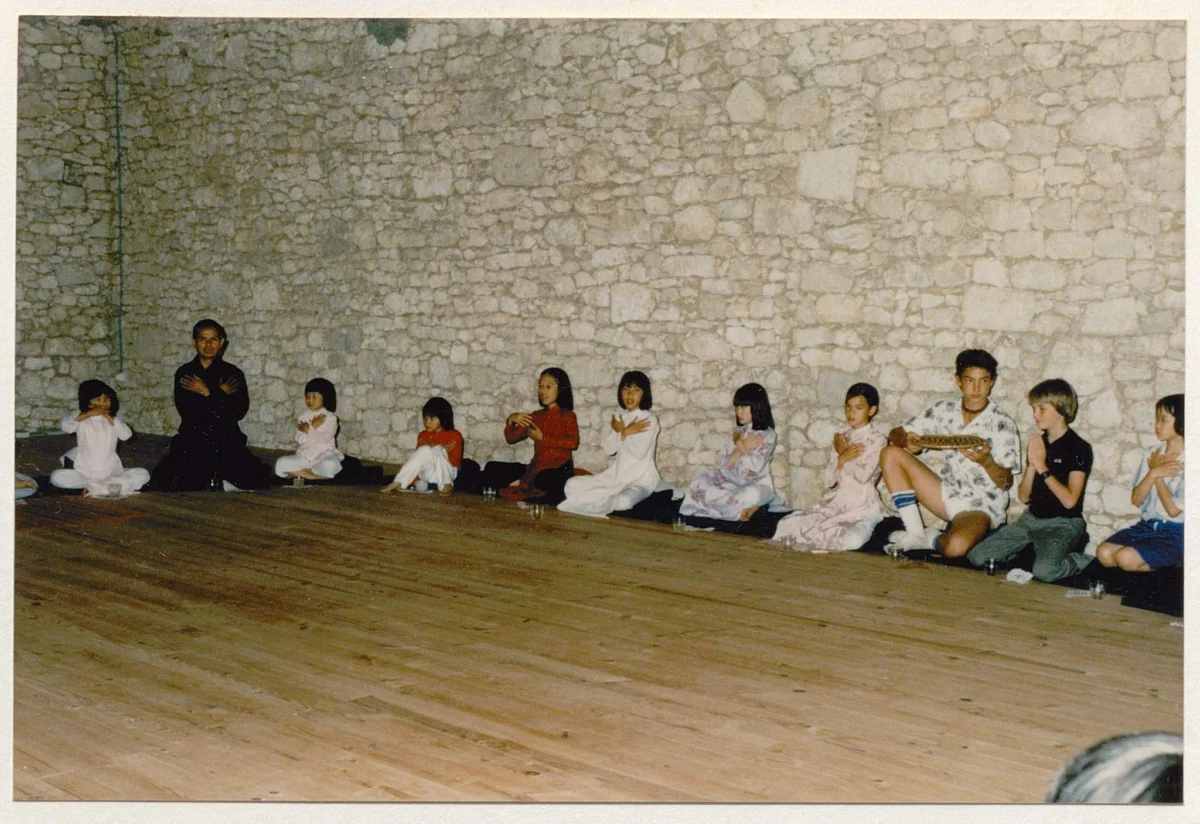
October 11, 2026, marks a significant milestone: the 100th anniversary of the birth of Thich Nhat Hanh, the revered Zen master, author, poet, and peace activist. Known to his devoted followers as Thay, Vietnamese for "teacher," Nhat Hanh’s profound influence on contemporary Buddhism and global peace movements continues to resonate. His birthdate is observed by the Plum Village tradition not as a day of death, but as a "continuation day," reflecting the Buddhist teaching of impermanence and the absence of inherent birth or death.
Born in central Vietnam in 1926, amidst the turmoil of colonialism and war, Thich Nhat Hanh emerged as a transformative figure. He masterfully bridged ancient Buddhist wisdom with the pressing needs of the modern world, offering a path to clarity and resilience even in the face of overwhelming adversity. His legacy is particularly poignant for those impacted by conflict, serving as a testament to the possibility of healing and the transformative power of individual and collective peacebuilding.
A Pioneer of Engaged Buddhism
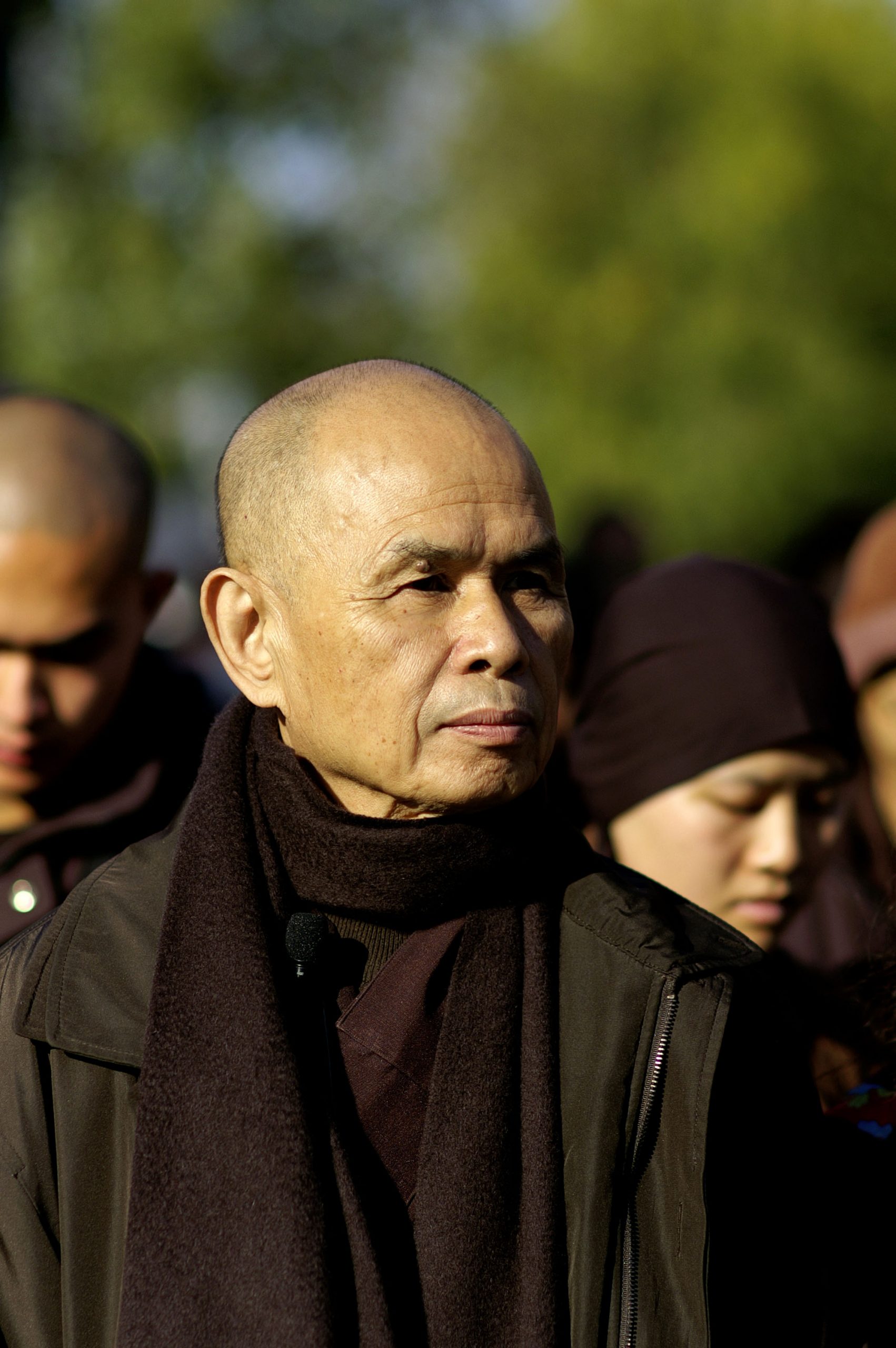
Thich Nhat Hanh is widely recognized as one of the most influential figures in contemporary Buddhism. His pioneering concept of "engaged Buddhism" revolutionized how Buddhist communities engage with social, political, and environmental crises. This approach emphasizes that spiritual practice is not separate from the world’s challenges but is deeply intertwined with them. Nhat Hanh’s work in this area has inspired countless individuals and organizations to integrate mindfulness and compassion into their efforts to address issues such as poverty, inequality, and environmental degradation.
His founding of the Plum Village tradition and the Order of Interbeing, along with his prolific authorship of over one hundred books, has disseminated his teachings globally. These works, translated into numerous languages, have made the profound principles of mindfulness, compassion, and interbeing accessible to a vast audience.
Reflections on a Beloved Teacher
In honor of his centennial, prominent teachers, writers, and students have shared their personal reflections and insights into Thich Nhat Hanh’s enduring impact. These voices highlight his extraordinary ability to transmit the dharma through every aspect of his life, demonstrating a profound commitment to waking up the world to its inherent interconnectedness and capacity for peace.
A Life Dedicated to Peace and Healing
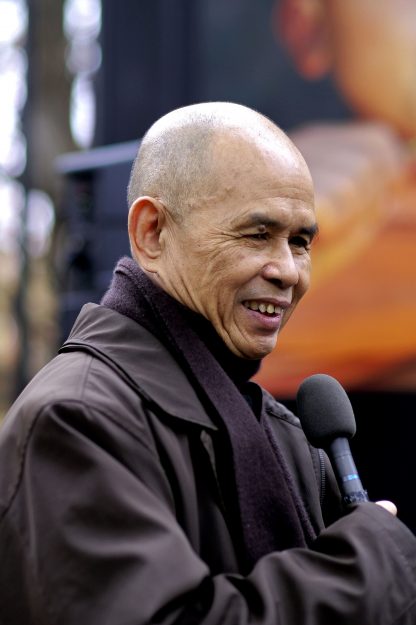
Adrienne Minh-Châu Lữ, a historian and author, notes Nhat Hanh’s exceptional insight and ability to bring the dharma to the modern world. She emphasizes his role in demonstrating how to live with purpose, even when circumstances seem dire, and his offering of proof that healing is possible, not only for individuals but for ending cycles of violence and bringing light to humanity.
Bhikshuni True Virtue, the first Western European woman ordained by Thich Nhat Hanh, recounts her first encounter with him in 1997. She describes an "unexplainable feeling of recognition and absolute trust," which led her to abandon her travel plans and immerse herself in practice at Plum Village. She highlights Nhat Hanh’s profound love for his students, his ability to make each individual feel seen, and a transformative moment on a bus in China where his gaze of "compassion and love so huge" burned away her self-doubt and bound attachment to the "small self." This moment, she explains, taught her that awakening is possible in every instant, affirming innate goodness and worthiness.
Kaira Jewel Lingo, a dharma teacher and author, reflects on Nhat Hanh’s love that extended to inclusivity, particularly for people of color. She recalls their request for a retreat for people of color, to which Nhat Hanh immediately responded, "I am also a person of color," and agreed. This led to the first-ever retreat of its kind in their tradition. Lingo also shares a powerful teaching from Nhat Hanh: "Black is beautiful!" during a tea discussion, which helped her overcome self-imposed hang-ups and love with freedom and confidence. She concludes that Nhat Hanh’s legacy is carried forward not by admiration from afar, but by offering the same mindful attention to those around us.
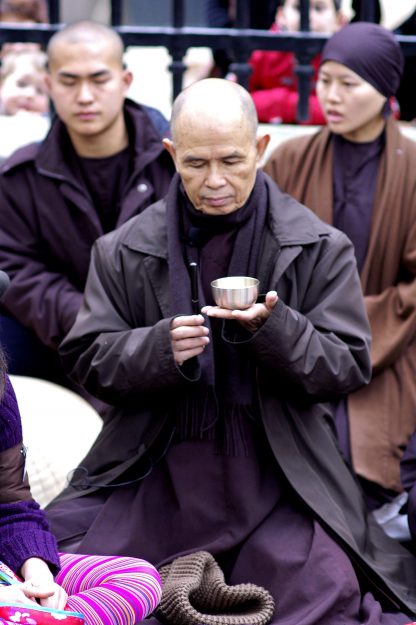
Sister Dang Nghiem of Deer Park Monastery shares a deeply personal address to Thay, expressing gratitude for the sangha he created and the freedom and ease he revealed. She speaks of his enduring presence, symbolized by his cushion in the meditation hall, and how his teachings continue to empower practice. The growth of new initiatives and ordinations within the Plum Village tradition, even after his passing, is seen as a clear testament to the continuation of his legacy.
An Tran, an author and practitioner in the Thien-Pure Land lineage, reflects on Nhat Hanh’s profound influence on Vietnamese Buddhism and his role in popularizing engaged Buddhism in the West. He notes Nhat Hanh’s deep scholarship, his ability to synthesize diverse Buddhist philosophies, and the immense meaning of honoring him as an ancestor-master. Tran emphasizes that the true continuation of Nhat Hanh’s legacy lies in practicing mindfulness, as embodied in the simple act of "inviting the bell."
Sister Tue Nghiem, a Plum Village monastic, shares her initial fears upon embarking on the monastic path and how her faith in Thay’s teachings gave her the confidence to proceed. She highlights his profound impact on her spiritual growth, particularly through the story of his response to a reporter’s challenging question about his presence in America. Nhat Hanh’s explanation, "If you want to water a tree, it does not help to water the leaves; you have to water the roots. Many of the roots of the war were in America, and that was why it was necessary for him to be there," exemplifies his commitment to addressing the root causes of conflict. She concludes that Thay embodied the Buddha, dharma, and sangha, and that his selfless dedication to sharing the dharma serves as an inspiration to be a true continuation of his legacy.
Valerie Brown, an author and dharma teacher, reflects on how many of Nhat Hanh’s practices, such as welcoming children into retreats and extending transmission to lay practitioners, were revolutionary yet felt normal within Plum Village. She emphasizes his faith in laypeople and his creation of new models of Buddhist community, fostering a family-like environment where monastics and lay practitioners, men and women, young and old, could practice, bloom, and serve together.
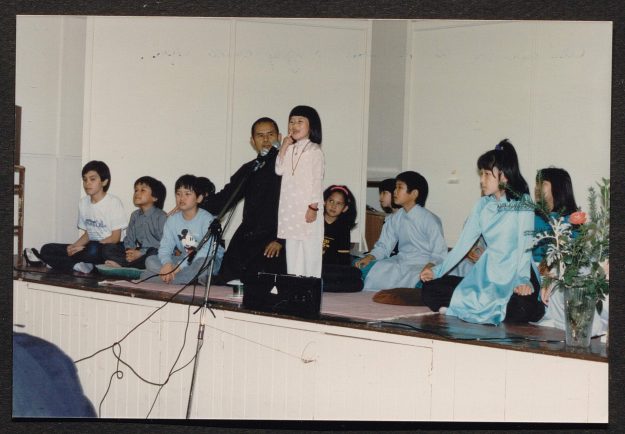
Peggy Rowe Ward, a dharma teacher and cofounder of The Lotus Institute, shares intimate memories of her time with Thich Nhat Hanh, including his guidance during her wedding and his words of comfort after her house was bombed. She recounts his profound wisdom, such as "Perfect health is just an idea," and his encouragement to direct her energy toward her mission. Ward highlights Nhat Hanh’s three-time instruction to "offer the dharma our way" and "not [to] give in to despair," which has become a guiding principle in her life. Her poem, "Become Stardust," poignantly captures the enduring presence of peacemakers beyond physical form, emphasizing that their love and spirit continue to live on.
Larry Ward echoes the sentiment of Nhat Hanh’s continuous presence, describing a profound experience on the beach with Thay following the 9/11 attacks. He recounts Nhat Hanh’s simple yet powerful question, "Will there be a war?" and his own response, "Yes. It is our conditioning." This shared silence and presence offered a deep meditation, reinforcing the importance of sangha solidity in times of crisis.
Shantum Seth, a Buddhist teacher and pilgrimage guide, recounts his first meeting with Nhat Hanh in 1987 and the profound impact of his invitation to "Bring the buddhadharma back to India." Seth’s travels with Nhat Hanh through India, following the Buddha’s footsteps, provided a unique perspective on the Buddha as a human being and the interconnectedness of all life. Nhat Hanh’s teaching, "It does not matter what you do but how you do it," became a guiding principle for Seth’s life and livelihood.
Marisela B. Gomez, MD, a dharma teacher and physician, highlights Nhat Hanh’s innovative teaching methods, such as inviting students to sing spontaneously to illustrate the concept of anatta (nonself). This practice, she explains, helps practitioners let go of ego and experience the emptiness of a solid self, leading to a deeper understanding of Buddhist principles.

Brother Pháp Lữu, a Plum Village monastic, provides a biographical sketch of Thich Nhat Hanh’s early life, his cofounding of educational institutions, and his vision for a renewed Buddhism that transcended ideological division. He details Nhat Hanh’s travels, his activism for peace in Vietnam, and his subsequent exile, emphasizing his consistent approach of non-victimhood and understanding the nondual nature of opposing forces.
Andrew Cooper, Tricycle’s features editor, shares his transformative experience listening to Nhat Hanh speak on dependent origination and "interbeing." He describes the profound impact of Nhat Hanh’s ability to articulate radical interdependence in a way that resonated deeply, creating a "cinematic moment" of spellbound silence.
Bradley Donaldson, a lay teacher and former monastic, recounts how Nhat Hanh’s book, Touching Peace, provided solace and a path to inner peace during the turbulent aftermath of 9/11. The visualization practices from the book grounded him, leading him to deeper engagement with Buddhist practice and scholarship, and ultimately to the Thich Nhat Hanh Program for Engaged Buddhism.
Ayo Yetunde, a community dharma leader and chaplain, emphasizes Nhat Hanh’s ability to offer wisdom in "appropriately sized bits" to a culture steeped in defensiveness and aggression. He highlights Nhat Hanh’s spiritual formation in the spirit of Samantabhadra Bodhisattva and the Avatamsaka Sutra, suggesting that October 7 can serve as a day of inspiration to live artfully amidst conflict.
Enduring Impact and Future Directions
Thich Nhat Hanh’s centennial is not merely a commemoration of a life lived but a powerful reminder of the ongoing relevance of his teachings. His emphasis on mindfulness, compassion, and interbeing offers practical tools for navigating the complexities of the 21st century. The growth of the Plum Village tradition and the continued dedication of his students worldwide underscore the profound and lasting impact of his vision for a more peaceful and compassionate world. As his students carry forward his legacy, they embody his belief that true continuation lies not in dwelling on the past, but in actively practicing and sharing the dharma in every moment.

