

Renowned Japanese poet Hiromi Ito, celebrated for her unflinching exploration of female experience, pregnancy, and sexuality, is embarking on a serial publication of her profound work, Reading the Heart Sutra, with Tricycle magazine. The initial chapters, released monthly throughout the year, delve into Ito’s personal engagement with Buddhist philosophy as she navigates the complexities of motherhood, loss, and the care of her aging parents. This installment focuses on Ito’s contemplative journey as she grapples with her father’s impending death and her own understanding of the Buddhist concept of the Pure Land.
Ito’s writing, translated for the first time into English by Jeffrey Angles, offers a unique intersection of poetic sensibility and theological inquiry. Her previous national prominence in Japan during the 1980s stemmed from her courageous and groundbreaking literary contributions that challenged societal norms surrounding women’s bodies and experiences. In Reading the Heart Sutra, she extends this characteristic honesty to her engagement with ancient Buddhist texts, weaving them into the fabric of her lived reality. The decision to publish the translated work serially allows readers to follow Ito’s evolving thoughts and emotional landscape, mirroring her own process of deep reflection. The first four chapters are available through Tricycle‘s dedicated series page, setting the stage for a year-long immersion into her spiritual and personal quest.
Confronting Mortality and the Enigma of the Pure Land
The current chapter finds Ito wrestling with profound questions surrounding her father’s imminent passing. "He’s still alive, and I’ve got doubts," she admits, her voice resonating with a familiar vulnerability. These doubts are primarily directed towards the concept of the Pure Land, a central tenet in Mahayana Buddhism, often understood as a realm where beings can be reborn through the grace of Amitabha Buddha, facilitating their path to enlightenment. Ito articulates a deep-seated desire for her father to find peace, stating, "If it’s possible to get there, of course I want him to go. Definitely. More than anything." However, this desire is tempered by a pragmatic uncertainty: "Going to the Pure Land isn’t like going to math class or something. Just wanting to get there doesn’t change a thing."
Her introspection reveals a critical lacuna in her father’s spiritual preparedness. "I’m a serious person by nature, so I ought to think this through," she reasons, leading her to the stark realization that her father likely lacks any concrete image or understanding of the Pure Land that could offer him solace. Ito paints a poignant portrait of her father, a man who "had abandoned the family grave" and "spent his whole life never thinking about his ancestors at all." Now aged and weary, his "imagination has dried up." He exists in a liminal state, "no longer feels like living, but he doesn’t want to die either." Ito’s predicament is amplified by his apparent detachment from religious thought: "I don’t think he’s thought much about religion at all, but I still want him to die in peace. So, what am I supposed to do…?" This internal conflict underscores the human struggle to reconcile spiritual aspirations with the tangible realities of aging, loss, and the perceived spiritual void.
An Unexpected Catalyst: Mahler’s "The Song of the Earth"
It was during this period of deep contemplation that a serendipitous connection emerged, sparked by an email from a friend in Germany. The friend, having read Ito’s book, The Disappointment of Women, shared an observation about the interplay between Mahler’s music and her prose. "When I was reading it, I had the radio on, and one of the FM channels was playing a vocal piece by Mahler. The glorious voice of the German tenor seemed to fit strangely well with the spoken voice of the female protagonist describing her disappointment."
This seemingly tangential remark resonated deeply with Ito, prompting her to consider the music of Gustav Mahler, a composer she listens to occasionally, often as background accompaniment to her activities. While not an ardent devotee, she finds solace and a contemplative mood in his work. The specific piece that comes to mind is Mahler’s monumental symphony, Das Lied von der Erde (The Song of the Earth), a work that translates to "The Song of the Earth." Ito recalls a particular recording featuring Bruno Walter conducting the Vienna Philharmonic, with the unforgettable voice of Kathleen Ferrier. The profound impact of this music is palpable: "By wishing for it, a vision of the Pure Land had been presented to me."
The Resonance of "Ewig" and Wang Wei’s Verse
Ito draws parallels between the comforting platitudes one might offer in times of hardship—"Wait long enough, and fair weather will come for your voyage out to sea," or "When one god abandons you, another will pick you up"—and the biblical phrase, "Knock, and it shall be opened unto you." She emphasizes that the friend’s email, and her subsequent reflection on Mahler’s music, felt like a similar revelation, a "tantalizing whiff of the delicious food being prepared inside" a restaurant, offering a glimpse of something desirable without full access.
The pivotal moment in Das Lied von der Erde, according to Ito, occurs in the final movement, "The Farewell." Approximately two minutes from the conclusion, the contralto voice sustains a single word for an extended period: "Ewig," meaning "eternal." Ito describes the musical journey leading to this point as one traversing darkness, with occasional "glimpses of brightness," before finally emerging "fully into the light." The word "eternal" then "hovers in the air, allowing us to see into the distance," imbued with such raw emotional power that Ito feels she can "see the pale light of eternity."
The lyrics of this final movement are a synthesis of poems by the Tang Dynasty Chinese poets Meng Haoran and Wang Wei, interspersed with Mahler’s own additions. The word "Ewig" originates from a poem by Wang Wei. Ito notes that while Mahler’s adaptation retains the essence of Wang Wei’s poem, the original possesses a "serene and unhurried sadness" that she finds particularly poignant. She detects Wang Wei’s Buddhist influence, even from the liner notes.
The poem, as presented by Ito with an English translation, reads:
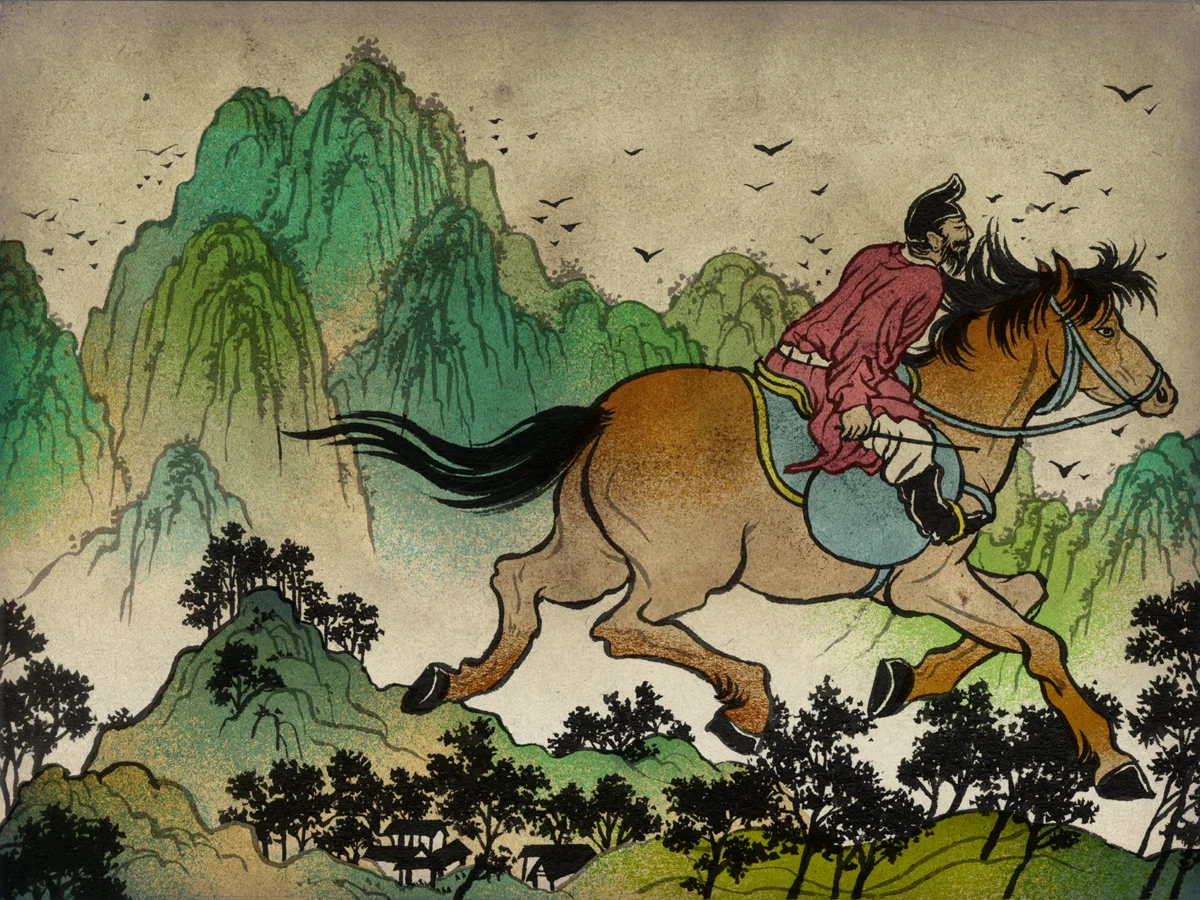
Dismounting, I offer wine to drink
And ask where you will go
You say you’ve haven’t fared well
You’ll return to rest by the southern mountains
Then just go, I will not ask again
White clouds stretch on, endlessly
Ito explains the complex lineage of this poem, highlighting how it underwent a "long game of telephone," involving translations and arrangements by poets who did not necessarily know Chinese. Mahler himself further adapted it for his musical composition. Notably, when Mahler first encountered the poem, it was not in its original Kanji script but transliterated into letters.
Mahler’s Transformation and Ito’s Personal Resonance
Ito delves into her interpretation of the poem’s underlying narrative, imagining a man consumed by thoughts of death, on the brink of despair, possibly contemplating suicide. She pictures a strained relationship with a younger wife, leading to feelings of desperation and self-abandonment. While acknowledging this as her own projection, she sees this "world-weary" and potentially suicidal narrator in Mahler’s adaptation. The music, in her perception, allows this figure to "peer into the abyss of death before encountering a pure vision stretching on and on."
This vision, she feels, has now reached her. Ito confesses to being "completely obsessed with death," a preoccupation that stems from her own experience of menopause and her constant concern for her parents’ well-being. Her active imagination compels her to dwell on the nature of their eventual passing. Her quest to understand the "meaning of the Pure Land" intensified when these powerful words from Mahler’s work struck her.
Despite her limited German and her tendency to "glaze over" when reading extensive English text, Ito was driven to internalize these words. She enlisted a German-speaking friend to provide a word-by-word explanation and English equivalents, which she then meticulously refined into Japanese. This process, while yielding results not drastically different from the liner notes’ English translation, rendered each word "fresh and intense, making their way into my heart."
The profound impact of Mahler’s "The Song of the Earth" is inextricably linked to the final word sung by Kathleen Ferrier. Ito muses whether Mahler himself experienced a similar revelation upon encountering Wang Wei’s poem, acknowledging that the textual lineage is complex. Nevertheless, when she calls out to Wang Wei, "Hey, Wang Wei, where are you?", she feels a faint response, a muffled voice from deep within saying, "Hey, I’m here, I’m here!"
A Musical Legacy for a Father
The chapter concludes with Ito contemplating how to convey this profound musical and philosophical experience to her father. She notes his lack of formal religious practice, mentioning his past as a horn player in a pre-war band, recalling his performance of "When the Saints Go Marching In." Despite his current hearing impairment, Ito harbors a hope that sharing Mahler’s "Song of the Earth," note by note and word by word, might offer him a measure of peace and guidance.
"Perhaps he’ll be carried away by the music," she muses, "And perhaps they will carry him where he needs to go." This sentiment underscores Ito’s deeply personal engagement with Buddhist concepts, illustrating how ancient wisdom can be transmuted and expressed through contemporary art forms, offering solace and a sense of connection across generations and even across the veil of mortality. The serial publication of Reading the Heart Sutra promises further explorations into these profound intersections of life, death, and the enduring power of contemplative art.
The Farewell: A Poetic Offering
The chapter includes the full text of "The Farewell" as Ito interprets it, offering a poetic summation of her reflections:
His friend dismounted from his horse
He handed him a parting cup of wine
And asked,
Where will you go?
Why has fate befallen you?
The friend responded in a low voice
You have been a good friend
I am so weary of life
What shall I do next?
Where shall I go from here?
Perhaps I’ll wander the mountains
But I shall do so alone from here on out
For I want to spend my time in silence
I will return to my homeland
The place that calls to me
And never leave again
With a still, calm heart
I shall await my final hour
Spring will come to the rich earth
Flowers will bloom and green will grow
As far as the eyes can see
The distant sky will fill with pale light
As far as the eyes can see
Onward to eternity, to eternity
To eternity, to eternity, to eternity

