


In the hushed embrace of the Allegheny Mountains, nestled within sixty acres of stony, forested ridges in eastern Hampshire County, West Virginia, lies the Bhavana Society Theravada Buddhist Monastery. For those seeking solace and spiritual guidance, this serene sanctuary offers "kutis," small, secluded huts designed for contemplation. It was within this tranquil setting that the author, grappling with the recent suicide of his 36-year-old son, found himself undertaking a four-day meditation retreat, a journey marked by both profound personal sorrow and the quiet pursuit of wisdom. The monastery, founded in the mid-1980s, has become a beacon of Theravada Buddhism in the American outback, attracting individuals from all walks of life seeking inner peace.
A Haven of Noble Silence and Deep Reflection
The retreat was structured around the principles of "noble silence," a practice designed to minimize external distractions and foster internal introspection. This meant a stark reduction in verbal communication among the retreatants, with interactions limited to hushed whispers during communal tasks or brief apologies exchanged during walking meditation. The daily schedule was rigorous, beginning with a 5:30 a.m. meditation session in the sangha hall, followed by communal work hours, and concluding with communal meals. The atmosphere, while silent, was far from sterile; the shared experience of seeking enlightenment created a palpable sense of community, even without overt conversation.

The author’s personal journey during this retreat was deeply intertwined with the loss of his son. The metaphorical weight of his son’s absence was a constant companion, a "jumbled mind and fractured heart" that often made navigating the wooded paths to his kuti, named Panna, a challenging experience. Panna, a Pali word signifying wisdom and discernment, became a poignant symbol of the author’s aspiration to gain clarity and overcome his profound grief. The choice of this particular kuti, one of the oldest among the two dozen scattered across the monastery grounds, underscored the author’s deep connection to the Bhavana Society and its history.
The Guiding Light of Bhante G
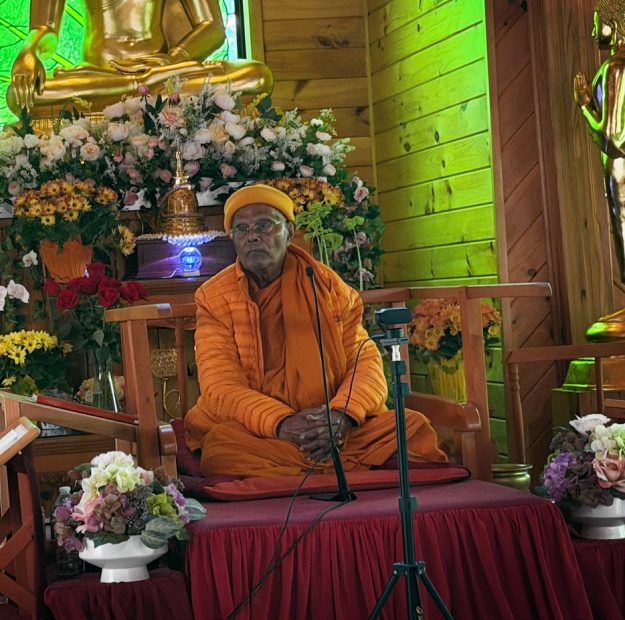
Central to the retreat’s instruction was Bhante Henepola Gunaratana, affectionately known worldwide as "Bhante G." At 98 years old, Bhante G is a globally recognized Buddhist scholar, author, and former abbot of the Bhavana Society. His presence, even in his advanced age, lent an air of profound authority and wisdom to the proceedings. The author, who first met Bhante G in 1989 when he visited Bhavana as a newspaper reporter, spoke of the teacher’s enduring clarity of mind and guidance, which remained "crystal pure" despite a slower delivery. Bhante G’s teachings, rooted in the Buddha’s noble eightfold path, provided the framework for the retreatants’ contemplative practice.
The Bhavana Society itself is a testament to Bhante G’s vision. Established in the foothills of the Allegheny Mountains, it offers a serene environment conducive to meditation and the study of Buddhist philosophy. The monastery has steadily grown since its inception, now encompassing a significant acreage dotted with kutis and communal spaces like the sangha hall. Its location, approximately twenty minutes from the nearest town of Wardensville and a two-hour drive from Washington D.C., places it in a unique position—a remote spiritual haven accessible to those seeking refuge from urban life.
Navigating Grief Through Buddhist Teachings
The author’s participation in the retreat was not merely an academic or spiritual pursuit; it was a deeply personal quest for healing. He openly acknowledged his own struggles with suicidality in the past, admitting he was not a "Buddhist maven" but rather a "wayward soul keen to grok the teachings." This vulnerability allowed him to connect with the core of Buddhist practice, which acknowledges suffering and provides a path toward its cessation. The retreat offered a structured environment to confront the "riptide of tea and coffee" that mirrored the emotional turmoil within.
During his work hours, the author assisted in copyediting a forthcoming book by Bhante G, tentatively titled Seeing Things as They Are. This work, focused on the sustained ethics and purpose required for deepening meditation practice, offered him direct insight into the profound philosophical underpinnings of their shared journey. He also recalled working on a previous book with Bhante G, What Why How: Answers to Your Questions About Buddhism, Meditation, and Living Mindfully, which has achieved international acclaim through translations into multiple languages. Bhante G’s seminal work, Mindfulness in Plain English, has been translated into nearly thirty languages, solidifying his status as a preeminent voice in bringing Buddhist teachings to a global audience.
A Father’s Anguish and the Universal Language of Grief
The rawest expressions of the author’s grief emerged during his late-night journaling sessions. In a poignant poetic fragment, he articulated the struggle between his identity as a grieving father and a retreatant seeking enlightenment. He grappled with the societal context of his son’s suicide, implicitly referencing the accessibility of firearms in America. The contrast between his internal turmoil and the tranquil sounds of the monastery—the "ballast of tree frogs and the whir of a million crickets"—highlighted the profound isolation of his sorrow, even within a supportive community.

The author’s personal reflections offered a powerful glimpse into the universal experience of grief. He recounted the stark memories of finding his son, a moment that evoked an overwhelming urge to "scream my boy’s name into the cool September evening air." However, the monastic setting and the vastness of the Appalachian wilderness dictated a different response, one of silent endurance and inner processing. The "chatty September insect and animal night-song of the ancient woods" continued, a testament to the ongoing cycle of life that persists even in the face of profound loss.
Bhante G’s upcoming book provided a framework for understanding this grief. A passage on sorrow resonated deeply with the author, articulating how clinging to people, objects, experiences, or ideas leads to suffering when these are inevitably subject to change. The text offered a path toward surmounting lamentation not by denying grief, but by understanding its roots in attachment and expectation. This insight, shared with his wife and daughter, offered a beacon of hope for navigating the difficult path ahead.
The Small Acts of Connection in Noble Silence
Despite the constraints of noble silence, moments of human connection emerged. The author described a fellow retreatant who offered his wooden meditation bench. This simple gesture, communicated through a handwritten note left on the author’s cushion, exemplified the subtle ways in which compassion and understanding can manifest within a silent retreat. The author’s appreciation for this act of kindness, and his contemplation of adding the bench to his Christmas gift list, underscored the inherent loveliness and coolness of human beings. This exchange, coupled with the author’s subsequent "namaste" and the fellow retreatant’s broad grin and thumbs-up, demonstrated that even in silence, profound connections can be forged.
Practical Contributions and Enduring Legacy
The author’s assigned physical task during the retreat was to clear leaves and twigs from the paths and porches of the men’s kutis. Armed with a small broom, he meticulously worked his way through the monastery grounds, tending to kutis named after prominent Buddhist disciples like Rahula, Kalingaram, Lakhanna, Piti, and Sivali. Despite the physical exertion, the task provided a sense of accomplishment and satisfaction, a tangible contribution to the serene environment. This act of service, however small, symbolized the author’s engagement with the monastery’s ethos of mindful action.
The Bhavana Society, situated in the tranquil West Virginia hills, stands as a testament to the enduring power of Buddhist practice and the profound impact of dedicated spiritual leaders like Bhante G. It serves as a vital sanctuary for those seeking wisdom, healing, and a deeper understanding of themselves and the world. The author’s experience, marked by profound personal tragedy, highlights the monastery’s capacity to offer solace and a path toward reconciliation with life’s most difficult challenges, even amidst the silent echoes of loss in the vastness of the Appalachian landscape. Bhante G’s approaching 100th birthday on December 7, 2027, marks not only a personal milestone but also a celebration of the enduring legacy of wisdom and compassion he has cultivated at the Bhavana Society for nearly four decades.

