

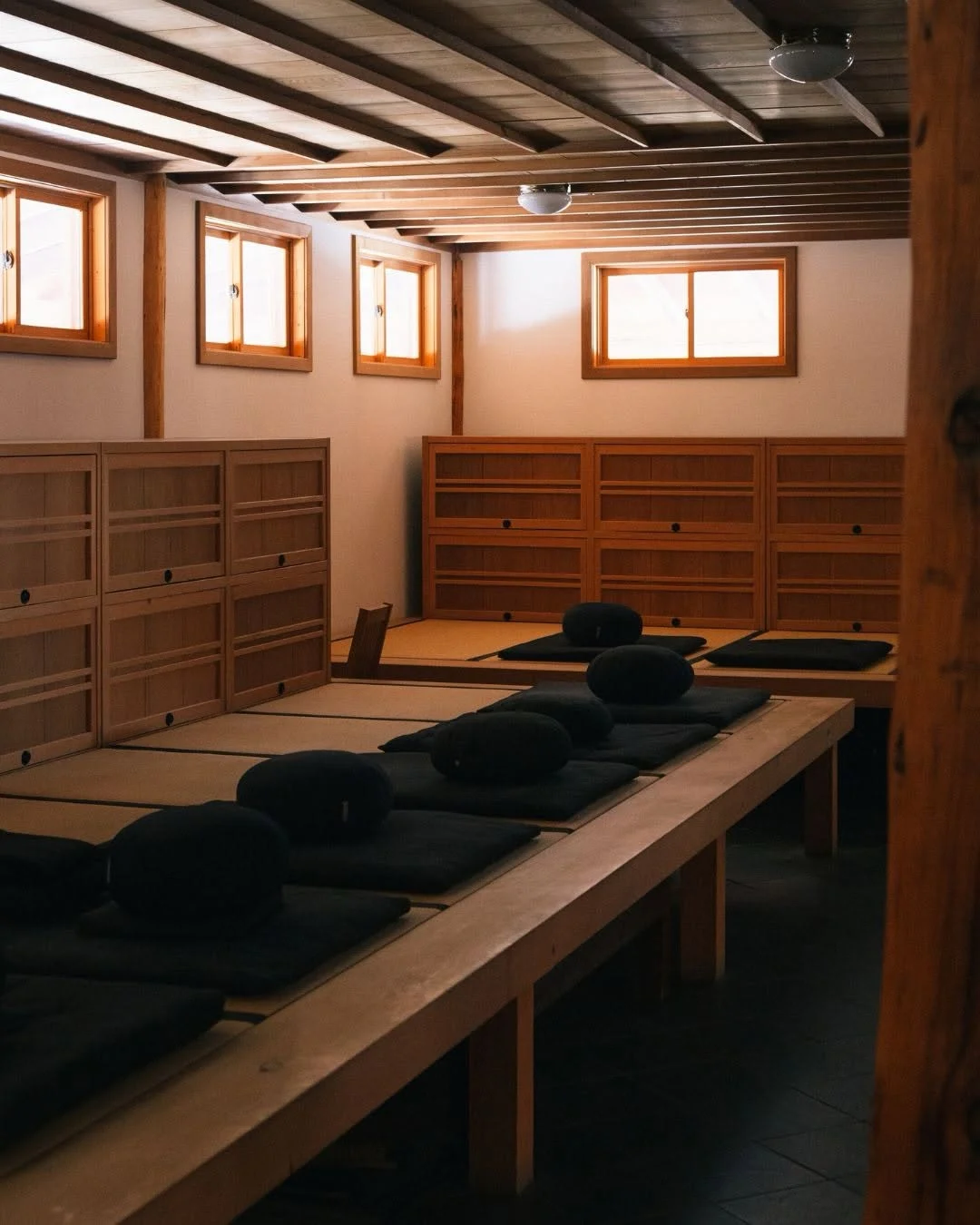
At the age of 24, I made a profound decision that would shape the trajectory of my life: I moved into a Zen monastery. This was not a sudden impulse but the culmination of seven years dedicated to insight meditation, a practice that had become the bedrock of my existence, yet my life remained fragmented. I would immerse myself in intensive retreats, then return to the mundane world, piecing together work as a waiter or house painter to fund my next period of spiritual exploration. This cyclical pattern, while dedicated to a singular practice, lacked cohesion and a clear sense of forward momentum.
The turning point arrived with my discovery of Crestone Mountain Zen Center, nestled high in the dramatic landscape of southern Colorado. The setting was awe-inspiring: 14,000-foot peaks loomed above, a vast desert valley stretched below, and a clear creek meandered through the property. The monastery itself exuded a serene beauty, with statues in every room seemingly offering silent instruction on posture and presence. The community was small, serious, and comprised of individuals who had dedicated years, even decades, to their practice. It felt like a sanctuary where spiritual maturation was not only possible but actively cultivated. Our days began at 3:30 a.m., dressing in the pre-dawn darkness before proceeding to the meditation hall. There, we would sit in glacial stillness, facing the wall, a practice known as zazen. The monastic discipline extended far beyond the meditation cushion. Bowing became an ingrained ritual, whether entering a room or encountering fellow practitioners on the pathways. Meals, work, and study were communal endeavors, each activity imbued with a shared intention. It was within this structured environment that my practice deepened, and for the first time, I began to envision a life wholly devoted to the dharma, the teachings of the Buddha.
My teacher at Crestone, Zentatsu Richard Baker Roshi, once articulated a powerful perspective on renunciation, describing it as a source of strength derived from intentional limitation. He stated, "When we limit ourselves, when we really choose one thing, it empowers that thing and shapes our lives around that thing. We give something up to empower our lives." This concept resonated deeply, offering a framework for understanding the profound sacrifices inherent in such a commitment.
The Divergence of Paths: A College Friendship and Emerging Realities
During my college years, I shared a close bond with a fellow writer. Our days were filled with dissecting literature, engaging in passionate discussions about novels, essays, and poetry, and nurturing a shared ambition to forge careers in the literary world. After graduation, our paths diverged sharply. She relocated to New York City to embark on a career as a publicist at Vintage, while I entered the monastic life. At the time, I viewed her choice as a compromise, a "selling out," while she found my decision to be—in her words—"ridiculous."
A year later, an email from her circulated among our former college circle, humorously detailing the absurdities of Manhattan life. She recounted locking herself out of her apartment three times in a single day, each instance requiring a call to an increasingly exasperated locksmith. A friend, who happened to be an editor at the Village Voice, transformed this personal anecdote into a published piece. The article caught the eye of an editor at Riverhead Books, who then invited her to write a book. The resulting novel became a New York Times bestseller, propelling her into the realm of literary celebrity, where she mingled with the very authors we had once discussed over coffee shop tables. This burgeoning success, however, created a rift; she stopped returning my calls. The emotional impact was palpable, a distinct feeling of loss and disconnection.
Another instance underscored this growing chasm. A close friend who had secured significant equity in a burgeoning tech company held a lavish wedding in Napa Valley. The financial realities of my monastic life—the inability to afford the hotel or the flight—made attendance impossible, and that friendship, too, began to fade.
The sting of these separations lingered. The narratives of my friends’ lives, conveyed through emails, phone calls, and infrequent visits, painted a picture of careers launched, marriages celebrated, apartments acquired, books published, and financial successes achieved. In stark contrast, my own existence was narrowing, becoming more profound but less expansive. My material possessions were few, my financial resources negligible, and my days largely prescribed. The rhythm of my life was dictated by early mornings, the donning of robes, hours of silent meditation, communal work, and continued study.
The Paradox of Renunciation: Sacrificing Happiness for Greater Fulfillment
Despite the apparent austerity, there was profound joy in this life. I cherished the seriousness of purpose, the aesthetic beauty of the monastic forms, and the deep intimacy forged through daily shared practice. The concentration of my life around a singular intention brought a unique form of contentment. However, the arrival of news about others’ lives often served as a stark counterpoint, temporarily diminishing the perceived value of my own seemingly "shabby" existence. Questions arose: Why had I stopped writing? What other experiences was I missing? Who else could I be spending my time with if not in these flowing black robes?
Six years is a significant portion of one’s twenties. By the time I departed Crestone, some of the life paths I had envisioned at 24 had irrevocably closed. This experience aligns with the ancient wisdom found in the Dhammapada, which states, "If by renouncing a lesser happiness one may realize a greater happiness, let the wise one renounce the lesser, having regard for the greater." On paper, this calculation appears straightforward. In the lived experience, however, the challenge lies in recognizing that the "lesser happiness" is still, unequivocally, happiness.
At 24, I possessed a clear understanding of what I was foregoing. I knew the pleasure of late-night conversations, the creative impulse to write, the freedom of travel, the exhilaration of falling in love, and the simple luxury of an unscheduled afternoon. I could envision a career path, as I had friends embarking on theirs. I could imagine marriage, financial security, and life in bustling cities. These were not perceived as temptations to be avoided due to some inherent flaw, but rather as desires I genuinely held.
What remained largely unknown was the other side of the equation. While I was committed to meditation, the specific impact of six years of monastic practice on my being was an enigma. The cumulative effect of thousands of hours of silent sitting, living within a community dedicated to spiritual realization, and making the daily choice to uphold these principles was an unwritten chapter.
This uncertainty is precisely what makes renunciation a complex topic. It is tempting to frame the relinquished desires as counterfeit pleasures, but the Dhammapada verse itself acknowledges them as "happiness." The lost friendships represented a loss of happiness. The cessation of writing was also a forfeiture of happiness. I could envision an alternative life rich with art, music, love, curiosity, and play—a life undoubtedly filled with its own forms of happiness, and the pain of its abandonment was real.
Renunciation in Everyday Life: The Subtle Sacrifices of Practice
The principles of renunciation are not confined to monastic settings. Any dedication to a meditation practice, for instance, demands time, and that time must be allocated from somewhere. Forty-five minutes spent meditating is forty-five minutes not spent scrolling through a phone, reading a novel, or indulging in extra sleep. A week spent on retreat means forgoing a weeklong vacation with family.
Some of these choices are relatively easy. Others present a more significant challenge. A vacation with loved ones can be deeply enriching, as can the simple pleasures of sleeping in, earning money, watching television, or dining out. The practice itself does not necessitate a denial of these experiences. However, when the practice assumes sufficient importance, individuals often find themselves making these choices anyway. A daily commitment of an hour can expand to a morning, then a full day, and over decades, these choices can constitute a significant portion of one’s life.
The Evolving Self: Leaving the Monastery and Embracing New Possibilities
After six years, the monastery, once a sanctuary, began to feel confining. My meditation practice, which had flourished for years, seemed to have reached a plateau, and I found myself struggling to stay awake during zazen. Furthermore, my relationship with my teacher became increasingly strained. I perceived inconsistencies in his conduct that I could no longer reconcile with my own evolving understanding.
Crucially, aspects of myself that had been dormant within the monastic structure began to stir. I felt a growing desire to engage with the broader culture, to write books, to connect with people, and to participate in the vibrant, often messy, fabric of everyday life. The very limitations that had once provided structure and focus now felt like constraints on a part of me that yearned for development.
Consequently, I made the decision to leave, with no clear plan for what lay ahead. The ensuing year was one of uncertainty and fear. Having spent the majority of my twenties in a monastery, I lacked marketable skills. The prospect of financial self-sufficiency was daunting. I briefly considered business school, only to recoil at the thought of a life dedicated to commerce. A similar strong aversion arose when contemplating law school.
Ultimately, I decided to pursue a PhD in psychology. This path felt like a natural extension of my monastic experience, where I had often sat with individuals, listened to their life stories, and offered support. When I entered Crestone at 24, I had relinquished one potential life without fully understanding what the monastery would offer in return. Six years later, I repeated this act of faith, leaving a life I loved before knowing what would replace it.
Unexpected Harvests: Lessons Learned and a Life Reimagined
My twenties were spent mastering the practicalities of monastic life: trimming altar candles, arranging ashes, dusting Buddha statues, and placing flowers. At the time, I could not conceive of any future utility for these skills. Who, I wondered, would ever need to know how to tend an altar? The monastic existence itself was a constant immersion in community, with little privacy and infrequent respite from others. I often joked that monastic life was akin to being married to a dozen people I hadn’t chosen, some of whom I found challenging. There was no escape when irritation arose; we were bound to sit, eat, and work together, day after day.
Years later, after getting married, the profound value of those monastic years became clear. Marriage and relationships are inherently complex and often demanding. However, my six years in community had provided an invaluable apprenticeship in navigating closeness with others, even amidst discomfort, irritation, hurt, or the simple desire for solitude.
Other aspects of my life also resurfaced in unforeseen ways. I believed I had abandoned my aspirations as a writer upon entering Crestone. In a sense, the specific literary career I had envisioned in college never materialized. However, I did become an author, though my focus shifted from literary fiction to writing about the dharma.
My current life encompasses many of the aspirations I held at 24, albeit in forms I could not have then imagined. I am in a happy marriage, surrounded by cherished friends, some from my monastic days, others from college, and new companions met along the way. I teach the dharma, and I have achieved a comfortable level of financial stability.
Each morning, I awaken with a sense of profound gratitude for my good fortune. When I encounter individuals living lives that once seemed to highlight the perceived deficiencies of my own, the old comparisons no longer hold sway. I recognize the value in their achievements and aspirations without desiring those lives for myself. My prevailing sentiment is one of sincere well-wishing: "Good for them."
A Leap of Faith: The Incomplete Information of Choice
Reflecting on the 24-year-old me, diligently facing the wall in the Crestone meditation hall, the news of distant lives reaching him, I do not wish to convey that his sacrifices were in vain. They mattered deeply to him, and they continue to hold significance for me. He relinquished possessions and experiences of genuine worth, taking a considerable risk without knowing the full extent of what those years in the monastery would ultimately bestow.
Perhaps this is the fundamental difficulty with the Dhammapada‘s verse on renunciation. We are often compelled to abandon the lesser happiness before we have a full understanding of the greater one. Our choices are made with incomplete information. At 24, the lives I was not living were far more vivid and tangible than the life I was actively creating. I could not have foreseen this present existence. My only certainty was the direction I felt compelled to move.

