


A recent commentary published in the UK Guardian by George Monbiot has ignited a vital discussion regarding the perceived decline in children’s connection to the natural world and its potential consequences for environmental advocacy. While Monbiot’s central assertion—that a diminished relationship with nature may erode future generations’ commitment to its preservation—resonates with many, the author of this response, Amy Lenzo, posits that the argument, as presented, oversimplifies a complex issue by placing undue emphasis on screen time as the primary antagonist. Lenzo contends that while societal shifts have undeniably altered children’s access to the outdoors, digital technologies themselves may also offer avenues for re-establishing that crucial link.
The Debate Over Nature Connection and Screen Time
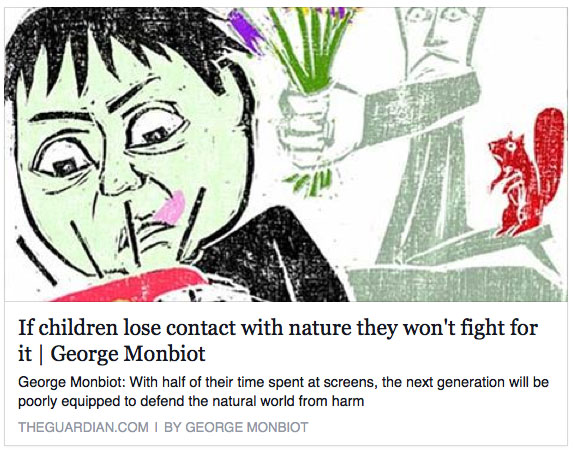
George Monbiot’s article, "If Children Lose Contact With Nature They Won’t Fight For It," published on November 19, 2012, argued that the increasing prevalence of digital devices and indoor leisure activities is leading to a disconnect between young people and the environment. This disconnect, Monbiot suggested, would inevitably lead to a generation less inclined to champion environmental causes, as the intrinsic motivation to protect something often stems from direct experience and emotional attachment. The piece quickly garnered widespread attention, sparking debate among educators, environmentalists, and parents.
Amy Lenzo, responding to Monbiot’s analysis, acknowledges the validity of the premise that direct engagement with nature is fundamental for fostering a protective instinct. However, she expresses a strong disagreement with the notion that blaming "on-screen engagement" is a sufficiently comprehensive or accurate explanation. Lenzo’s perspective, informed by her own experiences and understanding of ecopsychology, suggests that the digital realm, often cast as the sole culprit, could paradoxically serve as a bridge back to nature for many.
Societal Shifts Beyond the Digital Frontier
The argument that children are losing contact with nature is not new and predates the widespread adoption of the internet and smartphones. Sociological research has consistently pointed to a confluence of factors contributing to this trend.
- Urbanization and Suburban Sprawl: A significant portion of the global population now resides in urban or suburban environments, often with limited access to undeveloped natural spaces. This geographical reality restricts spontaneous outdoor exploration for many children. Data from the United Nations indicates that by 2050, 68% of the world’s population is projected to live in urban areas, a substantial increase from 55% in 2018. This trend inherently reduces the immediate proximity to nature for a growing number of children.
- Increased Parental Concerns and Safety: Modern parenting often involves a heightened awareness of safety risks, leading to greater supervision and a reduction in unsupervised outdoor play. This can be attributed to factors such as perceived increases in crime rates, traffic hazards, and legal liabilities for landowners. Studies have shown a marked decrease in children’s independent mobility and time spent playing outdoors unsupervised over the past few decades. For instance, research published in the Journal of Environmental Psychology has highlighted a correlation between perceived safety and children’s time spent outdoors.
- Academic Pressures and Structured Activities: The emphasis on formal education and extracurricular activities has also contributed to a reduction in unstructured free time available for outdoor exploration. Children’s schedules are often packed with homework, sports, and other organized pursuits, leaving less room for spontaneous encounters with the natural world.
- Economic Factors: In some regions, economic disparities can limit access to safe and engaging natural environments, particularly for children from lower-income households. Access to national parks, nature reserves, or even well-maintained green spaces can be dependent on proximity and the cost of transportation or entry fees.
These macro-level societal changes, Lenzo argues, are fundamental drivers of reduced nature contact, and attributing the problem solely to screens overlooks the broader environmental and social conditions shaping children’s lives.
The Digital Realm as a Potential Pathway
Lenzo’s counter-argument hinges on the idea that digital tools, when used thoughtfully, can supplement and even inspire a connection with nature. She draws a parallel to her own childhood in the Arizona desert, where her passion for the natural world was ignited through books, despite the "prickly" nature of her immediate surroundings. Today, she suggests, digital platforms offer a richer, multi-modal form of engagement that can be equally, if not more, effective in drawing children into the "mystery and magic" of the natural world.
- Educational Resources and Multimedia: The internet hosts a vast repository of educational content about nature, from documentaries and interactive games to virtual field trips and citizen science projects. Platforms like YouTube, educational apps, and online encyclopedias can provide children with detailed information about flora, fauna, ecosystems, and environmental issues. This access can spark curiosity and provide foundational knowledge that encourages further exploration.
- Virtual Exploration and Accessibility: For children with limited mobility or those living in areas devoid of natural landscapes, virtual reality experiences and high-quality nature photography and videography can offer a glimpse into diverse ecosystems. While not a substitute for direct experience, these tools can serve as powerful introductory gateways.
- Online Communities and Citizen Science: Digital platforms can connect children with like-minded individuals and communities passionate about nature. Online forums, social media groups, and citizen science initiatives allow young people to share their observations, learn from others, and even contribute to real-world research. Projects like eBird, which allows users to report bird sightings, or iNaturalist, which helps identify plants and animals, demonstrate the potential of digital tools for fostering engagement.
- Inspiring Creativity and Expression: Digital tools can also empower children to express their connection to nature creatively. Photography, video editing, digital art, and blogging can be used to document nature experiences, share observations, and advocate for environmental causes.
Lenzo emphasizes that the key lies not in demonizing screens but in understanding how they can be leveraged to enhance, rather than replace, real-world experiences. The integration of multi-media elements in digital content can be more engaging for today’s youth, mirroring the way books once captivated previous generations.
The Imperative of Direct Engagement and the Motivational Power of Nature
Despite her critique of the singular focus on screen time, Lenzo unequivocally supports the call for children to engage directly with the natural world. She reiterates two fundamental truths:
- Direct engagement is paramount: There is an undeniable value in children physically experiencing nature—feeling the earth beneath their feet, smelling the rain, observing wildlife firsthand. These sensory experiences create a profound and lasting impression.
- Personal connection fuels advocacy: A deep, personal relationship with nature is a potent motivator for conservation and environmental activism. As Lenzo states, "we protect what we know and love." This intrinsic motivation, born from familiarity and affection, is often more enduring than externally imposed obligations. Furthermore, a connection with nature provides a vital source of balance, well-being, and wholeness for individuals across all age groups.
Re-envisioning Online Engagement for Nature Connection
Lenzo’s core proposition is to imbue online engagement with a conscious connection to the natural world. This involves a paradigm shift from viewing online activities as inherently separate from or detrimental to nature connection, to seeing them as potential extensions.
- Mindful Online Presence: The suggestion is to avoid complete disembodiment when online. Users, including children, should be encouraged to remember that they are embodied beings with physical sensations and that their online interactions involve other people situated within specific environments.
- Sense-Based Language and Imagery: Encouraging the use of descriptive language that appeals to the senses (sight, sound, smell, touch, taste) and employing high-quality, evocative photography and videography can help maintain a connection to the natural world even when interacting digitally. This approach aims to ground online discourse in tangible realities.
- Empathy and Human Connection: When discussing environmental issues online, remembering that one is communicating with other human beings, who are also part of the natural world and its challenges, can foster greater empathy and collaborative spirit.
Lenzo’s perspective suggests that rather than lamenting the current reality of digital saturation, individuals and organizations should actively work to integrate nature-centric principles into online platforms and activities. This proactive approach can transform the digital landscape into a supportive environment for fostering environmental awareness and action.
Broader Implications and Future Directions
The debate initiated by Monbiot and further explored by Lenzo highlights the multifaceted nature of environmental education and advocacy in the 21st century. The implications extend beyond childhood development to encompass broader societal strategies for conservation.
- Integrated Educational Models: There is a growing need for educational models that seamlessly blend digital learning with outdoor experiences. Schools and environmental organizations could develop curricula that utilize online resources to prepare students for field trips, analyze data collected in the environment, and engage in online discussions about conservation issues.
- Responsible Technology Design: The design of educational apps, games, and online platforms could be more intentionally focused on promoting nature appreciation and environmental stewardship. This could involve incorporating elements of ecological literacy, encouraging sustainable practices, and fostering a sense of wonder about the natural world.
- Parental and Educator Guidance: Providing parents and educators with resources and strategies for guiding children’s digital consumption in a way that complements, rather than detracts from, their connection to nature is crucial. This includes encouraging critical media literacy and promoting a balanced lifestyle that incorporates both screen time and outdoor activities.
- The Role of Ecopsychology: Lenzo’s perspective aligns with the principles of ecopsychology, which explores the relationship between human psychology and the natural environment. This field emphasizes the interconnectedness of human well-being and ecological health, suggesting that fostering a healthy relationship with nature is essential for both individual and societal flourishing.
In conclusion, while the concern over children’s diminishing contact with nature is a valid and pressing issue, the proposed solutions require a nuanced approach. George Monbiot’s call to action serves as a crucial reminder of the importance of direct engagement. However, Amy Lenzo’s response offers a valuable counterpoint, suggesting that the digital world, often perceived as an antagonist, can also be a powerful ally in cultivating environmental awareness and fostering a deep-seated commitment to protecting the planet for generations to come. The challenge lies in harnessing the potential of all available tools—both digital and physical—to nurture a generation that understands, values, and actively defends the natural world.

