

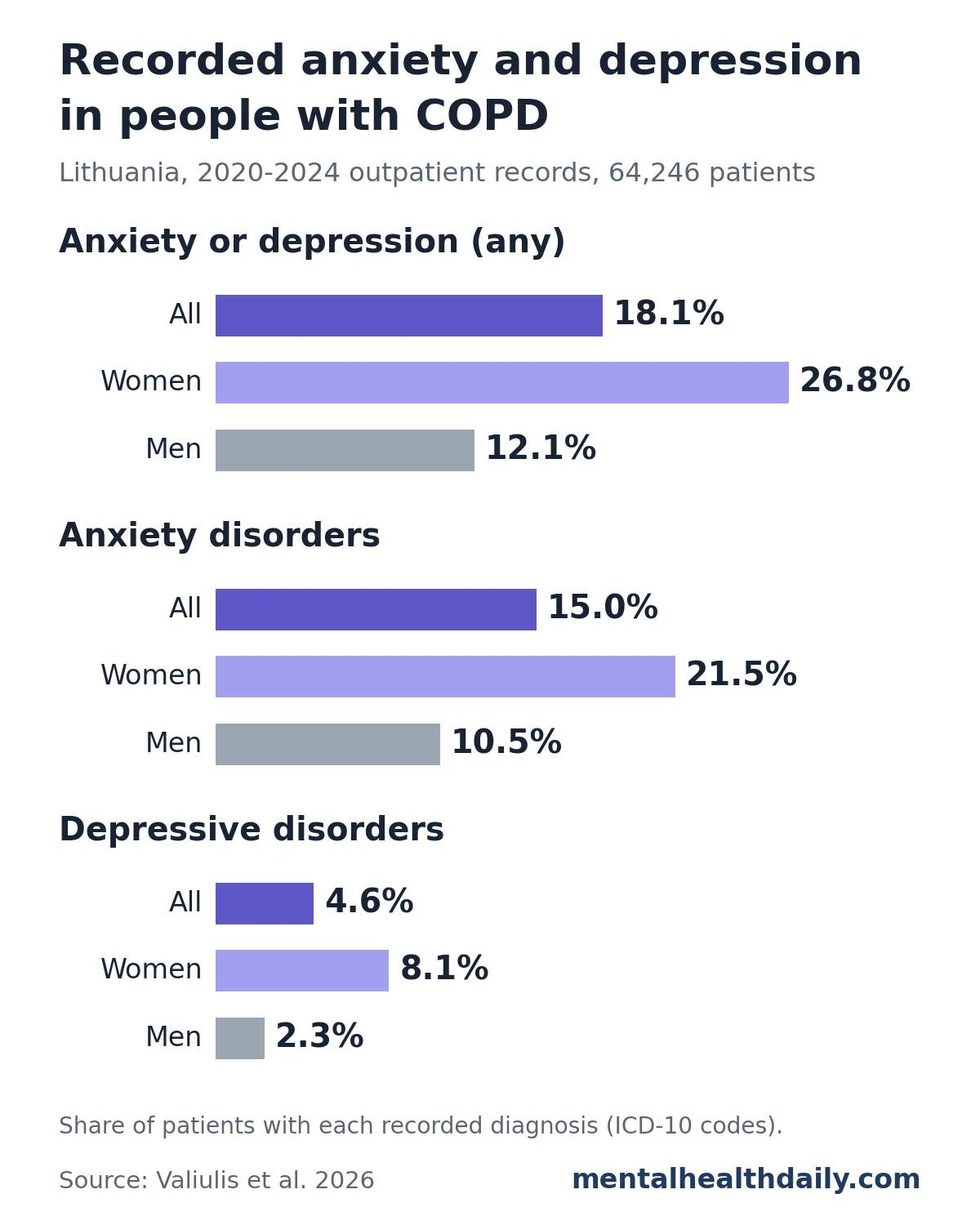
A comprehensive nationwide study conducted in Lithuania has shed critical light on the often-overlooked mental health challenges faced by individuals living with chronic obstructive pulmonary disease (COPD). The research, encompassing 64,246 patients across the country, revealed that nearly one in five individuals diagnosed with COPD also had a recorded diagnosis of anxiety or depression between 2020 and 2024. Notably, anxiety disorders were found to be significantly more prevalent than depressive disorders, and a striking majority of patients receiving pharmacotherapy were prescribed benzodiazepines, raising important questions about treatment strategies and patient well-being.
The Silent Struggle: Mental Health in Chronic Disease
Chronic obstructive pulmonary disease (COPD) is a progressive lung disease characterized by obstructed airflow from the lungs, making breathing difficult. Primarily caused by long-term exposure to irritants, such as cigarette smoke, it manifests through symptoms like breathlessness, chronic cough, and wheezing. The debilitating nature of COPD extends far beyond physical symptoms; the constant struggle for breath, limitations on daily activities, social isolation, and the chronic nature of the illness profoundly impact patients’ psychological well-being. This complex interplay between physical and mental health underscores why conditions like anxiety and depression are recognized as significant comorbidities in COPD patients globally. The Lithuanian study offers a crucial, real-world perspective on this phenomenon within a specific national context.
Methodology and Scope of the Lithuanian Research
The study, led by Tadas Valiulis and a team of researchers at Vilnius University, utilized anonymized outpatient records from the Lithuanian State Data Agency. This extensive dataset covered a five-year period, from January 2020 through December 2024, providing a robust foundation for analyzing mental health diagnoses and treatment patterns among a large cohort of COPD patients. The researchers identified 64,246 unique adult patients with a COPD diagnosis, comprising 38,063 men and 26,183 women.
Mental health conditions were meticulously identified using diagnosis codes from the International Classification of Diseases (ICD-10), a globally recognized standard for health information. In addition to diagnostic codes, the research team analyzed psychotropic prescriptions, differentiating between those issued by family physicians and those by psychiatrists. This dual-pronged approach offered insights into both the prevalence of diagnoses and the real-world treatment landscape. The findings of this significant research were formally published in September 2026 in the International Journal of Chronic Obstructive Pulmonary Disease, contributing valuable data to the global understanding of COPD management.
Key Findings: A Deep Dive into Prevalence
Of the more than 64,000 COPD patients studied, 11,608 (18.1%) had at least one recorded diagnosis of either an anxiety or depressive disorder during the study period. This figure, while substantial, is likely an underestimate of the true prevalence, a point that warrants further discussion. Among those diagnosed, anxiety disorders emerged as the predominant mental health concern, accounting for a significantly larger proportion of diagnoses compared to depressive disorders. This pattern represents a notable shift from earlier Lithuanian data (2012-2014) which indicated depression as more common than anxiety among COPD patients.
Researchers hypothesize that external factors, such as the social stress induced by the COVID-19 pandemic and the geopolitical anxieties stemming from the war in neighboring Ukraine, may have contributed to this observed shift in prevalence, alongside potential changes in healthcare access and diagnostic practices. However, the study’s design, being observational, cannot definitively establish a causal link for these temporal trends. The data also indicated that recorded diagnoses peaked around 2022 before showing a slight decline in 2023 and 2024, though no statistically significant straight-line trend was observed for either anxiety (P for trend = 0.284) or depression (P for trend = 0.238) over the five-year period. A subtle but statistically significant association was found between older age and a slightly higher likelihood of diagnosis, with an adjusted odds ratio of 1.015 per year of age.
Gender Disparities in Diagnosis
A particularly striking finding from the study was the significant gender disparity in mental health diagnoses. Women, who constituted 41% of the total COPD patient cohort, accounted for a disproportionately high 60% of those with a psychiatric diagnosis. After controlling for age and calendar year, women with COPD were found to have 2.40 times higher odds (95% CI 2.32 to 2.48) of receiving any recorded anxiety or depressive disorder diagnosis compared to men. This disparity was even more pronounced for depressive disorders, where women had 3.53 times higher odds (95% CI 3.36 to 3.72) of diagnosis.
The authors propose several explanations for this observed gender gap. These include potential differences in how symptoms are presented by patients, varying propensities to seek medical help, and distinct diagnostic approaches by healthcare providers. It is widely acknowledged in medical literature that women are often more likely to report mood-related symptoms and to seek mental health care, whereas distress in men may manifest differently, sometimes being overlooked unless accompanied by physical complaints. Consequently, a portion of this diagnostic disparity may reflect variations in who receives a diagnosis rather than solely indicating a higher underlying prevalence of mental health struggles among women. This finding highlights the need for gender-sensitive approaches to screening and diagnosis in clinical practice.
The Underestimation Challenge: Why Real Numbers Are Higher
While the recorded rate of 18.1% for anxiety or depression among Lithuanian COPD patients is higher than the approximately 12.5% cited for the general Lithuanian population, it is crucial to recognize that these figures likely represent a significant underestimation of the true burden. A recorded diagnosis only occurs when a clinician identifies the problem and formally documents it in patient records. Many individuals experiencing mental health symptoms may not be diagnosed for various reasons, including stigma, lack of awareness, or the masking of symptoms by physical comorbidities.
Studies employing direct screening methods among COPD populations consistently report much higher rates of mental health conditions. For instance, global research indicates that the prevalence of anxiety among COPD patients can range from 10% to 40%, while depression rates are often cited between 10% and 50%. Against these broader figures, the 4.6% recorded depression rate in the Lithuanian study appears notably low. The overlap of symptoms between COPD and mental health conditions further complicates diagnosis. Breathlessness, fatigue, poor sleep, and low energy are common to both COPD and depression, making it challenging for clinicians, particularly in a busy lung clinic setting, to distinguish between the two. Similarly, symptoms like a racing heart and air hunger can be misinterpreted as either a COPD exacerbation or a panic attack, leading to missed opportunities for mental health intervention. This suggests a systemic challenge in integrating mental health screening into routine COPD care.
Treatment Landscape: Dominance of Benzodiazepines
Of the 11,608 patients with a recorded mental health diagnosis, 7,190 (61.9%) received a psychotropic prescription. This proportion of treated patients showed an increasing trend over the study period, rising from 50.4% in 2020 to 61.4% in 2024, indicating a growing recognition and pharmacological response to these conditions. However, the composition of these prescriptions raises significant concerns.
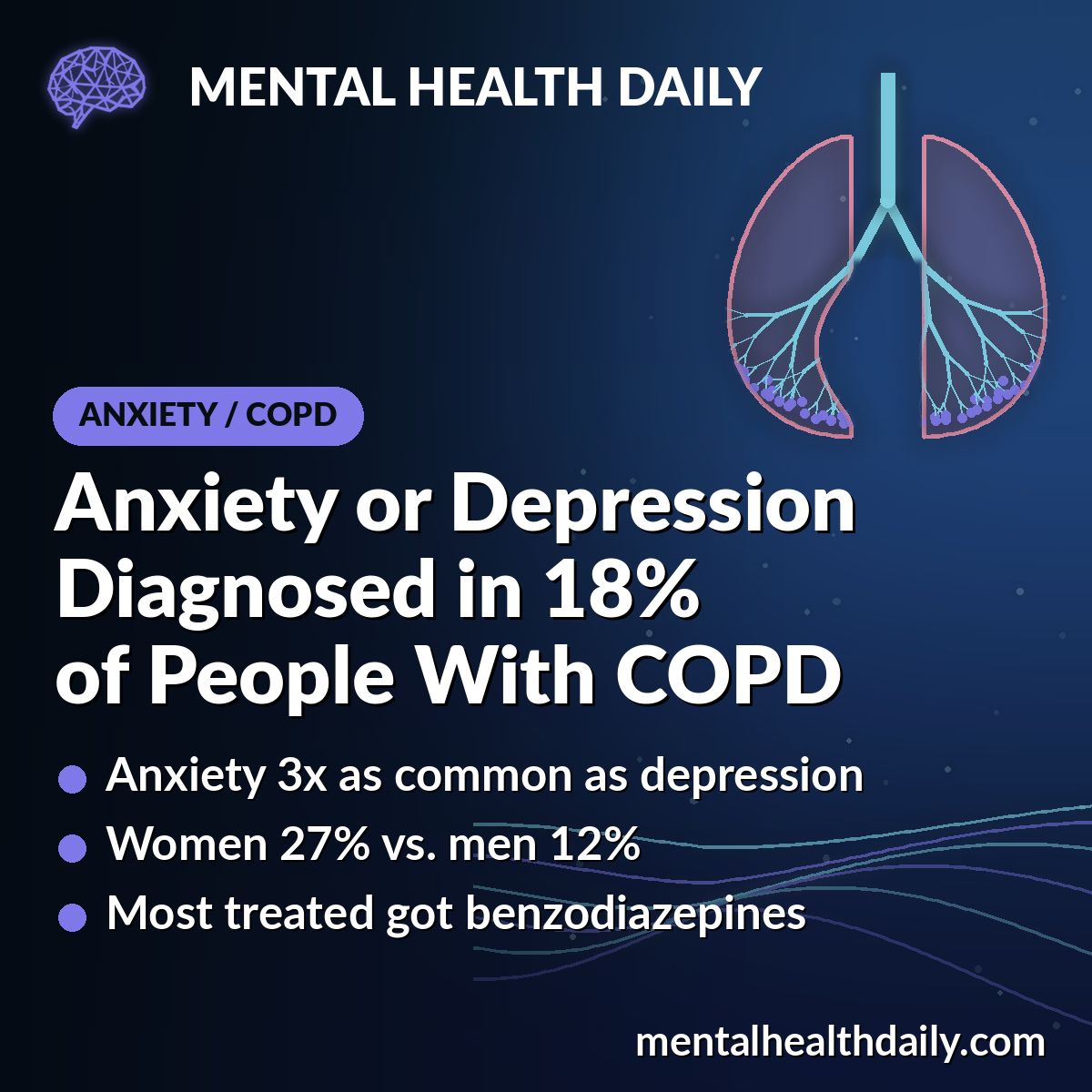
Among the treated patients, benzodiazepines constituted the majority of prescriptions. Specifically, 67.9% of treated patients received an anxiolytic, and 52.8% received a benzodiazepine. In contrast, antidepressants were prescribed to 37.6% of treated patients, and neuroleptics to 7.0%. This strong reliance on benzodiazepines, known for their sedative and anxiolytic properties, stands out.
The study also elucidated the roles of different healthcare providers in prescribing. Family physicians played a central role, prescribing to 82.5% of treated patients, while psychiatrists prescribed to 32.4% (with some patients seeing both). Family physicians were significantly more likely to prescribe anxiolytics (10.66 times the odds) and benzodiazepines (9.85 times the odds) compared to psychiatrists. Conversely, psychiatrists were more inclined to prescribe antidepressants (2.75 times the odds) and neuroleptics (2.10 times the odds). This pattern suggests a divergence in treatment philosophy and access to specialized care, with primary care often opting for more readily available, immediate-acting solutions.
Trends over the study period indicated a rise in benzodiazepine prescribing among all diagnosed patients, from 40.0% in 2020 to 46.0% in 2024. Antidepressant prescribing also increased, from 15.3% to 22.7% during the same period, suggesting a gradual shift towards more diverse treatment options, albeit with benzodiazepines retaining their dominance. Psychiatrist involvement in prescribing also saw a slight annual increase (adjusted odds ratio 1.04 per year), potentially indicating an incremental improvement in access to specialist mental health care.
The Peril of Benzodiazepines in COPD Management
The widespread use of benzodiazepines in COPD patients is a critical concern for several reasons. Benzodiazepines are known central nervous system depressants that can slow breathing, posing a significant risk to individuals whose respiratory function is already compromised by COPD. This risk is particularly elevated in patients with severe airflow obstruction or during acute exacerbations.
Supporting these concerns, an Ontario study involving adults aged 66 and older with COPD found that new users of benzodiazepines faced a 45% higher risk of outpatient-treated respiratory flare-ups and a 92% higher risk of emergency room visits for COPD or pneumonia, compared to non-users. While their risk of hospitalization was not significantly higher in that study, the increased burden on outpatient and emergency services underscores the potential adverse effects. Although the Lithuanian data could not specify the exact reasons for each benzodiazepine prescription (e.g., for sleep, anxiety, or other indications), nor did it report on dose or duration, the overall high prevalence warrants careful consideration and adherence to international guidelines that often recommend cautious use or avoidance of these medications in COPD patients.
Broader Context: Lithuania’s Healthcare Landscape and Societal Pressures
The observed shift in mental health prevalence, with anxiety surpassing depression, aligns with broader trends and specific pressures faced by Lithuania during the study period. The COVID-19 pandemic, with its associated lockdowns, health anxieties, and economic uncertainties, profoundly impacted mental health globally. For individuals with chronic respiratory conditions like COPD, the pandemic presented heightened fears of infection and severe outcomes, potentially exacerbating anxiety.
Furthermore, Lithuania’s geographical proximity to Ukraine and the ongoing war since February 2022 introduced a unique layer of societal stress, fear, and uncertainty. Such geopolitical events can trigger widespread anxiety and distress, contributing to a measurable impact on public mental health. This context underscores the importance of considering broader societal factors when interpreting trends in mental health diagnoses, particularly in vulnerable populations. The Lithuanian healthcare system, like many others, faces challenges in integrating mental health services into primary care, which could explain the reliance on family physicians for psychotropic prescriptions and the observed patterns of medication use.
Limitations and Future Directions
While providing invaluable insights, the Lithuanian study, like all observational research, has inherent limitations. The reliance on recorded diagnoses means that actual prevalence rates are likely higher due to underdiagnosis. The study could not account for patients receiving non-pharmacological treatments like psychotherapy, nor could it assess the severity of COPD or mental health conditions. Furthermore, the lack of a control group of individuals without COPD makes direct comparisons of mental health prevalence challenging. Dose and duration of prescribed medications were also not available, limiting a more granular understanding of treatment patterns.
These limitations highlight crucial areas for future research and clinical practice. There is a clear need for studies that incorporate direct mental health screening in COPD populations, alongside longitudinal analyses to track disease progression and mental health trajectories. Research into the effectiveness and accessibility of non-pharmacological interventions, such as cognitive behavioral therapy (CBT) and pulmonary rehabilitation programs that include psychological support, is also vital.
Implications for Patients and Healthcare Systems
The findings from this extensive Lithuanian study carry significant implications for patients, healthcare providers, and policymakers alike. For patients with COPD, it underscores the critical importance of open communication with their healthcare team about any feelings of anxiety, depression, or distress. It emphasizes that mental health symptoms are not merely a consequence of aging or physical illness but are treatable conditions that warrant attention. Patients should be informed about the potential risks associated with benzodiazepines, particularly in the context of their respiratory condition, and should discuss alternative treatment options.
For healthcare providers, the study highlights the urgent need for routine and systematic mental health screening as an integral part of COPD management. Training for family physicians on recognizing and managing anxiety and depression in chronic disease contexts, as well as on appropriate prescribing practices, is essential. Encouraging referrals to mental health specialists, where appropriate, and fostering integrated care models that facilitate collaboration between pulmonologists, primary care physicians, and mental health professionals are crucial steps.
From a public health and policy perspective, the study calls for a re-evaluation of national guidelines for managing mental health comorbidities in COPD, particularly concerning the use of anxiolytics. There is a need to improve access to diverse mental health services, including psychotherapy, and to ensure that national health strategies adequately address the complex interplay between physical and mental health in chronic conditions. Investing in public awareness campaigns to destigmatize mental health issues and encourage help-seeking behavior among individuals with chronic illnesses would also be beneficial.
In conclusion, the Lithuanian study serves as a potent reminder that effective COPD care must extend beyond lung function alone. Addressing the significant burden of anxiety and depression, while navigating the complexities of medication choices, is paramount to improving the overall quality of life and long-term outcomes for individuals living with this challenging chronic disease. The data from Lithuania provides a national lens on a global health concern, urging for more holistic, integrated, and patient-centered approaches to care.

