

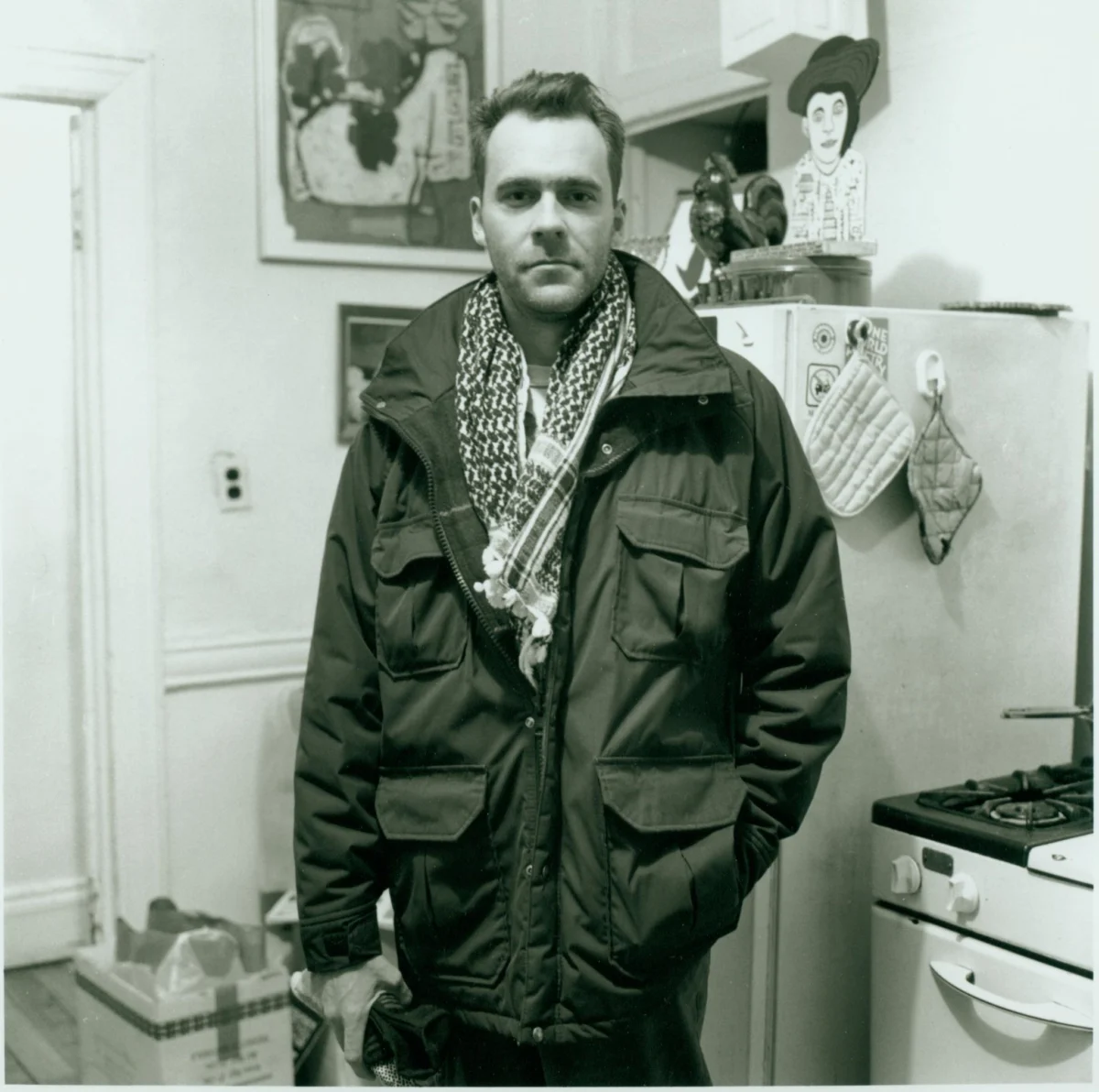
Steven Hall, known to the avant-garde music world as Nirosta Steel, is experiencing a remarkable late-career ascent at the age of 69. After over four decades of prolific, yet largely unreleased, experimental music creation, his first album in years, MY SKYSCRAPER, has captured the attention of critics and listeners alike. Released by the Indiana-based label ULYSSA, the album is a deep dive into Hall’s extensive archives, presenting a rich tapestry of his work spanning folk, disco, and experimental synth-pop, all filtered through the lens of his influential, decades-long collaboration with the late Arthur Russell and their shared concept of "Buddhist pop."
This resurgence in recognition comes after a significant period of artistic exploration that saw Hall working within niche communities, including the vibrant New York poetry scene of the 1970s. His journey into music began with a robust classical and choral education in Scotland, but it was his exposure to the burgeoning experimental art and music landscapes of New York that truly shaped his unique artistic trajectory. The critical acclaim for MY SKYSCRAPER has prompted a renewed interest in Hall’s philosophical underpinnings, particularly his connection to Buddhist principles, which he discusses in depth in a recent episode of Tricycle Talks.
A Surprising Ascent: The "Overnight Sensation" at 69
Hall himself expresses a profound sense of surprise at the current wave of recognition. "Above all, I’m the person who’s the most surprised that this has happened," he stated in the interview. He likens the experience to "being on a log rolling on top of a snowball as it gets bigger and bigger and faster and faster." This humorous perspective, however, is tempered by a sense of responsibility. "I get constantly reminded that it’s quite serious in its scope and that I have to take responsibility for the reaction to my work, because I have to consider this is what I was trying to do in the first place for many years. But I never expected it to happen on this scale."
This unexpected acclaim is, in part, attributed to the inherent nature of his music. Hall’s work is characterized by an emphasis on the "chance" and the "moment," echoing a core tenet of his Buddhist practice: mindfulness. "I love the aspect of chance, which still very much influences my own work, the idea of being in the moment as much as possible," he explained. "And if there’s something that’s definitely adjacent to my Buddhist practice, it would be the idea of being in the moment." Listeners have responded to this authenticity, perceiving the recordings as intimate glimpses into the creative process itself, often described as "unfinished" or "unfolding." This aspect, Hall notes, is what he is "most proud of – that people have this idea of the unfolding quality of the process, because in my work, I value the process almost as much as or even more than the product itself." This continuous exploration, a "rolling sense of restlessness and unfolding," drives his creative output, rather than a pursuit of finality.
The Artisan’s Craft: Sustained by Process
Hall’s sustained engagement with his art, even during periods of limited public attention, can be understood through his perspective on his work as a craft. He sees himself as part of a lineage of artisans, a member of a guild of musicians united by shared passion. "I don’t regard what I do too highly. I see what I do as a craft, in the old sense of being an artisan or being in a guild, where I’m one of a group of musicians that share this passion." While he doesn’t adhere to a formal meditation practice, he identifies his daily rehearsals and singing as his equivalent "practice," a discipline that has kept his artistic spirit "afresh."

Roots in Scotland and the Lure of New York
Hall’s musical journey began with a strong foundation in Scotland. His early experiences in the Presbyterian church exposed him to both traditional and contemporary choral music, including a leading role in Joseph and the Amazing Technicolor Dreamcoat. His formal education included classical music and participation in the school orchestra, where he played the tenor flat E horn. This early immersion in performance fostered a curiosity that soon extended to popular music.
The Beatles, particularly John Lennon’s innovative approach to vocal harmonies, became a significant influence. Hall recalled his early inclination to experiment with harmonies, even when it diver. "When I was singing in the church, I would be the one doing the weird harmonies, and the choral director would be like, ‘What’s that?’ But I was sort of searching for another way of approaching the harmonies."
Concurrently, Hall was captivated by Chinese poetry and the avant-garde art happenings in New York. This fascination fueled a yearning for America, a vision shaped by the romanticized imagery of Hollywood films. His arrival in America at 15, sporting a crew cut based on mid-20th-century cinema, was a stark contrast to the prevailing long-haired styles of his peers, highlighting the significant cultural immersion that awaited him.
The New York Scene: Poetry, Friendship, and Musical Seeds
Hall’s immersion into the New York arts scene began through an educational initiative in Wilmington, Delaware. A forward-thinking head of the education department, keen on the New York avant-garde, secured a grant to bring New York writers to Delaware for readings and workshops. This program brought poets like Kenneth Koch, whose work Hall admired, to the region. Hall, then a high school student, became involved in a creative writing workshop designed for established writers, an unusual position for someone his age. This led to his teaching creative writing to younger students, and importantly, facilitated introductions to visiting poets such as Anne Waldman and Larry Fagin.
It was his connection with Larry Fagin that proved pivotal. Hall would travel to New York on weekends, staying with Fagin in a building that later became renowned as a hub for poets. This immersion placed him at the epicenter of a vibrant artistic community around St. Mark’s Church and The Poetry Project. Within this building, a constellation of influential figures resided: Arthur Russell, sharing a floor with poet John Godfrey; Richard Hell of the band Television; art critic and Warhol superstar Rene Ricard; poets Bob Rosenthal and Shelley Kraut; and Allen Ginsberg, who lived on the floor above Hall and Fagin. This close proximity fostered deep friendships and creative cross-pollination.
Arthur Russell: A Teacher, a Friend, and a Buddhist Luminary
Within this dynamic environment, Hall developed a profound and collaborative relationship with Arthur Russell. Russell, a devoted Buddhist practitioner, significantly influenced Hall’s understanding and integration of Buddhist principles into his art. Hall described Russell as one of the most "fully realized" teachers he had encountered. Their shared endeavor was to weave these spiritual concepts into their work subtly, allowing them to manifest in both the process and the product, rather than through overt proselytizing.
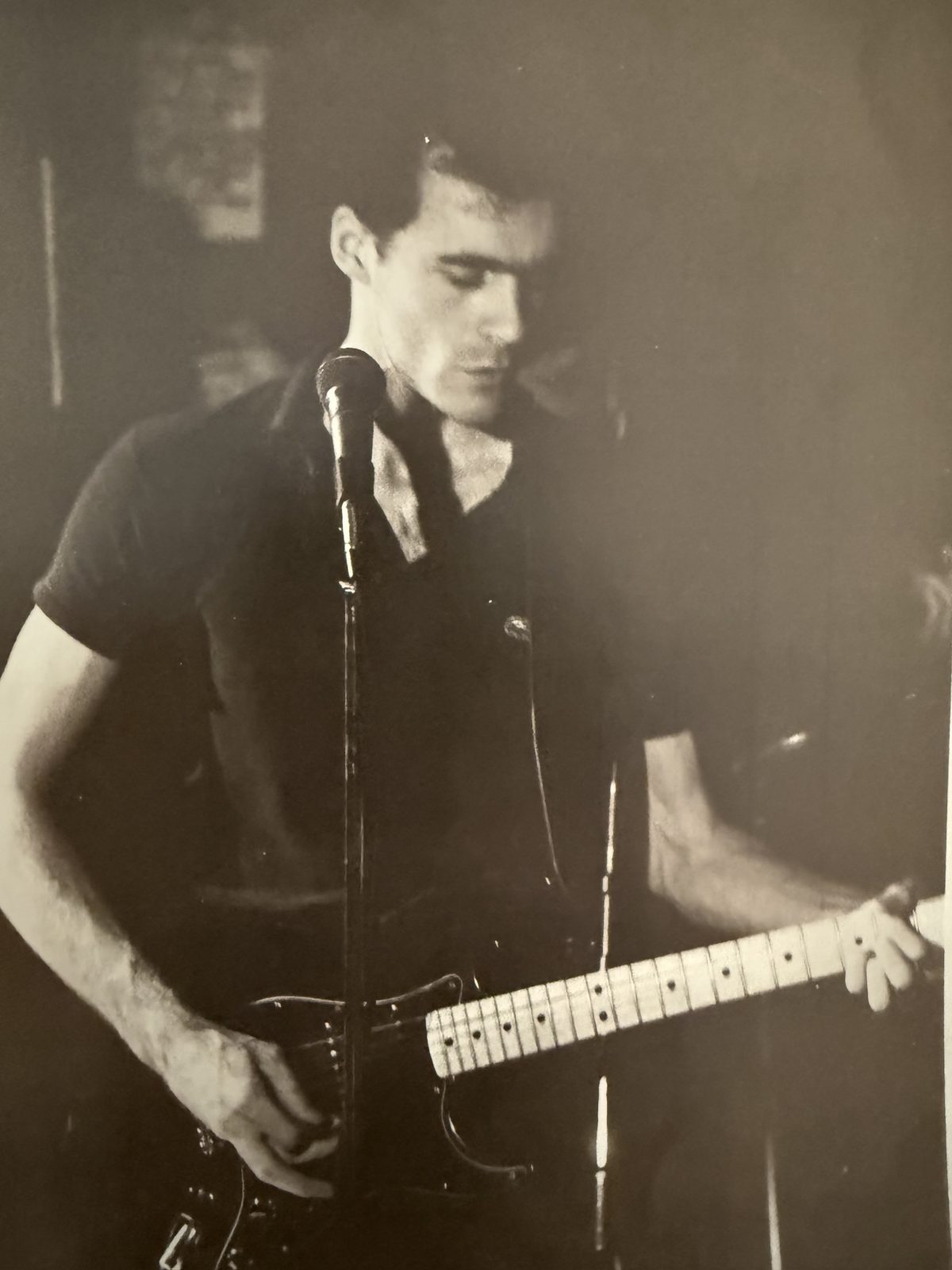
Russell’s daily Buddhist practice was a cornerstone of his life, and he shared these insights with many, including Allen Ginsberg. Hall noted Russell’s remarkable way of treating people, despite being a demanding collaborator in the studio. "He was a bit of a taskmaster sometimes in the studio in terms of what he wanted, but that was only because he had a very particular vision of what he was looking for," Hall explained. Russell sought out musicians who could focus on his specific musical interests and whose beliefs were compatible with his own, fostering an atmosphere of mutual respect and shared privilege.
The Genesis of "Buddhist Pop"
While the term "Buddhist pop" has been attributed to this era, Hall suggests it was more of an organic development than a deliberate genre creation. "I don’t think we were really thinking in those terms. I think we were doing, but not really thinking. I think those attributes came afterward," he mused. Arthur Russell’s concept of "Buddhist bubblegum" further illuminates this approach. "Bubblegum means silly and fun. It’s like really silly music that’s just fun to listen to and easy to remember and easy to sing," Hall elaborated. This embrace of accessible, joyous elements, encouraged by Russell, is evident in Hall’s music.
He recalled a collaborative songwriting experience where his initial inclination was to discard seemingly simple ideas. "I was saying ‘broken’ over and over again, and then I was saying ‘lost in thought’ over and over again, and I said, ‘This is boring. I don’t think I’ll finish this.’ And Arthur said, ‘No, it’s really pretty.’" Russell’s encouragement to pursue these seemingly minor ideas exemplified his pedagogical approach: "giving permission as a teaching tool." This allowed for exploration and experimentation within musical parameters, transforming the studio into a space for joyous discovery.
Improvisation and the "Fresh Feeling" of Creation
The tracks "FRESH FEELING" and "SPECIAL WEAKNESS," central to MY SKYSCRAPER, are prime examples of Hall and Russell’s improvisational approach. These pieces emerged from their daily rehearsals, where Russell was actively honing his drumming skills. Hall’s method involved using two-word poems written on three-by-five cards, which he would shuffle like a deck of cards. The intention was to record in real-time, without the possibility of multi-track editing, demanding complete presence from the musicians.
"The idea was we were not going to do it on multi-track, because that meant we could not edit it. So we had to totally be there," Hall stated. The recording process was stringent: once started, they were not to stop. This meant Russell had to anticipate Hall’s shifts, which were dictated by the shuffled cards. "It’s just amazing when you listen to it that he is anticipating what I’m doing in like a microsecond, that if I make a sudden change in the cards he’s right behind me or almost right in front of me."
This improvisational framework meant neither musician knew precisely what would happen next, including the order of vocal sections. The recordings were live to two-track, and the master tapes were only recently transferred for the album’s release, having gone unheard for decades. The irony of performing these songs again after forty years prompts contemplation on their status as historical documents versus living art. Hall acknowledges the challenge of balancing authenticity with contemporary interpretation, even considering the creation of new pieces inspired by the original concepts.

Hall’s artistic evolution has also involved a reassessment of his own creative categories. He initially distinguished between his "pop songs" or "dance songs" and his "poetry." However, with age and reflection, he no longer sees such a clear demarcation. He now views his published poetry as potential musical compositions. Furthermore, his appreciation for pop and disco music has deepened, recognizing their artistic merit, a sentiment echoed by those who later championed Arthur Russell’s disco work.
Disco’s Classical Resonance
Hall’s experience in Hong Kong further broadened his perspective on the artistic significance of disco. Working with DJs and younger musicians who treated him with reverence due to his association with Arthur Russell, he encountered a profound appreciation for disco music. Steve D’Acquisto, a producer of some of Russell’s disco hits, had already posited Russell’s genius on par with classical composers. In Hong Kong, this idea was amplified, with disco music being studied and revered with the same seriousness as 18th-century choral music. This revelation challenged Hall’s prior perception of disco as merely dance music, highlighting its intricate artistry and historical context.
The journey of Nirosta Steel, from the experimental fringes to critical acclaim, underscores the enduring power of artistic integrity, the profound influence of spiritual practice on creative output, and the timeless resonance of music that embraces both profound introspection and uninhibited joy. MY SKYSCRAPER stands as a testament to a life dedicated to the pursuit of sonic exploration, a legacy that continues to unfold with surprising and deeply rewarding results.

