

The paradigm of physical preparation has long been dominated by the debate between moderate stimulation and total muscular exhaustion, a concept often summarized by the industry maxim that athletes should seek to stimulate muscle growth rather than annihilate the tissue. While the sentiment emphasizes safety and longevity, contemporary strength and conditioning research suggests that the dichotomy is overly simplistic. High-performance coaching now leans toward a more nuanced application of training stress, where "annihilation"—or high-volume, high-intensity work—is not avoided but rather managed through meticulously structured, periodized, and undulated programming. This shift marks a transition from viewing exercise as a mere physical activity to treating it as a complex biological stress management system designed to provoke specific physiological adaptations.
The Evolution of Training Stress Theory
The foundational principles of modern strength conditioning are rooted in the General Adaptation Syndrome (GAS), a theory developed by Hans Selye in the mid-20th century. Selye’s model describes how biological systems respond to stress through three phases: alarm, resistance, and exhaustion. In an athletic context, the "alarm" phase is the workout itself, which temporarily diminishes performance. The "resistance" phase follows, where the body recovers and overcompensates, leading to increased strength or endurance. However, if the stressor is too frequent or intense, the "exhaustion" phase—now commonly referred to as overtraining—can lead to injury or systemic decline.
Modern coaches such as Alex Viada and Chad Wesley Smith have expanded upon these concepts by advocating for "concurrent" and "undulated" periodization. Unlike traditional linear models that focus on one physical attribute at a time, these systems fluctuate training volume and intensity to allow for various types of stress to be applied and recovered from simultaneously. This approach recognizes that while the body has a limited "recovery bucket," strategic mismanagement of that bucket in the short term can lead to superior long-term gains, provided a deloading period follows.
The Fitness-Fatigue Model and Performance Masking
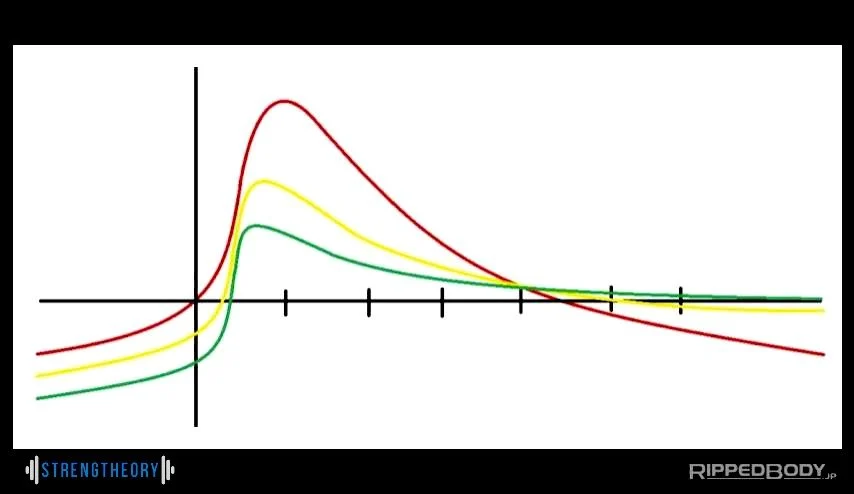
A critical component of understanding training stress is the Fitness-Fatigue Model, often cited by sports scientists like Greg Nuckols. This model posits that every training session creates two distinct after-effects: a positive fitness gain and a negative fatigue response. Performance at any given moment is the difference between the two.
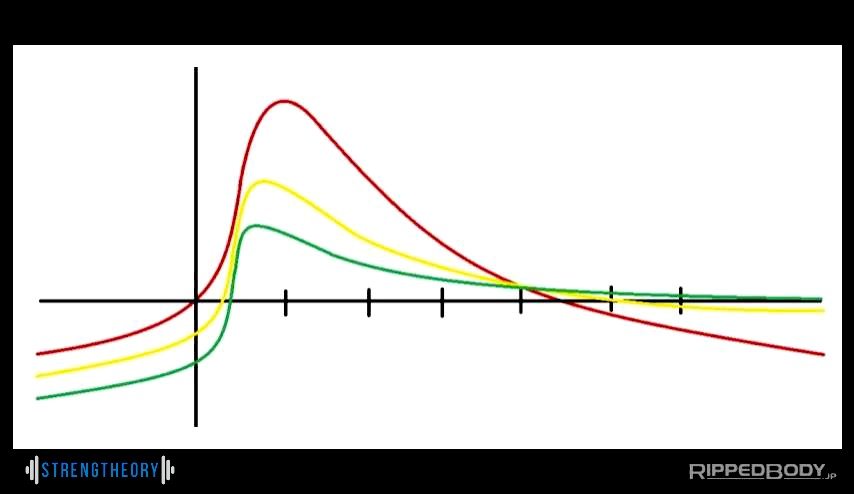
Data indicates that fatigue accumulates more rapidly than fitness but also dissipates more quickly. This explains why an athlete may feel "weaker" during a high-volume training block despite their underlying physiological potential increasing. For example, a powerlifter who tests their one-repetition maximum (1RM) on the deadlift immediately following a high-intensity endurance event, such as a 5K run, will invariably underperform. The underlying fitness (the ability to lift 315 pounds) remains, but the acute fatigue from the cardiovascular stress masks that capability. Professional programming seeks to manipulate this relationship, ensuring that fatigue is high during "accumulation" phases and low during "tapering" or "peaking" phases.
Redefining Overtraining in the Modern Era
One of the most significant misconceptions in the fitness industry is the prevalence of Overtraining Syndrome (OTS). While the term is frequently used by recreational trainees to describe general soreness or lack of motivation, clinical OTS is a rare and severe condition involving long-term hormonal imbalances, neurological fatigue, and immune system suppression.
Case studies of extreme endurance feats provide a baseline for human physiological resilience. In 2015, James Lawrence, known as the "Iron Cowboy," completed 50 full-distance triathlons in 50 consecutive days across 50 different U.S. states. Despite the astronomical volume of work, Lawrence did not enter a state of clinical overtraining. His success was attributed to meticulous attention to caloric intake, sleep hygiene, and a pacing strategy that managed systemic stress. For the average trainee, the risk of overtraining is statistically low; the more common issue is "non-functional overreaching," where the athlete experiences a temporary stall in progress due to inadequate recovery rather than a permanent systemic breakdown.
Strategic Optimization of High-Tax Exercises
Effective stress management requires a hierarchy of exercises based on their neurological and physiological costs. The deadlift is widely regarded as one of the most taxing movements in a strength coach’s arsenal. Due to the high amount of "axial loading"—weight placed directly on the spine—and the massive recruitment of the posterior chain, the deadlift generates significant Central Nervous System (CNS) fatigue.
Data from elite powerlifting circles suggests a "Law of Diminishing Returns" regarding the deadlift. Once a trainee reaches a certain strength threshold, such as lifting double their body weight, the recovery cost of performing a 1RM deadlift often outweighs the hypertrophic or neurological benefit if done too frequently. To mitigate this, high-level programs often implement:

- Max Effort Rotation: Limiting loads above 85% of 1RM to once every two or three weeks.
- Cluster Sets: Breaking a set into singles or doubles with 15-second rest intervals to maintain power output while reducing the "grind" associated with high-rep sets.
- Speed/Technique Work: Using 60-70% of 1RM to focus on bar speed and technical proficiency, which provides a stimulus without the heavy recovery price tag.
The Role of Mechanical Loading and Low-Intensity Recovery
A burgeoning area of interest in athletic programming is the use of "mechanical loading" versus "metabolic stress." Traditional heavy lifting focuses on mechanical tension, but significant gains can be made through time-under-tension (TUT) using lower loads. Bodyweight exercises, such as Bulgarian Split Squats performed for time rather than repetitions, allow athletes to reach muscular failure without the systemic strain of a loaded barbell. This "annihilates" the local muscle tissue while sparing the CNS and joints.
Furthermore, the integration of Low-Intensity Steady State (LISS) activity, such as casual walking, has been identified as a potent recovery tool. Unlike high-intensity interval training (HIIT), which triggers a sympathetic "fight or flight" response, walking encourages parasympathetic nervous system activation. This transition into a "rest and digest" state facilitates faster nutrient delivery to damaged tissues and aids in the clearance of metabolic byproducts.
Deloading Protocols and Volume Management
The standard four-week training block typically concludes with a "deload" week. The objective of a deload is to allow accumulated fatigue to dissipate while maintaining the fitness gains achieved during the previous three weeks. There are two primary methods for deloading:
- Volume Deload: Reducing the total number of sets and repetitions (tonnage) while keeping the intensity (percentage of 1RM) relatively high. This maintains the "feel" of heavy weight without overtaxing the body.
- Intensity Deload: Reducing the weight used while maintaining volume. This is often used for athletes recovering from minor joint irritations.
Industry data suggests that most overreaching occurs due to excessive volume rather than excessive intensity. Consequently, most strength coaches favor the volume deload. By reducing the total workload by 30-50% in the fourth week, athletes often return in the fifth week to set new personal records (PRs), as the "mask" of fatigue is lifted.
Broader Implications for the Fitness Industry
The shift toward "stress management" coaching has significant implications for public health and the commercial fitness sector. As more individuals move away from sedentary lifestyles and toward high-intensity sports like CrossFit or HyRox, the risk of injury from "unmanaged annihilation" increases. The rise of wearable technology that tracks Heart Rate Variability (HRV) and sleep quality is a direct response to this need for better stress monitoring.

Strength coaches are increasingly viewed not just as experts in exercise selection, but as "stress managers" who must account for an athlete’s life outside the gym. Work stress, sleep deprivation, and nutritional deficiencies all contribute to the same "recovery bucket" as a heavy squat session. As Pat Davidson, a prominent figure in the field, has noted, the role of a coach is to apply the maximum amount of stress an individual can survive and adapt to, rather than the maximum they can simply endure.
In conclusion, the path to sustained athletic progress lies in the intelligent application of high-stress training balanced by strategic recovery. By understanding the Fitness-Fatigue Model, respecting the neurological cost of heavy compound lifts, and utilizing deload cycles, trainees can move beyond the simplistic "stimulate vs. annihilate" debate. The goal of modern conditioning is to push the boundaries of human performance through a calculated, scientific approach to biological stress.

