

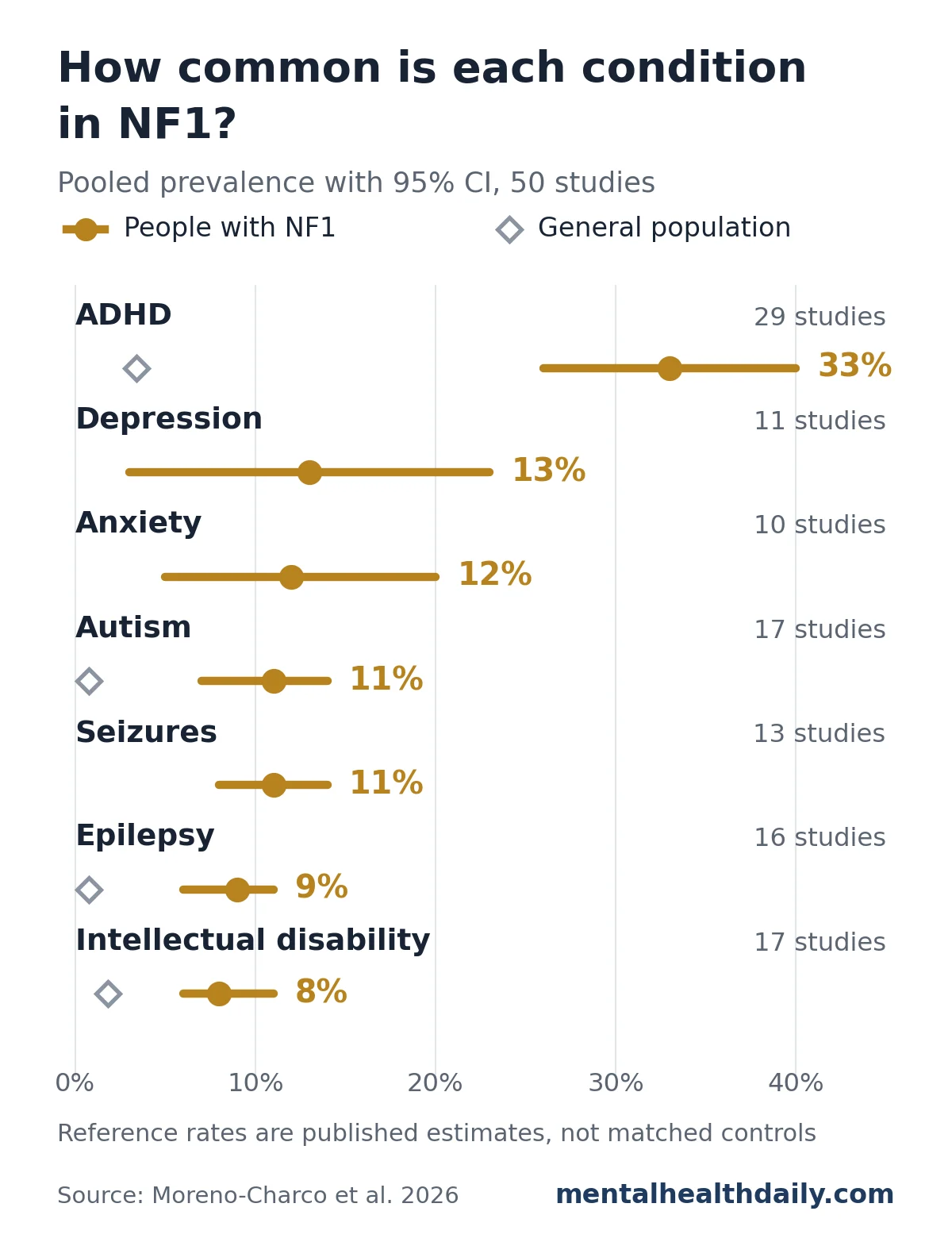
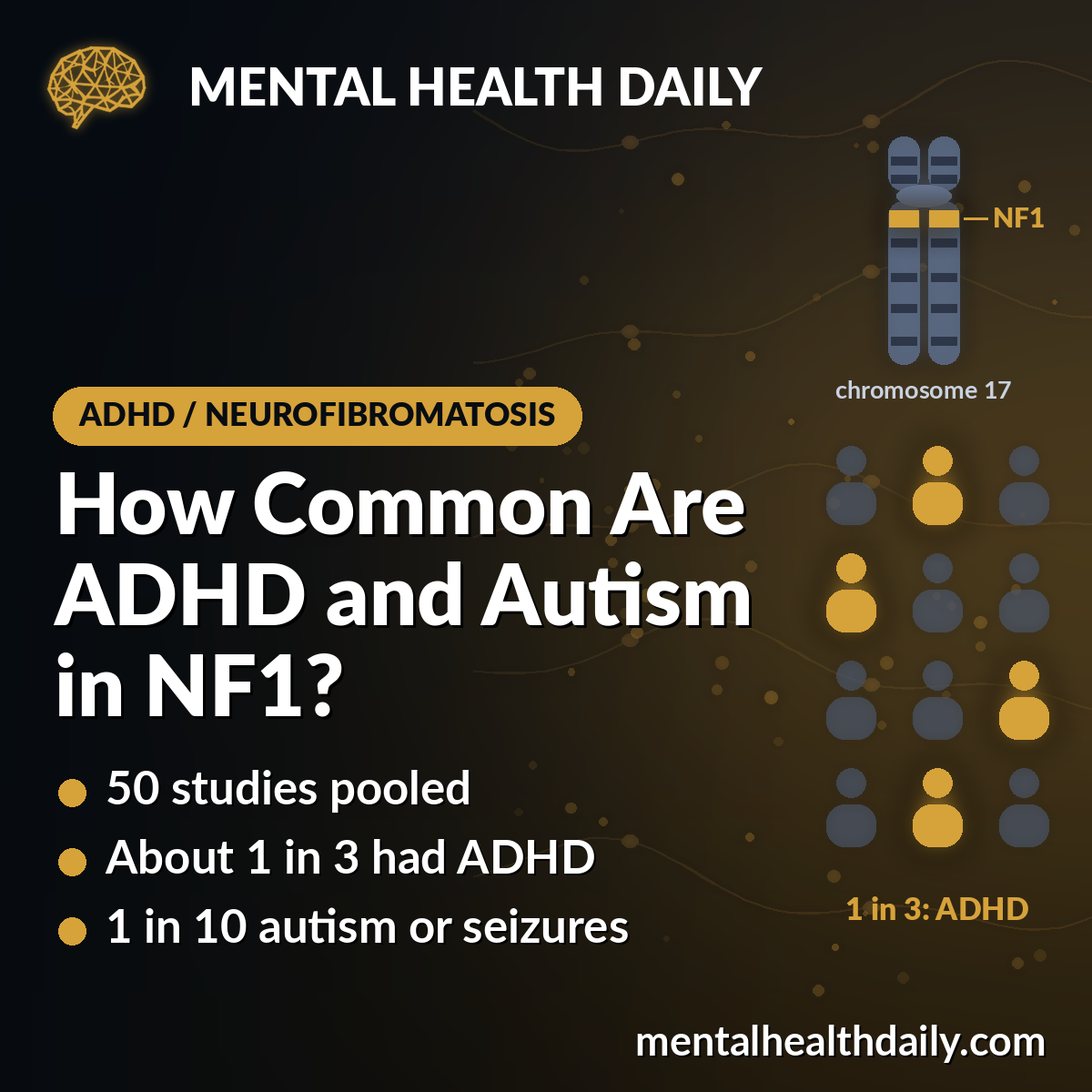
A comprehensive meta-analysis conducted in 2026, synthesizing data from 50 observational studies, has provided critical insights into the prevalence of neuropsychiatric conditions among individuals with Neurofibromatosis type 1 (NF1). The findings underscore a substantially elevated risk for conditions such as Attention-Deficit/Hyperactivity Disorder (ADHD), autism, seizures, depression, and anxiety within the NF1 population compared to the general public. While the precise percentages exhibit a broad range due to methodological variations across studies, the pooled estimates indicate that approximately one in three people with NF1 experience ADHD (33%), and roughly one in ten contend with autism (11%), seizures (11%), depression (13%), or anxiety (12%). These figures consistently surpass typical population rates, signaling a significant co-morbidity burden that necessitates heightened clinical awareness and tailored management strategies.
Understanding Neurofibromatosis Type 1: A Complex Genetic Disorder
Neurofibromatosis type 1 (NF1) is a relatively common genetic disorder, affecting approximately 1 in 2,500 to 3,000 newborns worldwide. First formally described in the late 19th century by Friedrich von Recklinghausen, NF1 is primarily recognized by its dermatological manifestations, including characteristic café-au-lait spots (coffee-colored skin patches) and the growth of benign tumors called neurofibromas along nerves. However, the condition’s impact extends far beyond the skin, affecting multiple organ systems, including the skeletal system, cardiovascular system, and, critically, the central nervous system.
NF1 is inherited in an autosomal dominant pattern, meaning that only one altered copy of the NF1 gene is sufficient to cause the disorder. This gene, located on chromosome 17, is responsible for producing a protein named neurofibromin. Neurofibromin plays a crucial role as a tumor suppressor by acting as a negative regulator of the RAS/MAPK signaling pathway. This pathway is a fundamental intracellular communication system that dictates cell growth, proliferation, differentiation, and survival. When neurofibromin levels are reduced or its function is impaired due to a mutated NF1 gene, the RAS/MAPK pathway becomes hyperactive, leading to uncontrolled cell growth. In the peripheral nervous system, this hyperactivity drives the formation of neurofibromas. Within the developing brain, this dysregulation is increasingly linked to a spectrum of neurodevelopmental and neuropsychiatric challenges.
For decades, the focus of NF1 research and clinical management largely centered on visible physical manifestations and tumor surveillance. However, a growing body of evidence, highlighted by the recent meta-analysis, demonstrates that neuropsychiatric problems constitute a major, often under-recognized, non-tumor burden of NF1. Previous estimates of the prevalence of these issues varied wildly, from a few percent to more than half of patients, underscoring the critical need for a comprehensive synthesis of existing data.
The Meta-Analysis: Unpacking the Methodology and Scope
The 2026 meta-analysis, led by Moreno-Charco and colleagues, systematically searched three major medical databases, encompassing studies published up to April 2026. This rigorous approach identified 50 observational studies originating from diverse geographical regions including the Americas, Europe, Asia, and Oceania. The sheer breadth of the included studies is noteworthy, with participant numbers ranging from 24 to 8,579 individuals, and average ages spanning from 4.5 to 43.3 years. A key strength of the analysis was the quality assessment of the individual studies; reviewers rated 43 out of the 50 (86%) as high quality based on a standard checklist for prevalence research, reinforcing the robustness of the pooled findings.
Prevalence, in statistical terms, refers to the proportion of a particular population found to be affected by a medical condition at a specific time. A meta-analysis aggregates prevalence data from multiple studies to generate a more precise and generalizable estimate. This particular study employed a random-effects model, a statistical technique well-suited for situations where individual studies are expected to measure somewhat different "true" rates due to variations in their samples, methodologies, and specific populations. This model estimates the average of these varying true rates rather than assuming a single fixed value, providing a more realistic representation of the overall prevalence.
Key Findings: Elevated Neuropsychiatric Conditions in NF1
The pooled estimates from the meta-analysis painted a clear picture of heightened vulnerability to several neuropsychiatric conditions among individuals with NF1:
- Attention-Deficit/Hyperactivity Disorder (ADHD): The most prevalent co-occurring condition, affecting approximately 33% of individuals with NF1.
- Depression: Found in about 13% of the NF1 population.
- Anxiety: Present in roughly 12% of patients.
- Autism Spectrum Disorder (ASD): Estimated at 11% prevalence.
- Seizures: Also affecting 11% of individuals with NF1.
- Epilepsy: A more specific diagnosis of recurrent unprovoked seizures, found in 9% of patients.
- Intellectual Disability: Affecting 8% of the NF1 population.
To provide context, these rates stand in stark contrast to general population estimates. For instance, ADHD is estimated at about 3.4% in children and teens, autism at approximately 0.76%, intellectual disability at 1.8% in children, and epilepsy ranging from 0.64% to 0.76%. Based on these comparisons, ADHD appears roughly 10 times more common in NF1, while autism and epilepsy are more than 10 times more prevalent. It is crucial to note that these comparisons offer scale rather than a formally measured relative risk, as the meta-analysis focused solely on the NF1 population without a matched control group. Nevertheless, the substantial differences highlight a clear and compelling association.
Understanding the Variability: Why Estimates Differ Wildly
Despite the robust pooled estimates, individual study results for conditions like ADHD ranged dramatically from 3% to 72%, and for depression, from 1% to 55%. This wide spread underscores the inherent challenges in prevalence research and highlights the sensitivity of results to methodological choices. The meta-analysis addressed this by reporting two key measures of heterogeneity: the I² statistic, which describes the percentage of variation across studies due to true differences rather than random error, and prediction intervals, which indicate the range where the prevalence in a future study might plausibly fall. For ADHD, the I² statistic was a staggering 99.5%, with a prediction interval stretching from 11% to 66%, signifying profound variability among studies.
Much of this variability can be attributed to how cases were identified within each study:
- Diagnostic Tools: Studies relying on standardized diagnostic interviews (e.g., Kiddie Schedule for Affective Disorders and Schizophrenia – K-SADS, Diagnostic Interview for Social and Communication Disorders – DISCO) generally reported higher prevalence rates compared to those using screening questionnaires or medical record reviews. Direct clinical assessments are more sensitive to subtle presentations and can differentiate between traits and full diagnostic criteria.
- Informant Reports: Whether information was gathered from parents, teachers, or self-reports also influenced outcomes, as different informants may observe and interpret behaviors differently.
- Age of Participants: The age range of study populations played a role, with certain conditions like ADHD and autism typically diagnosed in childhood, while mood disorders may manifest later in adolescence or adulthood.
- Small-Study Effects: The analysis also identified "small-study effects," where smaller studies tended to report higher prevalence rates for ADHD, autism, anxiety, seizures, and epilepsy. While statistical adjustments (like trim-and-fill) suggested slightly lower estimates (ADHD falling to 27% and autism to 7%), these were considered sensitivity checks rather than definitive corrections, and the overall robustness of the pooled results remained strong.
Autism in NF1: A Spectrum of Presentation and Diagnosis
The challenge of measurement is particularly evident in the case of Autism Spectrum Disorder (ASD). While the pooled estimate for autism in NF1 was 11%, several well-known studies focusing on NF1 populations have reported rates significantly higher, some reaching 25%. This discrepancy highlights that autism traits are common in NF1, but the rate of a formal diagnosis heavily depends on the diagnostic rigor and the extent to which clinicians actively screen and evaluate for ASD. Low estimates often originated from studies that relied solely on existing medical records, which may not capture cases where social difficulties are attributed to other NF1-related issues or even ADHD, rather than a distinct autism diagnosis. This emphasizes the need for proactive screening for ASD traits in all individuals with NF1.
NF1 Microdeletions: A More Severe Phenotype
A smaller, yet significant, subgroup of individuals with NF1 carries an NF1 microdeletion. Unlike the majority who have a small mutation within the NF1 gene, microdeletion carriers are missing a larger segment of chromosome 17, which includes the entire NF1 gene along with up to 14 neighboring genes. The loss of these additional genes is hypothesized to disproportionately impact cognitive development.
The meta-analysis included only two studies specifically on microdeletion carriers, involving a small number of participants (57 and 29 respectively). These studies indicated:
- Higher Intellectual Disability: Intellectual disability was notably more common in microdeletion carriers, with reported rates of 61% and 34%. This higher prevalence is plausibly explained by the deletion of genes such as OMG and RNF135, which are known to be involved in synaptic plasticity and neurodevelopment.
- Uncertainty for ADHD and Autism: While higher rates of ADHD and autism were observed in some microdeletion cohorts, the limited number of studies and participants meant that the data could not definitively confirm or rule out whether microdeletions independently add risk beyond the NF1 gene itself. Further dedicated research is crucial to clarify these associations.
Seizures and Epilepsy in NF1: Dual Etiologies
The pooled estimates of 11% for seizures and 9% for epilepsy in NF1 patients are consistent with prior research. An earlier meta-analysis by Wu et al., which synthesized 14 studies involving 4,946 patients, reported a seizure prevalence of 8.1% (95% CI 5.9% to 10.3%). The overlapping confidence intervals suggest statistical compatibility between these two comprehensive reviews.
The Wu et al. study further illuminated the characteristics of seizures in NF1:
- Childhood Onset: A majority (70%) of seizures in NF1 patients begin during childhood.
- Focal Seizures Predominance: Focal seizures, originating from a specific area of the brain, are more common (54%) than generalized seizures (26%), which involve widespread brain activity.
- Good Seizure Control: Encouragingly, approximately 75% of patients achieve seizure control with medication, highlighting the responsiveness to standard antiepileptic treatments.
These findings align with the 2026 review’s conceptualization of NF1-related epilepsy arising from two primary sources: an inherent hyperexcitability of the brain due to the underlying RAS/MAPK pathway dysregulation, and visible structural brain abnormalities such as glial tumors (often low-grade gliomas) or cortical malformations, which can act as epileptogenic foci.
Depression and Anxiety: Influences of Gender and Age
Mood and anxiety disorders in NF1 presented the least stable estimates across studies, with depression rates ranging from 1% to 55% and anxiety from 2% to 38%. However, a discernible pattern emerged: studies with a higher proportion of female participants reported increased rates of depression. Specifically, each one-point increase in the percentage of female participants was associated with approximately a 1.1-point higher depression prevalence (p = 0.018). This observation is consistent with the well-documented sex differences in mood disorder prevalence observed in the general population, where women are generally at a higher risk for depression and anxiety.
Further insights come from a Danish register study by Kenborg et al., which provided a crucial matched comparison group. By following 905 individuals with NF1 and 7,614 population controls matched for sex and birth year, and analyzing hospital psychiatric diagnoses, they found:
- Elevated Neurodevelopmental Diagnoses: Individuals with NF1 had a significantly higher risk (Hazard Ratio 6.8) of receiving a neurodevelopmental diagnosis (e.g., ADHD, autism).
- Increased Mood and Stress-Related Disorders: There was also a moderately elevated risk (HR 1.6) for mood and stress-related disorders in the NF1 group.
- No General Increase in All Psychiatric Disorders: Importantly, the study did not find a broadly increased risk across all psychiatric diagnoses (HR 1.2), suggesting that NF1 specifically predisposes individuals to neurodevelopmental conditions early in life, followed by a higher propensity for mood and stress-related problems later, rather than a generalized vulnerability to psychiatric illness.
Clinical Implications and Screening Recommendations
The findings of this meta-analysis strongly reinforce existing clinical recommendations for managing NF1. The American Academy of Pediatrics’ health supervision guidance for children with NF1 already advocates for periodic monitoring as new features emerge with age, specifically including learning and school difficulties. For clinicians and families, the pooled estimates from this comprehensive review provide actionable insights:
- Routine ADHD Screening: Given that one in three individuals with NF1 is estimated to have ADHD, routine screening for ADHD symptoms should be an integral part of clinical follow-up for all NF1 patients, regardless of age. Early identification can lead to timely interventions that significantly improve academic, social, and functional outcomes.
- Monitoring for Autism and Intellectual Disability: While less prevalent than ADHD, autism (11%) and intellectual disability (8%) are common enough to warrant ongoing monitoring. Clinicians should be vigilant for signs of social communication difficulties, restrictive or repetitive behaviors, and developmental delays. Referral to neurodevelopmental specialists for formal assessment should be considered at the first indication of concern.
- Proactive Assessment for Seizures and Mood Disorders: With 11% experiencing seizures and 13% depression, and 12% anxiety, these conditions should be actively kept on the monitoring list. Caregivers and patients should be educated on the symptoms of seizures, depression, and anxiety, and encouraged to report any concerns. Regular discussions about mental health and neurological symptoms are crucial.
It is important to acknowledge what this meta-analysis, despite its strengths, cannot definitively answer. Prevalence rates alone do not identify the most effective screening tools, the optimal screening intervals, whether screening is cost-effective in all settings, or if earlier treatment consistently leads to improved long-term outcomes. The researchers explicitly flagged these as critical areas requiring dedicated, prospective studies.
Evidence Strength and Future Directions
The 2026 meta-analysis provides robust qualitative evidence: neurodevelopmental, mood, and seizure disorders are unequivocally more common in NF1 than in the general population. However, the exact percentages, while offering valuable benchmarks, should be interpreted with an understanding of the inherent variability across studies. Key limitations include:
- Heterogeneity: The significant heterogeneity across studies, particularly in diagnostic methods and age groups, means that the pooled estimates represent an average across diverse populations rather than a single, universal figure.
- Cross-sectional Data: The majority of included studies were cross-sectional, providing a snapshot of prevalence at one point in time rather than tracking the incidence or longitudinal course of these conditions.
- Lack of Matched Controls: The absence of a consistently matched control group within the meta-analysis means that comparisons to the general population are based on separate, often heterogeneous, reference rates.
- Diagnostic Evolution: Diagnostic criteria for conditions like ADHD and autism have evolved over time, which could influence prevalence rates reported in older studies.
For an individual living with NF1, the takeaway message is not a precise percentage, but rather a clear understanding that certain neuropsychiatric conditions are common enough to warrant routine vigilance. ADHD should be routinely checked for, while autism, seizures, intellectual disability, depression, and anxiety should remain high on the monitoring list. This understanding empowers clinicians to provide more holistic care, enabling earlier detection, intervention, and ultimately, improved quality of life for individuals navigating the complexities of Neurofibromatosis type 1. Future research must now focus on developing standardized screening protocols, evaluating the efficacy of early interventions, and delving deeper into the specific neural mechanisms by which NF1 gene mutations contribute to this elevated neuropsychiatric burden.

