

The traditional paradigm of strength and conditioning, which for decades has mandated strict bilateral symmetry in foundational movements such as the squat and deadlift, is currently undergoing a significant scientific re-evaluation. Modern biomechanical research and clinical observations suggest that the pursuit of perfect physical symmetry may not only be an unattainable goal but could also be fundamentally counterproductive to athletic performance and musculoskeletal health. Experts in the field of sports science are increasingly advocating for a shift toward individualized biomechanics, acknowledging that the human body is inherently asymmetrical by design.
The Biological Reality of Asymmetry
For much of the 20th century, the fitness industry operated under the assumption that the human body should function like a precision-engineered machine. This "mechanical" view of the body led to the widespread belief that any deviation from a symmetrical stance or movement pattern was a sign of dysfunction that required correction. However, contemporary anatomical studies confirm that internal and external asymmetries are the biological norm rather than the exception.
Internally, the human body is profoundly lopsided. The liver, the body’s largest internal organ, sits on the right side, while the heart and spleen are positioned to the left. The right lung possesses three lobes, whereas the left has only two to accommodate the heart. Crucially for movement, the diaphragm—the primary muscle of respiration—is larger and stronger on the right side. These internal realities create a natural "lateralization" that influences how humans shift their weight, breathe, and stabilize their spines.
Research into orthopedic anatomy further complicates the "symmetry-first" model. Studies on the human pelvis and femur reveal significant variances in bony structure. The angle at which the femoral head sits in the hip socket (acetabulum) can vary by several degrees between the left and right sides of the same individual. These structural differences dictate the optimal "track" for a joint during a squat or hinge movement. When a coach forces an athlete with asymmetrical hip sockets into a perfectly symmetrical stance, they may be forcing bone-on-bone contact or soft-tissue impingement, leading to chronic pain or injury.
Chronology of a Paradigm Shift
The movement away from rigid symmetry gained momentum in the early 21st century, largely driven by the work of the Postural Restoration Institute (PRI). Founded by Ron Hruska, PRI began disseminating research that highlighted the inherent "patterns" of the human body, such as the Left Anterior Interior Chain (AIC) pattern, which describes a universal tendency for humans to shift their pelvis toward the right.
By the mid-2010s, this philosophy began to permeate elite athletic circles. In a notable 2014 workshop at Cressey Sports Performance (CSP), a leading facility for professional baseball players, performance coach Neil Rampe introduced staff to the practical applications of PRI. This marked a turning point for many high-level coaches who realized that the "one-size-fits-all" approach to lifting was failing athletes with unique structural histories.

Following this, experts such as Michael Mullin and Dr. Stuart McGill, a world-renowned authority on spine biomechanics, began publishing data that supported "functional asymmetry." Dr. McGill’s research emphasized that the goal of training should be the optimization of an individual’s specific anatomy rather than the adherence to an arbitrary aesthetic standard of symmetry. By 2020, the integration of individualized assessment tools, such as the "hip scour test," became a staple in professional training environments, allowing coaches to determine an athlete’s unique squat depth and stance width based on their specific joint architecture.
Supporting Data: The Science of Structural Variance
The argument for individualized stance is rooted in measurable anatomical data. According to orthopedic research, the "normal" range for femoral neck torsion (the twist of the thigh bone) can vary from 10 to 20 degrees of anteversion. However, outliers can exhibit significantly more or less.
Key data points that influence lifting mechanics include:
- Acetabular Orientation: The hip socket can be oriented more toward the front (anteverted) or more toward the side (laterally oriented). An individual with laterally oriented sockets will naturally find a wider, more turned-out stance more comfortable and powerful.
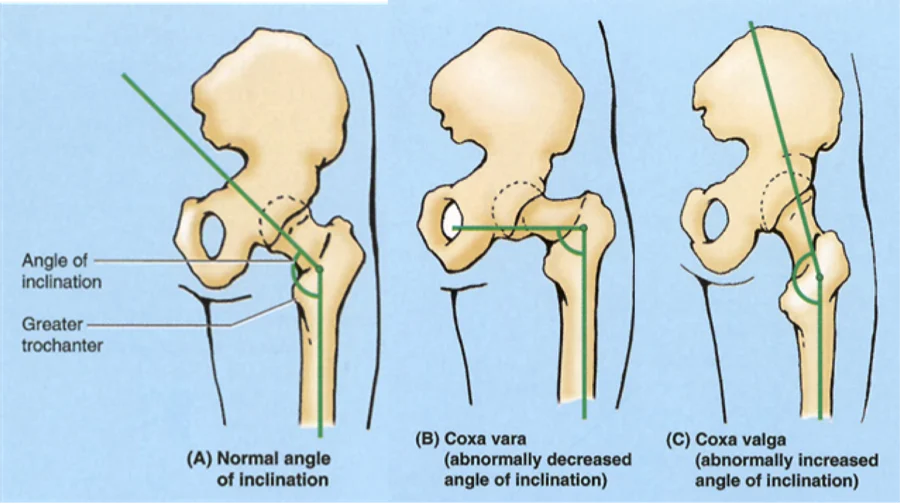
- Femoral Neck Angle: The "angle of inclination" between the femoral neck and the shaft of the femur affects how much a person can abduct their legs. Differences of even 5 degrees between the left and right hip are common.
- The "Squat Diagnostic": In clinical trials where participants were allowed to self-select their stance based on comfort rather than a "feet-straight-ahead" rule, power output increased by an average of 12-15%, and reported joint discomfort decreased significantly.
These findings suggest that forcing a symmetrical stance on an asymmetrical pelvis is akin to forcing a square peg into a round hole. The result is often "butt wink" (pelvic tucking), knee valgus (knees caving in), or lower back strain, as the body attempts to find the path of least resistance around its own bony obstructions.
Challenging the Mechanical Analogy
A common counterargument in the fitness industry compares the human body to a car, suggesting that just as a car requires alignment to prevent tire wear, a human requires symmetry to prevent joint wear. However, biomechanists argue this analogy is fundamentally flawed.
Unlike a Volvo or a Ford, which are manufactured by machines to exact, repeatable specifications, the human body is a biological organism capable of adaptation. A car is a closed system; once a part wears down, it cannot heal itself. The human body, conversely, operates via dynamic equilibrium. Asymmetries often develop as necessary compensations that allow an athlete to perform at a high level. For example, a professional pitcher will almost always display significant asymmetry in shoulder rotation and bone density between their throwing and non-throwing arms. Attempting to "fix" this asymmetry to make both sides equal would likely result in a decrease in performance and an increase in injury risk.
Broader Impact and Industry Implications
The shift toward accepting asymmetry has profound implications for the future of physical therapy and personal training. It moves the industry away from "corrective exercise"—the idea that we must fix every imbalance—and toward "integrative performance."

In a professional setting, this means the initial assessment of a client has become more sophisticated. Instead of simply checking if a client can perform a squat, coaches like Dean Somerset and Dr. John Rusin utilize "anatomically-informed" assessments. They may test a client’s hip internal and external rotation in various positions to map out where the "room" is in the joint.
If an assessment reveals that a client’s right hip has more internal rotation than their left, the coach may prescribe a staggered stance or a slight foot flare on one side. This is not "cheating" the movement; it is optimizing the movement for the hardware available.
The industry is also seeing a change in how "perfect form" is defined in textbooks. Modern certifications are beginning to include caveats about anatomical variance, advising new trainers that a "good-looking" lift is secondary to a "pain-free and powerful" lift. This evolution is expected to reduce the incidence of gym-related injuries, particularly in the hip and lumbar spine, which are often the first areas to suffer when a trainee is forced into a movement pattern their skeleton cannot accommodate.
Conclusion: Embracing Biological Diversity
The move toward acknowledging human asymmetry represents a maturing of the sports science field. By abandoning the myth of the "symmetrical human," the fitness industry is embracing a more evidence-based, compassionate, and effective approach to human movement.
As the "Complete Shoulder & Hip Blueprint" and other educational platforms continue to disseminate these findings, the standard for excellence in coaching is shifting. The goal is no longer to make every athlete look the same under a barbell, but to ensure every athlete can move in a way that is most efficient for their unique biological structure. In the words of leading biomechanists, we are not "broken" because we are asymmetrical; we are simply human, and our training should reflect that reality. This transition from rigid protocols to anatomical intuition marks the next great frontier in physical performance and longevity.

