

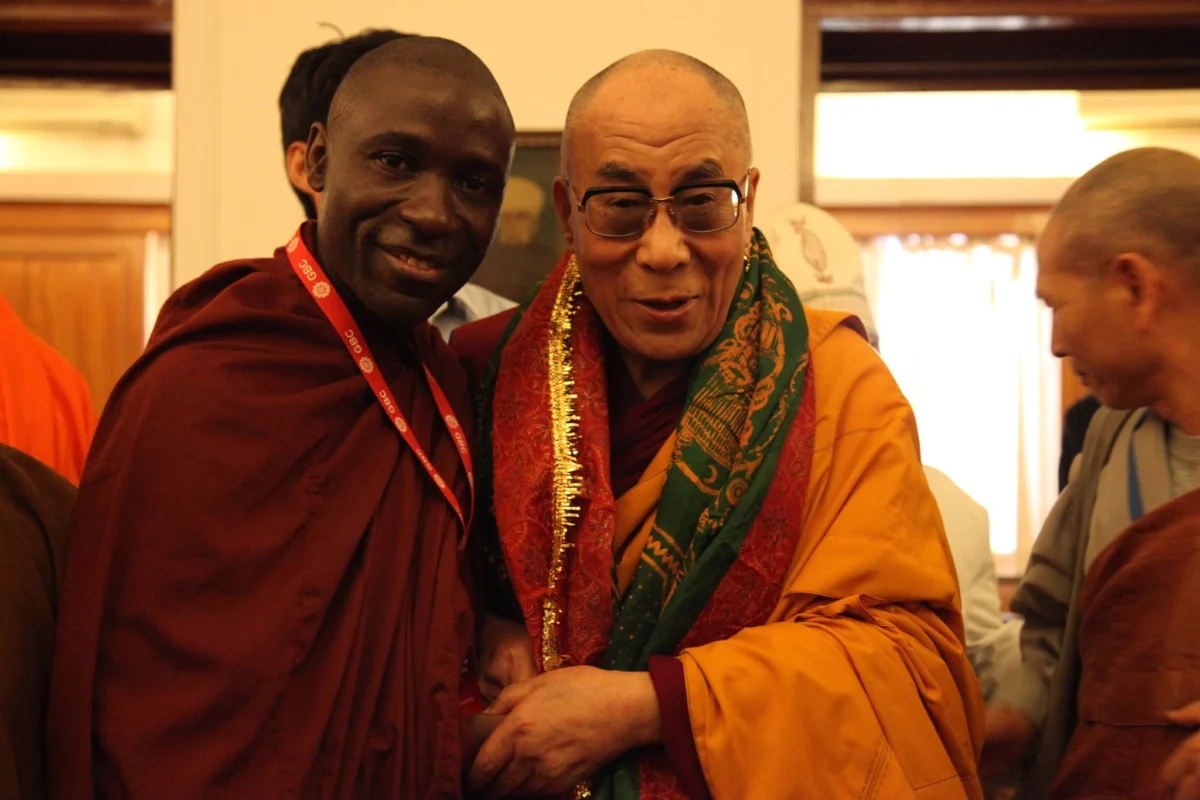
In January, Theravada monk Bhante Buddharakkhita of Uganda embarked on a significant tour of prominent American dharma centers, including the Barre Center for Buddhist Studies, Spirit Rock Meditation Center, and New York Insight. The purpose of his visit was to galvanize support and raise awareness for the Uganda Buddhist Centre (UBC), a beacon of spiritual growth and transformation in East Africa, founded by Buddharakkhita in 2005. The UBC has recently secured a pivotal opportunity to permanently protect thirteen acres of ecologically vital wetland on the shores of Lake Nalubaale, also known as Lake Victoria—the very source of the Nile River. This land acquisition is earmarked for the development of a groundbreaking retreat center, poised to be the first of its kind on the African continent. To fund this ambitious initiative, Buddharakkhita and his supporters launched a GoFundMe campaign in August, seeking crucial financial backing for this transformative project.
Genesis of a Vision: From Personal Peace to Continental Aspiration
Bhante Buddharakkhita’s journey toward establishing the Uganda Buddhist Centre is rooted in a profound personal experience. "When I was in India, I attended a meditation retreat in 1994 for twelve days. It was a Tibetan meditation called lamrim, a graduated path to enlightenment," he recalled in a conversation with Leslie Booker, guiding teacher at New York Insight. "Doing that for twelve days, I felt so peaceful. And I said, Wow, I’ve never learned this. I said to myself, I wish I could go to Uganda and tell everybody about this." This nascent desire to share the peace he found in meditation sparked the initial idea for what would eventually become the UBC.
His early vision was grand, perhaps even audacious: to introduce the dharma to all of Africa. This ambition led him to seek counsel from His Holiness the Fourteenth Dalai Lama. Despite only having a five-minute private audience, Buddharakkhita presented his vision. "I told him, I want to introduce the dharma to all of Africa. That’s why I call it the Afro-Tibetan Friendship Society," he explained. The Dalai Lama’s succinct advice—"You should get friends. Get friends. Get friends. You must have friends"—initially seemed understated to Buddharakkhita, who had envisioned more concrete guidance. However, this simple yet profound counsel would ultimately prove to be the cornerstone of his success.
Building from the Ground Up: The Organic Growth of the Uganda Buddhist Centre
Buddharakkhita’s path was not without its challenges. Upon returning to Uganda with his grand vision, he encountered skepticism and a lack of understanding. "Everyone was saying, How much money do you have to start a business? I said, None, I’m a meditator. What meditation? Medication? They couldn’t understand what meditation was," he recounted. This initial lack of reception led him to refine his approach, realizing that a direct, large-scale introduction of the dharma might not be immediately feasible.
His journey took him through South America and then to the United States in 1999. It was during this period of international exposure and study that he began to cultivate the "friends" the Dalai Lama had advised. He met influential figures in the American Buddhist community, including his teacher Bhante Gunaratana, Joseph Goldstein, Sharon Salzberg, and Jack Kornfield. These relationships provided not only personal support but also invaluable guidance and a network of resources.
Returning to Uganda in 2005, Buddharakkhita founded the Uganda Buddhist Centre with little more than an alms bowl and a network of supportive friends. His strategy shifted from a continental rollout to establishing a strong, self-sustaining hub in Uganda. "If I could create a thriving community in Uganda, then I would attract Africans to Uganda. I could train them in Uganda and disperse them," he explained, drawing a parallel to the Buddha’s own method of training disciples and sending them out to spread the teachings.
A Holistic Approach to Community Development
The evolution of the Uganda Buddhist Centre has been a testament to Buddharakkhita’s responsiveness to the needs of the community he serves. What began as a spiritual refuge quickly expanded to address multifaceted challenges. "It was just one thing leading to the other," he noted. Recognizing that children attending the dharma teachings were often pulled away by the demands of secular education, he initiated a preschool with twelve children, supported by Buddhist Global Relief and Bhikkhu Bodhi. This grew into a primary school and subsequently a high school, providing a stable environment where dharma could be integrated into daily learning.
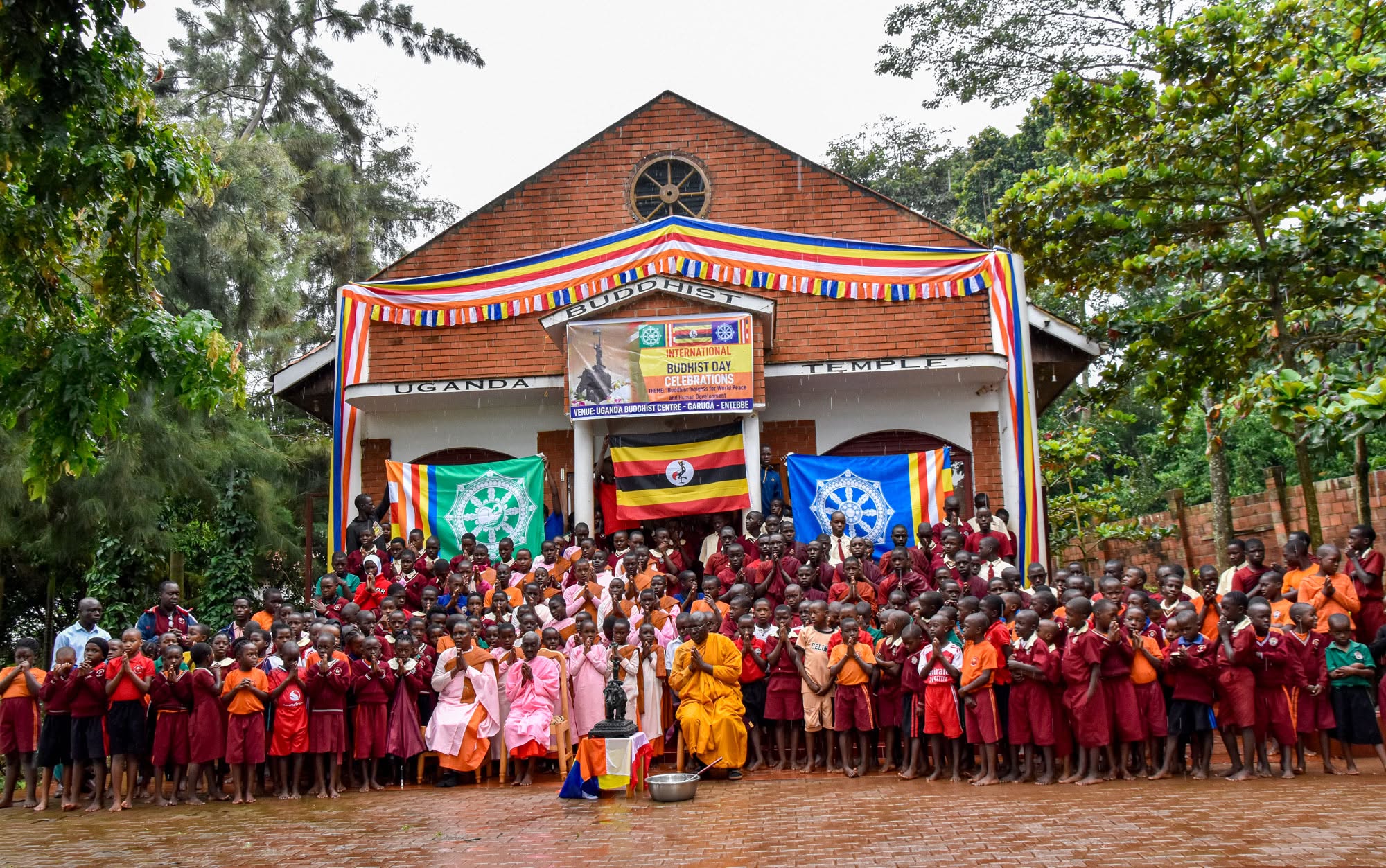
The health of the students became another pressing concern. "Then I built a primary school and later a high school. And then, with all the kids in school, the children were getting sick," Buddharakkhita said. This led to the establishment of a medical center. Furthermore, to alleviate the financial burden on parents struggling with school fees, he launched a women’s empowerment project, equipping women with skills to generate income and support their children’s education.
Compassion in Action: Addressing Water Scarcity
A significant aspect of the UBC’s community outreach has been its focus on providing access to clean water. Prior to the UBC’s intervention, residents often walked long distances to Lake Victoria for water, which was frequently contaminated and unhealthy. "People in Africa are not coming to listen to my talk the way I give it in the US. Something came to my mind: How about teaching by action? By precept. So then I say, OK, let me teach Buddha’s teaching, which is known for words about compassion, but we will do compassion in action," Buddharakkhita explained.
The construction of wells, or boreholes, became a tangible demonstration of Buddhist compassion. The first well was installed at the temple, but its location deterred some villagers. Consequently, it was moved outside the temple grounds. As the demand for water persisted, additional wells were dug. Recognizing the water challenges faced by local schools, the UBC provided boreholes to educational institutions as well. On a typical day, it is estimated that 2,000 people benefit from the clean water provided by the UBC’s wells. This initiative has not only improved public health but has also fostered trust and opened avenues for deeper engagement with the community.
The Vision for Lake Nalubaale: A New Era for Contemplative Practice in Africa
The current initiative to protect thirteen acres of wetland on Lake Nalubaale represents a significant leap forward for the Uganda Buddhist Centre. This land offers a unique opportunity to create a dedicated retreat center, a sanctuary for intensive meditation and spiritual practice. The development of such a facility on continental Africa would be historic, providing a much-needed space for both local and international practitioners to deepen their understanding and experience of the dharma.
The GoFundMe campaign aims to secure the necessary funds for land acquisition and the initial stages of construction for this retreat center. The project aligns with the UBC’s broader mission of fostering spiritual growth and transformation across East Africa. The wetland’s preservation also underscores a commitment to environmental stewardship, recognizing the intrinsic value of these vital ecosystems.
The Enduring Wisdom of Spiritual Friendship and Wise Attention
In his conversation with Leslie Booker, Bhante Buddharakkhita emphasized the critical importance of two core principles for sustaining a spiritual path: spiritual friendship (kalyana-mittata) and wise attention. Drawing on the Buddha’s teachings, he stated that spiritual friendship is not merely a component but the "entire spiritual life." He stressed the necessity of cultivating a supportive community, whether through established sitting groups or by creating new ones.
"The second thing the Buddha mentioned is wise attention, which is internal. It means, in other words, to follow the noble eightfold path," Buddharakkhita explained. He advocated for a consistent daily practice, even if it is brief, and underscored the foundational role of sila, or ethical conduct. Without this ethical grounding, he warned, any spiritual progress risks being impermanent.
The advice offered by Bhante Buddharakkhita serves as a powerful reminder that the dharma is not solely an individual pursuit but a path best navigated with the support of others and a commitment to ethical living. The ambitious expansion of the Uganda Buddhist Centre, culminating in the potential establishment of Africa’s first dedicated retreat center, embodies this holistic approach, promising to deepen the presence of Buddhist wisdom and practice across the continent.

