

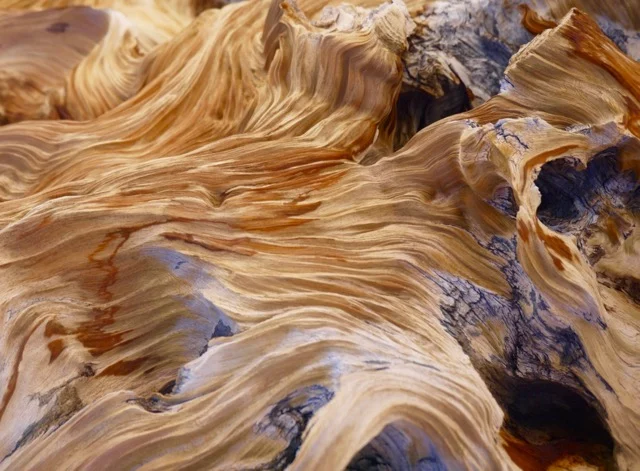
For over eighteen months, a profound dialogue has unfolded between this publication and David Malinsky, a multifaceted artist whose work encompasses writing, photography, and a deep reverence for the natural world. Malinsky has cultivated a particularly strong affinity for the Great Basin Bristlecone Pines, trees he affectionately refers to as "Old Friends in High Places." This article delves into the essence of his connection with these ancient sentinels, offering a glimpse into the contemplative beauty he encounters during his explorations. Malinsky invites interested individuals to join his ongoing conversation and share their own reflections by contacting him via email at [email protected] to be added to his listserve.
A Glimpse into the Bristlecone’s Soul
Malinsky’s communications often feature not just striking visual documentation but also philosophical musings that resonate with the profound age and resilience of the Bristlecone Pines. One particular sequence of thoughts, shared with this publication, offers a powerful metaphor for human exploration and self-discovery, drawing parallels between the pursuit of knowledge and the steadfast presence of these ancient trees.
"Daring to take a path towards what may be unknowable can be among the most noble pursuits of the human spirit," Malinsky writes. "Known targets bring tangible opportunities for achievement, but also limitations; even a well-aimed arrow is forced to halt its arc, having reached a bullseye. Allow the arrow to be what it is, a tool for a particular purpose, but after your fingers release the bowstring do not let the confines of the arc define you. It was what you did, but only a small piece of who you are."
This sentiment underscores a central theme in Malinsky’s appreciation of the Bristlecone Pines: their ability to exist beyond defined goals or immediate human comprehension. Their sheer longevity, measured in millennia, transcends typical human metrics of success and achievement. They simply are, a testament to enduring presence and adaptation.
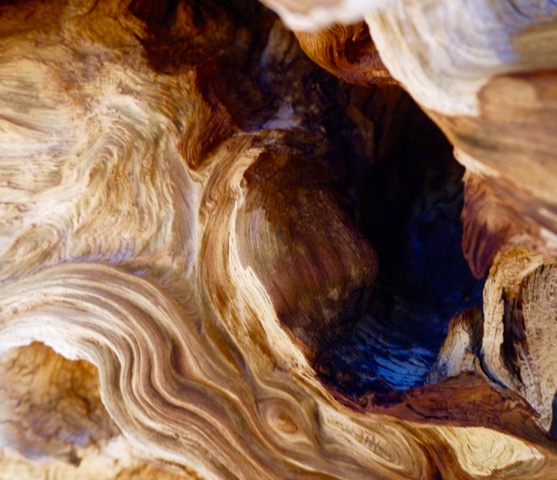
Malinsky further elaborates on this concept: "Without narrowing the focus on the bullseye, there can be so much to see, much that will be missed if our sights are too confined. You do not have to reduce all of this to a single place; there is room in your consciousness for all of it, if you allow it in." This encourages a broader perspective, one that embraces the multifaceted nature of existence, much like the complex ecosystems that these trees inhabit.
The Journey of Self and Nature
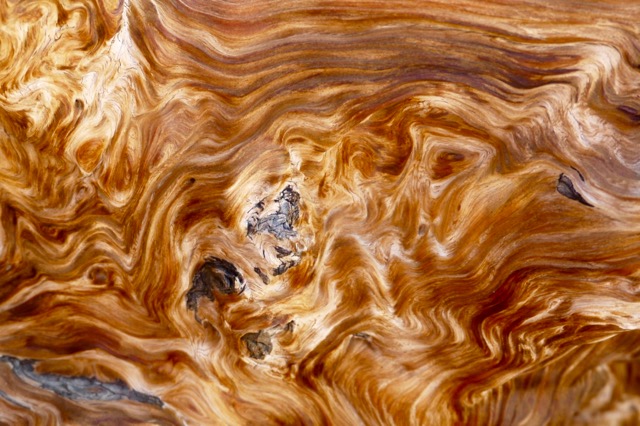
The visual narrative accompanying Malinsky’s words often features the gnarled, sculptural forms of the Bristlecone Pines, set against the stark, often dramatic landscapes of their high-altitude habitats. These images are not mere snapshots; they are portals into a world where time operates on a different scale.
Malinsky’s reflections continue to explore this idea of journey and discovery: "It is in taking a path beyond established targets that you begin the journey of yourself, a path whose first steps may appear as though on the way to a ‘Where,’ but as you venture will almost magically turn into as much a ‘Who,’ person and place becoming one. When you feel something inside of yourself growing with each step, and your developing senses appreciating what surrounds the path even more, then you are on the verge of the most important discovery you can make, and any notions of maps can be discarded."
This profound connection between the explorer and the explored, between the individual and the environment, is a hallmark of ecopsychology and a theme that resonates deeply with the Bristlecone Pine’s existence. These trees, often found in harsh, seemingly barren environments, are masters of survival and adaptation, offering a powerful symbol of inner strength and resilience.
"Your path has no end, for both you and Nature are constantly evolving, and it is in that trust of Nature that you can place yourself, and explore the labyrinths ahead filled with the joy of anticipation, instead of trepidation," Malinsky states. This perspective shifts the focus from a destination-oriented approach to one of continuous growth and an embracing of the unknown, mirroring the ongoing evolutionary processes of both humanity and the natural world.
Embracing the Darkness as Illumination
The Bristlecone Pine’s survival strategy in its arid, high-altitude environment often involves the shedding of lower branches, leaving a stark, often blackened, core. This aspect of their form, which might appear as "darkness" to an uninitiated observer, is precisely what Malinsky finds profound.
"Once you develop that trust, both of Nature and of yourself, when you come across what appears to be a darkness you do not fear," he writes. "That darkness is only a place that is currently without illumination, and should you venture forward with an open spirit, your path may well take you to where it was intended to all along – the place where it is you that are the light."
This evocative imagery suggests that perceived challenges or unknowns are not to be feared but rather embraced as opportunities for growth and self-realization. The Bristlecone Pine, in its weathered and ancient form, becomes a teacher, demonstrating that even in apparent adversity, there is a persistent, luminous spirit.
The Great Basin Bristlecone Pine: A Biological and Ecological Marvel
David Malinsky’s fascination with the Great Basin Bristlecone Pine (Pinus longaeva) is rooted in the species’ extraordinary biological characteristics. These trees are among the longest-living organisms on Earth, with some individuals estimated to be over 5,000 years old. Their remarkable longevity is attributed to a combination of factors:
- Slow Growth Rate: Bristlecone pines grow incredibly slowly, adding only about an inch in diameter per century. This slow growth results in extremely dense, resinous wood that is highly resistant to insects, disease, and decay.
- Adaptation to Harsh Environments: They thrive in the high-altitude, arid, and windswept conditions of the Great Basin region of the western United States, typically above 9,000 feet. Their ability to survive in such extreme environments is a testament to their evolutionary resilience.
- Survival Strategy: Bristlecone pines often survive by growing in a "single-cone" or "half-living" state. This means that a portion of the tree may die and become non-functional, while the living tissue continues to grow and transport nutrients along the remaining living wood. This strategy allows them to conserve energy and resources in nutrient-poor soils and under extreme weather conditions.
- Dendrochronology: The continuous growth rings of Bristlecone pines provide invaluable data for dendrochronologists, scientists who study tree rings. This data has been crucial in establishing precise historical timelines, dating archaeological sites, and even understanding past climate patterns and solar activity. The oldest continuously verified Bristlecone Pine, nicknamed "Methuselah," is located in the White Mountains of California and is over 4,850 years old. Another, discovered in 2012, is estimated to be over 5,060 years old.
Context and Significance of Malinsky’s Work
David Malinsky’s artistic and philosophical engagement with the Great Basin Bristlecone Pines is more than just an appreciation of natural beauty; it is an exploration of themes that are increasingly relevant in contemporary society. In an era characterized by rapid change, disposability, and a perceived disconnection from the natural world, the Bristlecone Pine offers a powerful counterpoint.
The "Old Friends in High Places" moniker encapsulates the profound sense of companionship and wisdom that Malinsky derives from these ancient trees. His work serves as an invitation to:
- Re-evaluate our relationship with time: The millennia-spanning lives of Bristlecone Pines challenge our short-term perspectives and encourage contemplation of deeper, more enduring values.
- Embrace resilience and adaptation: Their survival in extreme conditions offers a potent metaphor for human capacity to overcome challenges and adapt to changing circumstances.
- Foster a deeper connection with nature: By highlighting the subtle beauty and profound lessons embedded in these ancient beings, Malinsky encourages a more mindful and appreciative engagement with the natural world.
- Explore the journey of self-discovery: His philosophical reflections align with the growing interest in ecopsychology, which posits that a connection with nature can be profoundly therapeutic and transformative for human well-being.
Broader Impact and Implications
The ongoing dialogue initiated by David Malinsky through his correspondence and invitation to his listserve has the potential to foster a community of like-minded individuals who are inspired by the wisdom of the natural world. By sharing his unique perspective, Malinsky contributes to a broader conversation about:
- Environmental conservation: Increased appreciation for species like the Bristlecone Pine can translate into greater support for their protection and the preservation of their fragile ecosystems. These ancient forests are vital for biodiversity and hold scientific value for climate research.
- The role of art in environmental awareness: Malinsky’s photography and writing demonstrate how artistic expression can serve as a powerful tool for raising awareness and fostering emotional connections with nature.
- Personal growth and mindfulness: The philosophical insights drawn from observing these ancient trees can offer guidance and inspiration for individuals seeking greater meaning, resilience, and peace in their own lives.
In conclusion, David Malinsky’s dedicated correspondence and artistic exploration of the Great Basin Bristlecone Pines offer a valuable lens through which to appreciate the enduring majesty and profound wisdom of these ancient organisms. His invitation to engage in this dialogue underscores the importance of shared reflection and the potential for nature to illuminate our own paths of discovery. Those interested in participating in this enriching conversation are encouraged to reach out to David Malinsky at [email protected].

