


The history of diabetes treatment is punctuated by pivotal discoveries, none perhaps more surprising in retrospect than the profound impact of oatmeal. Long before the advent of insulin, a groundbreaking dietary approach centered on oatmeal, championed by physician Carl von Noorden, offered a lifeline to individuals grappling with diabetes. Published in 1903, von Noorden’s findings, detailed in his work on the "oatmeal diet," were met with considerable skepticism from the medical establishment. However, the burgeoning body of evidence gradually silenced critics, solidifying oatmeal’s role as a critical intervention in the pre-insulin era.
The initial resistance to von Noorden’s dietary therapy stemmed from prevailing medical theories of the time, which often focused on caloric restriction and the avoidance of carbohydrates. The idea that a seemingly simple food like oatmeal could dramatically alter the course of diabetes challenged these established paradigms. Yet, as the efficacy of the diet became increasingly apparent, prominent physicians began to adopt and advocate for it.
One such influential figure was Dr. James B. Herrick, a highly respected physician who, despite his initial reservations, began experimenting with the oatmeal diet on his patients. Herrick’s astonishment at the remarkable improvements observed in his patients led to a significant public endorsement. By 1909, his influential pronouncements declared that no child or adolescent diagnosed with diabetes should be denied the potential benefits of this "oatmeal cure." This marked a turning point, transforming a controversial theory into a recognized clinical practice.
The impact of this dietary intervention was further amplified by Dr. Elliott Joslin, a titan in the field of diabetes research and the founder of what would become the world’s largest and oldest diabetes clinic. Joslin, after witnessing firsthand the effects of oatmeal on his patients, described them as "sometimes magical." He recognized the profound, yet perplexing, nature of oatmeal’s efficacy, referring to it as "one of the greatest puzzles in diabetes." This sentiment was echoed by other medical professionals of the era, who grappled with understanding the precise mechanisms behind this dietary success.
While the exact scientific underpinnings remained elusive for decades, early observations provided crucial clues. A consistent finding across these early studies was the necessity of strictly excluding animal protein from the diet. Researchers noted that the presence of animal protein seemed to "annihilate the favorable action of oatmeal-type diets." This observation, though not fully understood at the time, foreshadowed modern understanding of insulin resistance.
The Scientific Unraveling: From Mystery to Mechanism
More than a century after von Noorden’s initial publications, contemporary scientific research has illuminated the remarkable wisdom embedded in these early dietary prescriptions. The exclusion of animal protein, a cornerstone of the historical oatmeal diet, is now understood to be directly linked to the management of insulin resistance. Modern science has established that high animal protein intake can exacerbate insulin resistance, the fundamental physiological dysfunction underlying prediabetes and type 2 diabetes. Conversely, diets rich in plant-based foods, including oats, have been shown to enhance insulin sensitivity, effectively improving the body’s ability to utilize insulin.
The association between higher consumption of whole grains, particularly oats, and a reduced risk of developing diabetes has been a consistent finding in epidemiological studies for years. This correlation has been further solidified by a robust body of scientific evidence derived from numerous randomized controlled trials. These trials, as detailed in research, have consistently demonstrated that incorporating oats into the diet significantly improves both short-term and long-term glycemic control in individuals with diabetes. Beyond blood sugar management, these studies have also reported beneficial effects on cholesterol levels.
The Power of Beta-Glucan: A Gut-Brain Connection
The primary driver behind the therapeutic benefits of oats is believed to be a specific type of soluble fiber known as beta-glucan. This fermentable fiber, abundant in oats, plays a crucial role in the complex interplay between diet, the gut microbiome, and metabolic health. One of the key mechanisms through which oatmeal exerts its cholesterol-lowering effects is by modulating the gut microbiome – the vast community of microorganisms residing in the digestive tract. By fostering a healthier and more balanced gut environment, oats contribute to improved metabolic markers.

Fiber’s Multifaceted Role in Diabetes Management
The significance of fiber in dietary interventions for diabetes cannot be overstated. Even modest amounts of fiber can have a substantial impact. The beneficial bacteria residing in the gut, often referred to as "good gut flora," metabolize dietary fiber to produce short-chain fatty acids (SCFAs). These SCFAs possess potent anti-inflammatory properties and are increasingly recognized for their role in metabolic regulation.
Dozens of randomized controlled trials have provided compelling evidence that the types of fiber found in oats and legumes are instrumental in improving long-term blood sugar control for individuals with diabetes. The underlying reason lies in how dietary fiber selectively promotes the growth of specific gut bacteria that can help alleviate the symptoms and progression of type 2 diabetes.
Specifically, oat fiber acts as a prebiotic, providing nourishment for beneficial bacteria such as Lactobacillus and Bifidobacteria. The synergistic effect of a diet that is inherently low in animal protein and animal fat, while being exceptionally rich in prebiotic fiber, explains the historical success and continued relevance of oatmeal-based dietary approaches in diabetes management.
The Timeliness of Oatmeal’s Impact: Rapid and Lasting Effects
The remarkable efficacy of the oatmeal diet is further underscored by the speed at which its benefits can manifest. Research suggests that even a few days of incorporating oatmeal into the diet can yield positive results that persist for approximately a month.
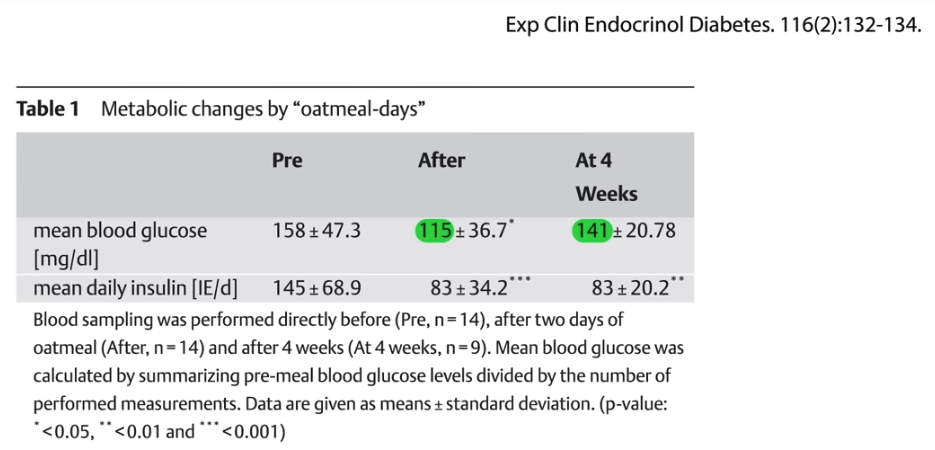
A notable randomized, controlled, crossover trial provided striking evidence of this rapid impact. In this study, participants consuming oatmeal experienced a dramatic reduction in their insulin needs, dropping by an average of 40% within just two days. This improvement was observed in comparison to a control group adhering to a calorie-restricted diabetic diet. Furthermore, a key indicator of long-term blood sugar control, measured four weeks later, reflected the sustained benefits of the short-term oatmeal intervention.
Subsequent research has corroborated these findings. Studies have indicated that a mere two-day regimen of oatmeal consumption can significantly decrease the required insulin dosage and improve blood sugar levels, with beneficial effects extending for up to four weeks post-intervention. For patients with uncontrolled type 2 diabetes, this two-day oatmeal intervention led to a substantial 40% reduction in insulin dose, coupled with an almost normalization of average blood sugar levels. Crucially, these positive outcomes were observed even after participants resumed their regular diets, highlighting the lasting impact of this short-term dietary adjustment.
Further evidence from studies involving diets rich in oats, beans, fruits, vegetables, and nuts demonstrates a significant increase in the population of fiber-feeding gut microbes. These microbes, in turn, churn out beneficial SCFAs, leading to a notable drop in fasting blood sugar levels – approximately 25% within one month. The study indicated a direct correlation between the diversity and abundance of these fiber-promoted SCFA-producing bacteria and improved glycemic control, including better hemoglobin A1c levels, a key marker for long-term blood sugar management.
Potential Downsides and Necessary Precautions
Despite its profound benefits, the implementation of an oatmeal-centric diet requires careful medical supervision. The potency of oatmeal’s blood-sugar-lowering effects necessitates a proactive approach from physicians. If a patient initiates an oatmeal diet, their healthcare provider must be prepared to rapidly adjust or "deprescribe" their blood sugar medications. Failure to do so could result in dangerous hypoglycemia, or dangerously low blood sugar levels, due to overmedication.
Individuals who may have difficulty recognizing or reporting symptoms of low blood sugar, such as those with advanced neuropathy or cognitive impairment, require particular caution. The primary "downside" of employing short-term oatmeal interventions is, paradoxically, their effectiveness. The potential for rapid and significant improvements in glycemic control means these interventions should never be undertaken without close medical oversight.
Understanding the Glycemic Index of Oatmeal
The form of oats consumed significantly influences their impact on blood sugar levels, as reflected in their glycemic index (GI). While whole grains are generally beneficial, intact whole grains are considered superior. Oat groats, which are whole oat kernels with their inedible outer husks removed, represent the most intact form.
When oat groats are processed, they can be cut into smaller pieces to create steel-cut oats (also known as pinhead or Irish oats). These are classified as low-glycemic-index foods, typically scoring below 55. Oat groats can also be coarsely ground to produce Scottish oatmeal or steamed and flattened into "old-fashioned" rolled oats. Both of these varieties have a moderate glycemic index, averaging around 55.
In contrast, instant oats undergo a more extensive steaming and rolling process, resulting in thinner flakes. With a GI score of 79, instant oats are considered a high-glycemic-index food. While not as detrimental as some highly processed breakfast cereals, which can reach GI scores in the 80s and 90s, instant oats still represent a less optimal choice for blood sugar management compared to steel-cut or rolled oats.
Elevating Oatmeal: Culinary Versatility
Oatmeal, a classic whole-grain breakfast, offers remarkable versatility in its preparation and enjoyment. Beyond its basic form, numerous culinary adaptations can enhance its appeal and nutritional profile. A foundational approach involves a "BROL" base – an acronym representing Beans, Rolled Oats, and Legumes – which provides a robust foundation of fiber and complex carbohydrates.
For those seeking a sweet option, creative flavor combinations can be explored. A "chocolate-covered-cherry sensation" can be crafted using frozen dark red cherries, cocoa powder, dates, and nuts like walnuts or pumpkin seeds, offering a rich and satisfying flavor profile without excessive added sugars.
The savory potential of oatmeal is equally vast. Adaptations incorporating sautéed greens, mushrooms, herbs, curry, or roasted vegetables demonstrate the adaptability of this grain to a wide range of palates. The widespread availability of recipes for "savory oatmeal" online attests to its growing popularity as a versatile and nutritious meal option, suitable for any time of day.
The historical significance of oatmeal in diabetes management, once a revolutionary concept, now stands validated by modern scientific inquiry. Its enduring legacy underscores the power of dietary interventions rooted in whole foods, highlighting the profound and often underestimated impact of nutrition on metabolic health. The journey from a controversial "oatmeal cure" to a scientifically understood therapeutic agent reflects a significant evolution in our understanding of diabetes and its management.

