

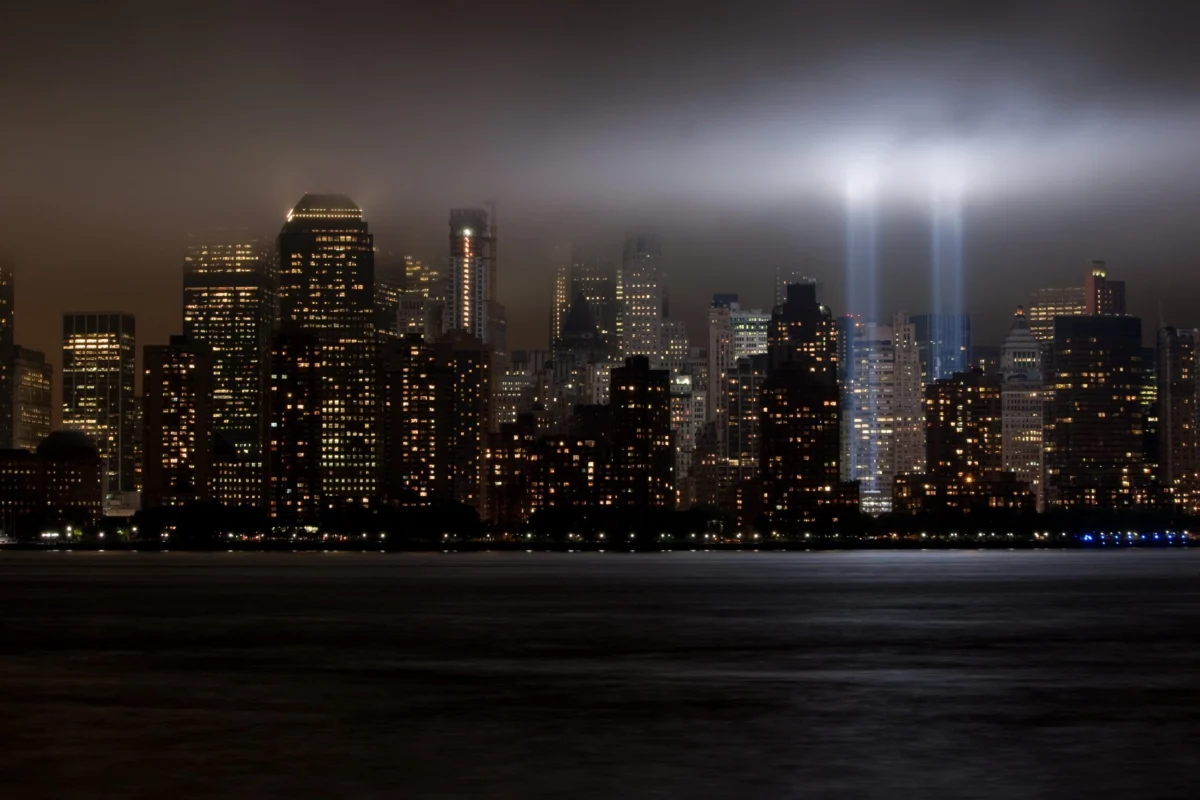
Twenty-five years have passed since the horrific events of September 11, 2001, yet the profound impact of that day continues to resonate. This article, originally penned by the late teacher Larry Ward and published in the December 2001 issue of The Mindfulness Bell, offers a deeply personal yet universally resonant account of navigating the immediate aftermath of the attacks through the lens of mindfulness. This expanded version aims to provide a comprehensive journalistic perspective, contextualizing Ward’s experience within the broader historical, societal, and psychological landscape of post-9/11 America.
The Immediate Aftermath: A World Transformed
Larry Ward’s journey back to New York City in late September 2001, to join Thich Nhat Hanh and other monastics for a service at Riverside Church, marked his first flight since the World Trade Center and the Pentagon were attacked. His initial observations were starkly different from any pre-9/11 travel experience. The heightened security at airports, the unusually sparse passenger loads on flights, and the palpable undercurrent of fear and anxiety among travelers painted a vivid picture of a nation in shock. Ward’s description of a fellow passenger, an Arab man exhibiting palpable nervousness, underscores the nascent fear and suspicion that began to permeate public spaces.
The disorientation Ward experienced upon approaching LaGuardia Airport, realizing the iconic silhouette of the Twin Towers was no longer present, encapsulates the profound visual and psychological rupture caused by the attacks. This absence served as a powerful, albeit devastating, new reference point for a city and a nation grappling with an unprecedented loss. The applause upon landing, a gesture of collective relief in the face of lingering anxiety, highlighted the fragility of normalcy and the deep-seated need for reassurance.
A Mindful Pilgrimage to Ground Zero
Ward’s commitment to undertaking a mindful walk to Ground Zero, dedicating 5,000 steps to the estimated number of missing individuals, transformed a personal spiritual practice into a poignant act of collective remembrance and solidarity. His journey through the streets of Manhattan, from Canal Street to the devastated site, was a sensory immersion into the immediate physical and emotional consequences of the tragedy. The pungent smell of burning rubber and the smoke-filled haze were not merely environmental conditions but tangible manifestations of the destruction.
Ward’s practice of looking deeply into the faces of passersby, seeing "deep heartbreak," and continuing his mindful breathing with each step for a lost soul, transformed the act of walking into a profound engagement with grief. This deliberate and conscious engagement with suffering, a cornerstone of mindfulness, allowed him to internalize the collective sorrow.
The Dust of Remembrance: A Physical and Spiritual Encounter
The most visceral and transformative element of Ward’s experience was his encounter with the dust and ash that permeated Ground Zero and the surrounding areas. He describes how this dust, covering buildings and himself, became a tangible link to the victims. "The dust of the September 11 World Trade tragedy was in me now as I was in it, in every cell of my body, in every mindful step, every fiber of my heart and the mystery of my every breath." This powerful statement transcends a mere physical description; it represents a profound spiritual realization: the interconnectedness of all beings and the shared burden of suffering.
Ward’s insight that the dust was composed of the remnants of individuals from all walks of life—policemen, firemen, stockbrokers, janitors, secretaries, maids, delivery people—underscores the indiscriminate nature of the attack and the shared humanity it tragically exposed. This realization, rooted in his mindfulness practice of "stopping and looking deeply," allowed him to transcend the immediate shock and connect with the profound emptiness that underlies all phenomena, a concept central to Buddhist philosophy.
The Teachings of Emptiness and Signlessness
Ward draws a direct connection between his experience at Ground Zero and the Buddhist teachings on "emptiness and signlessness." He posits that the perceived solidity and permanence of the World Trade Center, like all phenomena, were illusory. "All dharmas, all phenomena are marked with emptiness and signlessness. They have no enduring separate self and are always in disguise." This understanding, facilitated by his mindful observation, offered a framework for comprehending the impermanence of even the most formidable structures and, by extension, the transient nature of life itself.
His gratitude towards Thich Nhat Hanh for transmitting these teachings, the "instruments of the doors of liberation," highlights the crucial role of spiritual guidance in navigating profound societal trauma. The practice of aimlessness, beginning with mindful breathing and stopping, becomes the gateway to experiencing deeper truths and developing the capacity to cope with loss and uncertainty.
A Beacon of Hope: The Riverside Church Service
The service at Riverside Church on September 25th, attended by an estimated 3,000 people, became a powerful testament to the enduring human spirit and the capacity for collective healing. The overwhelming turnout, with thousands lining up hours before the event, demonstrated a deep societal yearning for solace, community, and a shared space to process grief.
The presence of Thich Nhat Hanh and the monastic community, alongside members of the "Fourfold sangha" (monks, nuns, laymen, and laywomen), provided a sanctuary for collective grieving and the practice of "making peace with our anger." The chanting of the Heart Sutra and Thich Nhat Hanh’s dharma talk on managing anger, along with Sister Chan Khong’s personal account of loss and resilience, offered pathways for transforming individual and collective suffering.
The Sangha’s Capacity for Holding Grief
Ward emphasizes the profound capacity of the sangha to "hold the grief of 3,000-plus people without getting caught by it." This ability, he explains, is the fruit of dedicated mindfulness practice. The practice is not solely for personal development but to cultivate the inner strength, calmness, and insight necessary to offer support to others during times of crisis.
The profound impact of the sangha’s presence was evident in the reactions of attendees. When asked if they had traveled to New York solely for the event, and responding affirmatively, many were moved to tears, recognizing the deep commitment and compassion offered by the practitioners. This exchange highlights the potent effect of dedicated spiritual presence in times of immense suffering.
Cultivating Paramitas: Inclusivity and Forbearance
Ward identifies the paramita of inclusivity and forbearance as central to the sangha’s ability to navigate the post-9/11 landscape. Inclusivity, in this context, extends beyond mere tolerance; it encompasses the capacity to hold and transform suffering into light. This capacity is nurtured through practices such as noble silence, conscious breathing, mindful sitting, mindful walking, and the mindfulness trainings.
These practices, when cultivated collectively, foster a sense of shared humanity and resilience, enabling individuals and communities to confront darkness and emerge with renewed strength and compassion. The ability to live in such a way that transforms suffering into light is the ultimate expression of this cultivated capacity.
A Call to Action: The Era of Maitreya Buddha
Returning from New York, Ward emerged with a heightened sense of clarity regarding the transformative potential of the post-9/11 era. He identified this moment as the "exact moment for Maitreya Buddha," a time for embodying "Mr. Love and Ms. Love," as Thich Nhat Hanh would describe it. The profound clarity of what truly matters, a clarity born from shared tragedy, presented an opportunity to deepen spiritual practice and community building.
Ward recognized that periods of war and societal upheaval, while fraught with sorrow and chaos, inherently contain profound spiritual opportunities for transformation and healing. This historical perspective informed his decision to reorient his life towards greater dedication to mindful living, mindful breathing, mindful walking, and mindful sangha building. His commitment was to be fully present for the dharma and its transformative work in a world grappling with suffering and confusion.
Yearning for Light in the Darkness
The article concludes with a powerful affirmation of humanity’s deep-seated yearning for its "true home" amidst darkness. This yearning is for the "light of the Buddha which is present in each of us," the "light of the dharma which is present in reality itself," and the "light of the sangha, our capacity to live in harmony and awareness."
The events of September 11, 2001, while inflicting immense pain and devastation, also served as a catalyst, illuminating the profound interconnectedness of humanity and the urgent need for practices that foster compassion, resilience, and understanding. Larry Ward’s reflections, rooted in his personal experience and spiritual practice, offer a timeless message of hope and a call to cultivate inner light in the face of external darkness.
Historical Context and Data
The attacks of September 11, 2001, were a series of four coordinated terrorist attacks by the Islamist terrorist group al-Qaeda against the United States. On that morning, 19 al-Qaeda terrorists hijacked four commercial airplanes.
- American Airlines Flight 11 was deliberately crashed into the North Tower of the World Trade Center in New York City at 8:46 a.m. Eastern Time.
- United Airlines Flight 175 was deliberately crashed into the South Tower of the World Trade Center at 9:03 a.m.
- American Airlines Flight 77 was deliberately crashed into the Pentagon in Arlington, Virginia, at 9:37 a.m.
- United Airlines Flight 93, believed to be targeting a location in Washington D.C., crashed into a field in Shanksville, Pennsylvania, at 10:03 a.m. after passengers and crew attempted to regain control of the aircraft from the hijackers.
The attacks resulted in the deaths of 2,977 people (excluding the 19 hijackers), making it the deadliest terrorist attack on U.S. soil. Among the victims were 2,753 people in New York City, 184 at the Pentagon, and 40 in Pennsylvania. This figure includes civilians from over 90 countries, as well as first responders—firefighters, police officers, and emergency medical personnel—who rushed to the scene.
Timeline of Key Events in the Immediate Aftermath
- September 11, 2001: Terrorist attacks occur in New York City and Arlington, Virginia. All air traffic over the United States is grounded.
- September 12, 2001: President George W. Bush addresses the nation, vowing to bring those responsible to justice. International condemnation of the attacks mounts.
- September 13, 2001: Thich Nhat Hanh, present in the U.S. at the time, issues a statement and delivers a dharma talk on responding to the tragedy with compassion.
- September 14, 2001: A National Day of Mourning is observed in the United States. President Bush visits Ground Zero.
- September 17, 2001: U.S. stock markets reopen after being closed for nearly a week.
- September 20, 2001: President Bush addresses a joint session of Congress, outlining his administration’s response, including the declaration of a "War on Terror."
- September 25, 2001: Larry Ward attends a service led by Thich Nhat Hanh at Riverside Church in New York City.
Broader Implications and Analysis
The 9/11 attacks fundamentally altered the global geopolitical landscape and had profound implications for domestic policy, national security, and societal psychology.
- National Security and Foreign Policy: The attacks led to the U.S. invasion of Afghanistan in October 2001 and later the Iraq War in 2003, marking the beginning of extended military engagements in the Middle East and the broader "War on Terror." This era saw significant increases in defense spending and the establishment of new security agencies and protocols, such as the Department of Homeland Security.
- Domestic Security and Civil Liberties: The passage of the Patriot Act in October 2001 expanded government surveillance powers, raising concerns about the balance between national security and civil liberties. Airport security measures were drastically enhanced, becoming a permanent fixture of air travel worldwide.
- Societal Impact and Psychological Trauma: The attacks created widespread fear, anxiety, and grief across the nation and globally. The concept of vulnerability became a dominant theme, impacting public consciousness for years. The long-term health effects, particularly for first responders and survivors exposed to toxic dust at Ground Zero, continue to be a significant concern.
- Interfaith Dialogue and Xenophobia: While the attacks spurred some efforts towards interfaith dialogue and solidarity, they also unfortunately fueled a rise in Islamophobia and anti-Arab sentiment. This highlighted the challenge of distinguishing between extremist ideologies and entire religious or ethnic groups.
- The Role of Mindfulness and Spirituality: As exemplified by Larry Ward’s experience and Thich Nhat Hanh’s teachings, the post-9/11 period saw an increased interest in mindfulness and contemplative practices as tools for coping with trauma, fostering resilience, and promoting peace. The desire for inner peace and a deeper understanding of suffering became more pronounced for many.
Larry Ward’s personal narrative, when placed within this broader historical context, serves as a poignant reminder of the human capacity for both profound suffering and extraordinary resilience. His journey through the dust and grief of Ground Zero, guided by the principles of mindfulness, illustrates a path toward transforming tragedy into an opportunity for deeper connection, understanding, and ultimately, healing.

