

A micromort, a unit for comparing and communicating risk to patients, is equivalent to a one-in-a-million chance of dying. This innovative metric, championed by Dr. Michael Greger, aims to demystify complex probability figures and provide a more intuitive understanding of the potential dangers associated with various activities and medical procedures. The concept of micromorts offers a standardized framework for assessing risk, enabling individuals and healthcare professionals to make more informed decisions.
The Challenge of Risk Perception
In the realm of healthcare and everyday life, accurately conveying the magnitude of risk has always been a significant challenge. Patients often struggle to comprehend statistical probabilities, leading to misinterpretations and anxieties. For instance, the risk of death associated with hundreds of millions of surgical procedures performed annually, typically around 0.5%, is often met with comparisons to mundane activities like crossing the road. This highlights a fundamental disconnect in understanding the relative dangers involved.
Dr. Greger points out that even seemingly simple medical interventions carry quantifiable risks. Undergoing anesthesia, for example, presents an approximate 1-in-100,000 chance of not waking up. While this figure is precise, its impact can be limited. Analogies are often employed to bridge this gap, such as comparing the anesthesia risk to that of an expert skydive. However, even these comparisons can be abstract, as visualizing a 0.0017-mile by 0.00227-mile rug, a representation of this risk, proves difficult for many. The need for more digestible and relatable units of risk measurement led to the development and popularization of the micromort.

Understanding the Micromort Unit
A micromort (mM) is defined as a one-in-a-million chance of dying. To contextualize this, consider the odds of flipping a coin and achieving heads 20 consecutive times. This event, statistically improbable, mirrors the risk represented by a single micromort. Another comparison often cited is the likelihood of drawing a royal flush in a game of poker, which, while rare, is slightly less risky than one micromort.
The true power of the micromort lies in its utility for comparative analysis. By assigning a micromort value to diverse activities and medical procedures, a clear and consistent metric emerges for evaluating relative dangers. This allows for direct comparisons, moving beyond subjective interpretations of risk.
Micromorts in Action: Everyday Activities vs. Medical Procedures
The application of micromorts extends to a wide array of daily activities, providing a novel perspective on their inherent risks. For instance, driving 100 miles is associated with approximately one micromort. This means that an individual undertaking a 500-mile journey would face a risk equivalent to five micromorts, comparable to the risk of five scuba dives. This metric allows for a direct comparison between the perceived dangers of travel and recreational activities.
The implications of this framework become particularly apparent when examining medical interventions. Giving birth, a significant life event, carries a risk comparable to driving from New York to Los Angeles and back again. However, the elective procedure of a Cesarean section more than doubles this risk. Even seemingly minor surgical procedures, such as a hernia repair, carry a mortality risk equivalent to 200 skydives.
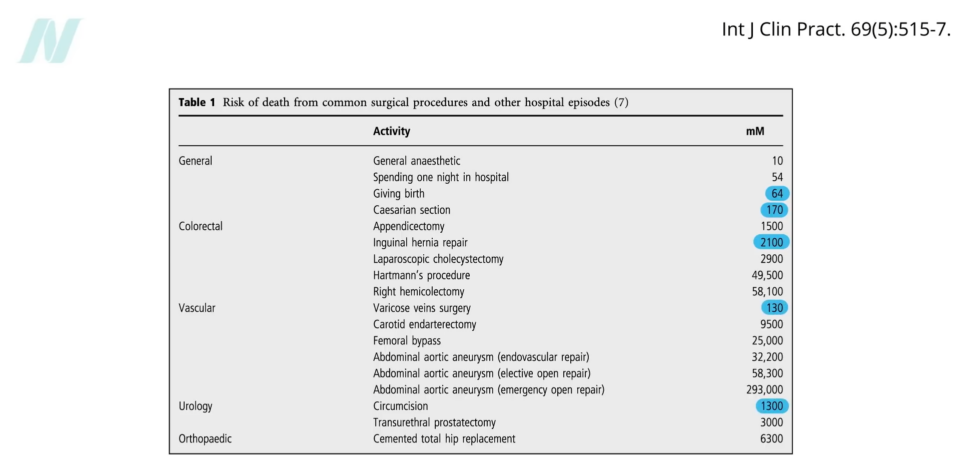
These comparisons are not intended to induce fear but to foster informed decision-making. Procedures like varicose vein surgery or circumcision, where the risks associated with them might outweigh the benefits in certain contexts, can be re-evaluated when viewed through the lens of micromorts. This encourages a more critical assessment of elective procedures and their potential consequences.
Broader Applications and Unexpected Risks
The micromort metric also sheds light on less commonly discussed risks. The inherent dangers of chemotherapy and radiation therapy for head and neck cancers, for example, are significantly higher than those associated with rock climbing for extended periods, driving millions of miles, or numerous skydives. This stark contrast underscores the severity of such medical treatments.
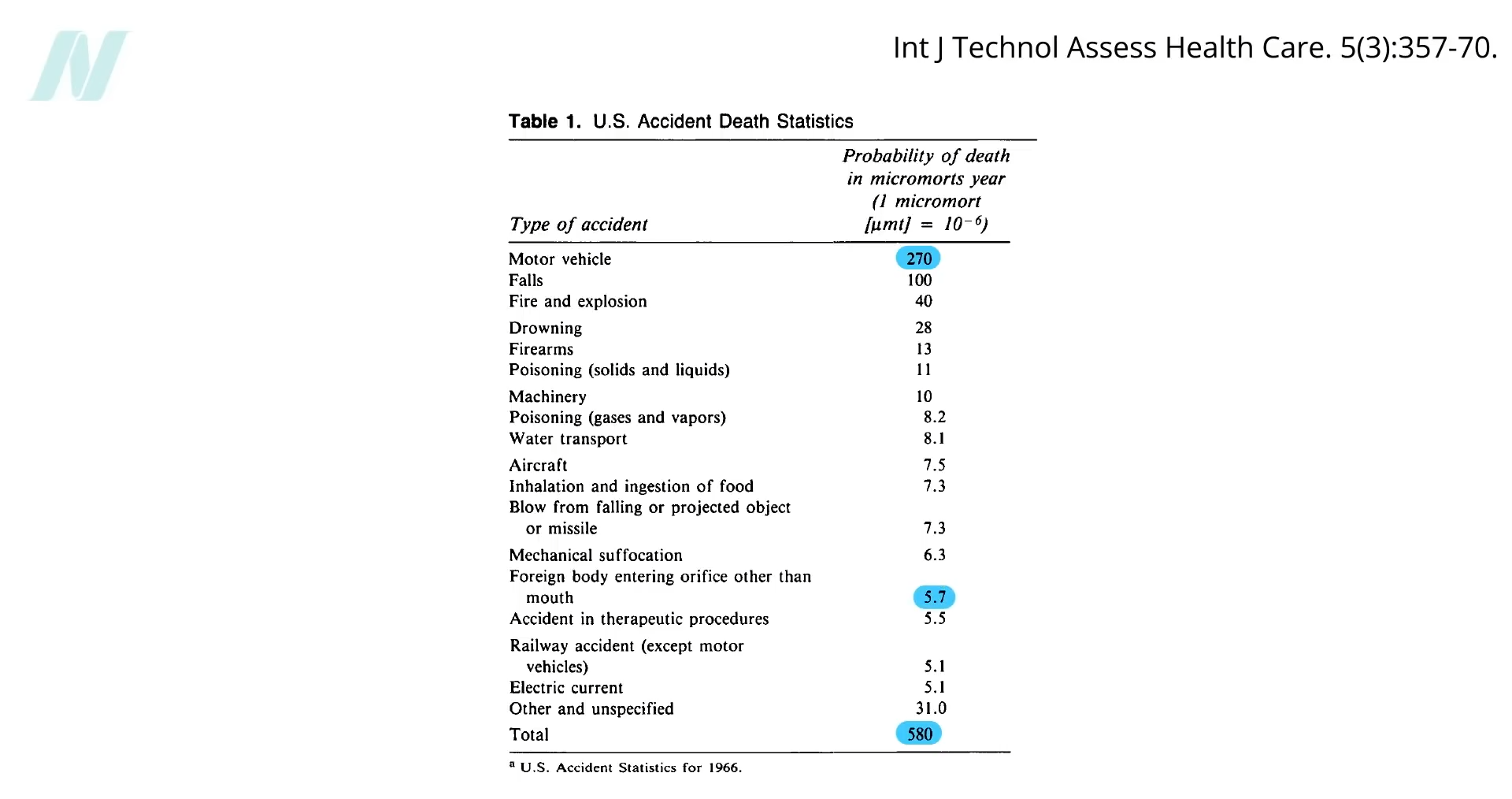
Furthermore, the concept of accidental death, a significant contributor to overall mortality, can be better understood with micromorts. On average, individuals face a one-in-a-million chance of dying from an accident each day. Approximately half of this risk is attributed to car crashes in the United States, based on current data. However, other accidental hazards exist, each with its own micromort value. For example, the risk of dying from a foreign body entering an orifice other than the mouth is approximately 1 in 200,000 annually for Americans, a figure that may surprise many.
The comparison of various extreme activities also reveals surprising insights. Horseback riding, for instance, is found to be four times riskier than rock climbing, a fact that might challenge conventional perceptions of danger. Activities like climbing Mount Everest are significantly more perilous than coal mining or base jumping, with Everest expeditions carrying a risk approximately 30 times greater. While trains and planes offer comparable safety over the same distance, motorcycle riding presents a substantially higher risk, being roughly 50 times deadlier than car travel. Even cycling, often viewed as a healthy alternative, carries a near-term risk about 10 times greater than driving.
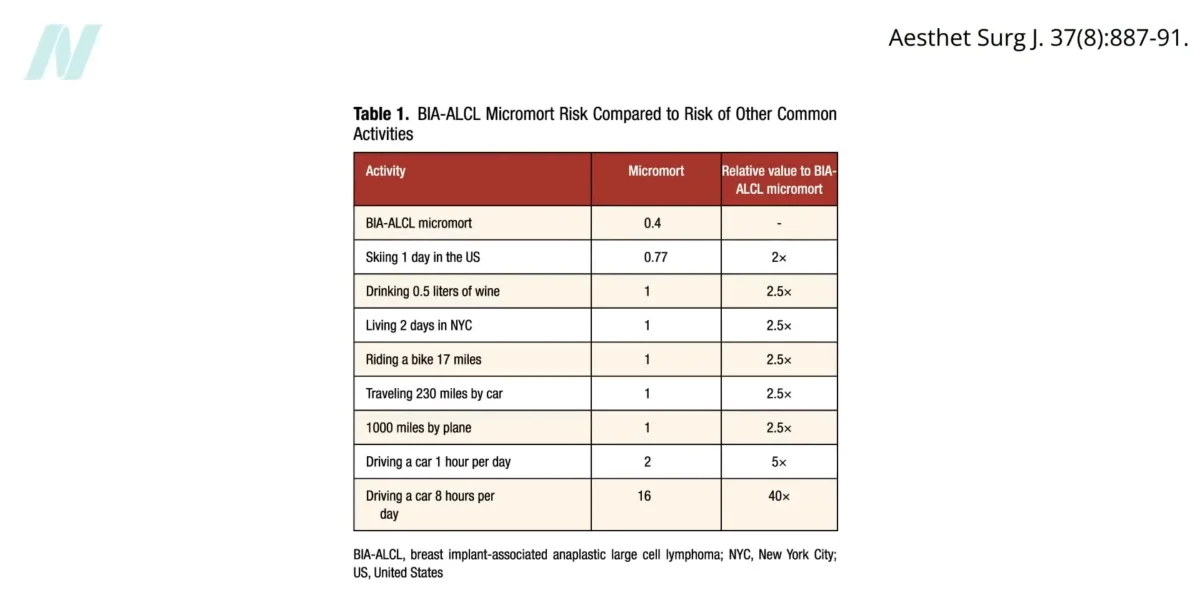
The Importance of Context: Breast Implants and Cancer Risk
A compelling case study for the utility of micromorts involves the risk associated with certain types of breast implants and their association with a rare form of cancer, breast implant-associated lymphoma. While the prospect of developing cancer is inherently frightening, especially for millions of women with implants, the micromort metric helps to contextualize this risk.
Studies have indicated that the risk of dying from this specific type of implant-associated cancer is less than the risk of a single day of skiing. While the prospect of a slow, debilitating cancer might be perceived differently than a sudden accident on the slopes, this comparison allows for a more objective evaluation. It also brings into focus the financial implications of such a diagnosis, which can be catastrophic for families. The micromort provides a quantitative basis for understanding these risks in relation to more commonly understood scenarios.
Physician’s Note: Medical Interventions and Prevention
Dr. Greger’s work often emphasizes the importance of preventive healthcare, and the micromort concept aligns with this philosophy. He notes that medical interventions themselves, while often necessary, are not without risk. In fact, physicians are identified as a leading cause of death, a sobering statistic that underscores the need for robust preventive strategies. Resources like "Why Prevention Is Worth a Ton of Cure" and "How Doctors Responded to Being Named a Leading Killer" delve deeper into this critical aspect of healthcare.
The broader implications of the micromort metric are far-reaching. It offers a potential pathway to enhanced patient education, more transparent medical consent processes, and a more rational approach to risk assessment in public health policy. By providing a common language for discussing risk, micromorts empower individuals to make more informed choices about their health, lifestyle, and safety, ultimately contributing to a more health-conscious society. The continued exploration and application of this metric hold the promise of transforming how we perceive and manage risk in our daily lives.

