

William Shakespeare’s profound exploration of power, identity, and the ephemeral nature of authority, particularly as depicted in his play Richard II, offers a compelling lens through which to examine contemporary political dynamics and timeless human experiences. The play’s central figure, King Richard II, initially embodies an almost unshakeable belief in his divinely ordained right to rule. By the play’s conclusion, however, he is stripped of his crown, his power, and his illusions, left to confront the stark reality of his own impermanence. This dramatic arc, tracing the dissolution of perceived absolute power, resonates deeply with recent political upheavals and offers a framework for understanding how perceived solidity can dissolve into contingency.
The recent political landscape in the United Kingdom, for instance, provided a stark, real-world parallel to Richard II’s downfall. The swift and relatively uncontested departure of a Prime Minister who had, for a period, appeared unassailable, highlights the often-overlooked fragility of political authority. While Shakespeare’s play is not a direct allegory for any single modern event, its depiction of a leader whose power was predicated on a narrative, rather than an inherent quality, serves as a potent cautionary tale. It illuminates the critical distinction between holding a position and internalizing that position as an immutable aspect of self. The play meticulously maps the chasm that emerges when a leader’s personal identification with their role eclipses their understanding of the systemic and conditional nature of that role.
A pivotal moment in Richard II occurs when the king, away in Ireland, learns that his Welsh army has dispersed, having been misled by rumors of his death. In response, Richard attempts to conjure an army not through tangible military might, but through the sheer force of his language. He invokes the very landscape of his kingdom, declaring that the stones will transform into soldiers and serpents will impede his enemies. This incantation, a rhetorical stand-in for actual military force, underscores a fundamental insight also found within Buddhist teachings: when the substantial is absent, the mind often seeks to manufacture presence rather than acknowledge absence. This psychological phenomenon, the tendency to create a substitute reality when faced with a void, is a recurring theme in understanding human behavior, particularly in moments of crisis or loss.
The mechanics of power, as illustrated by Richard II’s reign, are not unique to monarchs or political leaders. The crown, in essence, was never a metaphysical certainty woven into the fabric of the universe. Instead, it represented a complex web of agreements, oaths, rituals, and the tacit consent of the governed. This intricate structure, while appearing robust, is inherently withdrawable the moment a critical mass of participants ceases to uphold it. Buddhism offers a conceptual framework for this understanding through the concept of sunyata, or emptiness of inherent existence. Applied to institutions or roles, sunyata suggests that entities like a throne or a political office do not possess an intrinsic, self-sufficient nature. They arise from and depend on a confluence of conditions, including attention, belief, and collective agreement. Their dissolution is as possible as their formation. This can be further understood through the lens of anatta, or no-self, extended from the individual to the collective or institutional. Just as a person is a temporary aggregation of physical and mental components, so too is a position of power a dependent arrangement of social constructs.
Shakespeare’s dramatic genius lies in his ability to move beyond a generalized illustration of impermanence. Richard II’s kingship is deeply rooted in a specific medieval ideology: the doctrine of the divine right of kings. This conviction, expressed in lines like “not all the water in the rough rude sea / Can wash the balm off from an anointed king,” posited kingship as an indelible, divinely sanctioned reality. It was not merely a belief that later proved vulnerable to challenge, but a worldview so pervasive that it had solidified into what was perceived as an unassailable truth. Buddhism articulates this phenomenon as ditthi, or a view mistaken for the nature of things. Such beliefs, invisible in their ubiquity, become the very medium through which reality is perceived, akin to swimming in water without recognizing its presence. Richard’s tragedy is that he cannot perceive his kingship as a position within a system of meaning until he is forcibly removed from it.
The profound emotional impact of the play stems from Richard’s eventual self-awareness. Deposed and isolated, he requests a looking glass, expecting to see the visage of a fallen monarch. Instead, he observes his own ordinary face, unchanged by the loss of his crown. “Was this the face,” he muses, “that every day under his household roof / Did keep ten thousand men?” This moment of stark realization underscores the play’s central argument: the essence of his kingship had never resided within his face, nor anywhere that could be definitively located and lost. It existed elsewhere—in the willingness of others to believe in and uphold his authority. His subsequent smashing of the looking glass can be interpreted in multiple ways: as a petulant outburst, or, more profoundly, as a misguided but instinctive rejection of a superficial validation. It represents a desperate, albeit misdirected, refusal to seek an answer from a surface that could never yield it, because the answer lay in collective perception and agreement.
Buddhism offers a framework for understanding this vulnerability through the teachings on the eight worldly winds. These consist of gain and loss, pleasure and pain, praise and blame, fame and disgrace. Our identities are often constructed upon conditions that are, by their very nature, unstable. A position of power, a reputation, a following—these are all subject to the buffeting of the worldly winds. What appears solid and enduring can shift and dissipate because its perceived solidity was an illusion. Richard’s kingship, like the stones and adders he conjured, was ultimately wind-built. His tragedy is not merely the loss of the crown, but the realization that he was never, in the manner he believed, a king at all. He was a man, who, for a period, was conditionally recognized as such by others.
Beyond the confines of Shakespearean tragedy, this pattern of perceived solidity dissolving into contingency is a recurring archetype in human affairs, particularly in the realm of politics. It is the oldest story in the political arena: a figure who, for a time, seems to embody the very essence of authority, ultimately discovers they were merely a focal point for a collective agreement. The inevitability that seemed to surround such a figure was not inherent but a product of an unexamined narrative that held sway while conditions permitted.
While few individuals will experience the literal loss of a throne, the principle extends to the quiet certainties most of us hold. We often build our sense of self and security on foundations that are just as conditional—a role we play, a reputation we cultivate, the belief that what we have built will endure because it has, thus far. The practice that Shakespeare’s play, and Buddhist teachings, point toward is not one of grim detachment or cynical resignation. Instead, it is a call for mindful awareness—a gentle recognition of the conditional nature of our perceived realities, particularly our sources of security and identity, before the inevitable winds of change arrive. This proactive understanding allows for a more resilient and less ego-driven engagement with life’s inherent impermanence.
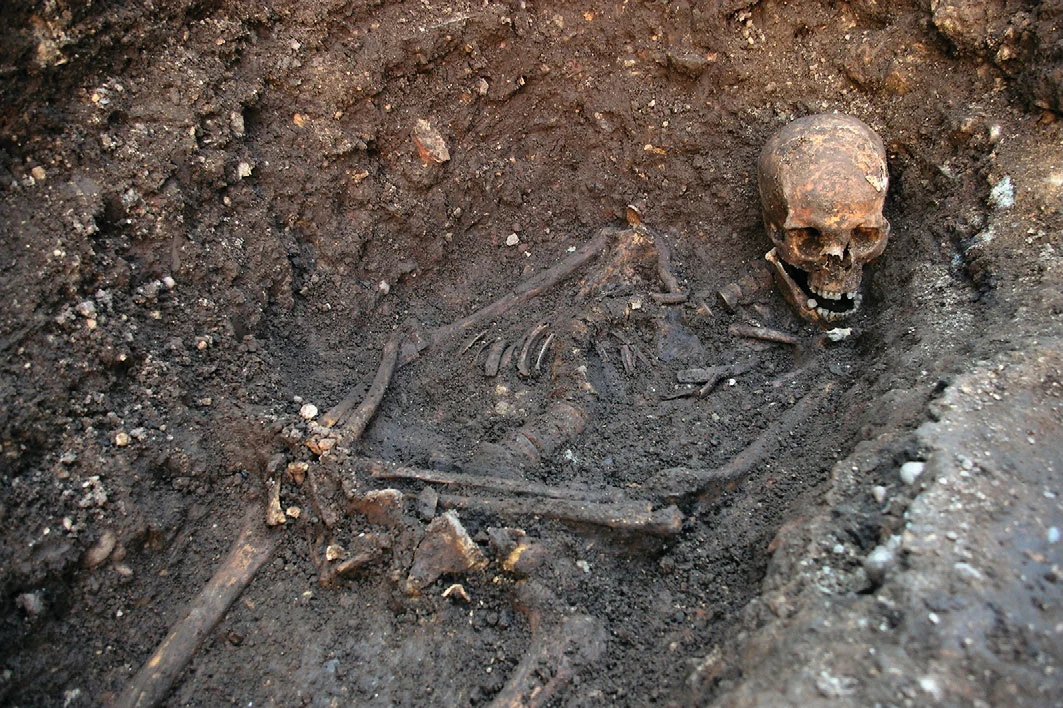
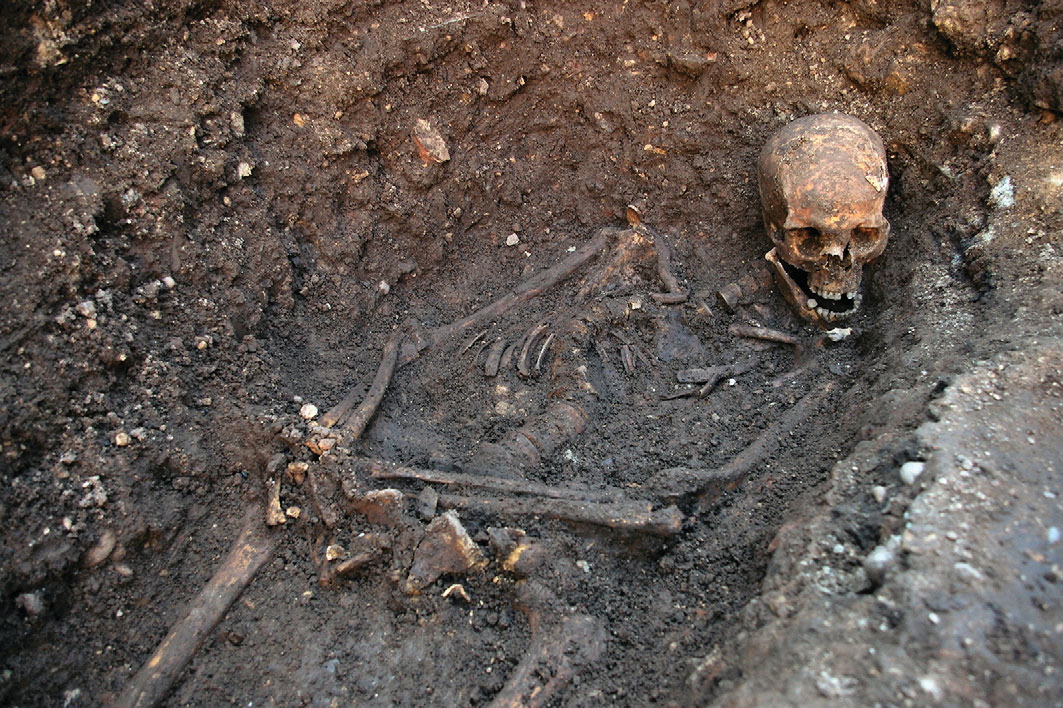
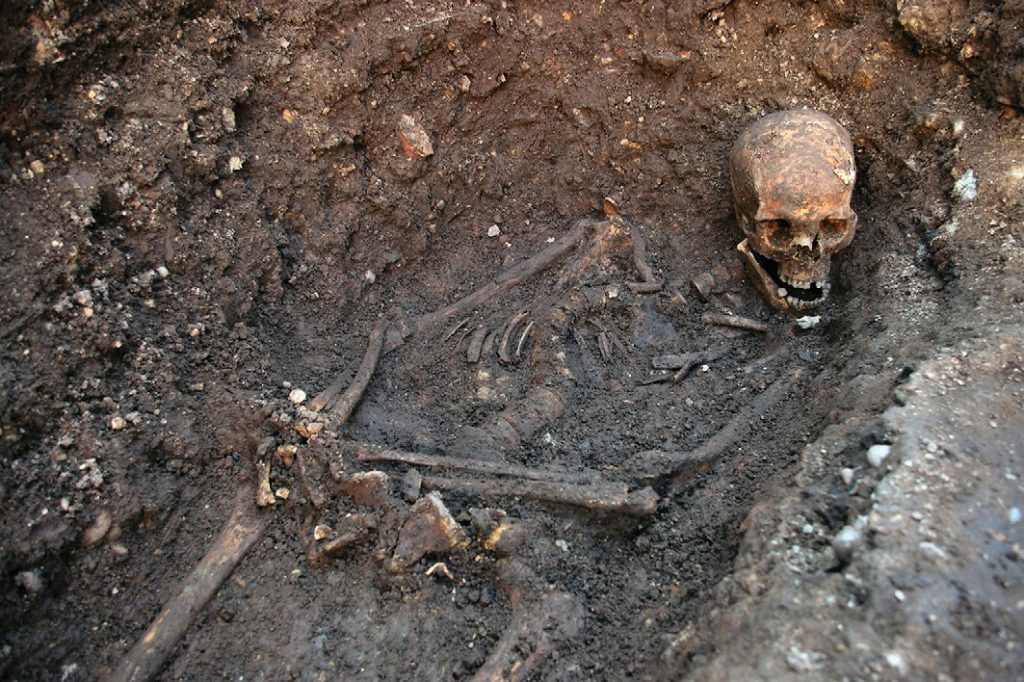
The discovery of the remains of King Richard III in 2012 beneath a Leicester car park, beneath the unassuming foundation of the modern world, offered a poignant, tangible echo of the play’s thematic concerns, albeit concerning a different historical figure. The skeletal remains, unearthed from their incongruous resting place, served as a stark reminder of the earthbound reality that awaits all individuals, regardless of their earthly station. While the play Richard II focuses on the psychological and political dissolution of a monarch, the archaeological discovery of Richard III, a king whose reign was marked by controversy and a violent end, brings a visceral, material dimension to the concept of impermanence. The king who was famously said to have been buried without ceremony, his body lost to history, was eventually found, not in a royal tomb, but amidst the detritus of everyday life. This juxtaposition of royal bones in a mundane setting underscores the leveling power of time and the ultimate humility of mortality. The image of the king discovered in situ, a stark contrast to the regal portraits and grand narratives that often surround historical figures, forces a confrontation with the raw, unvarnished reality of existence and its eventual end. This discovery, in a way, mirrors Richard II’s own journey from the perceived invincibility of his throne to the solitary contemplation of his own mortal face. It reminds us that beneath all titles, all power, and all grand narratives, lies a fundamental human condition subject to the same forces of decay and eventual obscurity, only to be revealed anew by the chance of discovery.

