

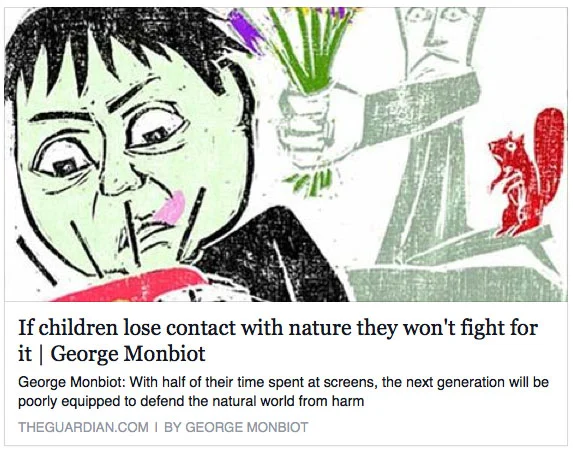
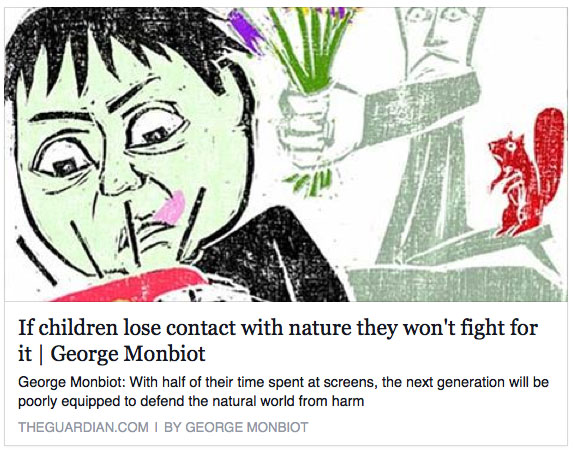
A recent commentary published in the UK’s The Guardian by George Monbiot, titled “If Children Lose Contact With Nature They Won’t Fight For It,” has ignited a debate regarding the disconnect between contemporary youth and the natural world, and its implications for future environmental stewardship. While Monbiot’s central thesis—that a lack of direct engagement with nature diminishes the likelihood of future generations championing its preservation—resonates with many, the article’s proposed attribution of this problem primarily to the ubiquity of digital screens has drawn nuanced counterarguments.
The core assertion of Monbiot’s piece, which appeared in November 2012, posits a direct correlation between reduced outdoor activity and a diminished sense of connection, thereby undermining the foundation for environmental advocacy. This perspective highlights a palpable concern: as childhoods become increasingly mediated by technology, the intimate, sensory experiences that foster a deep-seated appreciation for the environment may be eroding. The argument suggests that without firsthand encounters with the intricate ecosystems, the tactile sensations of soil and bark, and the visual spectacle of untamed landscapes, children are less likely to develop the emotional investment necessary to become ardent defenders of the planet.
However, an alternative perspective, articulated by commentators and echoed in broader discussions within ecopsychology circles, suggests that while the broad societal shifts impacting children’s freedoms and access to nature are undeniable, the narrative of digital technology as solely a detrimental force may be overly simplistic and, at times, inaccurately framed. This view contends that while large-scale socio-economic factors and changes in urban planning have undoubtedly restricted children’s unsupervised access to natural spaces, the very digital platforms that are often scapegoated could, paradoxically, also offer avenues for reconnection.
Background: The Shifting Landscape of Childhood and Nature
The concern over children’s declining connection with nature is not new. Over the past several decades, researchers and environmentalists have documented a trend known as “nature deficit disorder,” a term popularized by Richard Louv in his 2005 book of the same name. This concept describes the potential negative consequences for children’s physical, psychological, and spiritual health resulting from a lack of time spent in the natural world.
Several converging factors have contributed to this phenomenon:
- Urbanization and Suburban Sprawl: An increasing proportion of the global population lives in urban and suburban areas, often characterized by a scarcity of accessible green spaces. Housing developments have expanded into previously wild areas, and urban planning has, at times, prioritized concrete over parks and natural habitats.
- Increased Screen Time: The proliferation of digital devices, including personal computers, smartphones, and gaming consoles, has dramatically altered how children spend their leisure time. Studies consistently show a significant increase in the amount of time children dedicate to indoor, screen-based activities. For instance, data from Common Sense Media, a non-profit organization focused on children and media, has consistently shown a rise in daily screen use among children and teens over the years. A 2019 report indicated that U.S. teens averaged 7 hours and 20 minutes of screen media per day, not including homework.
- Safety Concerns and Parental Supervision: Heightened parental anxieties regarding child safety, coupled with increased litigation risks, have led to more structured and supervised childhoods. This often translates to fewer opportunities for independent exploration of natural environments, a practice that was more common in previous generations.
- Changes in Education: While outdoor education programs exist, the emphasis in many school curricula has shifted towards standardized testing and core academic subjects, sometimes at the expense of hands-on, experiential learning in natural settings.
- Economic Pressures: For many families, economic pressures can limit opportunities for travel to natural areas or participation in outdoor recreational activities.
These societal shifts have created a context where Monbiot’s concern about a diminished future constituency for environmental action is understandable. The argument is that without a personal history of engaging with nature, the abstract concepts of conservation and ecological responsibility may struggle to take root.
The Digital Divide: A Double-Edged Sword?
Monbiot’s critique places a significant emphasis on the perceived negative impact of “on-screen engagement.” This perspective often frames digital technology as a direct antagonist to nature immersion. However, proponents of a more integrated approach argue that this framing overlooks the potential of digital tools to act as bridges to the natural world.
Amy Lenzo, a commentator who responded to Monbiot’s article, articulated this viewpoint. She acknowledged the validity of the concern but argued against what she termed a “lazy and inaccurate argument” that places the entire blame on screens. Lenzo’s perspective, informed by her own experiences and an understanding of ecopsychology, suggests that digital platforms can serve as powerful conduits for introducing children to the wonders of nature.
“I grew up as an introvert in the Arizona desert, where nature was a bit prickly to say the least, and my own passion for the natural world was born in books,” Lenzo noted. “Today’s ‘books’ have multi-media to draw children in to the mystery and magic of the natural world, and are even more effective.”
This argument highlights the evolution of how information and inspiration are disseminated. While traditional books played a crucial role in fostering early environmental interests, modern digital formats—including high-definition nature documentaries, interactive educational apps, virtual reality experiences, and online communities dedicated to nature photography and exploration—can offer compelling and immersive introductions to ecological concepts and biodiversity.
Supporting Data and Emerging Trends
While precise longitudinal data directly linking screen time to a specific decline in environmental advocacy is complex to isolate, several trends provide supporting context:
- Rise of Nature-Based Digital Content: The immense popularity of nature documentaries (e.g., Planet Earth, Our Planet), wildlife photography on social media, and online educational resources underscores a significant public appetite for experiencing nature vicariously through digital media. Platforms like YouTube host vast libraries of content on flora, fauna, ecosystems, and conservation efforts, attracting millions of viewers.
- Citizen Science and Digital Platforms: The growth of citizen science projects, many of which rely on digital platforms for data submission and analysis (e.g., iNaturalist, eBird), demonstrates how technology can facilitate direct engagement with the natural world, even from a distance. These platforms allow individuals to contribute to scientific research by identifying species, documenting sightings, and contributing to biodiversity databases.
- Online Communities and Advocacy: Social media has become a powerful tool for environmental activism and awareness campaigns. Online communities can mobilize support, share information, and organize events, demonstrating that a connection to nature can be fostered and expressed through digital interaction.
Official Responses and Broader Implications
The debate sparked by Monbiot’s article reflects a broader societal conversation about the role of technology in shaping human development and our relationship with the environment. Environmental organizations, educators, and policymakers are increasingly grappling with how to balance the benefits and drawbacks of digital engagement.
From an ecopsychological standpoint, the core objective remains the cultivation of a profound and enduring connection with the natural world. The emphasis is on fostering what some call "biophilia"—an innate human tendency to connect with nature and other living systems. Whether this connection is initiated through direct, unmediated experiences in the wild or catalyzed by engaging digital content, the ultimate goal is to nurture a sense of belonging and responsibility towards the Earth.
The implications of this discussion extend beyond individual children. A society that is less connected to its natural heritage is likely to be less equipped to address pressing environmental challenges such as climate change, biodiversity loss, and pollution. A generation that does not feel a personal stake in the health of ecosystems may be less inclined to support conservation policies, adopt sustainable practices, or engage in environmental activism.
Towards a Balanced Approach
The consensus emerging from these discussions is that a balanced approach is most effective. While direct engagement with nature is invaluable and should be prioritized, digital tools should not be dismissed outright. Instead, they can be leveraged strategically:
- Augmenting, Not Replacing: Digital resources can serve as introductions and supplements to real-world experiences. A documentary about a rainforest can inspire a visit to a local park or botanical garden, or motivate a child to learn more about local ecosystems.
- Accessibility and Inclusivity: For individuals with limited mobility, geographical constraints, or other barriers to outdoor access, digital platforms can offer crucial pathways to learning about and appreciating nature.
- Promoting Sensory Engagement Online: As Lenzo suggests, online engagement can be made more nature-connected by encouraging the use of sense-based language, vivid photography, and mindful interaction. This involves remembering that online discussions involve real human beings situated within specific environments.
Ultimately, the challenge lies not in demonizing technology but in understanding its multifaceted role and harnessing its potential to foster a deeper, more pervasive connection with the natural world. The future of environmental stewardship depends on cultivating this connection in all its forms, ensuring that as technology evolves, our intrinsic bond with the Earth remains strong and vibrant for generations to come. The conversation initiated by Monbiot, while perhaps focusing on a singular aspect of the problem, serves as a crucial reminder of the urgent need to re-evaluate and actively nurture this vital human-nature relationship.

