


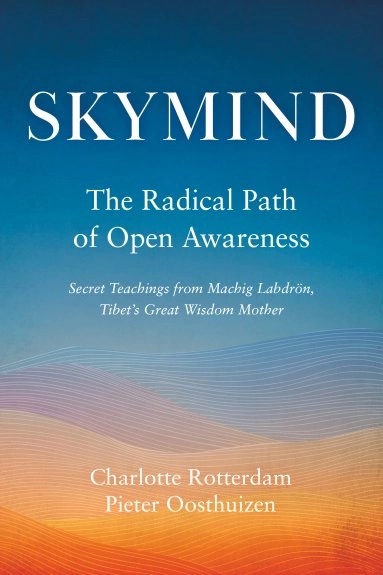
The profound teachings of Machig Labdrön, a pivotal figure in Tibetan Buddhism known as the Great Wisdom Mother, offer a path towards liberation through the practice of "severance," or chöd. This ancient wisdom tradition, originating in 11th-century Tibet, centers on the concept of "realizing rootlessness," a state of profound non-attachment that liberates practitioners from the cycle of suffering. Charlotte Rotterdam, in her recent exploration of this practice, highlights Machig Labdrön’s emphasis on cutting through the root of self-clinging, the illusion of a solid, independent self that fuels our anxieties and attachments.
Machig Labdrön, who lived from 1055 to 1149 CE, is revered for her revolutionary approach to Buddhist practice. Her lineage of chöd emerged during a period of significant spiritual development in Tibet, building upon existing tantric traditions while introducing innovative methods. The core of her teaching is the radical understanding that the suffering we experience stems not from external circumstances, but from our ingrained habit of clinging to a false sense of self. This self, perceived as a stable, independent entity, is an illusion, according to both Machig Labdrön and the foundational teachings of Buddhism, notably the concept of anatman or no-self, articulated by the Buddha himself.
The Illusion of the Solid Self
Rotterdam’s reflection, sparked during a solitary retreat, underscores the subtle yet pervasive nature of self-clinging. She describes the spiritual path metaphorically as a tree, where our confusions and ignorances are like branches. While pruning these branches can offer temporary relief, the ultimate cessation of suffering requires severing the root itself—the deep-seated belief in an enduring, separate "I."
This realization challenges our fundamental perception of existence. When we examine the nature of "who" we are, we find no fixed, solid core. As Rotterdam elucidates, "we don’t have a basic root that makes us some thing—solid, independent, immutable." Instead, our existence is characterized by interdependence and impermanence. We are akin to a wave that cannot exist independently of the ocean; our sense of self is a transient confluence of conditions, relationships, and patterns, inseparable from the larger reality of being. This echoes the Buddhist doctrine of dependent origination (pratītyasamutpāda), which posits that all phenomena arise in dependence upon other phenomena.
Severance: Cutting the Root of Suffering
The practice of severance, as taught by Machig Labdrön, is a direct method for deconstructing this illusory self. It involves consciously releasing our constant efforts to construct and defend a fixed identity—our likes, dislikes, beliefs, and achievements. These elements, while seemingly solid pillars of our individuality, are in fact "golden chains" that bind us to a cycle of fear and dissatisfaction.

Machig Labdrön’s instruction to "let it go, let it go, let it go" is not a passive relinquishing, but an active engagement with the impermanent nature of all phenomena. By releasing our tenacious grip on this perceived territory of "me," we open ourselves to a boundless, empowered ground of being that is free from the limitations of dualistic thinking and personal ownership. This "groundless ground" is described as "without meeting and parting," suggesting a state of pure, unadulterated awareness that transcends the usual cycles of coming and going.
The Unfolding of Rootlessness
The experience of realizing rootlessness, as described by Rotterdam, is not one of nihilism or emptiness in the conventional sense. Rather, it is an awakening to a richer, more connected reality. When the constant effort to maintain a separate self subsides, our senses become more attuned to the world around us. The "coo of the evening dove, the chirping of the crickets, the gentle gaze of the deer" become more vivid, not as separate objects of observation, but as expressions of the same underlying reality of which we are a part.
This state is characterized by a profound sense of presence, a "resting, not outside of the movement of things, but right within them." It’s a recognition that our individual journey is transient, much like the passage of the deer in the meadow, and that true peace lies not in establishing a permanent stronghold, but in moving with the flow of existence.
Reinterpreting "Roots" in a Spiritual Context
While the concept of rootlessness might initially suggest a lack of grounding, Machig Labdrön’s teachings invite a deeper understanding of "roots" themselves. At a relative level, we all have connections—family, friends, cherished places. These are our relative roots, sources of nurturance and belonging. However, the invitation to rootlessness is a call to extend these roots infinitely, to allow them to connect us with all beings, until the very notion of an individual root dissolves into a universal network of life.
This process transforms the idea of a fixed foundation into an expansive interconnectedness. Instead of seeking a solid base to hold us, we realize that we are the ground, an integral part of the fabric of existence. The deep roots that once sought to anchor us to a singular identity now reach out, binding us to the entirety of life. This is the profound paradox of rootlessness: by letting go of the illusion of a singular root, we discover ourselves to be universally rooted.
The Implications of Releasing Grasping

When the grip of self-clinging loosens, and the perceived territory of our identity is released, what remains? The answer, according to Machig Labdrön’s teachings, is a profound state of rest and ease. This is the "rest relaxed. Rest just so with everything." It is a resting within the "groundless ground," the boundless source from which all phenomena arise.
This state is not one of isolation, but of profound communion. In realizing rootlessness, we begin to understand that we are not alone. We are intrinsically connected to all things, and in a fundamental sense, we are all things. This realization is not a philosophical abstraction but a lived experience, a direct apprehension of our inseparable unity with the cosmos.
Historical Context and Lineage
Machig Labdrön’s teachings emerged within the vibrant spiritual landscape of Tibet during the second diffusion of Buddhism. Her lineage of chöd became a significant stream within Tibetan Buddhism, influencing various schools and practitioners. The practice is often transmitted through direct oral instruction and meditative experience, emphasizing experiential realization over purely intellectual understanding. The emphasis on "severance" is not about annihilation, but about cutting through the conceptual mind’s tendency to create dualistic divisions and to attach to impermanent phenomena as if they were permanent.
The "Corpse Pose" Meditation: An Experiential Approach
To offer a practical glimpse into the realization of rootlessness, Machig Labdrön’s teachings include a specific meditative exercise. This practice, often referred to as "Rest in the Way of a Corpse," is designed to cultivate a profound sense of letting go and open awareness. The instructions are simple yet potent:
-
Rest the body in the way of a corpse: This involves allowing the body to lie down completely relaxed, without any tension or effort to hold it in a particular posture. The aim is to surrender to gravity, releasing all muscular control and allowing the body to be fully supported. This mirrors the impermanence of the physical form and the ultimate letting go that occurs at death.
-
Rest in the way of being ownerless: This instruction addresses the mental aspect of clinging. It encourages practitioners to observe thoughts, emotions, and sensations without claiming ownership. Just as a corpse has no possessions or attachments, the practice is to experience phenomena arising and passing without identifying with them or them as "mine." This cultivates detachment from mental constructs.
-
Rest the mind in the way of the sky: The mind is compared to the vast, open sky. The sky accommodates everything—clouds, storms, sunshine—without being changed or defined by them. Similarly, this practice encourages an open, receptive awareness that allows thoughts and experiences to arise and dissolve without disturbance. It is about recognizing the boundless, unchanging nature of awareness itself, which is not limited by the contents it holds.
This exercise is typically guided, with practitioners encouraged to set a timer for 20-30 minutes to allow for undisturbed immersion. The deliberate relaxation of the body, the release of mental ownership, and the cultivation of expansive awareness work in concert to provide a direct taste of the "groundless ground" that Machig Labdrön’s teachings point towards.
Broader Implications and Enduring Relevance
The teachings on rootlessness and severance, originating from a 11th-century Tibetan yogini, hold profound relevance in the modern world. In an era characterized by constant stimulation, information overload, and the relentless pursuit of material and digital validation, the illusion of a solid, independent self is amplified. The emphasis on identifying with external markers of success, possessions, and curated online personas can lead to increased anxiety, comparison, and a pervasive sense of dissatisfaction.
Machig Labdrön’s path offers a powerful antidote. By cultivating an understanding of our interconnectedness and the impermanent nature of phenomena, we can begin to dismantle the structures of self-imposed suffering. The implications extend beyond individual well-being to fostering greater compassion and empathy. When we realize our fundamental unity with all beings, the artificial barriers that divide us begin to dissolve, paving the way for a more harmonious and cooperative existence.
The practice of severance, therefore, is not merely a spiritual technique but a radical reorientation of our perception of reality. It is an invitation to step out of the confines of a limited, ego-driven existence and to embrace the boundless freedom that arises when we stop holding on. As Charlotte Rotterdam’s reflections suggest, the realization of rootlessness is not an endpoint but a continuous unfolding, an awakening to the profound truth that we are, and always have been, an inseparable part of the vast, dynamic tapestry of existence. The continued study and practice of Machig Labdrön’s teachings offer a timeless wisdom for navigating the complexities of life with greater clarity, equanimity, and deep-seated peace.

