

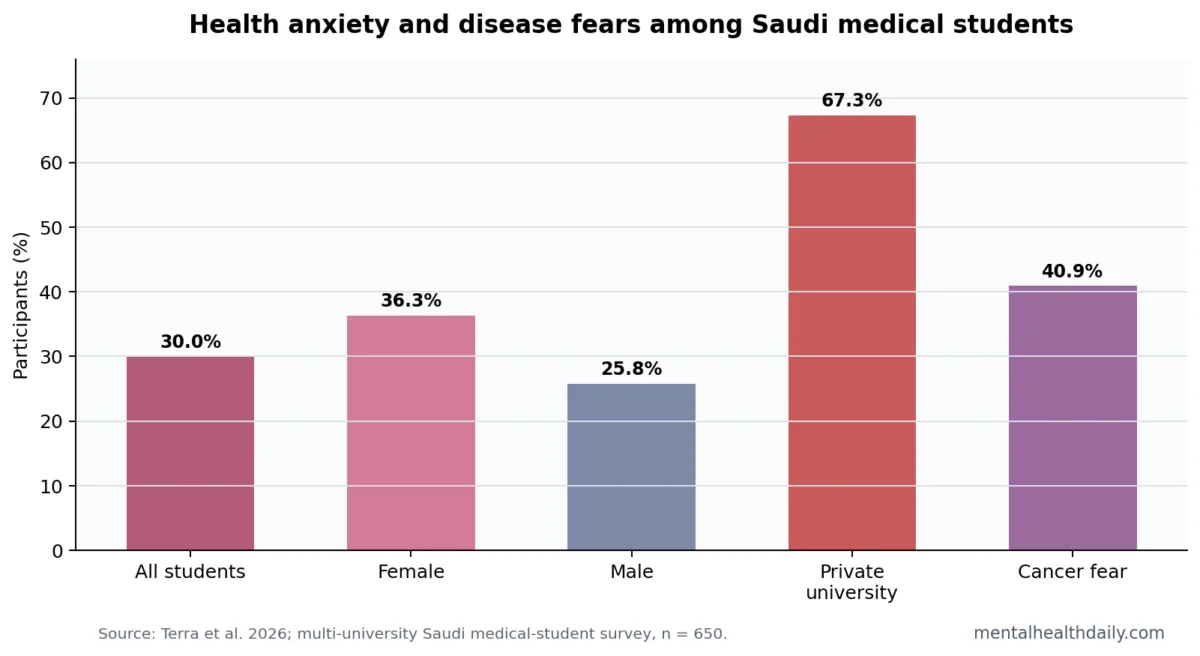
A comprehensive multi-university survey, conducted between November 2024 and April 2025 and reported in 2026, has uncovered a substantial prevalence of clinically significant health anxiety among Saudi medical students, with nearly one-third (30%) of participants meeting the threshold for this condition. The study, involving 650 students from eight Saudi universities, highlights health anxiety as a significant, yet often overlooked, mental health challenge within medical education. This finding is crucial for understanding the unique pressures faced by future healthcare professionals, emphasizing that while medical training inherently involves exposure to illness, persistent and impairing fear warrants structured support rather than dismissal. The research clarifies that this screening signal does not equate to a diagnosis of "hypochondria" but rather indicates a pervasive illness-focused fear that could severely impact student well-being and academic performance.
Understanding Health Anxiety in a Medical Context
Health anxiety is characterized by a persistent fear or preoccupation with having or developing a serious illness, often accompanied by heightened bodily vigilance, repeated checking behaviors, and reassurance seeking. In the context of medical students, this can manifest uniquely due to their continuous immersion in disease descriptions, clinical scenarios, and high-stakes examinations. While a certain degree of health literacy and concern is expected, the study’s findings suggest that for a significant minority, this concern crosses into a clinically significant realm. It can overlap with conditions such as illness anxiety disorder, somatic-symptom concern, and obsessive-compulsive tendencies related to health.
Medical students represent a particularly vulnerable population for this type of anxiety. Their curriculum constantly exposes them to a wide array of pathologies, from rare genetic disorders to prevalent chronic diseases. This exposure, combined with the inherent pressure to excel and the responsibility of future patient care, can create a fertile ground for health-related worries to escalate. While their advanced health literacy allows for recognition of symptoms and diagnostic uncertainty, it can also paradoxically fuel anxieties, leading to self-diagnosis or misinterpretation of benign bodily sensations. The 30% screening rate, therefore, signals not necessarily widespread pathology, but a common enough experience that demands a systemic and compassionate response from educational institutions.
The Scope and Methodology of the Terra et al. Study
The groundbreaking research, led by Terra et al., systematically surveyed 650 medical students enrolled across eight distinct Saudi universities, encompassing both five public and three private institutions. The data collection phase spanned six months, from November 2024 to April 2025, allowing for a comprehensive snapshot of student mental health during a significant portion of the academic year. This extensive sampling across diverse institutional settings lends considerable weight to the study’s findings, providing a more representative picture than single-institution surveys might.
To accurately assess health anxiety and related factors, the researchers employed a multi-faceted approach utilizing validated psychometric instruments. The primary tool for measuring health anxiety was the Short Health Anxiety Inventory (SHAI), a widely recognized questionnaire designed to quantify health-related worry, perceived likelihood of illness, and feared consequences. The SHAI is highly effective for screening and research purposes, offering a reliable indicator of health anxiety symptom severity, though it is not a substitute for a formal diagnostic interview by a mental health professional.
In addition to the SHAI, the survey incorporated a self-perception of illness question to capture students’ subjective experiences and the SF-12 quality-of-life instrument. The SF-12, a shorter version of the SF-36 Health Survey, measures perceived physical and mental health functioning, providing insights into how health anxiety might be impacting students’ overall well-being. By combining these instruments, the study was able to estimate the prevalence of health anxiety (195 out of 650 students, yielding the 30% figure) and explore its associations with other critical indicators of mental health and quality of life. The meticulous methodology underscores the robustness of the findings, offering a solid evidence base for policy and intervention development.
Key Predictors and Demographic Vulnerabilities
The study meticulously identified several factors significantly associated with higher adjusted odds of meeting the threshold for clinically significant health anxiety. These predictors offer crucial insights for targeted intervention strategies and institutional support.
Private University Enrollment: The most striking finding was the significantly higher adjusted odds ratio (AOR) for students enrolled in private universities, reported at 6.14 (95% CI 3.66 to 10.5, p < 0.001). This substantial figure indicates that private university students were more than six times more likely to experience health anxiety compared to their counterparts in public institutions, after accounting for other variables. While this cross-sectional design cannot establish causality, the finding serves as a strong institutional risk signal. Educational policy analysts suggest that potential contributing factors could include differences in socio-economic backgrounds, where financial pressures related to tuition fees might exacerbate stress; potentially more intense academic competition or different grading cultures; variations in the availability or accessibility of mental health support services; or even selection effects where students with pre-existing vulnerabilities might gravitate towards certain types of institutions. University administrations in private sectors are therefore urged to critically review their student support frameworks and academic environments in light of these findings.
Gender Disparities: Female students also exhibited a notably higher prevalence of health anxiety (36.3%) compared to male students (25.8%), with an AOR of 2.33 (95% CI 1.51 to 3.62). This gender disparity aligns with global trends observed in mental health conditions, where women often report higher rates of anxiety and depression. Cultural factors, societal expectations, and differing coping mechanisms may play a role in this observed difference. Mental health experts emphasize the importance of gender-sensitive mental health programs that acknowledge and address these distinct needs.
Rural Residence: Students residing in rural areas also showed increased odds of health anxiety. This predictor could be linked to several factors, including potentially limited access to healthcare facilities and mental health services in rural regions, lower awareness of mental health issues, or greater stigma associated with seeking psychological help. Such geographical disparities highlight an access problem that extends beyond individual symptoms, underscoring the need for telemedicine options and community-based mental health initiatives.
Psychiatric History: Unsurprisingly, both a personal psychiatric history and a family psychiatric history were identified as significant predictors. This underscores the established genetic and environmental predispositions to mental health conditions, emphasizing the need for early identification and proactive support for students with such backgrounds. For these individuals, lower-friction entry points to confidential care and preventive strategies are paramount to mitigate the risk of developing or exacerbating health anxiety during their demanding medical training.
Impact on Quality of Life: A Modest Yet Meaningful Link
The study revealed a statistically significant, albeit modest, negative correlation between health anxiety scores and quality of life (r = -0.25, p < 0.001). While a correlation coefficient of -0.25 might not appear overwhelming, its presence in a high-pressure student population like medical students holds considerable significance. Even a modest link can have profound implications for daily functioning, academic performance, and overall well-being, particularly when the exposure (medical training) is constant and the condition (health anxiety) is common.
This negative correlation suggests that as health anxiety increases, students’ perceived quality of life tends to decrease. This can manifest in various ways: diminished academic focus, disrupted sleep patterns, reduced engagement in social activities, and an overall sense of distress. For medical students, who are already navigating rigorous academic demands and high expectations, any additional burden on their quality of life can critically impair their ability to cope and thrive. The researchers utilized the SF-12 instrument for internal quality-of-life comparisons, acknowledging that the scores were not directly comparable to norm-based physical and mental component scores of the general population. This limitation prevents broad claims about the exact degree of impairment relative to the general public but firmly establishes a significant internal relationship within the student cohort. The finding reinforces the need for interventions that not only address health anxiety directly but also aim to bolster students’ overall resilience and quality of life.
Unpacking Disease Fears: The Shadow of Cancer
Beyond a general anxiety score, the study provided invaluable insight into the specific disease fears harbored by medical students. This "disease-fear network" analysis proved to be one of the most illuminating aspects of the research, moving beyond quantitative prevalence to qualitative understanding.
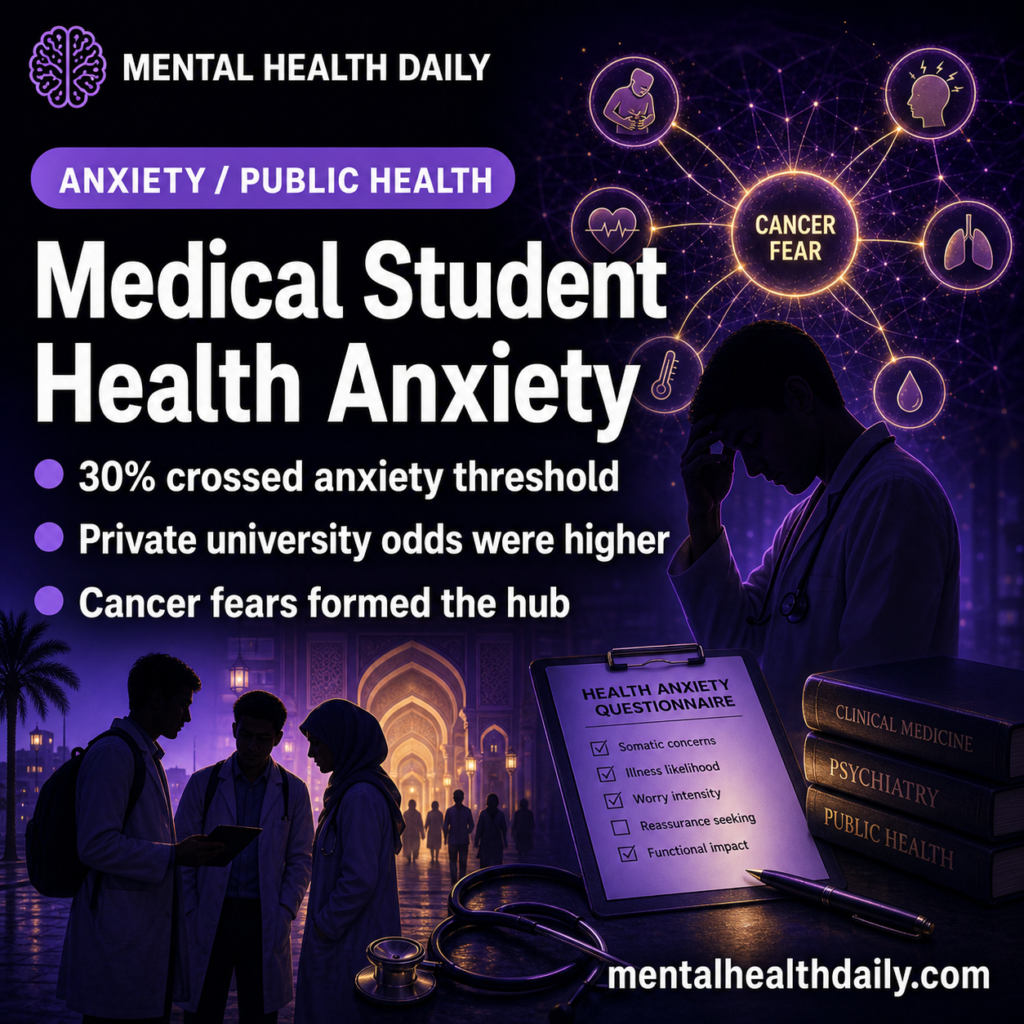
Cancer emerged as the most frequently endorsed primary fear, cited by a significant 40.9% of students, translating to 266 individuals. This overwhelming prominence of cancer fear was followed by cardiovascular fears (29.7%), diabetes fears (29.1%), ophthalmic fears (27.8%), and psychiatric fears (27.7%). The clustering of these specific fears offers a compelling narrative about the sources of anxiety within medical training.
The network analysis further solidified cancer’s central role, identifying it as the main "hub" with a high betweenness centrality score of 0.42. Betweenness centrality is a network measure that quantifies how often a particular node (in this case, cancer fear) lies on the shortest path between other nodes in the network. In simpler terms, cancer fear appears to act as a critical connector, linking multiple distinct illness-fear clusters. This means that fear of cancer might often be intertwined with, or serve as a gateway to, other health-related anxieties.
The pervasive fear of cancer among medical students is plausible and understandable. Cancer is a disease that is extensively covered in medical curricula, from pathology and diagnosis to treatment and prognosis. It is emotionally loaded, often associated with severe outcomes, and diagnostically broad, encompassing a wide range of manifestations and prognoses. Furthermore, cancer often presents with ambiguous early symptoms, which can feed into a cycle of heightened self-surveillance, catastrophic interpretation of minor bodily sensations, and compulsive reassurance-seeking behavior. The constant exposure to patient cases, lectures on oncology, and the grim realities of cancer outcomes can understandably amplify these fears, making it a natural focal point for illness-focused worry in this unique student population.
Regional Context and Global Comparisons
The 30% prevalence of clinically significant health anxiety among Saudi medical students, while substantial, must be understood within a broader regional and global context. The Terra paper notes that this estimate is higher than some other regional findings. For instance, a study conducted in the United Arab Emirates identified health anxiety in nearly 10% of medical students, a significantly lower figure. Another Saudi medical-student study, referenced in the 2026 paper’s background review, reported illness anxiety disorder in 17% of participants.
These variations underscore the critical importance of "denominator discipline" when interpreting such statistics. Differences in instruments used (e.g., SHAI vs. diagnostic criteria for illness anxiety disorder), specific thresholds applied, sampling methods, academic years surveyed, the particular countries involved, and even cultural reporting patterns can sharply alter prevalence estimates. Therefore, the 30% figure, while robust for this specific Saudi cohort, should not be generalized as a universal rate for all medical students worldwide.
Mental health researchers like Stein et al. have advocated for framing illness anxiety as part of a broader spectrum of health-related fear and somatic preoccupation, rather than a single, simple condition. This "spectrum model" resonates well with medical student data, acknowledging that a certain degree of worry is an expected, often transient, part of medical training. However, when this worry becomes persistent, distressing, and functionally impairing, it warrants targeted support. The high screening rate in the Saudi study indicates that a significant portion of students are experiencing anxiety that falls within this impairing end of the spectrum.
The 30% screening rate translates to 195 out of 650 students in this specific sample crossing the questionnaire threshold. It is vital to recognize that these 195 students likely represent a spectrum of severity, functional impairment, checking behaviors, and varying needs for specialty psychiatric care. For medical schools, this distinction is paramount. Effective screening programs should be designed to differentiate support needs based on the level of impairment and distress, rather than treating every elevated questionnaire score identically. This nuanced approach ensures that resources are allocated effectively and that students receive care commensurate with their individual needs.
Implications for Medical Education and Student Well-being
The findings of the Terra et al. study carry significant implications for medical education institutions in Saudi Arabia and beyond, urging a re-evaluation of current student support systems and academic cultures.
Ethical Screening and Confidential Support: The most crucial takeaway is the necessity for confidential and non-punitive screening programs. A student who endorses cancer fear or high SHAI scores should be routed toward confidential support channels, not labeled as weak, unstable, or unfit for a medical career. Such punitive labeling would be counterproductive, increasing stigma and deterring students from seeking the help they need. Screening is only beneficial if it leads to accessible, confidential care, psychoeducation, and pathways that actively reduce compulsive checking and avoidance behaviors.
Institutional Responsibility: The high adjusted odds ratio for private university enrollment, while not causal, mandates institutional review. University administrations must investigate whether factors such as tuition pressure, academic intensity, student selection processes, or the availability and visibility of support services contribute to this heightened vulnerability. Similarly, the identification of rural residence and psychiatric history as predictors offers clear "screening clues" that point toward the need for visible and easily accessible support pathways, ideally before students reach a crisis point. Students with limited informal access to care, high levels of stigma around mental health disclosure, or pre-existing anxiety vulnerabilities require lower-friction entry points to support services. This is fundamentally an access problem that institutions are uniquely positioned to address.
Faculty Training and Educational Environment: The study highlights the critical role of faculty. Instructors can foster a more supportive environment by acknowledging that symptom worry is a common experience during medical training, normalizing these feelings, while simultaneously directing students with persistent impairment toward confidential professional care. This approach is far more useful than dismissive jokes about "medical student syndrome" or invalidating student fears as overreactions. Faculty training should equip educators with the skills to recognize signs of distress, respond empathetically, and guide students to appropriate resources.
Concrete Support Mechanisms: Effective support systems must be concrete and actionable. These could include:
- Accessible Counseling Services: On-campus counselors specializing in student mental health, with flexible appointment scheduling.
- Peer Support Programs: Facilitated groups where students can share experiences and coping strategies in a safe, confidential environment.
- Mindfulness and Stress Management Workshops: Practical skills training to help students manage the inherent stressors of medical school.
- Curriculum Integration: Incorporating modules on mental health literacy, coping mechanisms, and self-care into the medical curriculum itself.
- Psychoeducation: Providing information on health anxiety, its symptoms, and effective management strategies, helping students distinguish normal worry from clinically significant anxiety.
- Mentorship Programs: Pairing students with senior mentors who can offer guidance and support on academic and personal challenges.
Crucially, a good screening program must avoid inadvertently feeding the very anxiety it aims to detect. Repeated, generic reassurance about every symptom can paradoxically reinforce checking behaviors. Instead, support should focus on teaching students how to tolerate diagnostic uncertainty, when and how to seek appropriate medical care responsibly, and how to disengage from converting every lecture topic into self-surveillance.
Looking Ahead: Recommendations and Future Directions
While this cross-sectional convenience survey provides invaluable screening burden estimates and association insights, it is important to reiterate its limitations: it cannot establish causality, definitively diagnose illness anxiety disorder, or prove that specific university features directly caused the anxiety signal. However, its findings lay a crucial groundwork for future research and intervention.
Longitudinal studies are needed to track the trajectory of health anxiety in medical students over time, identify specific triggers, and evaluate the effectiveness of interventions. Research into the specific cultural nuances of health anxiety in Saudi Arabia and the broader Middle East could further refine support strategies. Furthermore, intervention trials testing various support models – from tailored counseling to curriculum modifications – are essential to build an evidence base for best practices.
The 2026 Terra et al. study serves as a powerful call to action for medical education stakeholders in Saudi Arabia. By acknowledging the significant burden of health anxiety, understanding its predictors, and implementing sensitive, confidential, and concrete support systems, universities can better equip their future physicians not only with medical knowledge but also with the resilience and mental well-being necessary to thrive in their demanding profession. The ultimate goal is to foster an environment where aspiring doctors can learn, grow, and serve without their own health fears becoming an insurmountable barrier.

