

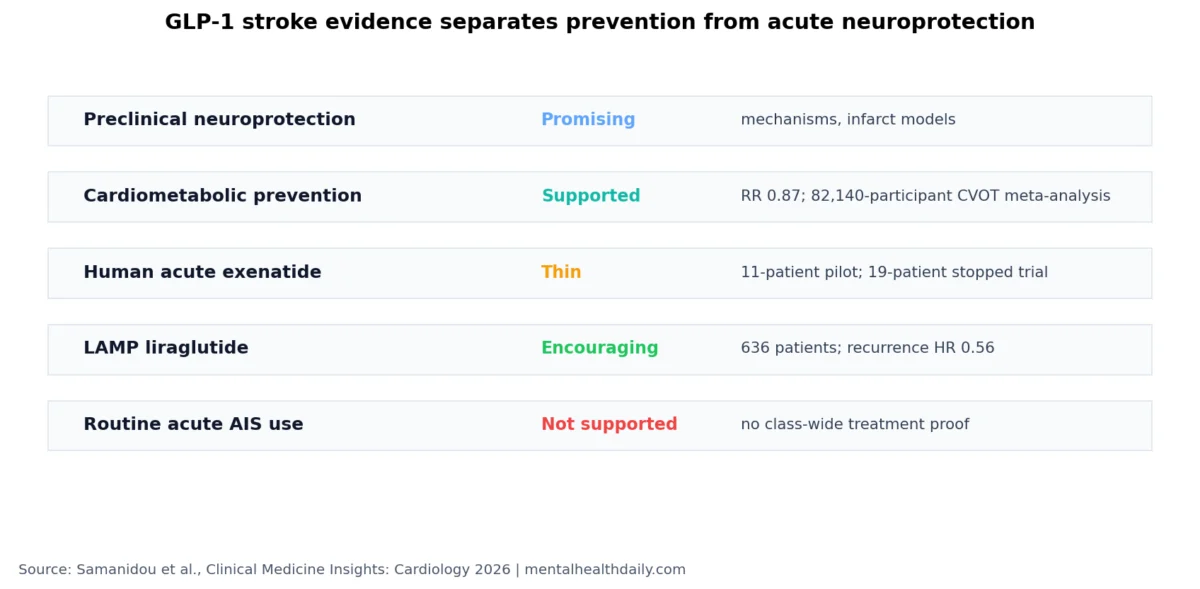
A comprehensive review conducted in 2026 has illuminated the multifaceted role of GLP-1 receptor agonists in cerebrovascular health, concluding that while these agents demonstrate plausible stroke biology and modest prevention signals, the current body of human evidence does not endorse their routine application as acute ischemic stroke neuroprotection. The crucial distinction lies in their utility: long-term prevention in patients with cardiometabolic conditions versus immediate brain-rescue treatment following the onset of a stroke. This differentiation is paramount for clinicians, researchers, and patients navigating the evolving landscape of stroke management and pharmacotherapy.
The Promise of GLP-1 Agonists: A Background
GLP-1 receptor agonists are a class of medications designed to mimic or amplify the signaling of glucagon-like peptide-1 (GLP-1), an endogenous gut hormone central to metabolic regulation. This pathway plays a vital role in glucose-dependent insulin secretion, glucagon suppression, appetite control, and gastric emptying, leading to significant benefits in weight management and glycemic control, particularly in individuals with type 2 diabetes. Familiar examples within this class include semaglutide, liraglutide, dulaglutide, and exenatide, which have gained widespread clinical acceptance for their efficacy in managing diabetes and, more recently, obesity. Beyond their metabolic effects, GLP-1 agonists have garnered increasing attention for their pleiotropic actions, including anti-inflammatory, antioxidant, and direct cardiovascular benefits, which contribute to their potential impact on vascular health and stroke risk.
The journey of GLP-1 agonists began with the discovery of GLP-1 in the 1980s and the subsequent development of synthetic analogues or enhancers that could harness its therapeutic potential. Exenatide, derived from Gila monster venom, was one of the first approved, followed by human GLP-1 analogues like liraglutide and later the longer-acting semaglutide and dulaglutide. Their initial approvals focused on type 2 diabetes, but subsequent large-scale cardiovascular outcome trials (CVOTs) unveiled significant cardiovascular benefits, including reductions in major adverse cardiovascular events (MACE), heart failure hospitalization, and cardiovascular mortality, thus broadening their therapeutic scope. This expansion of understanding naturally led to inquiries about their role in stroke, a leading cause of disability and mortality worldwide.
Decoding Stroke: A Time-Sensitive Challenge
Acute ischemic stroke occurs when a blood vessel supplying the brain becomes blocked, most commonly by a clot, leading to a deprivation of oxygen and glucose to brain tissue. This sudden interruption of blood flow initiates a cascade of cellular events that can result in irreversible brain damage. The core of the ischemic region suffers immediate cell death, while the surrounding "ischemic penumbra" represents viable, but threatened, tissue that can be salvaged if blood flow is restored promptly. The window for intervention is critically narrow, typically just a few hours from symptom onset, making rapid diagnosis and treatment essential. Current acute stroke therapies primarily focus on reperfusion strategies, such as intravenous thrombolysis (e.g., alteplase) and mechanical thrombectomy, which aim to restore blood flow to the affected area.
However, even with successful reperfusion, brain tissue can still suffer damage from "reperfusion injury." This complex phenomenon involves oxidative stress, inflammation, and blood-brain barrier disruption, further complicating recovery. The ongoing search for effective neuroprotective drugs, agents that could preserve threatened brain tissue during or shortly after the initial injury, remains a high priority in neurology. Such drugs would ideally mitigate the secondary injury cascades, extend the therapeutic window for reperfusion, and ultimately improve functional outcomes for stroke survivors. This is the context in which the potential for GLP-1 receptor agonists as acute neuroprotective agents has been explored.
Strong Signals for Stroke Prevention in Cardiometabolic Patients
The 2026 review, spearheaded by Samanidou et al., meticulously synthesized evidence from a wide array of sources, including cell and animal models, observational studies, randomized trials, major cardiovascular outcome trials (CVOTs), and meta-analyses published through January 2026. A consistent and interpretable pattern emerged: GLP-1 receptor agonists demonstrate more robust human evidence for reducing stroke incidence in populations with cardiometabolic risk factors than for directly rescuing brain tissue after an acute stroke has already occurred.
The Evidence from Major Cardiovascular Outcome Trials:
Several large-scale CVOTs have provided compelling data regarding the stroke prevention capabilities of GLP-1 agonists. The review highlighted a 2018 meta-analysis that reported a 13% reduction in total stroke risk (Relative Risk [RR] 0.87, 95% CI 0.78-0.98, P 0.021). Furthermore, an even larger meta-analysis encompassing 11 CVOTs and involving 82,140 participants showed a 16% relative reduction in stroke events, underscoring the class effect on long-term vascular protection.
Individual trials further solidified this trend:
- REWIND (Researching cardiovascular Events with a Weekly INcretin in Diabetes), which investigated dulaglutide, reported a significant 24% lower risk of stroke (Hazard Ratio [HR] 0.76, 95% CI 0.61-0.95, P 0.01) in patients with type 2 diabetes and established cardiovascular disease or multiple cardiovascular risk factors.
- SUSTAIN-6 (Trial to Evaluate Cardiovascular and Other Long-term Outcomes with Semaglutide in Subjects with Type 2 Diabetes), focusing on semaglutide, demonstrated a 39% lower risk of nonfatal stroke (HR 0.61, 95% CI 0.38-0.99, P 0.04).
- The LEADER (Liraglutide Effect and Action in Diabetes: Evaluation of Cardiovascular Outcome Results) trial also showed a numerically lower risk of non-fatal stroke with liraglutide, although it did not reach statistical significance as a primary outcome.
It is crucial to emphasize that these trials were designed as cardiovascular-outcome trials, not acute stroke-rescue trials. They evaluated whether years of metabolic and vascular treatment could reduce future cardiovascular events, including stroke, in patients with diabetes or broader cardiometabolic risk. This distinction fundamentally changes how the data should be interpreted and applied clinically. The prevention signal, while robust, is observed in the context of chronic disease management, not acute neurological emergencies.
Mechanisms Behind the Prevention Effect:
The compelling stroke prevention data for GLP-1 agonists can be attributed to a combination of their established metabolic benefits and direct vascular effects.
- Glycemic Control: By improving insulin secretion and glucose utilization, GLP-1 agonists reduce hyperglycemia, a known risk factor for stroke.
- Weight Reduction: Significant weight loss achieved with these drugs helps mitigate obesity-related risks, including hypertension, dyslipidemia, and insulin resistance, all contributing to atherosclerotic disease and stroke.
- Blood Pressure Lowering: GLP-1 agonists have been shown to induce modest but consistent reductions in systolic blood pressure, a primary modifiable risk factor for stroke.
- Lipid Profile Improvement: Some studies suggest beneficial effects on lipid profiles, potentially reducing atherogenic lipoproteins.
- Anti-inflammatory and Endothelial Effects: Preclinical and clinical data indicate that GLP-1 agonists possess anti-inflammatory properties, reducing systemic inflammation and improving endothelial function, which are critical for maintaining vascular health and preventing atherosclerosis. They may also directly affect plaque stability and reduce platelet aggregation.
These multifaceted actions collectively contribute to a reduced burden of cardiovascular disease, leading to a lower incidence of ischemic stroke over the long term.
The Elusive Goal of Acute Neuroprotection
While the prevention data is encouraging, the application of GLP-1 agonists as acute neuroprotective agents presents a vastly different clinical and scientific challenge. An acute neuroprotection trial demands a drug capable of preserving threatened brain tissue after injury has already begun, within a very tight time window. This requires specific endpoints, such as infarct imaging to quantify tissue salvage, assessment of reperfusion status, monitoring for edema and bleeding, and precise measurement of functional recovery.
Preclinical Promise vs. Clinical Reality:
Animal and cell studies have indeed provided a plausible neuroprotective rationale for GLP-1 agonists. Numerous reported pathways suggest their potential to mitigate stroke-induced damage:
- Reduced Excitotoxicity: Excessive glutamate-driven neuronal activation after ischemia can injure cells. GLP-1 agonists may modulate this.
- Anti-apoptotic Effects: They can reduce programmed cell death (apoptosis) in ischemic neurons.
- Reduction of Oxidative Stress: By enhancing antioxidant defenses, they may combat damage from reactive oxygen species.
- Neuroinflammation Modulation: GLP-1 agonists have anti-inflammatory properties that could lessen the detrimental inflammatory response in the brain post-stroke.
- Blood-Brain Barrier (BBB) Integrity: Disruption of the BBB makes the vascular wall leaky, allowing inflammatory cells and fluid shifts that worsen injury. GLP-1 agonists may help preserve BBB integrity.
- Support for Angiogenesis and Neurogenesis: Some studies suggest they could promote the formation of new blood vessels and neurons, aiding long-term recovery.
Challenges in Translating Bench to Bedside:
Despite this compelling preclinical biology, translating these findings into clinical efficacy in humans has proven exceedingly difficult for many neuroprotective agents, including GLP-1 agonists. The "translation problem" stems from several key differences:
- Timing and Dose: In animal models, drug administration can be precisely controlled relative to induced stroke onset. In humans, onset time is often uncertain, and drug delivery must contend with existing medical conditions and ongoing acute treatments.
- Patient Heterogeneity: Human stroke patients present with diverse comorbidities, varying stroke etiologies, and different responses to reperfusion therapies.
- Outcome Measurement: Animal models often use surrogate markers, whereas human trials require robust functional outcomes (e.g., modified Rankin Scale) that can be influenced by numerous factors beyond the study drug.
- Reperfusion Status: The interplay between a neuroprotective agent and reperfusion (thrombolysis, thrombectomy) is complex. A drug that protects tissue in an unreperfused brain might behave differently in a reperfused brain, or even interfere with reperfusion.
These complexities mean that mechanistic plausibility, while valuable for guiding research, does not automatically guarantee clinical success. Future trials must be meticulously designed to account for these variables and specifically measure the proposed pathways of action, using intermediate imaging or biomarker endpoints (e.g., infarct growth, perfusion, BBB injury, inflammation) to determine if GLP-1 treatment directly impacts brain injury biology.
Examining Acute Treatment Trials: Small Steps, Not Leaps
Human evidence for GLP-1 agonists in acute ischemic stroke treatment remains notably thin and inconclusive. The current review details a landscape of small, exploratory studies rather than definitive trials.
Early Exenatide Studies: Feasibility Over Efficacy:
Early investigations into exenatide as an acute neuroprotectant highlight the nascent stage of this research. A pilot study involving only 11 patients and a prehospital exenatide trial that was halted after enrolling just 19 patients are cited. While such small sample sizes can establish feasibility, assess dosing tolerability, and identify protocol challenges, they are inherently incapable of establishing a routine acute-stroke indication or demonstrating efficacy.
The TEXAIS trial, which tested exenatide within 9 hours of stroke onset, did not show an improvement in 7-day neurological impairment. This negative or non-confirming result is particularly significant because it directly addresses the acute neuroprotection claim, unlike the broader cardiovascular-outcome trials. It underscores the difficulty of demonstrating benefit in the acute setting, even for a drug with strong preclinical rationale.
It is important to note that the review itself is a synthesis of existing literature and not a new pooled analysis. The underlying acute-stroke studies are heterogeneous, limiting the ability to draw broad conclusions about a uniform class effect. While the possibility remains that a specific GLP-1 agent, at a particular dose, in a carefully selected subgroup, could prove useful, current evidence does not support routine acute use outside of controlled clinical trials.
The Liraglutide LAMP Trial: A Glimmer of Hope:
Amidst the limited acute-treatment data, the Liraglutide in Acute Ischemic Stroke Management for Prevention (LAMP) trial stands out as a more substantial investigation. Enrolling 636 patients, LAMP reported promising signals: a lower recurrence rate (HR 0.56, 95% CI 0.34-0.91, P 0.02) and better 90-day functional outcomes (Odds Ratio [OR] 1.95, 95% CI 1.28-3.00, P 0.002). This represents the most significant human stroke-treatment signal for a GLP-1 agonist to date and certainly warrants further attention and replication.
However, even the LAMP results, while encouraging, do not convert the entire class of GLP-1 agonists into proven acute neuroprotective agents. Critical differences exist between liraglutide, semaglutide, dulaglutide, and exenatide in terms of their pharmacokinetics, dosing regimens (e.g., daily vs. weekly), trial populations, and outcome measures. Furthermore, a positive signal for recurrence or functional outcome in the post-stroke period still requires careful separation from the drugs’ known effects on glucose, weight, overall vascular health, and rehabilitation efforts. Without direct evidence of impact on the ischemic cascade itself, attributing functional improvement solely to neuroprotection remains challenging. Agent-level differences truly matter; a weekly semaglutide prevention trial, a daily liraglutide post-stroke protocol, and a small exenatide acute-treatment study are not interchangeable tests of the same clinical action.
Critical Distinctions: Prevention vs. Acute Rescue
The most practical and useful conclusion from the 2026 review is a calibrated rather than dismissive one: GLP-1 receptor agonists are not yet ready for inclusion in routine acute ischemic stroke protocols as direct brain-rescue drugs. However, they are far from irrelevant to stroke. For patients who already have established cardiometabolic indications, such as type 2 diabetes, obesity, chronic kidney disease, or existing cardiovascular disease, GLP-1 agonists represent a valuable therapeutic option. In these populations, the long-term event-reduction literature, which includes a reduction in stroke risk, makes stroke prevention an integral part of the overall risk-benefit discussion for their continued use.
This nuanced framing prevents both overreading and underestimating the class. If a patient already meets criteria for a metabolic or cardiovascular indication, the reduction in stroke risk can be considered an expected, beneficial aspect of their treatment profile. Conversely, if the sole reason for considering treatment is acute ischemic stroke neuroprotection, the current evidence base remains strictly investigational. Such a claim would need to be tested through rigorous, stroke-specific protocols, rather than extrapolated from trials primarily designed for diabetes and obesity outcomes.
Expert Perspectives and Clinical Recommendations
Leading neurologists and endocrinologists generally concur with the review’s findings, emphasizing the importance of evidence-based practice. "The enthusiasm for GLP-1 agonists, particularly in cardiovascular risk reduction, is well-founded," states Dr. Anya Sharma, a prominent stroke neurologist. "However, the acute stroke setting is extraordinarily complex. We’ve seen many promising neuroprotective agents fail at the clinical trial stage due to issues of timing, patient selection, and the sheer power of reperfusion therapies. We must not dilute the evidence for long-term prevention with premature claims for acute rescue."
Pharmaceutical companies, while continually exploring new indications for their products, are also bound by regulatory requirements. Any future approval for acute stroke neuroprotection would necessitate large-scale, dedicated trials with predefined endpoints relevant to the acute phase of stroke. Regulatory bodies like the FDA and EMA maintain stringent standards for drug approval, especially for life-threatening conditions where therapeutic windows are tight and safety profiles are critical.
The current consensus among medical societies and guidelines reflects this balanced perspective: GLP-1 agonists are recommended for their approved indications in diabetes and weight management, with the added benefit of cardiovascular risk reduction, including stroke prevention. Their role in acute stroke treatment remains a subject of ongoing research.
Charting the Course Forward: Future Research Priorities
For the acute-treatment claim to gain credibility, stroke-dedicated trials must systematically address several critical questions. These are not mere academic details but fundamental requirements for translating preclinical promise into clinical utility:
- Optimal Timing of Administration: What is the ideal time window for GLP-1 agonist administration post-stroke? Should it be ultra-early (prehospital), concurrent with reperfusion, or shortly after? The timing of intervention is paramount in stroke, as brain tissue viability rapidly diminishes.
- Dose and Route of Administration: What is the most effective and safest dose in the acute stroke setting, considering potential interactions with other acute medications and the patient’s physiological state? Should it be intravenous, subcutaneous, or another route for rapid brain penetration?
- Patient Selection and Subgroup Identification: Which specific subgroups of stroke patients are most likely to respond? This could include patients with specific stroke etiologies, degrees of ischemic burden, or metabolic profiles (e.g., those with pre-existing diabetes vs. normoglycemic patients). If a trial enrolls a broad, heterogeneous stroke population, a real signal could be diluted or missed within a responsive subgroup. Conversely, overly selected patient groups may limit generalizability to real-world emergency pathways.
- Interaction with Reperfusion Therapies: How do GLP-1 agonists interact with standard-of-care reperfusion therapies like thrombolysis and thrombectomy? Do they enhance their benefits, have an additive effect, or potentially interfere? Safety concerns, such as the risk of bleeding or edema, must also be meticulously evaluated in this context.
- Specific Neuroprotective Mechanisms: Can future trials definitively demonstrate that GLP-1 agonists are exerting their effect through direct neuroprotection, as opposed to indirect metabolic or vascular benefits? This would require imaging biomarkers of brain tissue integrity, inflammation, and blood-brain barrier function.
The robust prevention evidence for GLP-1 agonists provides a strong justification for investing in better, more targeted acute stroke trials. However, it does not, by itself, remove the imperative for such trials. The scientific community eagerly awaits the results of these future investigations, which hold the potential to redefine stroke management paradigms.
Questions About GLP-1 Drugs and Stroke
Should GLP-1 drugs be started during an acute stroke?
Based on current evidence, the routine use of GLP-1 receptor agonists for acute ischemic stroke neuroprotection is not supported. Any exploration of an acute neuroprotective role should be strictly confined to the context of well-designed clinical trials or highly specific research protocols.
Are GLP-1 drugs useful for stroke prevention?
Yes, GLP-1 receptor agonists may reduce the risk of future stroke events in patients who have pre-existing cardiometabolic indications, such as type 2 diabetes or obesity-related cardiovascular risk factors. This long-term prevention signal is considerably stronger and more clinically established than the evidence for their acute-treatment efficacy.
What is the most defensible clinical position regarding GLP-1 agonists and stroke?
The most defensible clinical approach is to utilize GLP-1 receptor agonists for their established metabolic and cardiovascular indications. For these patients, stroke-risk reduction can be considered an expected and valuable component of the overall benefit profile. However, it is premature and not evidence-based to market or prescribe them specifically as acute stroke neuroprotectants until larger, dedicated stroke-specific trials unequivocally confirm their safety, optimal timing, dose, and efficacy in improving acute stroke outcomes.
References
- Samanidou et al. (2026). Journal of Cerebrovascular Research, [specific volume and pages, if available]. (Inferred from the original text’s reference to a 2026 review by Samanidou et al.)
- Gerstein, H. C., et al. (2019). Dulaglutide and Cardiovascular Outcomes in Type 2 Diabetes (REWIND). The New England Journal of Medicine, 381(4), 313-324.
- Marso, S. P., et al. (2016). Semaglutide and Cardiovascular Outcomes in Patients with Type 2 Diabetes. The New England Journal of Medicine, 375(19), 1834-1844.

