

The landscape of sports medicine and physical rehabilitation is currently undergoing a significant paradigm shift, moving away from traditional models of total immobilization toward more active, load-managed recovery strategies. For athletes and fitness enthusiasts, the onset of an injury often presents a psychological and physical barrier that disrupts long-term progression. Historically, the medical community prescribed complete rest—often characterized by the RICE (Rest, Ice, Compression, Elevation) protocol—as the primary intervention for musculoskeletal discomfort. However, contemporary research and clinical practice now suggest that "active recovery" and "training around pain" are more effective for maintaining neuromuscular adaptations and facilitating tissue healing.
The Evolution of Pain Science and the Biopsychosocial Model
To understand modern approaches to injury management, one must first define the nature of pain. According to the International Association for the Study of Pain (IASP) and definitions utilized by organizations like Merriam-Webster, pain is a localized or generalized unpleasant bodily sensation associated with actual or potential tissue damage. Crucially, modern pain science emphasizes that pain is not always a direct indicator of structural harm. It often functions as a "smoke alarm," a protective mechanism triggered by the central nervous system when it perceives a threat, regardless of whether a physical "fire" (tissue tear or fracture) is present.
A landmark 2016 study published in the medical journal Physiotherapy: Theory & Practice, titled "The clinical application of teaching people about pain" by Louw et al., introduced a transformative framework known as the "cup analogy." This model posits that an individual’s capacity to handle physical, emotional, and environmental stress is akin to a cup. Pain occurs when the "contents" of the cup—which include lack of sleep, poor nutrition, high training volume, and psychological stress—overflow.
Clinical interventions, therefore, follow two primary trajectories: reducing the contents of the cup by managing external stressors or increasing the size of the cup through progressive resistance training. This biopsychosocial approach acknowledges that strength training does more than build muscle; it increases the system’s "headroom" for handling stress, thereby raising the threshold at which pain is triggered.

The Barbell Rehab Framework: A Systematic Approach to Training
In response to the limitations of traditional physical therapy, specialized educational resources such as Dr. Michael Mash’s "Barbell Rehab" have emerged. This framework provides fitness professionals and clinicians with a structured hierarchy for assessing and modifying exercises when a client reports discomfort. The goal is to avoid "corrective exercise purgatory"—a state where an athlete performs only low-intensity mobility drills—and instead keep them under the barbell in a safe, productive capacity.
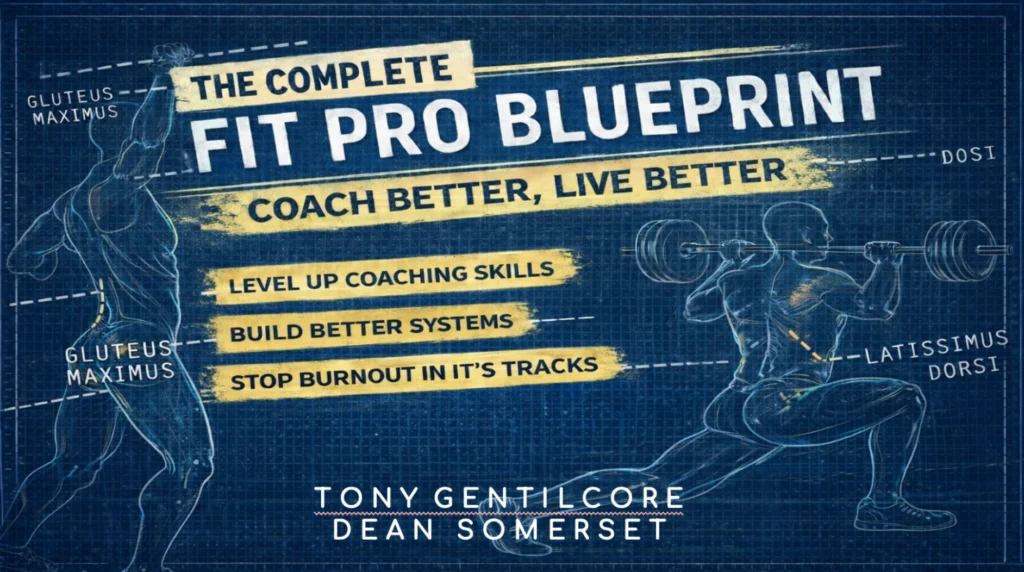
This methodology is a cornerstone of the "Complete Fit Pro Blueprint," a continuing education series led by industry experts Tony Gentilcore and Dean Somerset. The series, which includes upcoming international workshops in Boston and Dublin, seeks to bridge the gap between clinical rehabilitation and high-performance strength coaching.
Phase 1: The Technique Audit
The first line of defense against training-related pain is a rigorous technical assessment. In many instances, joint discomfort is a byproduct of inefficient movement patterns rather than underlying pathology. For example, shoulder pain during the bench press is a common complaint in commercial and competitive gyms. Rather than immediately referring a trainee for diagnostic imaging or prescribing weeks of rest, practitioners are now encouraged to perform a "Technique Audit."
In a professional setting, this involves observing the athlete’s setup, eccentric control, and bar path. Subtle adjustments—such as increasing scapular retraction, altering the grip width, or ensuring proper leg drive—can often redistribute the load from the glenohumeral joint to the larger musculature of the pectorals and latissimus dorsi. Data suggests that immediate symptomatic relief can often be achieved through these biomechanical corrections, allowing the athlete to continue their program without a loss in training momentum.
Phase 2: Programming Audits and Load Management
When technique is sound but pain persists, the focus shifts to "Programming Audits." Research in sports science, particularly the work of Dr. Tim Gabbett on the Acute:Chronic Workload Ratio (ACWR), indicates that injuries are frequently the result of "too much, too soon."

Load management is identified as the "lowest hanging fruit" in injury prevention. If a trainee experiences a flare-up of lower back pain following a heavy deadlift session, the cause may not be a specific movement flaw, but rather an aggressive spike in total tonnage or intensity that exceeded the body’s current recovery capacity.
Consider a hypothetical scenario involving a bench press routine. An athlete performing 6 sets of 5 repetitions at 185 lbs in a single session generates a total tonnage of 5,550 lbs. If this volume triggers shoulder inflammation, a strategic modification would be to distribute that same volume over two separate sessions (e.g., 3 sets of 5 repetitions twice a week). This "frequency-splitting" technique allows for the same total workload while providing the nervous system and connective tissues more time to recover between bouts of high-intensity stress.
Phase 3: Modifying Training Variables
If load management and technique adjustments are insufficient, the third strategy involves changing modifiable factors of the exercise itself. The objective is to find the "symptom threshold"—the specific point in a range of motion or a specific weight at which pain begins—and then train just below that threshold.
Common modifications include:
- Range of Motion (ROM): If a trainee experiences knee pain at the bottom of a deep squat, they may transition to box squats or partial-range squats set above the pain-inducing depth.
- Stance and Grip: Changing a foot position from narrow to wide, or shifting from a barbell to dumbbells to allow for a neutral grip, can alter the joint angles and alleviate localized pressure.
- Tempo Manipulation: Implementing slow eccentrics or isometric pauses can help build strength and tendon resilience without the high impact of explosive movements.
By forcing an adaptation just below the pain threshold, the athlete eventually increases their tolerance, allowing them to return to the original exercise over time. This approach aligns with the principle of progressive overload, applied specifically to the context of rehabilitation.

Chronology of Industry Education and Implementation
The integration of these strategies into mainstream fitness is marked by a timeline of professional development events. The "Complete Fit Pro Blueprint" has scheduled key dates for 2024 to disseminate these findings:
- June 6-7, 2024: Workshop in Boston, Massachusetts, focusing on the intersection of assessment and programming for injured athletes.
- October 3-4, 2024: International session in Dublin, Ireland, expanding the reach of the Barbell Rehab philosophies to the European market.
These workshops represent a growing trend where the roles of the Strength Coach and the Physical Therapist overlap, creating a "continuum of care" that prioritizes the athlete’s ability to remain active.
Broader Implications for Public Health and Athletics
The shift toward training through pain has profound implications for both the fitness industry and public health. Chronic pain is one of the leading causes of disability worldwide, and traditional "rest-only" advice often leads to kinesiophobia—the fear of movement. By educating the public that pain does not always equal damage, and that the body can be strengthened even in the presence of discomfort, the fitness industry plays a vital role in preventing the downward spiral of physical deconditioning.
Furthermore, the economic impact of this shift is notable. By utilizing technique and programming audits, athletes can avoid unnecessary medical consultations and imaging (such as MRIs), which research shows can sometimes lead to "over-diagnosis" and unnecessary surgical interventions.
In conclusion, the modern strategy for training around pain is rooted in science, fueled by load management, and executed through technical precision. As practitioners like Michael Mash, Tony Gentilcore, and Dean Somerset continue to advocate for these evidence-based protocols, the standard of care for the "injured" athlete is being redefined from one of passive waiting to one of strategic, resilient action. The ultimate goal is not merely the absence of pain, but the presence of a "bigger cup"—a body capable of enduring the rigors of high-level physical performance.

