

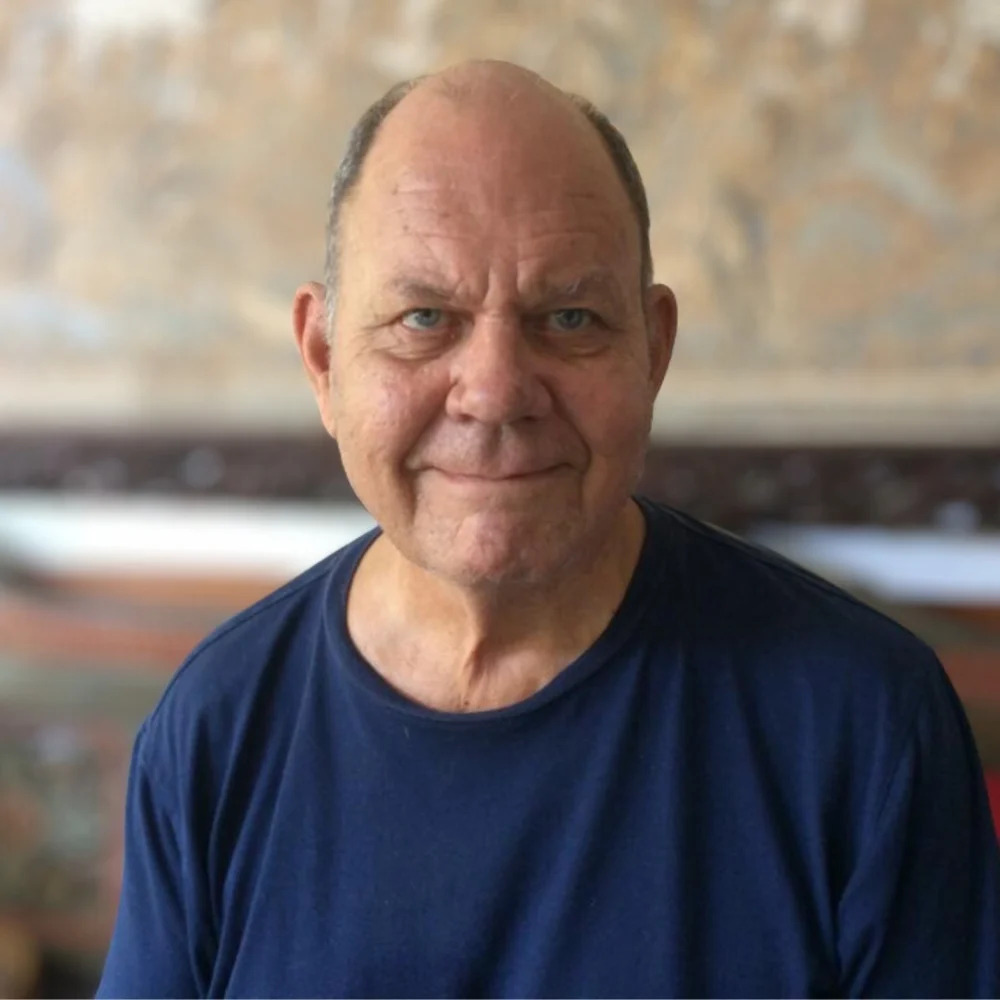
David Chadwick, a multifaceted figure renowned as a Soto Zen priest, writer, musician, poet, podcaster, historian, and world traveler, passed away on February 23, 2026. He was 81 years old. Chadwick was widely recognized for his definitive biography of the Soto Zen master Shunryu Suzuki Roshi and for his extensive documentation of the San Francisco Zen Center (SFZC) and its associated institutions through cuke.com and the Cuke Archives. His passing occurred at a hospital in Sanur, Bali, where he resided with his wife, Katrinka McKay, just two weeks after his 81st birthday.
Chadwick had been undergoing intensive treatment for Stage IV gastric nodal cancer, a tenacious and advanced form of the disease that had metastenized to nearby lymph nodes. Peter Ford, managing director of the Cuke Archives, confirmed the news via a post on the SFZC’s Instagram page, noting that while his death was anticipated, it transpired more rapidly than hoped. Ford emphasized Chadwick’s unwavering dedication to the archives, even in his final days. "Although his passing was not totally unexpected, it happened more quickly than we hoped," Ford stated. "Chadwick was always working on various aspects of the archives, and shortly before his death, when he was too weak to continue his chemotherapy, he sent me a number of corrections he wanted to make sure were included in the next volume of Tassajara Stories." This planned series, spearheaded by Chadwick, aimed to meticulously preserve the legacy of Suzuki Roshi and the individuals whose lives intersected with his. The inaugural volume, Tassajara Stories: A Sort of Memoir/Oral History of the First Zen Buddhist Monastery in the West—The First Year, 1967, was published by Monkfish in 2025. The second installment, covering the years 1968 to 1971, is slated for release in September 2026, with Chadwick actively engaged in developing a third volume prior to his passing.
A Legacy of Literary Acclaim and Community Impact
The impact of Chadwick’s literary contributions has resonated deeply within the Zen community. Former Governor of California, Jerry Brown, a prominent figure who had visited Tassajara and the SFZC city center on multiple occasions, lauded Tassajara Stories as "engrossing" and "alive." Actor-director Peter Coyote, a Zen priest and friend of Chadwick’s since the 1970s when he resided at SFZC, commented on Chadwick’s ability to capture the essence of the early Zen students surrounding Suzuki Roshi, noting that he "capture[d] the wacky spirit, the dedication, and the courage required to leap into the unknown that characterized the earliest Zen students surrounding Suzuki Roshi."
Beyond his scholarly pursuits, Chadwick was widely described as a vibrant, larger-than-life personality. Nikko Odiseos, president of Shambhala Publications, which published a new edition of Chadwick’s memoir Thank You and OK!: An American Zen Failure in Japan, as well as two compilations of Suzuki’s teachings edited by Chadwick (Zen is Right Here and Zen is Right Now), recalled Chadwick’s "boundless curiosity." In a tribute on the Shambhala website, Odiseos characterized Chadwick as "a storyteller to his bones. It was a constant stream, always full of delight."
Chadwick’s memoir, Thank You and OK!, was even cited in a PhD dissertation, as noted by David Guy in an article on American Zen. However, it is widely considered that his most impactful work remains Crooked Cucumber: The Life and Zen Teaching of Shunryu Suzuki, published in 1999. This biography is celebrated as the definitive account of Suzuki Roshi, a pivotal figure in introducing Zen Buddhism to America and, for many, its most influential proponent. The title itself, "Crooked Cucumber," was a nickname bestowed upon Suzuki Roshi by his teachers during his novice years, alluding to his "forgetful and unpredictable nature," a characteristic often associated with the mischievous water spirit kappa in Japanese folklore. Chadwick’s own literary output was diverse, including an autobiographical novel, To Find the Girl from Perth, described by film producer Gaetano Kazuo Maida as "delightfully mischievous." He also penned the unconventional The, The Book, an 80-page work consisting solely of the word "the" repeated.
A Multifaceted Artist and Keeper of the Flame
Chadwick’s creative spirit extended far beyond the written word. He hosted the Cuke Audio Podcast, where he engaged in insightful interviews with prominent Zen Buddhists, and meticulously curated several websites dedicated to Zen history and practice. His extensive work as a songwriter, musician, and poet is showcased on defusermusic.com under the self-deprecating moniker "DC the mediocre, the bad, and the awful." This platform features recordings of his rock bands, Defuser and Baliyuga, and albums with evocative titles such as Drake’s Nightmare, Moonfood, and Boat of Dreams. The site also lists over 1,250 songs, many accompanied by lyrics and rough recordings of Chadwick singing and playing guitar. A poignant example of his artistic expression is the song "I Hate Zen," written in 1971, five years into his Zen practice, which includes the lines: "I hate Zen / even though it is my friend. / Just can’t win. / It follows me until the end."
Despite his self-proclaimed status as a "failed Zen student," Chadwick’s connection to Soto Zen and his commitment to preserving Suzuki Roshi’s legacy remained steadfast throughout his life. A remembrance published in SFZC’s Sangha News Journal highlighted his decades-long dedication to the websites he founded and managed, noting, "He worked for decades with volunteers to collect, edit, digitize, and freely share these materials, ensuring that the voice and presence of his teacher would remain accessible worldwide."
Early Life and the Seeds of Inquiry
David Reich Chadwick was born in Fort Worth, Texas, in 1945. His intellectual and spiritual trajectory was influenced by his father, a former reader in the Christian Science church who, disillusioned by its perceived dualism, turned to the New Thought Movement and Transcendentalist philosophies, both of which contained Buddhist undertones. Though his father passed away when David was 11, his belief in the power of the mind, stating, "In our home, God was not an outside power, it was mind," left a lasting impression.
After a brief stint in college and an engagement with the civil rights movement, Chadwick spent a year in Mexico, where he first encountered LSD. Describing himself as a "semi-hippie," he moved to San Francisco in 1966 and continued his exploration of psychedelics. While these experiences were "profound," he later acknowledged that they did not lead to the lasting transformation he sought. His discovery of Zen literature marked a turning point, prompting him to embrace meditation and a more disciplined path.
A Deep Dive into American Zen
At the age of 21, in 1966, Chadwick approached the San Francisco Zen Center, expressing a need for guidance and group meditation. Although Suzuki Roshi was in Japan at the time, Chadwick "plunged in," receiving preliminary meditation instruction from Katagiri Roshi. He committed to a year of practice, a period that ultimately evolved into a lifelong engagement.
Chadwick’s arrival coincided with a dynamic period in the growth of Zen in America. Over the subsequent fifteen years, he held progressively significant roles within the organization. Suzuki Roshi’s initial purpose in San Francisco was to guide a temple for Japanese American Buddhists, but the fervor of his Western students inspired him to revitalize a tradition he felt was stagnating in Japan. Chadwick played a crucial role in the development of Tassajara Zen Mountain Center near Carmel, California, the first Zen Buddhist monastery in America, which opened in 1967 as a sanctuary for retreats and intensive practice. He served as practice leader, assistant director, and director at Tassajara. Reflecting on his monastic experience, Chadwick once stated, "One of the fundamental teachings from a Soto point of view is not to seek an end, not to seek a goal. . . [W]hat you are doing is learning how to practice, how to cultivate yourself, how to be somebody who awakens, and to accept yourself as you are." He also acknowledged the inherent paradox in studying Buddhism without any goal, a paradox he believed was essential to its truth.
Suzuki Roshi’s teachings often eschewed discussions of enlightenment and transmission, famously stating, "practice is enlightenment" and "there’s nothing to transmit." When asked about Suzuki’s core message, Chadwick recounted, "He taught be yourself. He said, ‘All I have to teach you is zazen and practice.’" This, too, presented a paradox, given the legendary nature of Suzuki Roshi’s teaching stories, many of which are collected in his seminal work, Zen Mind, Beginner’s Mind.
Ordination, Service, and a Move East
Prior to his death in 1971, Suzuki Roshi ordained Chadwick. Following Richard Baker Roshi’s succession as abbot of SFZC, Chadwick was instrumental in the Zen Center’s expansion into new centers and enterprises. He held positions at the City Center, Green Gulch (SFZC’s organic farm in Marin County), and at Greens, the popular vegetarian restaurant and grocery store in San Francisco. This period involved extensive travel between SFZC outposts, sometimes managing responsibilities at multiple locations concurrently. He also dedicated six months to studying Japanese at a language school in Monterey, California.
By 1988, Chadwick sought a change of pace. Having left Tassajara and navigated a divorce, he relocated to Japan with his son, Kelly. This period, which he described as "voluntary exile and remedial Zen education," was supported by his and his new wife’s teaching of English. Their second son, Clay, was born in Japan. Chadwick spent six months at Shogoji, a Soto Zen temple in Kyushu, and explored various other Zen centers and teachers.
The Birth of a Biographer and Archivist
Chadwick remained in Japan until 1992. During a visit to Bali, his friend and literary agent, Michael Katz, encouraged him to document his often humorous and insightful experiences navigating Japanese culture. While initially hesitant, Chadwick was persuaded by Katz’s suggestion to compile his letters into a book, resulting in Thank You and OK!.
Given the presence of Katagiri Roshi, whom Chadwick affectionately termed "my Zen uncle," in Thank You and OK!, it felt natural to embark on a project detailing the life of his primary teacher, Suzuki Roshi. As Chadwick amassed a significant collection of materials related to Suzuki and the SFZC, often contributed by members of the sangha, he assumed the role of archivist. This endeavor led to the creation of cuke.com and shunryusuzuki.com, which became the central pillars of the Cuke Archives.
In 2013, Chadwick moved to Bali with Katrinka McKay, whom he married on the beach in Sanur in July 2015. He continued his musical pursuits and diligently oversaw the Cuke Archives.
A Legacy of Connection and Delight
Richard Baker Roshi once remarked, "Years of Zen training gone to waste." While Chadwick often characterized himself as a failure, his impact on countless individuals, both through his profound insights and his ability to bring delight, unequivocally contradicts this self-assessment. Reflecting on his journey with Zen in a 2020 post on cuke.com, Chadwick expressed profound gratitude: "I marvel now how fortunate I was to have walked through that doorway [of the Zen Center], met Shunryu Suzuki, Dainin Katagiri, and all the inspiring fellow students, friends, and teachers through the years that followed."
David Chadwick’s legacy is one of a freewheeling spirit deeply intertwined with the foundational development of Zen Buddhism in the West. His multifaceted contributions as a scholar, artist, and dedicated chronicler have ensured that the teachings and lives of his teachers and peers will continue to inspire generations to come.
For further insights into David Chadwick’s life and work, readers are encouraged to explore his account of Katagiri Roshi’s funeral, an excerpt from Tassajara Stories, and Jeffrey Zaleski’s review of Thank You and OK!.

