

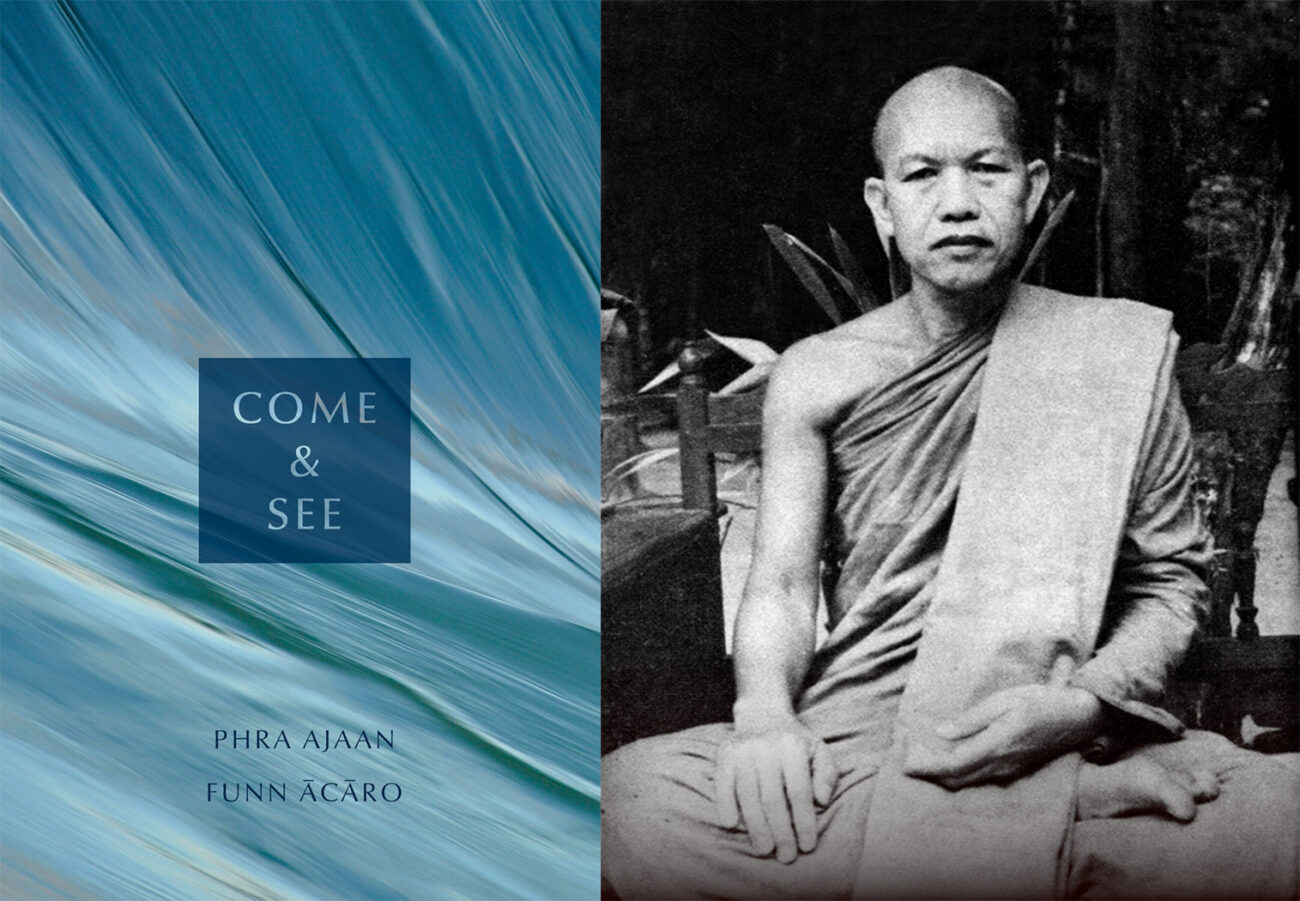
The profound teachings of the Four Noble Truths, as expounded by the Buddha, offer a framework for understanding the fundamental nature of suffering and the path to its cessation. This ancient wisdom, delivered in a discourse at Wat Tham Khaam in Sakon Nakorn, Thailand, on June 15, 1972, by Ajaan Funn Acaro and translated by Thanissaro Bhikkhu, continues to resonate with seekers of truth, guiding them toward a deeper comprehension of existence and the liberation from its inherent pains. The essence of these teachings lies not in intellectual accumulation but in direct experiential insight into the Four Noble Truths, the cornerstone of Buddhist philosophy.
The Unveiling of Suffering: Birth, Aging, Illness, and Death
Ajaan Funn Acaro emphasizes that true monastic understanding arises from the direct apprehension of the Four Noble Truths. Without this insight, even extensive scholarly knowledge remains merely "book-knowledge." The first truth, the truth of suffering (dukkha), is not abstract but intimately woven into the fabric of our lived experience. The Buddha’s discourse meticulously outlines the inescapable realities of existence that constitute suffering: birth, aging, illness, and death.
Birth itself is presented as a painful experience, beginning with the arduous journey through the mother’s womb. Aging follows, marked by physical decline, weariness, and decrepitude, adding another "heap of suffering." Illness constitutes a third category, bringing with it pain and discomfort. Finally, death represents the culmination of suffering, the ultimate point where continued existence in this world becomes unbearable. These four fundamental aspects of life, the Buddha asserted, are not merely unpleasant events but intrinsic forms of suffering that affect all beings without exception.
The Cycle of Seeking: A Deluded Pursuit of Temporary Solace
The discourse critically examines the common human tendency to avoid confronting these truths. Instead of seeking an escape from suffering, people often become ensnared in a cycle of seeking—pursuing status, wealth, material possessions, and a place to call home. Ajaan Funn Acaro pointedly states that these pursuits, including the construction of homes and mansions, are ultimately driven by a desire for suffering, a misguided attempt to find security and happiness in impermanent things. The Buddha, in contrast, renounced such worldly attachments, having seen through their illusory nature and their inevitable connection to profound suffering.
The teachings clarify that suffering is not merely the absence of status or material comfort. Rather, the Buddha identified the fundamental elements of existence—birth, aging, illness, and death—as the primary sources of suffering. These are universal experiences, irrespective of one’s social standing, race, or background. The physical body, by its very nature, is predisposed to these afflictions, tending inexorably towards birth, aging, illness, and ultimately, death.
The Body as a Vessel of Illness: A Deeper Examination
The discourse delves into a more granular understanding of suffering by examining the human body as a locus of pervasive illness. When aches and pains arise, whether in the head or elsewhere, the teachings prompt contemplation on the true nature of ownership and control. If the head is "ours," why can we not command it to be free from pain? This line of questioning reveals that our physical form is not entirely under our command, tending as it does towards illness.
The Buddha’s teachings challenge the conventional view that illnesses originate solely from external factors. Instead, they highlight the inherent susceptibility of the body to disease, present even at a microscopic level. Every part of the body, from the eyes and ears to the skin, muscles, bones, and bone marrow, is prone to various ailments and malfunctions. The discourse lists numerous examples: "Cakkhu-rogo" (illnesses of the eye), "Sota-rogo" (illnesses of the ear), "Ghana-rogo" (illnesses of the nose), and so forth, extending to the hair, nails, teeth, and even the heart. This detailed enumeration underscores the pervasive nature of bodily vulnerability.
The assertion that the body is "made of germs" by the Buddha emphasizes its inherent impermanence and susceptibility to decay and disintegration. This understanding forms the basis of the Buddhist aspiration to transcend the cycle of worldly existence, a cycle characterized by birth, aging, illness, and death.
The Threefold Path to Liberation: Virtue, Concentration, and Discernment
To navigate and ultimately escape this cycle, the Buddha prescribed a path comprising generosity, virtue, and meditation, later elaborated as virtue, concentration, and discernment. These principles are designed to cultivate wisdom and understanding, enabling individuals to see through the illusions of the world and achieve liberation.
Virtue (sila) involves ethical conduct, observing precepts that prevent harm and animosity. By living virtuously, one cultivates inner peace and reduces the causes of suffering. This ethical foundation is crucial for progress on the spiritual path.
Concentration (samadhi) refers to the stabilization of the mind, establishing it firmly and without wavering. A concentrated mind is less susceptible to the disturbances of the world and can engage in deeper contemplation.
Discernment (panna) is the wisdom that arises from contemplation and insight. It involves understanding the true nature of reality, particularly the impermanence, suffering, and non-self aspects of existence.
The "Heavenly Messengers" and the Unwavering Call to Awareness
The discourse highlights the "heavenly messengers"—the constant warnings of pain and discomfort experienced in all physical postures. Whether sitting, standing, walking, or lying down, the body signals its inherent suffering. These signals, though persistent, are often ignored or merely addressed by changing positions, a temporary fix that delays the inevitable confrontation with decay. The body, in its entirety, is described as a "heap of suffering," a tangible reality of pain that extends from head to toe.
This suffering is not external but resides within the confines of our own physical form, a "cubit wide, a fathom long." The Buddha’s teachings and monastic discipline are precisely aimed at addressing this fundamental reality, offering a framework for understanding and transforming our experience of suffering. Hell, the path, and its fruition are all situated within this immediate experience, allowing for conscious choice and discernment.
The Nature of "Mara": Confronting Internal and External Obstacles
The teachings introduce the concept of "Mara," often translated as death or the tempter. However, the discourse expands this to encompass various forms of obstruction, including the "Maras of the aggregates" (form, feelings, perceptions, fabrications, consciousness), the "Maras of defilement," the "Maras of mental fabrications," and the "Maras of death." These are not external entities but manifestations of our own internal processes and attachments.
The discourse asserts that these Maras are not otherworldly beings but are, in essence, human beings themselves, and more precisely, the constituent elements of our own experience. The very process of being born, from the womb onward, can be seen as the emergence of these Maras. The aggregate of form, feelings, perceptions, fabrications, and consciousness are all identified as Maras, highlighting the pervasive nature of these internal obstacles. Contemplating them without infatuation or delusion is key to liberation.
The Impermanence of Existence: Form, Feelings, Perceptions, and Beyond
The chanting of the "Samvega Gatha" serves as a reminder of the impermanence of all phenomena: "Rupam aniccam" (Form is inconstant), "Vedana anicca" (Feelings are inconstant), "Sanna anicca" (Perceptions and labels are all inconstant), "Sankhara anicca" (Fabrications are all inconstant), and "Vinnanam aniccam" (Consciousness is inconstant). This impermanence leads to the understanding of "anatta" (non-self).
If all constituent elements of our being are inconstant, they cannot be considered our true self. Form, feelings, perceptions, fabrications, and consciousness are all "anatta." This realization helps to loosen the grip of self-identity views and attachments to worldly relationships and possessions. The tendency of these elements toward illness, aging, and death further reinforces their non-self nature.
The Mind as the Architect of Reality: Attachment and Delusion
The discourse strongly emphasizes that the mind is the architect of our experience, fabricating notions of "mine" and "me." Attachments to possessions, relationships, and even the body itself are rooted in this mental construction. However, these attachments are ultimately unfounded, as the body and its possessions cannot be controlled or retained indefinitely. The body, too, is a manifestation of Mara, subject to decay and disintegration.
The aggregates of form, feelings, perceptions, fabrications, and consciousness are identified as the "Maras of the aggregates." Form is the physical body, feelings are sensations of pleasure or pain, perceptions are labels and meanings, fabrications are thoughts, and consciousness is awareness. All these are seen as Maras, and understanding their inconstant and non-self nature is crucial.
The Path to Unbinding: Seeing Through All Levels of Becoming
The ultimate goal is liberation, or "nibbana" (nirvana), which is described as constant and attainable within this very existence. The path involves cultivating concentration and discernment to see through all levels of becoming. The sensual realm, with its attractions and repulsions, the realm of form, and the formless realms are all subject to impermanence and suffering.
The discourse encourages contemplation of consciousness and its various levels—sensuality, form, and formlessness. Whether the mind is unskillful or clear, it remains within the cycle of birth, aging, illness, and death, leading to suffering and stress. The path to unbinding involves recognizing the emptiness and inconstancy of all these realms.
The Present Moment: The Key to Inner Sensitivity and Liberation
The core of the teachings lies in focusing on the present moment. By observing whether the mind is experiencing pleasure or pain, darkness or brightness, one cultivates inner sensitivity. This internal awareness is a resource that cannot be created by others and must arise from within.
The discourse concludes with a powerful exhortation to observe the mind, to apply the teachings internally, and to experience their truth firsthand through meditation. The body, devoid of consciousness, is likened to a log of wood, devoid of substance or essence. Consciousness, though in charge, is also subject to the cycles of becoming. The realization that all levels of becoming are inconstant leads to the possibility of unbinding.
Ultimately, the teachings underscore that attachments are the primary obstacle. By letting go of these attachments and focusing on the present moment, one can begin to experience a profound sense of peace and liberation, moving beyond the suffering inherent in the cycle of existence. The path, though challenging, is presented as accessible through diligent practice and unwavering contemplation.

