


A profound teaching, recently translated and introduced by scholar Maria Heim, offers a compelling framework for understanding the path to psychological liberation, drawing directly from the ancient Buddhist scripture, the Anguttara Nikaya, or Numerical Discourses. This teaching, attributed to the Buddha himself and dated to approximately the 5th century BCE, outlines a sequential, virtuous progression that fosters inner peace and clarity, ultimately leading to profound insight and freedom. The core message emphasizes that positive psychological states are not achieved through forceful intention but emerge naturally as a consequence of ethical conduct and the subsequent clearing of the mind.
The Foundation of Virtue: A Moral Bedrock for Mental Growth
The teaching begins by positing that the journey towards freedom is firmly rooted in virtuous conduct. This foundational element, as outlined in the Anguttara Nikaya, encompasses abstaining from the four cardinal unwholesome actions: killing, stealing, lying, and sexual misconduct, along with the avoidance of intoxicants that cloud the mind. This ethical framework is not presented as a mere set of rules, but as a direct pathway to psychological well-being. By adhering to these precepts, individuals actively prevent the generation of harmful thoughts and behaviors, thereby circumventing the corrosive effects of remorse.
Remorse, in this context, is described as a "scratchy feeling" encompassing regret, guilt, shame, worry, and anxiety. These emotional states are intrinsically linked to actions or intentions that cause harm, either to oneself or to others. The absence of these negative emotional repercussions, stemming directly from virtuous actions, creates a vital space for the emergence of positive psychological states. This initial stage, therefore, establishes a crucial link between ethics and mental health, suggesting that a clear conscience is the fertile ground upon which genuine inner peace can flourish.

The Unfolding Spiral: From Remorse-Free to Insightful Clarity
The Anguttara Nikaya teaching describes this progression as an "upward spiral," where each stage naturally gives rise to the next. The absence of remorse, a direct outcome of virtuous conduct, does not necessitate a deliberate effort to cultivate delight. Instead, the teaching posits that delight spontaneously arises when the mind is free from the burden of self-recrimination and the worry of causing harm. This is a critical distinction: positive states are not manufactured through sheer willpower but emerge organically when the conditions are right. The text suggests that attempting to force delight or happiness is often counterproductive, making these states even more elusive. True delight, therefore, is an emergent property of a mind cleared of internal agitation.
As the individual experiences the absence of remorse and the subsequent emergence of delight, this fosters an environment ripe for further positive developments. The teaching elaborates on this continuous unfolding:
- Delight leading to Joy: When one is delighted, the need to intentionally cultivate joy diminishes. Joy, a more profound and stable sense of happiness, naturally arises from a state of delight.
- Joy leading to Calmness: Experiencing joy leads to a calming of the physical body. This suggests a psychosomatic connection where positive emotional states directly impact physiological relaxation.
- Calmness leading to Happiness: A calm body, in turn, naturally facilitates feelings of happiness. This highlights the interconnectedness of mind and body, where physical tranquility supports emotional well-being.
- Happiness leading to Concentration: With the presence of happiness, the mind becomes naturally more concentrated. This increased focus is not a product of strenuous effort but a consequence of a settled and content state.
- Concentration leading to Insight: A concentrated mind, free from distractions and agitation, gains the capacity to "know and see things as they truly are." This is a pivotal stage, enabling clear perception of reality without the distortions of bias or emotional reactivity.
The Apex of Understanding: Disenchantment and True Freedom
The culmination of this spiral is the realization that all phenomena are impermanent and conditioned. This insight, gained through clear seeing, leads to a natural process of disenchantment and dispassion. This is not a negative or nihilistic view, but a profound understanding of the transient nature of all things, which loosens the grip of attachment. By understanding the impermanent and conditioned nature of phenomena, individuals are freed from the suffering that arises from clinging to what is inherently impermanent.
This disenchantment and dispassion then pave the way for the realization of a "way of knowing and seeing that is free." This is the ultimate aim of the practice – a state of liberated awareness, unburdened by the cycles of suffering. The teaching explicitly states that this freedom is the ultimate goal, and all preceding stages serve as the necessary conditions for its attainment.

Historical and Scholarly Context: The Anguttara Nikaya and its Significance
The Anguttara Nikaya is one of the most significant collections within the Pāli Canon, the primary scriptures of Theravada Buddhism. It is organized by numerical categories, making it a systematic compilation of the Buddha’s discourses. The teaching presented here, focusing on the sequential development of positive mental states through ethical conduct, aligns with broader Buddhist doctrines concerning karma, the cultivation of wholesome states, and the path to enlightenment (Nirvana).
Maria Heim, the translator and introducer of this teaching, is a respected scholar in Buddhist studies, known for her work in translating and interpreting early Buddhist texts. Her introduction highlights the "subtle" nature of this teaching, emphasizing its relevance to modern psychological understanding of how freedom is achieved. The inclusion of this teaching in a contemporary publication like Tricycle: The Buddhist Review, a prominent magazine dedicated to Buddhist news and teachings, underscores its enduring relevance and applicability to contemporary audiences seeking spiritual and psychological well-being. The publication date of February 26, 2026, suggests a recent scholarly effort to bring this ancient wisdom to a wider readership.
Analyzing the Implications: A Practical Blueprint for Well-being
The implications of this teaching are far-reaching, offering a practical and actionable blueprint for cultivating a more fulfilling and liberated life.
- Demystification of Positive Psychology: The teaching challenges the often-held notion that positive emotions must be actively pursued or manufactured. Instead, it presents them as natural byproducts of a well-ordered ethical life. This can alleviate pressure and anxiety associated with trying to "force" happiness, shifting the focus to creating the conditions for its natural emergence.
- Empowerment through Agency: While positive states are presented as emergent, the teaching firmly places agency with the individual through their ethical choices. By choosing to refrain from harmful actions, individuals actively participate in their own psychological liberation. This empowers individuals by demonstrating that their daily actions have profound psychological consequences.
- Holistic Approach to Well-being: The interconnectedness of virtue, emotional states, mental clarity, and insight emphasizes a holistic approach to well-being. It suggests that spiritual and psychological growth are not separate endeavors but deeply interwoven aspects of human experience.
- Relevance to Mental Health: In an era increasingly concerned with mental health, this ancient teaching offers a timeless perspective on preventing psychological distress and cultivating inner resilience. The emphasis on freedom from remorse and the cultivation of calm and concentration provides a robust foundation for addressing issues like anxiety, depression, and stress.
- A Universal Ethical Framework: The core ethical precepts – avoiding harm to oneself and others – are universally recognized values. This teaching demonstrates how adherence to these values can have tangible, positive psychological outcomes, making the case for ethical living not just a moral imperative but a pathway to personal flourishing.
The teaching concludes with a powerful summary, reiterating the sequential benefits: "Monks, knowing and seeing in a way that is free is the aim and benefit of becoming disenchanted and dispassionate. Disenchantment and dispassion are the aim and benefit of knowing and seeing things as they really are. Knowing and seeing things as they really are is the aim and benefit of concentration. Concentration is the aim and benefit of feeling happy. Happiness is the aim and benefit of being calm. Being calm is the aim and benefit of joy. Joy is the aim and benefit of delight. Delight is the aim and benefit of freedom from remorse. Freedom from remorse is the aim and benefit of virtue." This elegantly structured summary reinforces the idea that the entire process is a natural flow, a "phenomena flow into phenomena and phenomena succeed phenomena," guiding practitioners from one shore of suffering to the other shore of liberation.
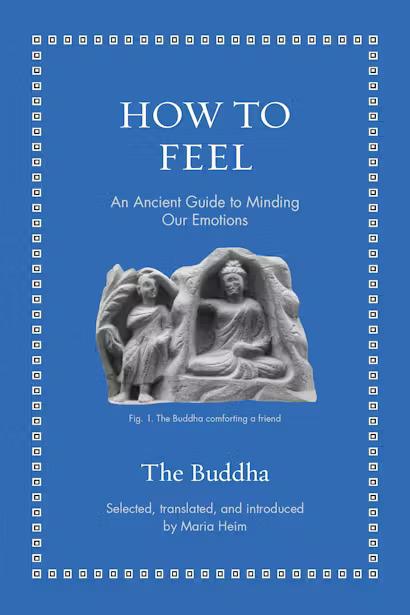
The accompanying image, an abstract representation of an upward spiral, visually reinforces the core metaphor of the teaching. The inclusion of the book cover for "How to Feel" by The Buddha, edited and translated by Maria Heim, further contextualizes this teaching within a broader contemporary exploration of emotional and psychological states, bridging ancient wisdom with modern inquiry. This teaching, rooted in millennia-old wisdom, continues to offer a profound and practical guide for navigating the complexities of the human mind and achieving lasting freedom.

