

The stark beauty of Juneau, Alaska, illuminated by the lingering twilight of an early May night, served as the backdrop for a profound personal transformation. Arriving by ferry, under skies that refused to darken, the author embarked on a journey not just to Alaska, but inward, seeking a new life, the embrace of the wilderness, and a sustainable livelihood. This quest would soon lead to a rudimentary existence, a canvas tent perched on a self-built platform in the woods, punctuated by days of domestic work and evenings spent in the convivial, yet perhaps numbing, atmosphere of local saloons. The casual consumption of alcohol, a seemingly harmless indulgence, would later reveal itself as a gateway to a far darker landscape.
As the Alaskan winter descended, casting long shadows and a perpetual gloom, the author found themselves isolated in a snowbound cabin, wrestling with thoughts of despair. It was in this nadir, a moment of existential crisis, that a flicker of self-preservation ignited: a whisper of an inner voice urging, "If you do, you will never know what might have been." This profound realization marked the genesis of a path toward recovery and the adoption of Zen practice. The author began to grasp a fundamental truth: that brokenness, when confronted rather than evaded, possesses an inherent capacity for healing and serves as a powerful impetus for forward movement.
Returning to the familiar environs of San Francisco, the arduous process of recovery from alcohol abuse commenced. The decision to abstain from drinking was not merely an act of cessation, but an intentional step onto the fertile ground of Buddhist practice. Here, a potent blend of dynamic teachers, the wisdom of Buddha’s prescriptions for living, and the supportive embrace of the sangha—the monastic community—at the San Francisco Zen Center offered the rigor and vitality the author had been seeking. The challenging months in Juneau, with its relentless darkness and personal struggles, came to be understood not as a period of failure, but as a metaphorical descent into an underworld, a crucible from which, like a phoenix, one could emerge bearing invaluable insights, akin to precious jewels.
This journey resonates with the teachings of Dogen Zenji, the 13th-century sage credited with introducing Zen Buddhism from China to Japan. Dogen’s profound encouragement states: "To have faith means to believe that one is already inherently in the Way, and not lost, deluded or upside down, and no increase, and no decrease, and no mistake." This perspective allowed the author to transcend the notion of a distinct "before" and "after" in their life. It became clear that the experiences preceding their engagement with practice were not separate from the Way itself. Inherent in their being, even amidst feelings of being lost, was a fundamental connection to this path. The only requirement was to move forward with an unwavering intention to be true to oneself.
The Art of Kintsugi: Embracing Imperfection
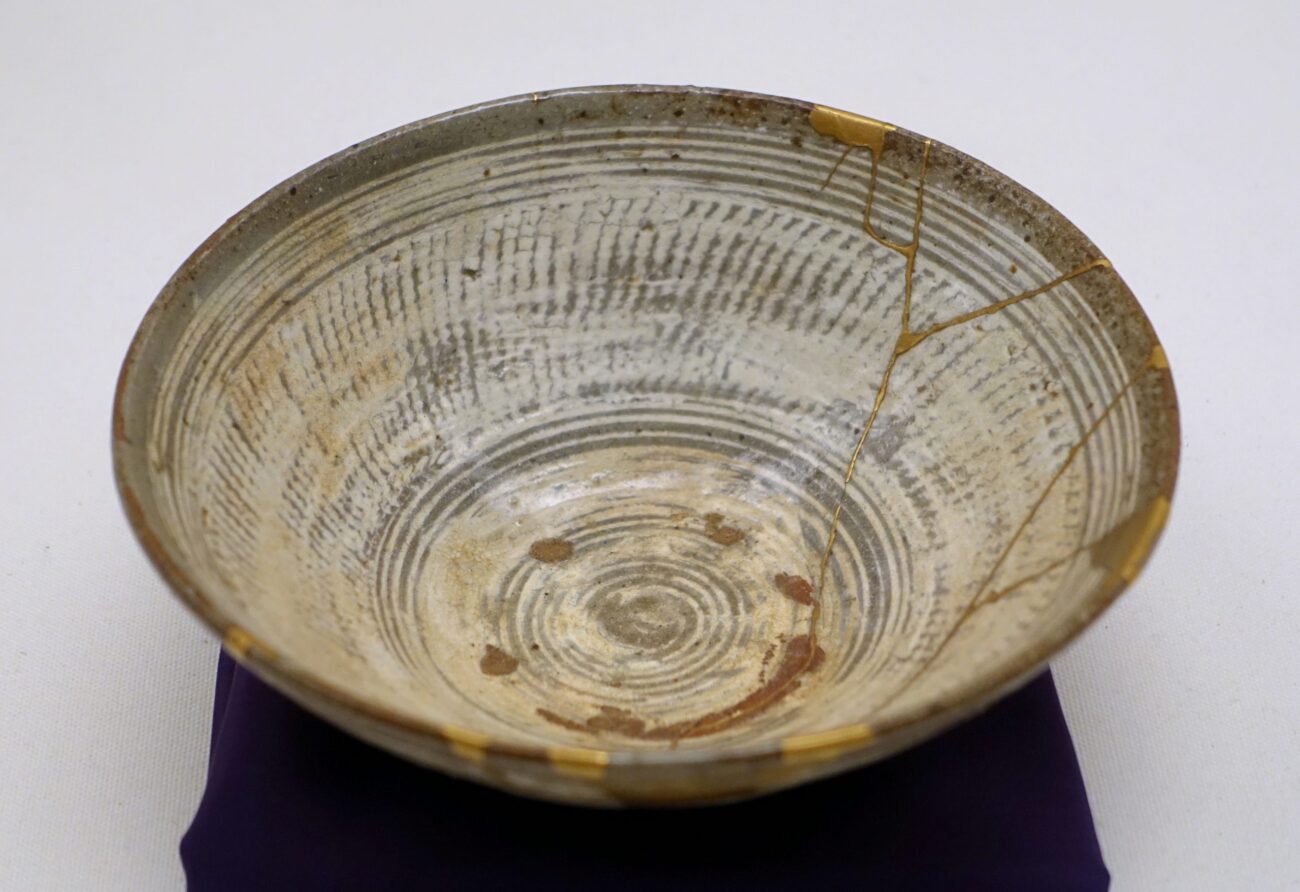
The profound implications of embracing brokenness are beautifully illustrated by the Japanese art of kintsugi, the practice of repairing shattered pottery with lacquer dusted or mixed with powdered gold, silver, or platinum. A renowned anecdote concerning the revered Zen tea master Sen no Rikyu highlights this philosophy. During a journey through southern Japan, Rikyu was hosted by a nobleman eager to showcase his prized antique jar. Rikyu, however, seemed oblivious to the artifact, his attention captivated by a branch swaying gently outside. His departure, without acknowledging the jar, left the host frustrated. In a fit of pique, the host hurled the jar to the floor, shattering it into numerous fragments.
Witnessing this act, Rikyu’s guests, after the host retired, gathered the scattered pieces. They painstakingly reassembled the jar, mending the cracks with lacquer infused with gold—the nascent form of kintsugi. Upon Rikyu’s subsequent visit, his reaction to the repaired vessel was one of admiration: "Now it is magnificent!" he exclaimed, his gaze fixed on the golden veins that traced the lines of fracture.
This story serves as a potent metaphor for the human condition. We are not cherished for our flawlessness, but rather for the resilience and beauty that emerge from our imperfections. The places where we have been broken are precisely where we can shine with a unique luminescence, fostering deeper connections with others. Experiencing profound loss can forge an empathetic bond with those enduring similar pain. Overcoming addiction can equip us to offer hope and shared understanding to fellow sufferers. In the depths of grief, we can extend a hand of solace to those who mourn. By offering the compassion born from our own imperfections—even acknowledging grave mistakes or past harms—we create pathways for redemption, transformation, and a profound form of alchemy. It is through this deep connection, this acknowledgment of shared vulnerability, that genuine healing can occur.
Confronting the Burden of the Past
Many individuals, upon reflection, carry the weight of burdens they find difficult to relinquish: the pervasive presence of shame, guilt, or remorse for past transgressions. The alternative, as suggested by the kintsugi philosophy, is to embrace the entirety of oneself, the totality of one’s life experiences. This includes recognizing that every action, every relationship, every endeavor, successful or otherwise, has contributed to the present moment. Even those experiences perceived at the time as abject failures have played a role in shaping who we are today.
Upon first encountering the San Francisco Zen Center, the author harbored a romanticized notion of the Ryaku Fusatsu, the Full Moon ceremony. Imagining a tranquil gathering for poetic contemplation under the moonlit sky, the reality proved to be far more potent and confronting. The ceremony unfolded not on a rooftop, but within the solemnity of the Buddha hall. Half of the resident community faced the other half, with a priest presiding at the center. The act involved countless full prostrations accompanied by the chanting of deeply resonant words: "All my ancient, twisted karma / from beginningless greed, hate, and delusion / Born through body, speech, and mind / I now fully avow . . ."
This timeless ceremony of confession, observed by Buddhist communities worldwide during each full moon, served as a stark reminder of the author’s own past. It encompassed not only personal missteps but also the complex, often inherited, burdens of family history, tracing back generations and across continents. The profound realization dawned that the confluence of causes and conditions, many beyond individual comprehension or control, had led to this precise moment of existence.
Yet, the ceremony continued, offering a framework for moving forward. It involved honoring the buddhas and bodhisattvas who had paved the way, taking refuge in the Buddha as the ultimate teacher, the dharma as the ultimate teaching, and the sangha as the ultimate way of life. Central to this practice was the recitation of the precepts, a set of guiding principles for living with integrity, courage, and wholeheartedness in a transient world.
Years later, as the author prepared to assume the role of kokyo, leading the chanting for the Full Moon ceremony, a profound shift occurred. The vow "Beings are numberless, I vow to save them; delusions are inexhaustible, I vow to end them; dharma gates are boundless, I vow to master them; Buddha’s way is unsurpassable, I vow to become it . . ." took on new meaning. A humorous anecdote from a priest revealed a past misrecitation: "Delusions are inexhaustible, I vow to become them." This shared human fallibility, the acknowledgment of our inherent struggles, became a source of connection. In leading the chant, the author, perhaps mirroring this earlier slip, found a resonance in the idea of confronting delusions not with judgment, but with an honest acknowledgment, a willingness to befriend them as integral aspects of our shared humanity.
The Path of Acknowledgment and Transformation
Within the structured environment of Zen Center, at the conclusion of each three-month practice period, a formal ceremony takes place. The shuso, or head student, is invited to respond to dharma questions posed by participants. In their closing remarks, the shuso offers profound words of gratitude to their teachers and fellow students: "My mistakes fill heaven and earth, leaving me no place to hide." This statement, woven into the fabric of the ceremony, underscores a fundamental understanding: perfection is not expected, nor is it the goal. The realization that these intricate forms and rituals are human constructs becomes more profound when one assumes the shuso role and must personally confront and release their own shortcomings.
Buddhism does not employ the concept of sin in the Western sense. Instead, it posits that actions, speech, and thoughts can be unwholesome or destructive, stemming from ignorance. The Buddha taught that a true understanding of the harm we inflict upon ourselves and others would naturally lead to a pause and a redirection towards more skillful paths. In Hebrew, the word for sin, "khatta’t," signifies "to miss the mark" or "to fall short of one’s goal." These missteps, when met with conscious awareness, can become powerful catalysts for progress. Poor decisions can illuminate areas requiring different approaches, and failed relationships can offer invaluable lessons about personal needs and the kind of companionship that fosters growth. Furthermore, the lingering resentment towards others for past hurts can be dissolved by a willingness to extend forgiveness and acceptance, mirroring the desire for such grace ourselves.
Initially, upon embarking on the path of Zen, the author found solace in the structured environment: donning a black robe, chanting in Japanese, and setting aside personal narratives. The expectation was that a life dedicated to meditation, study, and community would provide a definitive cure. The opportunity to live, work, and study at Tassajara, America’s first Zen Buddhist monastery, was met with profound gratitude, encapsulated in the chant, "This chance seldom occurs in any lifetime." It was within this setting that the author met their husband, and their marriage was solemnized in the zendo.
After five years of intensive practice and the birth of their daughter, the couple returned to San Francisco. The subsequent unraveling of an unhappy marriage, coupled with the insidious return of alcohol into the author’s life, created a profound dissonance. Despite continuing to participate in zendo activities, a sense of living a dual existence emerged, a familiar and isolating reality for anyone who has grappled with the truths of addiction.
The Turning Point: A Plea for Help and the Power of Recovery
The nadir of this period was marked by an internal plea, a raw and desperate cry: "Please, please help me." Though unsure of the recipient, this profound invocation was the beginning of an inner dialogue. In the subsequent journey of recovery, the author learned to attune to a "loving inner witness," a presence that had always resided within but had been obscured by the turmoil of addiction. This inner voice gently urged, "Come on, honey, let’s go get some help." The author was finally ready to embrace healing.
The simultaneous reentry into education, pursuing a teaching credential, and entering the rooms of recovery proved to be a pivotal juncture. The collective intention to maintain sobriety and the practical tools offered within these support groups provided a powerful grounding force. This dual commitment to practice and recovery enabled the author to embark on a career of teaching, impacting the lives of hundreds of children.
The foundational literature of recovery often carries the poignant phrase: "We do not regret the past, nor wish to shut the door on it." This acknowledgment recognizes the immense, untapped energy residing behind the closed doors of past experiences. To move beyond the haunting grip of the past, it became necessary to reclaim it, to assume responsibility for any harm caused, and to make amends to those who had been hurt. This process involved cultivating a willingness to release self-destructive habits and limiting beliefs, and to open the mind to new perspectives. Through the discipline of practice and the straightforward principles of recovery, a new sense of clarity, freedom, and ease emerged. The author finally found comfort in their own skin. By consciously choosing "no" to alcohol, a resounding "yes" was opened to a vast new world of possibilities. This paradox, that self-acceptance can be the very catalyst for growth, became a central tenet of their experience.
The often chaotic events of the past, the detours taken, and the experiences that once evoked shame, can, in recovery, transform into valuable resources for others. When shared openly, the darkness associated with these experiences begins to dissipate, revealing that these moments were not in vain. They become the "golden threads," the kintsugi of the human spirit—the broken and mended places where authentic connection with others on the path to wholeness can occur.
The mantra of recovery, "Keep coming back," finds a parallel in the practice of coming back to oneself, to the breath, and to the present moment. This teaching can be embodied even when one has "missed the mark" or acted unskillfully. The act of noticing, of acknowledging the misstep, and then returning to practice and one’s deepest intentions is paramount. In instances of harm, a sincere apology and a conscious effort to realign actions with the vow to benefit all beings can initiate profound transformation. This is the essence of the path of awakening: a mind and body that, though marked by brokenness and mended by experience, are ultimately laced with the enduring gold of resilience and compassion.

