

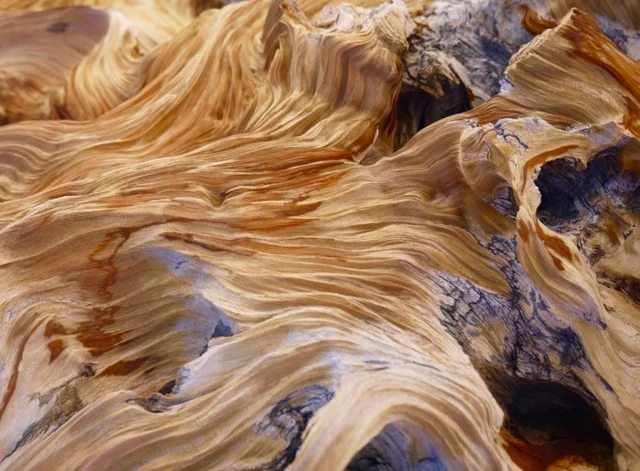
For the past eighteen months, a dialogue has unfolded between this publication and David Malinsky, a writer, photographer, and dedicated nature enthusiast whose work has increasingly focused on a venerable species: the Great Basin Bristlecone Pine (Pinus longaeva). Malinsky refers to these ancient trees, some of the oldest living organisms on Earth, with a profound sense of familiarity and respect, bestowing upon them the evocative moniker, "Old Friend in High Places." This series of exchanges offers a window into the unique aesthetic and philosophical perspectives Malinsky cultivates during his expeditions into the rugged, high-altitude environments where these remarkable trees have weathered millennia.
Malinsky’s reflections, shared through his correspondence, delve into the deeper meanings derived from observing these resilient beings. His contemplations, which he has generously made available to a wider audience, invite readers to engage with themes of exploration, self-discovery, and the profound interconnectedness between humanity and the natural world. Those interested in participating in this ongoing conversation and offering their own insights are encouraged to contact Malinsky directly via email at [email protected] to be added to his dedicated listserv.
The Majestic Bristlecone Pines: Sentinels of Time
The Great Basin Bristlecone Pine is not merely a tree; it is a living testament to time, a biological marvel that has adapted to some of the harshest conditions found on the planet. Thriving in the arid, windswept, and high-elevation environments of the Great Basin region of the western United States, these trees are renowned for their extraordinary longevity. Individual specimens have been reliably dated to be over 4,000 years old, making them the longest-living non-clonal organisms known. The most famous among them, "Methuselah," located in the White Mountains of California, is estimated to be over 4,850 years old. Another specimen, "Prometheus," was discovered in the Wheeler Peak Wilderness of Nevada and was dated to be approximately 4,900 years old before its unfortunate felling in 1964 for research purposes, a stark reminder of the vulnerability of even the most ancient life forms.
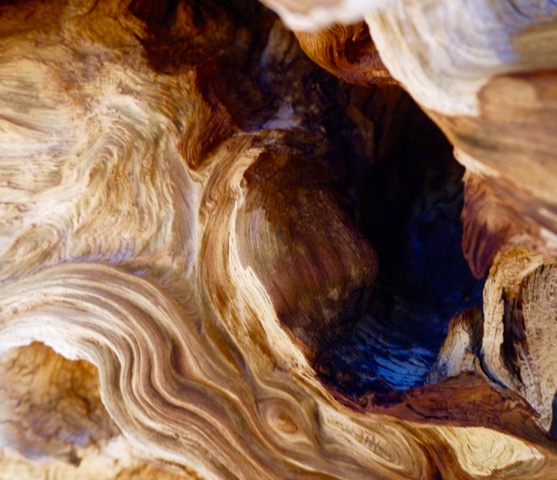
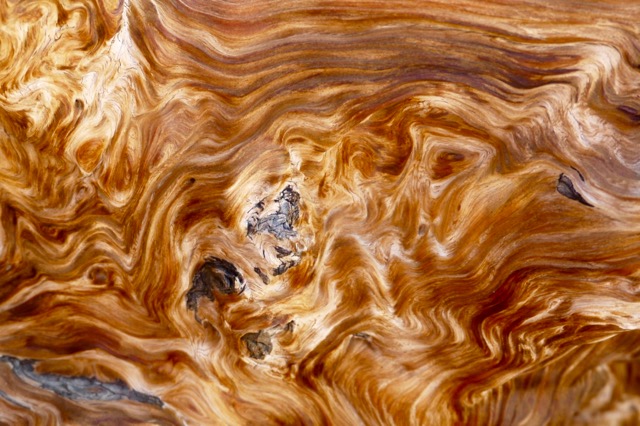
Their survival strategies are as remarkable as their age. Bristlecone pines grow incredibly slowly, often in nutrient-poor, rocky soils, and endure extreme temperature fluctuations, high winds, and prolonged droughts. Their wood is exceptionally dense and resinous, making it resistant to insects and decay. Over time, many bristlecone pines develop gnarled, twisted forms, with much of their bark sloughed away, leaving exposed, pale wood that gleams in the high-altitude sun. This aesthetic, often described as starkly beautiful, is a direct result of their struggle for survival, with only a narrow band of living tissue supporting their ancient crowns.
A Philosophy of Exploration: Beyond the Bullseye
Malinsky’s writings offer a compelling philosophical framework for understanding our relationship with nature and, by extension, with ourselves. He begins by positing that "daring to take a path towards what may be unknowable can be among the most noble pursuits of the human spirit." This statement immediately elevates the act of exploration beyond mere objective-seeking. He contrasts this with pursuits that have "known targets," which, while offering "tangible opportunities for achievement," also impose "limitations." He uses the metaphor of an arrow shot at a bullseye: "even a well-aimed arrow is forced to halt its arc, having reached a bullseye." The implication is that achieving a predetermined goal, while successful, can also signify an end to further discovery, confining the individual within the boundaries of that achievement.
Malinsky encourages a release from such confined perspectives: "Allow the arrow to be what it is, a tool for a particular purpose, but after your fingers release the bowstring do not let the confines of the arc define you. It was what you did, but only a small piece of who you are." This perspective suggests that our actions and accomplishments, while significant, do not wholly encapsulate our identity. There is a greater self that exists beyond the successful completion of a task.
He further elaborates on the importance of a broader perspective, stating, "Without narrowing the focus on the bullseye, there can be so much to see, much that will be missed if our sights are too confined." This sentiment underscores the idea that an overly focused or rigid approach can lead to overlooking the richness and complexity of the world around us. Malinsky advocates for an expansive consciousness: "You do not have to reduce all of this to a single place; there is room in your consciousness for all of it, if you allow it in." This calls for an openness to experience and a willingness to embrace a multiplicity of perceptions and understandings.
The Journey of Self: Embracing the Unknown ‘Who’
Malinsky’s reflections then shift towards the profound connection between external exploration and internal growth. He asserts that "It is in taking a path beyond established targets that you begin the journey of yourself." This suggests that true self-discovery is not found in pursuing pre-defined goals or societal expectations, but rather in venturing into the less charted territories of experience and consciousness.
He describes this unfolding process: "a path whose first steps may appear as though on the way to a ‘Where’, but as you venture will almost magically turn into as much a ‘Who’, person and place becoming one." This elegant phrasing captures the transformative power of experiential learning. The initial motivation might be a physical destination or an external objective ("Where"), but the deeper journey reveals an internal evolution of self ("Who"). The distinction between the explorer and the explored landscape blurs, suggesting a profound integration of the individual with their environment.
The signs of being on this authentic path, according to Malinsky, are visceral and sensory: "When you feel something inside of yourself growing with each step, and your developing senses appreciating what surrounds the path even more, then you are on the verge of the most important discovery you can make." This emphasizes an intuitive and sensory engagement with the world, a deepening of awareness that signifies progress. He suggests that in such moments, conventional guides become obsolete: "and any notions of maps can be discarded." The internal compass, guided by growth and heightened perception, becomes the true navigator.
Malinsky offers a vision of an unending journey, stating, "Your path has no end, for both you and Nature are constantly evolving." This perspective aligns with ecological principles of continuous change and adaptation. The inherent trust in this process is crucial: "and it is in that trust of Nature that you can place yourself, and explore the labyrinths ahead filled with the joy of anticipation, instead of trepidation." This calls for a fundamental shift from fear of the unknown to an embrace of its potential, transforming potential anxiety into eager anticipation.
Illuminating Darkness: Trusting the Inner Light
The final segment of Malinsky’s reflections addresses the concept of encountering challenges or perceived "darkness" on this journey. He proposes that with a developed trust, both in nature and in oneself, these moments are not to be feared. "Once you develop that trust, both of Nature and of yourself, when you come across what appears to be a darkness you do not fear." This is a significant assertion, reframing challenges not as obstacles but as opportunities for further revelation.
He defines darkness not as an inherent void but as a state of being: "That darkness is only a place that is currently without illumination." This perspective suggests that the absence of light is temporary and can be altered. The key to navigating these spaces lies in an open and receptive spirit: "and should you venture forward with an open spirit, your path may well take you to where it was intended to all along – the place where it is you that are the light." This profound statement suggests that by approaching difficult or unknown situations with openness and courage, individuals can discover their own capacity to illuminate and transform these very spaces. The journey, therefore, culminates not in reaching a static destination, but in recognizing and embodying one’s own inherent light.
Broader Implications and Future Exploration
David Malinsky’s writings, inspired by the stoic resilience of the Great Basin Bristlecone Pines, offer a compelling ecopsychological perspective. His call for an expansive consciousness, a trust in the unfolding journey, and the courage to embrace the unknown resonates deeply in a contemporary world often characterized by rapid change and a relentless pursuit of quantifiable outcomes.
The bristlecone pines themselves serve as potent metaphors. Their ability to thrive in extreme conditions, their slow and deliberate growth, and their immense age all speak to the power of endurance, adaptation, and deep time. Malinsky’s work encourages us to consider these qualities not just in the natural world but as integral aspects of our own human experience.
The implications of his philosophy extend to various fields, including environmental education, conservation efforts, and personal development. By fostering a deeper appreciation for ancient ecosystems like those inhabited by bristlecone pines, Malinsky contributes to a broader understanding of ecological interconnectedness and the intrinsic value of biodiversity. His invitation to join his listserv indicates a desire to cultivate a community of like-minded individuals who can share their experiences and collectively explore these profound themes.
As climate change continues to impact delicate high-altitude environments, the study and appreciation of species like the Great Basin Bristlecone Pine become increasingly vital. Understanding their resilience can offer insights into potential strategies for adaptation in a changing world. Malinsky’s work, therefore, is not merely poetic; it is a timely and relevant exploration of what it means to live in harmony with nature and to discover the enduring strength within ourselves, mirroring the ancient wisdom of the "Old Friends in High Places." His ongoing correspondence and the community he is fostering promise further insights into these vital connections.

