


One warm late summer evening, in a popular Upper East Side Manhattan steak house in the early 1940s, a profound, albeit seemingly simple, lesson in spiritual practice was unknowingly imparted to a young boy, a lesson that would later resonate as a cornerstone of Zen teachings. The anecdote, shared by Zen teacher Les Kaye, recounts a pivotal moment from his childhood that illuminated the universal foundation of spiritual endeavor: the practice of "being nice." This recollection, drawn from his youth, transcends a mere childhood memory, offering a deep dive into the essence of compassionate engagement and its role in cultivating a more harmonious existence.
A Childhood Encounter with "Nice"
Kaye, then a boy of eight or nine, found himself amidst a convivial gathering of his father’s friends and business associates. The atmosphere was one of joviality and confidence, with the young Kaye basking in the attention showered upon him. It was during this dinner, amidst the clinking of glasses and hearty laughter, that a seemingly innocent question was posed: "So, young man, what are you going to be when you grow up?" Young Les, in his youthful earnestness, offered a simple, yet profound, response: "Nice."
This answer, far from the conventional aspirations of professions like doctor, lawyer, engineer, or architect, prompted a gentle clarification from one of his father’s friends. "I mean, don’t you want to be a doctor or a lawyer or an engineer or an architect or a businessman like your father?" he inquired. The young Kaye, too young to grasp the intricacies of these demanding professions, remained silent, his gaze fixed on the rising bubbles in his ginger ale. Yet, he possessed a clear understanding of the feeling associated with "nice." It was an innate comprehension of a quality that, even at that tender age, felt intrinsically right and valuable.

Navigating the Urban Landscape: A Study in Contrast
Kaye uses his observations of New York City to further illustrate the concept of "nice." He vividly describes the city’s notorious crowds and busyness, where interactions can often be characterized by jostling and inconvenience. The chaotic scenes on subways and buses, with the lack of orderly queues and the friction that arises from pushing and shoving, paint a picture of everyday urban life where conflicts can erupt over minor delays and perceived obstructions. These moments, though brief, can leave a residue of anger and tension.
However, Kaye contrasts this with the equally prevalent politeness and consideration he frequently encountered. The ubiquitous "Pardon me," "Good morning," and "Please go ahead" are not merely superficial pleasantries. For Kaye, these expressions of courtesy created a palpable sense of ease, allowing the world to "ebb and flow with a natural rhythm, without conflict, relaxed." This observation underscores a fundamental truth: while social conventions are necessary for the functioning of any community, their impact is often limited to the surface of interactions.
Elevating "Nice" Beyond Courtesy
The core of Kaye’s message lies in the assertion that "nice" extends far beyond these everyday courtesies. He posits that spiritual practice compels us to elevate this understanding, to make it more inclusive and to expand our motivations. The aim is to move from mere courtesy, which can be driven by social obligation, to a deeper wellspring of empathy and genuine care. This is not a passive state but an active engagement with the world and its inhabitants.
In the context of Buddhist practice, this translates to a commitment to the elimination of worldly suffering. Kaye emphasizes that this endeavor begins with a conscious attention to how we relate to one another, focusing our awareness on those directly in front of us. The process of alleviating suffering, whether on a grand scale or in the smallest of gestures, is presented not as an intermittent activity, but as a continuous, ingrained attitude. It is a state of being that persists, irrespective of whether overt suffering is immediately apparent.

The Monk and the Floating Leaf: A Parable of Vigilance
To further elucidate this continuous practice of care, Kaye introduces a poignant Zen story. The parable involves two monks on a pilgrimage, traveling from temple to temple, seeking wisdom from renowned teachers. As they approach a well-known monastery beside a creek, they observe a single vegetable leaf floating downstream. Their immediate reaction is one of dismay; they prepare to turn back, interpreting the leaf as a sign of a lapse in the monastery’s orderliness, perhaps implying that the grounds are not being properly maintained or that something is amiss within the community.
However, their concern is swiftly addressed when another monk emerges from a side door, running towards the creek with a long pole. With practiced ease, he retrieves the errant leaf from the water. The two visiting monks, witnessing this diligent act, smile and resume their journey, their apprehension replaced by a quiet appreciation for the unseen, ongoing commitment to maintaining order and cleanliness. This story, Kaye suggests, illustrates the Zen emphasis on attending to ordinary activities, highlighting how even the smallest tasks, when performed with diligence and care, contribute to a larger sense of well-being and order.
The "Inmost Desire" for a World of "Nice"
The foundation of spiritual practice, according to Kaye, is this unwavering commitment to fostering a world permeated by "nice." This resonates with the concept of our "inmost desire," as articulated by the revered Zen master Shunryu Suzuki Roshi. A world characterized by this profound sense of "nice" is a world devoid of separation, a realm of interconnectedness, caring, and seamless flow. This ideal environment is not an unattainable utopia but a reality that can be cultivated through dedicated practice and a collective effort to create such a space.
A Poetic Reflection on Flow and Effortlessness
The article concludes with a poem penned over twenty years ago by a member of Kannon Do, a Zen center in Los Angeles. The poem beautifully encapsulates the essence of flowing with life’s currents, devoid of resistance or strain:
"Those who flow as life flows
Need no other force
They feel neither wear nor tear.
May I flow like
Silk thread on a sharp needle
Through soft cloth."
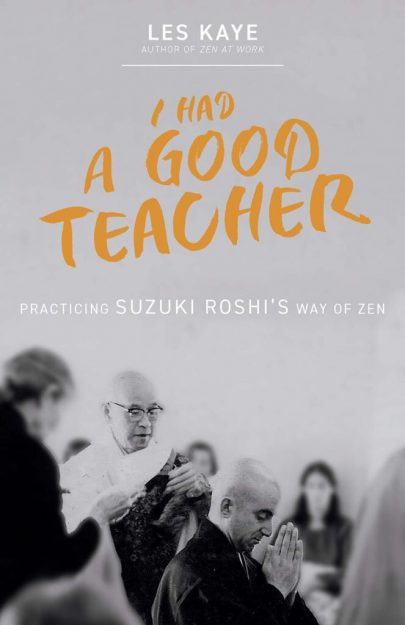
This imagery of effortless movement, of a delicate yet sure passage through material, mirrors the ideal state of being that Kaye advocates for – a state of being "nice" not as a forced exertion, but as a natural, graceful way of engaging with existence. The accompanying image of the book "I Had a Good Teacher: Practicing Suzuki Roshi’s Way of Zen" by Les Kaye, further contextualizes these teachings within the broader framework of Zen philosophy and practice, underscoring the enduring relevance of these principles in contemporary life. The book, published in 2025, serves as a testament to Kaye’s lifelong dedication to sharing these profound insights.
The implications of embracing "nice" as a foundational spiritual practice are far-reaching. In a world often characterized by division, conflict, and superficial engagement, the cultivation of genuine kindness, empathy, and meticulous attention to our surroundings offers a powerful antidote. It suggests a path toward personal transformation that ripples outwards, fostering a more compassionate and harmonious society. This is not merely about personal peace, but about actively participating in the creation of a world where the well-being of all beings is considered paramount, where every action, however small, contributes to a larger fabric of interconnectedness and care. The simple yet profound act of "being nice," when understood and practiced with depth, becomes a radical act of spiritual liberation and social betterment.

