

For the past eighteen months, a profound dialogue has unfolded between the world of journalism and the seasoned observations of David Malinsky, a writer, photographer, and dedicated nature enthusiast. His ongoing correspondence has illuminated a particular fascination with the Great Basin Bristlecone Pines, ancient sentinels of the high deserts, which he affectionately refers to as his "Old Friends in High Places." This article delves into Malinsky’s unique perspective, offering a glimpse into the profound beauty and philosophical insights he uncovers during his explorations of these venerable tree beings. The opportunity to engage directly with Malinsky and share your own reflections is extended to interested individuals via his listserve, accessible by contacting him at [email protected].
The Majesty of the Bristlecone Pines: A Chronicle of Resilience
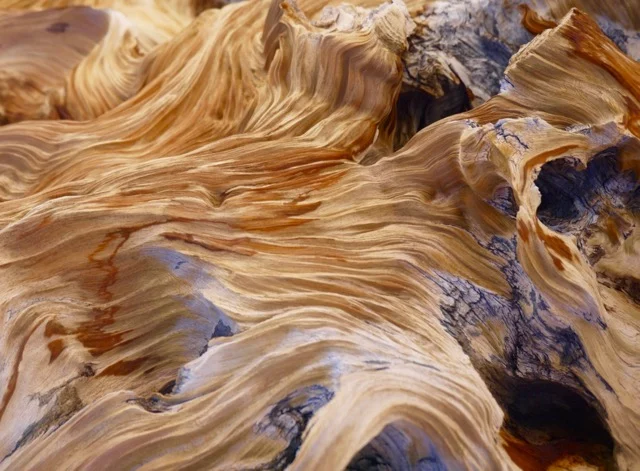
The Great Basin Bristlecone Pine (Pinus longaeva) is not merely a tree; it is a living testament to endurance, a botanical marvel that has weathered millennia of environmental challenges. These hardy specimens are renowned for their longevity, with some individuals verified to be over 5,000 years old, making them some of the oldest non-clonal organisms on Earth. Their natural habitat is restricted to the arid, high-altitude regions of the Great Basin, typically above 8,000 feet, where they cling tenaciously to rocky, exposed slopes. This harsh environment, characterized by extreme temperatures, scant precipitation, and nutrient-poor soils, has sculpted the pines into unique, often gnarled and twisted forms, each one a sculpture forged by time and adversity.
Malinsky’s work centers on capturing and conveying the spirit of these ancient trees, a spirit he perceives as deeply intertwined with the human experience of growth, exploration, and self-discovery. His writings, often accompanied by evocative photography, explore themes of venturing into the unknown, the nature of perception, and the profound connection between humanity and the natural world.
A Philosophy Rooted in Nature: Malinsky’s Insights
In a recent communication, Malinsky articulated a perspective on exploration and self-discovery that resonates deeply with the resilience and wisdom embodied by the Bristlecone Pines. He draws a powerful analogy between the pursuit of knowledge and the act of archery:
"Daring to take a path towards what may be unknowable can be among the most noble pursuits of the human spirit. Known targets bring tangible opportunities for achievement, but also limitations; even a well-aimed arrow is forced to halt its arc, having reached a bullseye. Allow the arrow to be what it is, a tool for a particular purpose, but after your fingers release the bowstring do not let the confines of the arc define you. It was what you did, but only a small piece of who you are."
This passage highlights a core tenet of Malinsky’s philosophy: the importance of embracing the journey over fixating on predetermined outcomes. He suggests that an overemphasis on achieving specific goals can inadvertently limit one’s potential for growth and broader understanding. The "bullseye," while a symbol of success, can also represent a point of closure, an end to the unfolding experience.
He continues to elaborate on this concept, emphasizing the richness of observation that arises from an open and expansive mindset:
"Without narrowing the focus on the bullseye, there can be so much to see, much that will be missed if our sights are too confined. You do not have to reduce all of this to a single place; there is room in your consciousness for all of it, if you allow it in."
This perspective encourages a widening of one’s perceptual field, urging individuals to appreciate the myriad details and interconnectedness of their surroundings, rather than reducing complex realities to simplistic targets. It speaks to the capacity of the human mind to hold multiple perspectives and to embrace the vastness of experience without the need for rigid categorization.
The Unfolding Self: A Journey of Becoming
Malinsky’s reflections then delve deeper into the transformative power of venturing beyond established boundaries, a journey he likens to the growth of the Bristlecone Pines themselves:
"It is in taking a path beyond established targets that you begin the journey of yourself, a path whose first steps may appear as though on the way to a ‘Where’, but as you venture will almost magically turn into as much a ‘Who’, person and place becoming one. When you feel something inside of yourself growing with each step, and your developing senses appreciating what surrounds the path even more, then you are on the verge of the most important discovery you can make, and any notions of maps can be discarded. Your path has no end, for both you and Nature are constantly evolving, and it is in that trust of Nature that you can place yourself, and explore the labyrinths ahead filled with the joy of anticipation, instead of trepidation."
This profound statement underscores the idea that true self-discovery is not a destination but an ongoing process, intrinsically linked to the dynamic relationship between the individual and the natural world. The initial motivation to seek a "Where" – a specific location or outcome – evolves into a deeper understanding of "Who" – one’s own evolving identity. The growing sense of internal development and heightened appreciation for the surrounding environment are presented as indicators of being on the right track. The discarding of maps symbolizes a release from preconceived notions and external guidance, embracing instead an intuitive navigation guided by inner growth and trust in the unfolding of life. The concept of an endless path, mirroring the continuous evolution of both humanity and nature, offers a comforting perspective, transforming potential fear of the unknown into joyful anticipation.
Embracing the Darkness: Illumination Through Openness
Malinsky further extends this philosophy to the concept of encountering what may appear as challenging or obscure situations:
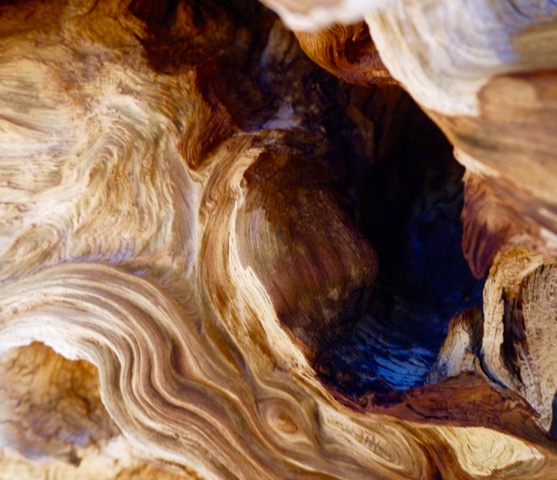
"Once you develop that trust, both of Nature and of yourself, when you come across what appears to be a darkness you do not fear. That darkness is only a place that is currently without illumination, and should you venture forward with an open spirit, your path may well take you to where it was intended to all along — the place where it is you that are the light."
This final reflection offers a powerful reinterpretation of adversity. Instead of viewing "darkness" as an endpoint or an obstacle, Malinsky posits it as a state of potential, an area awaiting illumination. The key to navigating these spaces, according to his philosophy, lies in cultivating trust—both in the inherent processes of nature and in one’s own inner capacity. By approaching such situations with an "open spirit," individuals can discover that their journey naturally leads them to become the source of light, transforming challenges into opportunities for personal growth and contribution.
Supporting Data and Context: The Ecological Significance of Bristlecone Pines
The scientific community has long recognized the ecological and scientific importance of Great Basin Bristlecone Pines. Their extreme longevity has made them invaluable subjects for dendrochronology, the science of dating events and understanding past climates through tree rings. By studying the growth patterns of these ancient trees, scientists have been able to reconstruct climate histories stretching back thousands of years, providing crucial data for understanding long-term climate change and ecological cycles.
For instance, the "Old Wood" project, initiated in the mid-20th century, has utilized Bristlecone Pine samples to create continuous tree-ring chronologies extending back over 9,000 years in some regions. This data has been instrumental in calibrating radiocarbon dating, a fundamental technique in archaeology and geology. The resilience of these trees to harsh conditions, including extreme drought and cold, also offers insights into plant adaptation and survival strategies in marginal environments, which are increasingly relevant in the context of global climate change. Their ability to survive by growing only a narrow strip of living bark on one side of their trunk, while the rest of the wood dies and becomes exposed, is a remarkable adaptation to conserve resources.

Broader Impact and Implications: Nature as a Mirror for Human Growth
David Malinsky’s work, through his writings and photography, serves as a powerful reminder of the profound lessons that nature can offer to human experience. The Great Basin Bristlecone Pines, with their ancient wisdom and unyielding resilience, provide a potent metaphor for the human capacity to endure, adapt, and evolve. His philosophy, which encourages an embrace of the unknown, a widening of perspective, and a deep trust in the unfolding journey of life, resonates with principles found in various schools of thought, including ecopsychology and mindfulness.
The implications of Malinsky’s perspective extend beyond individual introspection. In an era often characterized by rapid change and uncertainty, his emphasis on finding joy in anticipation rather than succumbing to trepidation offers a valuable framework for navigating societal and environmental challenges. By viewing "darkness" not as an end but as a space for potential illumination, his insights encourage a proactive and hopeful approach to complex problems.
Furthermore, Malinsky’s invitation to join his listserve signifies a commitment to fostering a community of like-minded individuals. This collaborative approach to sharing experiences and reflections can amplify the impact of his message, creating a ripple effect of deeper connection with nature and with oneself. The ongoing dialogue he facilitates underscores the belief that shared exploration and mutual learning are essential components of personal and collective growth.
In conclusion, David Malinsky’s correspondence offers a compelling invitation to view the world, and our place within it, through the lens of ancient wisdom embodied by the Great Basin Bristlecone Pines. His philosophy, rooted in the resilience and profound beauty of these venerable trees, provides a roadmap for navigating life’s uncertainties with courage, curiosity, and an open spirit, ultimately leading us to discover the light within ourselves and the world around us.

